In this exclusive Melbourne Marvels special, host Eamonn tracks down and speaks directly with the elusive witness who encountered Mr Cruel on the very night he released his young victim, Sharon Wills in December 1988. For decades, this brief but chilling interaction has lingered on the edges of the case, and it has been unclear as to whether it was a genuine encounter with the offender. Now, for the first time, listeners will hear the witness recount his experience in his own words—what he saw, what he felt, and what he remembers most about that night.
This rare conversation sheds new light on one of the most disturbing chapters in Melbourne’s true crime history and details why it is almost certain that the man driving the Holden Commodore Vacationer was in fact the offender known as ‘Mr Cruel’.
Please also read up on Jay’s website www.whoismrcruel.com for more information about this case.
NB: The use of copyright material in this podcast is for fair dealing for research purposes, for criticism and for reporting news. Melbourne Marvels is a non-profit blog/podcast that is researching the unsolved crimes of ‘Mr Cruel’.
Warning, this episode contains details about the sexual assault of children and the murder of a child. Please use discretion before listening.
If you like to leave a comment to Melbourne Marvels, please fill out the form below.
Production by Elocra
A Holden Commodre Vacationer like the one driven by the offender.
Christian Bennett has written a manuscript analysing the Mr Cruel crimes. This manuscript was originally written in 2014 and has been updated several times. He has provided the manuscript to the Victoria Police. It has not been published previously on the internet. Clinton has given me permission to publish sections of it here. This chapter of the the manuscript deals with the connections between Presbyterians and the offender.
Melbourne Marvels would like to preface the inclusion of the below chapters from Bennett’s manuscript by stating our reasons for publishing these sections. Bennett proposes several theories as to the motive of the offender known as Mr Cruel. These are that perhaps he held a grudge against things Presbyterian, or against someone in this church or one of its offshoots. Melbourne Marvels finds these propositions to be highly unlikely, however, feels these sections are worthy of publication because of the excellent research carried out by Bennett. We also feel that, the associations between some of the Mr Cruel crimes and the Presbyterian Church could perhaps be better explained by a more simple proposition: perhaps the offender was in some way connected to one of the main branches of the Church. Furthermore, we feel that the information these sections provide on the convicted sexual offender and murderer Robert Arthur Selby Lowe are of great interest to the reader interested in the Mr Cruel case.
38 PRESBYTERIANS and THE OFFENDER
DID THE OFFENDER STAGE A VENDETTA AGAINST PRESBYTERIANS?
The concept that the offender, known as Mr Cruel, was staging some sort of vendetta against the Presbyterian Ladies College (PLC) in Burwood is hardly an original idea. After all, two of the College students were abducted from their homes, with one being assaulted and another murdered and possibly sexually assaulted as well.
The vendetta angle, possibly revenge for a perceived slight, would have been one of the first things detectives would investigate. PLC supplied a long list of people they had dealings with, and this would include those involved in the invariable dispute or complaint (legitimate or otherwise) that arise when running a school.
The idea that Mr Cruel had some sort of general loathing of things Presbyterian and was conducting some sort of campaign against them is harder to conceptualise. Anti-Semitism, as in hatred of Jewish people, is something most people are aware of, as in the Holocaust of the past, and present day attacks on synagogues and terrorist attacks on Jewish people.
A Google search will also produce a large quantity of hits for “anti-Catholic” and / or “anti-Protestant”.
By contrast, “anti-Presbyterianism” didn’t raise a hit. As a concept it would appear almost the stuff of macabre satire. Generally speaking, Presbyterians don’t excite much interest and until quite recently have been included in Australian census data under the cover-all title of “Other Protestant Denominations”. Catholics and Anglicans have always had their own sections.
However, given his behaviour towards two students from PLC, some sort of campaign against Presbyterians in general cannot be ruled out. Two is not a huge sequence, but the obvious planning that went into both kidnappings suggests something beyond a physical motive.
There is also an internet blog suggesting that Sharon Wills had a first cousin who attended PLC. At the moment the writer is unable to confirm the veracity of this piece of information but if true, this potentially increases the sequence to three.
So now we come to look at what circumstantial evidence there is that the offender may have had some connection with the Presbyterian Church – whether as a member, or as an embittered ex-member, or as someone who held a grudge against that particular Church and its members.
At first it would appear that there would be no physical circumstantial evidence of any sort of connection but there does seem to be some interesting coincidences.
PRESBYTERIAN GRAVEYARDS
The writer has already postulated that the offender may have used a number of cemeteries for his surveillance of crime scenes. However, when the writer looked at actual maps of these cemeteries, his attention was drawn to something that could be quite significant.
If the offender known as Mr Cruel was using Burwood Cemetery as a surveillance area for Presbyterian Ladies College students arriving and departing from the school, then he would most certainly have chosen the Burwood Hwy side. Of interest is that the Presbyterian graveyard section of Burwood Cemetery dominates the northern portion of this site.
This by itself would probably not be particularly significant. The cemetery is dominated by the four major denominations of pioneer settlement i.e. Church of England, Presbyterian, Methodist and Roman Catholic. The cemetery is now fully occupied with no new burial places. Not surprisingly it is a favourite among a small group of students of local history.
Templestowe Cemetery
Presbyterians occupy a small but significant corner of the Templestowe Cemetery. Roman Catholics and Church of England have their own significant areas, but in this case Methodists (and possibly it’s successor, the Uniting Church) are listed under Other Denominations (as well as “Other D” on the map). The Lutherans have a presence probably from the earliest days of settlement.
It has been suggested by the writer that the offender, Mr Cruel, possibly used the Templestowe Cemetery for surveillance of the Church Rd area south from the cemetery. This is the place where Karmein Chan had her home, on the corner of Church Rd and Serpells Rd. From the cemetery corner, near the intersection of Foote St and Church Rd he would have had an uninterrupted view south, straight up the hill to the place where she lived.
The Presbyterian graveyard or section borders the internal cemetery road called Hunter Av which runs parallel to Foote St, and at first, it would seem that this part of the cemetery would not be as significant as a place nearer Church Rd i.e. the Harle Lawn section.
However, from the point of view of monitoring traffic, at night, that turns in and out of Church Rd from the south of Foote St and the continuation in Reynolds Rd, the Presbyterian section offers the best concealment. Even at night the Harle Lawn area, would mean that potentially the offender may be spotted from four different angles. The Presbyterian Monumental area, not only provides grave stones and other hiding places, but the offender if he has his back to the cemetery side fence on the west side, can only been seen from one side. Given this, on a moonless or overcast night, the offender would have been virtually invisible.
From the Presbyterian graveyard section, the offender potentially could have monitored not only the traffic, but before the road works circa 1990, also the Chan family car if they used the Foote St – Church Rd intersection to turn south towards their home near the top of the hill.
By the time the writer came around to finding a map of the Kew cemetery – near where Nicola Lynas was released in 1990 – he had a “hinky” feeling that the nearest significant graveyard section that would be closest to the crime scene, would be the Presbyterian section.
The Presbyterian section of the Kew Cemetery – also known as the Boroondara General Cemetery – dominates the High St side, which is the street that’s closest to the Eglinton St and Tennyson St area where Nicola Lynas is reputed to have been released.
The Presbyterians occupy a greater area in the cemetery than their numbers in the past would suggest as a percentage of Australian Christians, but would reflect a very strong local presence. This will be discussed later, but it is no real surprise that on either side of the Kew Cemetery, along High St, within a kilometre, were once three Presbyterian churches.
Given the apparent planning that went into the offender’s crime with regard to Nicola Lynas, it is not totally unreasonable to suggest that he may have lived in the area at once stage, or at the very least had something to do with the suburb of Kew i.e. work, or even being involved socially.
The Kew Cemetery itself has the usual preponderance of Church of England (Anglican) sections but Wesleyan sections suggest a strong link with the Methodist church. Baptists and Lutherans are also represented.
Of interest is a large memorial to David Syme (1827-1908), the man who saved The Age newspaper from insolvency in the 1860s and made it into what was then a great liberal newspaper and institution. Syme was raised a Presbyterian but revolted against its Calvinistic teachings of the day. Syme and The Age championed manhood suffrage, land reform, free and secular education, and protectionism for industry.
Whether the man know as Mr Cruel supports these or similar views is an open question, but circumstantial evidence would suggest that the offender had an interest in newspapers that was greater than that of merely an average reader.
A cynic may suggest that it is merely coincidence where Presbyterians bury their dead when it comes to Mr Cruel but it is not totally unreasonable to suggest that there may be some connection, even if it is the offender laying another red-herring.
However, when it came to the selection of one of his victims – in the case of Nicola Lynas – and the siting of the crime, Presbyterian churches may have some connection. Committing a crime near a Presbyterian church is something that the offender has some control over in terms of topography.
The following example is given:
PRESBYTERIAN CHURCHES IN RELATION TO CRIME SCENES
The above map represents approximately the 4 kilometres covered by Rathmines Rd-Canterbury Rd between Auburn Rd in Hawthorn East to just past Warrigal Rd in Surrey Hills.
Not surprisingly all the major Protestant denominations are listed, including a Church of Christ (C. of C.). While all churches along Rathmines Rd-Canterbury Rd are listed, a few minor denominations close by have been omitted. These are the Armenian Apostolic, located in Norfolk Rd, between Margaret St and Warrigal Rd. and a Seventh Day Adventist Church, some distance from Rathmines Road in East Hawthorn.
A quick look at the map would suggest that if this pattern was replicated throughout Australia, then the Presbyterian Church would be the dominant Protestant denomination, if not the largest Christian community. But this is more than a mere statistical aberration, for it reflects the conservative nature of the area in that these individual churches didn’t join the Uniting Church in 1977 when two-thirds of the old Presbyterian Church of Australia did.
The map also shows the location of the first place of residence for the Lynas family (c. 1987-1990) and the second temporary location (1990) while they were planning their eventual return to England (in July 1990).
Just up from their first home in Margaret St is an Anglican church. Mr Brian Lynas was very much an establishment type person (MCC member who followed Melbourne Football Club). Whether they were actual church goers or not is unknown. He may have chosen PLC for his daughters’ education probably because it was moderately close by and for its good academic reputation.
The Lynas’ first home is just about halfway between the Presbyterian Church in Surrey Hills and the Presbyterian Church in Canterbury. The second Lynas home in Monomeath Av is quite close to the Presbyterian Church in Canterbury.
A point to note is that while all three Presbyterian churches are substantial buildings, the one in Canterbury is almost approaching cathedral size. The complex there almost speaks of a time when it was really important, possibly an administrative centre. There is even a tennis court.
It is this Presbyterian Church in Canterbury which may have found its way into the possible planning by the offender, known as Mr Cruel when he kidnapped Nicola Lynas near midnight on a Tuesday night on 3 July 1990.
It is on the public record that the offender known as Mr Cruel, kidnapped Nicola Lynas, stole the Lynas’ family car, drove it around for several minutes (possibly to disorientate his victim), dumped the car in Chaucer Cres, and then transferred his victim to another vehicle (possibly also stolen) and took her to a prepared hideout possibly in the northern suburbs.
That much is known. But it is also the contention of the writer that the offender may have been planning to walk his victim from her home in Monomeath Av to his getaway car in Chaucer Cres in the event that he couldn’t steal the Lynas’ family car.
As evidence of his mindset here, Mr Cruel allegedly ordered Nicola Lynas, while he was inside her home, to get her Presbyterian Ladies College blazer, tunic and runners. Note he didn’t appear to request that she get her leather school shoes.
It’s one thing to drive a kidnap victim around for several minutes, it’s quite another to walk some distance with them. A feature of Mr Cruel’s crimes is that he was prepared to walk 200-300 metres with his victims but it must be noted, in a direct route to where he most likely intended.
In Nicola Lynas’ case, this would have been south along Monomeath Av, then crossing Canterbury Rd, a short walk east to Marlowe St, then south (possibly on the east side which has no footpath) down Marlowe St, passing an unnamed alleyway, to Chaucer Cres to where his car was nearby. (Circumstantial evidence suggests that the offender included unnamed roads, paths and alleyways in his plans).
Not only is this plan the most logical way, it is by far the shortest route. And this is something the map doesn’t tell the reader. Most of the houses that he would have passed would have been on the sides of their property. Only some four or five would have directly faced his flight route. The houses across the road, even if an occupant could see him, could have looked for all the world at 11.30 pm on a cold winter’s night, like a nondescript couple making their way home from some function.
At first sight the map of the Presbyterian Church location in Canterbury doesn’t suggest anything much in the way of the planned crime.
One thing that police almost universally agree upon is that the crimes of Mr Cruel are extremely well-planned.
The writer would concur with this view. It is here that the possible planning of the offender may be deduced.
Had the offender felt the need to walk his victim, Nicola Lynas, from her home to his getaway car, what would he do if police sirens and lights suggested that the kidnapping had become possibly known to them?
One course of action that springs to mind is that if he was in Marlowe St, abandoning his victim, exiting down the unnamed alleyway, and heading for the grounds of the Presbyterian Church in Canterbury makes sense.
From recent aerial photographs it would appear that a number of properties may have annexed bits of the alleyway that runs off Marlowe St and between Canterbury Rd and Chaucer Cres. Trying to navigate these with the idea of eventually getting back to Chaucer Cres doesn’t seem practicable. However, climbing one or two fences to get to the grounds of the Presbyterian Church located nearby seems a much better option.
Back in 1990, in order to plan something like this, the offender would have to have known the area or at least visited here to grasp such things. It’s quite possible that he visited the Presbyterian Church and / or its grounds some time prior to this.
It’s interesting that a local council property map has the unnamed alleyway being officially a passable lane for some three properties distance, then it lists it as an easement for the rest of its journey. Some 50 to 100 years ago it was probably totally navigable due to such services as the toilet pan collection of the night cart, which would need to access the back of home properties. Changing technology would make such things obsolete.
Please note: The map of the Presbyterian Church Canterbury location area is based on today’s maps. While most of the homes in the area would be more or less as they were in 1990, the unit complex to the east of the Presbyterian Church is very modern looking and may not have been there in 1990.
The circumstantial evidence for Presbyterian graveyards and churches is starting to mount up. But there is one other thing to note.
Currently there is a Presbyterian church listed in Tennyson St, Burwood. It has previously been listed as some sort of local administrative centre and now is the official home of the Presbyterian Chinese Church of Burwood.
At a distance of some 2 km from PLC it doesn’t seem much of a clue, even though the church is located in the Burwood suburb.
However, the offender is known for laying false trails and red-herrings. This has been tantamount to taunting police investigators of his crimes.
The fact that this church is in Tennyson St, Burwood, is of some significance since the offender released Nicola Lynas in or near another Tennyson St (but this time in Kew).
Also of interest, but in a suburb much further away, there is another Presbyterian church located in Tennyson St, this time in Elwood. The arrangement of this Tennyson St, Byron St disrupts, closely matches the disruption to Chaucer Cres in Canterbury, where the offender had placed his getaway vehicle.
In 1990 there were some 25 Tennyson streets, avenues, courts etc in the Melbourne metro area. A hunt through the Melway Street Directory only produces two churches for all these locations, and both are Presbyterian. In Moonee Ponds there is a Presbyterian church in the street next to Tennyson St, located in McPherson St.
FORMER PRESBYTERIAN CHURCHES
As previously mentioned, two former Presbyterian churches, located a short distance either side of the Kew Cemetery, joined the Uniting Church in 1977.
In 1988, the offender released Sharon Wills near Church St, in Bayswater. Across the Mountain Hwy, in Bayswater, just down from Church St, is a Uniting Church located in Elm St.
This looked as if it just might fit the pattern, but a source within the Presbyterian Church of Australia has pointed out that this particular church had never been part of the previous Presbyterian Church prior to two-thirds of the membership voting to join the Uniting Church in 1977.
This does not rule out a connection but unless there is other evidence to support this, as a clue it would have limited value.
KEW PRESBYTERIAN CHURCHES JOIN THE UNITING CHURCH
While on the subject of Presbyterian churches joining the Uniting Church in 1977, it is worth noting what took place in the Kew area, near where the offender released kidnap victim, Nicola Lynas, in 1990.
According to past editions of the Melway Street Directory, before 1977, there were three Presbyterian churches in the City of Kew. All of these churches voted to join the Uniting Church in the 1977 merger of Methodists, Congregationalists and Presbyterians.
This left the City of Kew without a Presbyterian church and to this day this arrangement has been in place. Chances are that approximately a third of each Presbyterian congregation would have opposed their individual church moving to the Uniting Church, then over half a congregation worth of members would have been disenfranchised.
How these members would take it would range from great bitterness to resignation to the inevitable. Rusted on Presbyterians of Kew could, of course, travel to a suburb relatively nearby and continue to attend one of the churches that made up the PCA from 1977 onwards.
A person driven to seek revenge for this new arrangement would, on the surface, be more likely to take out their frustration on the Uniting Church, but this notion doesn’t discount the possibility of them being more angry with those Presbyterians who voted for the merger.
The map of Kew detailing the three previous Presbyterian churches is interesting in that the previous Presbyterian church at Highbury Grove (now a Uniting Church) is almost in a straight line with Derby St that leads to Eglinton Reserve in Eglinton Street, Kew. This is where some allege that Mr Cruel parked his vehicle and then walked Nicola Lynas round to Tennyson St, then released her there (“x” on the map).
NOT ONLY KEW PRESBYTERIANS BUT SUBURBS NEARBY
If Presbyterians in the City of Kew felt aggrieved that all three of their Presbyterian churches voted to join the Uniting Church in 1977, then their countenances would not have been improved by the next nearest Presbyterian church, located in Deepdene (Balwyn) also voted to join.
This church was formerly the Frank Paton Memorial Presbyterian Church on 958 Burke Rd, Deepdene (Balwyn). It was located next to the Deepdene Primary School.
Before 1977, a Presbyterian churchgoer living on the corner of Adeney Av and Cotham Rd, would have had, within a little over a kilometre, five Presbyterian churches to choose from. The four on the map and another to the south in Auburn.
In fact, from this location, one could walk in more or less a straight line, north or south, east or west, to a Presbyterian church without necessarily seeing another denomination’s church along the way. If one was to disingenuously use the area as a typical snapshot representing Australian Christianity in general, then Presbyterianism would be the dominant force.
Of course, this is not the case, but a case can be made for Kew and surrounding area being once a Presbyterian stronghold. The number of churches and graveyard sections might appear to be a rather crude indicator, but probably is a reasonable reflection on the hold the old Presbyterian church once had on the area.
After 1977, all four Presbyterian churches on the map became members of the Uniting Church.
A staunch Presbyterian who say lived near the corner of Adeney Av and Park Hill Rd, who once had four churches to choose from within walking distance, would suddenly find that at the stroke of a pen, find their worship options severely restricted.
CANTERBURY STAYED PRESBYTERIAN; KEW WENT UNITING CHURCH
By now the reader will have realised that both Canterbury and Kew were once significantly represented by the Presbyterian Church. Some might even say, over represented.
Here are two comparable established areas, in terms of wealth and desirability. These two areas are also moderately close to each other. Yet, one area’s Presbyterian churches voted to join the Uniting Church, while the other voted to stay Presbyterian.
Why this happened is hard to explain. In fact, it may get down to the personalities of the leading figures of each individual church at the time (1977). This would include Presbyterian ministers along with elders of the church etc. It’s quite possible that even the individual congregations or the State governing bodies of the present day Uniting Church or Presbyterian Church of Australia would not know the answer to this.
SIGNIFICANCE OF THE LOCATION OF CHURCHES IN TWO CRIMES
The location of a Uniting church, at Highbury Gv in Kew, near where the offender released Nicola Lynas (1990), in itself, would not be particularly significant if it wasn’t for the fact that there was a Uniting church, not far from Church St, Bayswater, where the offender released Sharon Wills (1988), just behind Bayswater High School.
Added to this, is that both Uniting churches are more or less the same distance from the release locations of two of the offender’s kidnap victims.
But that’s not the only similarities. Both Uniting churches are located due south of the crime scenes. And with both churches, any offender would have cross a mjaor road to get to the minor road that leads to the crime scene. Both these major roads travel in a North-East direction (although High St, Kew, is a truer example of this).
CONCLUSION – WHAT TO MAKE OF ALL THIS?
Despite all the above material, the writer still feels that the offender is more likely to have some sort of grudge – real or imaginary – against the Presbyterian Ladies College rather than Presbyterians in general.
He did after all kidnap two PLC students and there is no record of any other kidnapping of Presbyterians. Certainly no Presbyterian ministers or elders!
What cannot be ruled out is that this apparent grudge against PLC could manifest itself in other ways i.e. Presbyterian graveyards facing crime scenes; etc . The circumstantial evidence for the offender leaving false clues and crime scenes that may have hidden meanings is quite strong.
It would be up to the police to determine whether any of this matches existing evidence which is in their possession.
ADDITIONAL NOTE – THE PLC CHURCH AT PAKINGTON RD, KEW
When the writer was researching this section in 2015, he completely missed the former PLC Church at Pakington Rd, Kew, as it’s now listed as the North Kew Kindergarten (Inc.), and is located at 152 Pakington St, Kew.
Allowance has now been made for this correction both in maps and in the text of this section.
Obviously when the Uniting Church acquired the former PLC Church at Pakington Rd, Kew, it was realised that the area was well serviced by Uniting Churches, so turning it into a kindergarten made sense without unduly inconveniencing its members as there was another Uniting Church nearby in Highbury Gv.
Of real interest is that the former Pakington St Presbyterian Church was listed more or less correctly on the pre-1977 Melway maps but for a time incorrectly sited in the index (locality coordinates listed near the “P” in Pakington and not where the actual church was located.)
This sort of detail is almost typical of the offenders apparent type of planning. For instance, the Presbyterian Church listed in the Melway at the time of the Karmein Chan kidnapping, in 1991, which is the closest church to the main area of the kidnapping (in Serpells Rd and Church Rd), is not listed in its correct position on the Melway map.
The reason for this is that the congregation met inside the Templestowe Park Primary School and it would have been considered inappropriate to place the church symbol inside the school grounds.
That the offender chose an area where the closest Presbyterian / Former Presbyterian Church is not located exactly on a Melway map or in the index, could probably be put down to coincidence, were it not for the fact that numerous examples of the offender choosing crime sites / potential crime sites near where changes or even mistakes had been listed on Melbourne street directories.
A prime example was that the home number of kidnap victim, Karmein Chan, was incorrectly listed in several previous Melway Street Directory editions some years before 1991.
NOTE ON ACCURACY Every effort has been made to make this submission as accurate as possible. For the location of previous Presbyterian churches the writer has relied on the internet and historical copies of the Melway Street Directory and sources within the Presbyterian church and others for information. Any assistance with the correction of facts is always welcome and these will be incorporated into the document as they come to hand.
39 THE POLICE PROFILES AND THEPRESBYTERIAN CHURCH
The reader may feel that the writer has laboured long and hard over attempting to connect cemeteries and Presbyterian churches with the activities of the offender. Of course, the evidence is purely circumstantial.
One reason for investigating this angle is that the police profiles do mention religion.
The FBI profile of the offender, in point 6 and in part reads:
… He may show a short-term interest in religion.
Previously the writer felt this suggestion probably said more about the American profilers than the offender. By contrast Victorian police tended to downplay any such suggestions and the writer cannot find any reference to religion in their published profiles.
But given the number of times a Church road or Street appears near crimes scenes, and given the evidence of churches and cemeteries etc., the FBI may have scored a “hit” here.
If all this sounds somewhat fanciful, the reader should consider this proposition. Does there exist someone who is a renegade Presbyterian who fits much of the criteria of the police profiles?
The following might surprise the reader, but one such criminal comes to mind!
ROBERT LOWE’S CONNECTION WITH THE PRESBYTERIAN CHURCH
He is Robert Arthur Selby Lowe, a former elder in the Knox Presbyterian Church, located in Dandelion Drive, Rowville, and convicted murderer of 6 year old Sheree Beasley.
The list of profile matches is quite staggering:
[PLEASE NOTE: The above was written before the original FBI profile and letter dated 24 April 1991, accompanying it were released in April 2016, persumably by Victorian Police and then presented on the Fairfax website of The Age newspaper. The above FBI profile was generally listed as such in newspapers and was reproduced in books such as Rats – Crooks Who Got Away With It, by John Silvester and Andrew Rule, published in 2006.
The following profile points listed under Profile: Spectrum contain many points listed in the original FBI profile letter but were selectively published in newspapers presumably with the approval of Victoria Police.
The section containing “Other Profile Theories” is considered to be a mixture of police profiles and theories put forward by leading experts such as forensic psychologists, etc.
The key point here is not where all these profile points originate from but the fact that these were given “currency” in newspapers, books and other media.]
Incredibly, Robert Lowe, ticks almost all the boxes on the FBI profile and the Spectrum profile on Mr Cruel. He even had an obsession about the Karmein Chan kidnapping and collected newspaper clippings on her.
He also ticks the boxes for other information released on Mr Cruel i.e.
Notable differences with profiles and known behaviour include a certain lack of discipline by Lowe while under suspicion i.e. was reported to have masturbated in a café and also in an alleyway when under police surveillance. Lowe’s surveillance of victims allowed him to be seen and remembered by family members of potential victims and targeted victims. Also Lowe’s alibis were unconvincing and alerted police to his possible involvement in the Sheree Beasley abduction / murder. Lowe’s modus operandi was fairly unsophisticated when compared to that of Mr Cruel. As far as known, Lowe did not break into homes at night.
And there was a critical difference between Lowe and Mr Cruel as to how they acted towards their victims. Mr Cruel apparently sought some sort of personal relationship with those he abducted; the first two cases indicate attempting to engage his victims in conversation, and feeding and washing them. Lowe’s actions toward Sheree Beasley, suggest a much colder, baser relationship without any regard for anything much above power and lust.
The Knox Presbyterian Church was mortified when they discovered the extent of Robert Lowe’s past behaviour and his possible involvement in the Sheree Beasley abduction. With admirable speed, the Presbyterian Church excommunicated Lowe, some five days before he was sacked from his workplace as a sales representative.
Mr Cruel was some sort of hero to Robert Lowe, but it is highly unlikely that Lowe was Mr Cruel. The real question is, if Mr Cruel had some connection with the Presbyterian Church, would Robert Lowe have known him or had some idea as to the identity of Mr Cruel?
Robert Lowe was notable for a long, protracted legal battle in an unsuccessful attempt to prevent his DNA being taken for a match with a much earlier kidnap and rape and murder. This despite there being no connection, but it does suggest that in the future there may be other DNA matches especially as future scientific advances are made.
Robert Lowe’s crimes probably have little to do with his being a Presbyterian. Of course, being an elder in the Presbyterian Church would have given him a veneer of respectability and Lowe was almost certainly capable of using this to advantage. But he was a true Jekyll and Hyde character. His inability to control his more baser instincts led to his undoing on more than one occasion, with a long list of convictions in three countries (England, New Zealand & Australia). He also had an over inflated view of his own abilities and underestimated those in authority.
While the average law-abiding Presbyterian would see someone like Lowe as a modern day Judas Iscariot or worse, being a member of the Presbyterian Church may not have provided him with any motives for his crimes. He was also once a Baptist member.
Sadly, the individual church that Lowe belonged to, didn’t long survive his being a member. His association with the Knox Presbyterian Church at Rowville proved extremely traumatic. According to the Herald Sun of Saturday, 10 December 1994, the residing minister, Ross Brightwell, who once considered himself a friend of Lowe’s, for a time left the church and moved away to the country. His faith was severely shaken.
Membership of the Knox Presbyterian Church dwindled, and few were willing to replace those who left. It was as if the Devil itself had cursed the very ground on which the church at Rowville stood.
ADDITIONAL NOTE ON ROBERT LOWE
As stated, Robert Lowe was unlikely to be Mr. Cruel. He’s slightly taller than the height figures given for the offender. However, a small number of factors do give pause for thought.
Robert Lowe lived at Mannering Drive, Glen Waverley, of which the southern end enters Watsons Rd next to a high voltage transmission line. The writer has theorised that Mr Cruel has some intimate connection with electricity.
He was once an active member of the Baptist Church at High Street, Syndal. Of interest, is that there was Syndal Primary School (now closed) directly diagonally opposite the Baptist Church in High Street, Syndal. Being an active member of this church could mean making visits during school hours, something the average member wouldn’t have need or inclination to do.
The (former) Knox Presbyterian Church in Dandelion Drive, Rowville, doesn’t offer anything remotely like a clue where it’s situated. However, Dandelion Drive could be said to have continued on into Armstrong Drive for those not paying close attention to the road system. This sort of detail would be consistent with the offender, Mr Cruel, who seemed to prefer interrupted roads. Whether Armstrong Drive existed at the time Lowe was an elder with the Knox Presbyterian Church is not known at this point by the writer.
And in fairness to Presbyterians, while Lowe was born into the Presbyterian Church, after coming to Australia from New Zealand he became a member of the Baptist Church. He was a member of the Baptist Church at Brighton (in Melbourne), was married in the Camberwell Baptist Church (near the Camberwell Junction), taught Sunday School at a Baptist Church in Chelsea, before being an active member of a Baptist Church at Syndal. He was virtually expelled from this when his activities, such as placing a banana down his swimming togs, became publicly known when he was named in The Sun newspaper.
With regard to church membership, he was most likely devious and sly. When Lowe’s family joined the Knox Presbyterian Church, his wife was able to play the piano at services (always a welcome gift in a church). This was Robert Lowe’s entrée into the church social set there and churches love family involvement. Whereas a single man might attract more scrutiny, when Pastor Ross Brightwell asked whether the congregation had any objections to Robert Lowe becoming an elder in the church, if anyone did they kept it to themselves. It’s a lot harder to wound the feelings of an entire family, than one individual. Anyway, chances are that Robert Lowe, by charm and guile, was above suspicion.
Another thing to consider is that Lowe doesn’t seem to have chosen a church that was particularly close to where he lived. The Syndal Baptist Church was a few kilometres away from his home in Mannering Drive, Glen Waverley. As was his next church, the Knox Presbyterian Church in Rowville. It’s as if Lowe was in the habit of compartmentalising his activities in the event that he was unmasked.
Lowe was a pathological liar. His own psychotherapist, the late Margaret Hobbs, described Lowe as a habitual liar, a person who lied even when it wasn’t necessary or in his interests. One of the many disturbing elements connected to Robert Lowe, is his attitude to Christianity. He seemed to view the church like a bank. A churchgoer would build up a store of good-will, commit a crime, repent, be forgiven, ultimately accept Jesus as his saviour, and upon death enter the kingdom of Heaven … probably a long way in front of a heathen who led a good and law-abiding life. The writer has met many people who think like this including an overseas pastor that described in loving detail, their own sinful past (young women, alcohol, gambling, greed, more young women etc) but renounced all this to follow in the footsteps of Jesus. The writer is not sure whether a sceptical secular society would buy this; maybe from a pastor but certainly not from someone like Lowe.
NOTE ON THE NATURE OF INHERENT; ACQUIRED & AFFECTED PREJUDICE
In the event that Mr Cruel had some sort of animosity towards Presbyterians in general, it is most likely to be “acquired” as opposed to be “inherent” or “affected”.
It is probably safe to say that whatever prejudices Mr Cruel may of had with regard to Presbyterians, these are most likely to have been acquired.
40 OTHER CONTROVERSIES INVOLVING THEPRESBYTERIAN CHURCH
One of the endearing images of Lieutenant Columbo, is a scene in which the TV detective reads a history book on the military college where a murder has taken place. It was not enough to look for clues, Columbo wanted to know the history of the place, the values they attempt to inculcate to students, any past issues or controversies.
With regard to such matters as to a possible motive or event that motivated Mr Cruel regarding the Presbyterian Church would be in the realm of speculative theory but it is worth noting a few events that may or may not have had some bearing on his mindset.
First a little background history:
Before the 1960s, most Protestant churches were fairly conservative, and while the Church of England (Anglican) was the most “establishment” church, being a Methodists, Congregationalists or Presbyterians would not have been far behind.
Methodists tended to be the most conservative of this latter group of three, and there were still those among its membership who were opposed to dancing and playing any sort of card games (a joke at the time, occasionally repeated by broadcaster Phillip Adams, suggested Methodists were opposed to premarital sex because it led to dancing).
But society in the 1960s was rapidly changing, and the various churches adapted in varying degrees to this. Old fundamentalist views on a number of activities were quietly forgotten or had their bans lifted.
During the 1960s, the Presbyterian Church was the more progressive. It’s moderator from 1965-1966, the Rev. Alf Dickie, was a leading figure in the Peace Movement, thought of as a Communist front by right-wing organisations such as The League of Rights and influential commentator Mr Bob Santamaria (1915-1998).
All three churches had their radicals, for instance Rev. Dr Harold Wood, principal of the Methodist Ladies College (from 1939-1966), was publicly opposed to the White Australia Policy and the Vietnam War. He was under surveillance by ASIO for many years, as was the Rev. Alf Dickie of the Presbyterian Church.
In the early 1970s the Methodists, Presbyterians, and Congregationalists held discussion on an eventual merger of all three Church organisations.
In 1977 Methodists voted at synod level to join the new Uniting Church and almost all did. The much smaller organisation, the Congregationalists, didn’t quite have the same near unanimous result but some 220 of its churches voted to join, with 40 voting to establish the Congregational Union. But the Presbyterians voted on a local level with individual churches voting either for or against joining the Uniting Church. Some two-thirds voted for this merger with a third voting to stay “Continuing Presbyterians” as they were colloquially known.
Unfortunately there was a great deal of bitterness associated within the Uniting Church and without for the way the Presbyterians handled their part of the 1977 merger (or not as in the case of a third of its churches).
Even in the Uniting Church there was friction over seemingly trivial issues to the point where the Methodist way of conducting holy communion was alternated with the old Presbyterian way the next time holy communion was celebrated (with individual small glasses of grape juice being served as opposed to members taking a sip from the church chalice.). The writer can vouch for the fact one Minister taking a tape measure to his new church and complaining bitterly that the seating dimensions in relation to the alter and central nave were not in accordance with approved and correct apostolic architecture.
This may sound amusing but there were to be much more bitter disputes between the Uniting Church and the reconstituted Presbyterian Church (of the Continuing Presbyterians)
Never was this more so than with a property commission set up to deal with ownership of Scotch College and the Presbyterian Ladies College (PLC). The commission ruled that both schools were to be awarded to the (continuing) Presbyterian Church. This was challenged by Scotch and PLC, with strong backing from staff and old collegians associations. Supreme Court litigation followed, which in 1981 reaffirmed the original decision by the property commission.
The fallout for both schools was different. Scotch, which traditionally had been a conservative college, quickly made the transition under a new principal, Dr Gordon Donaldson, appointed in 1983, to reaffirm itself as one of Australia’s leading schools.
PLC’s future was to be more traumatic. With the college and its school council firmly under the control of the Presbyterian Church, popular principal Joan Montgomery was virtually sacked (a contract extension was not offered) in 1985. The college head had been a female since 1937 but the clock was turned back with the appointment of Rev William MacKay. Whereas Miss Montgomery could be described as a progressive liberal, the Rev MacKay was deeply conservative as evidenced by his occasional letters to The Age railing against the decline of standards in society etc.
The change at the top was to be reflected in the staff appointments as well. It was no place for radical feminists, as all ten department heads were eventually to be held by men. The head of the junior school, Mrs June Stratford was also replaced, but the new head was female. Even terms like “Ms” were replaced by “Miss” and “Mrs”.
Discontent bubbled over into the press with a very public spat between liberal and conservative groups battling for control of the college council. One council member was removed by the church commission and his position taken by the moderator of the Presbyterian Church in 1992.
Issues such as falling enrolement, perceived declining education standards, infrastructure needing replacement or improvement, and half the staff being replaced within the first five years of Rev Mackay’s tenure, etc were cited as issues of concern. As were parent concerns which included the following:
The parent said the school had adopted “a siege mentality” after the murder last year of one of its students, Karmein Chan. Another parent was concerned by the decline in enrolments and the growing proportion of girls from Asia who spoke poor English in the senior school. The Age – Friday, 31 July 1992, Church faces split in the tug-of-war over Presbyterian college, by Geoff Maslen.
There is no doubt that for a time the “college brand” suffered, but not all this can be sheeted home to Principal Rev William Mackay and the Presbyterian Church. The severe economic recession during this time and the unfortunate kidnapping of two students from their homes, who happened to attend the College, are events that the administration almost certainly had no control over.
Also Rev William Mackay, the Principal, was far more tolerant in matters of race than some of the parents were. It must be remembered that prior to joining the College, he had been a teacher at a boys’ school in Peru. Later after he retired he took to teaching English to foreigners, some of whom were Asian. The one thing he shared with former principal, Miss Joan Montgomery, was a belief in racial equality and an abhorrence of racism.
PLC eventually recovered; it simply had a history and tradition of academic success that would ensure adversity would be overcome. After 1997 when Rev William Mackay retired, a slightly more progressive female Principal was appointed, setting the future tone and mollifying the feminist element. PLC prospered under the leadership of Mrs Elizabeth Ward (1998-2006). It is still considered one of Australia’s top girls’ schools today.
The dispute between Presbyterians and the Uniting Church and between Presbyterians within the Presbyterian Ladies College is listed here as examples of bitterness that can linger for years.
Whether any of this provided Mr Cruel with some sort of perverse justification for his actions is unknown but cannot be ruled out.
THE MERGER BETWEEN THE METHODISTS & PRESBYTERIANS ETC
The merger between the Methodist Church, most of the Congregationalists and two-thirds of the Presbyterians, created a new organisation, the Uniting Church, that was roughly double the size of the old Methodist Church or Presbyterian Church.
The sheer size of the Uniting Church guaranteed its future. Over the last 20 years it has steadily drifted to the left on social issues i.e. climate change, refugees, euthanasia, etc. It has had its share of divisive issues at synod level centering around issues such as gay ordination and “marriage equality” for homosexuals.
The Congregational Union of Australia, split again into a smaller organisation of the same name and another called the Congregational Federation of Australia. Important unto themselves but quite insignificant in the ecumenical scheme of things.
The new reorganised Presbyterian Church was just large enough to be self-sustaining and could be said to have benefited from shedding its more liberal minded former members who joined the Uniting Church, in that some of the divisive issues affecting such a large organisation were not such a problem. Certainly, it became a more streamline organisation.
The current Presbyterians (PCA) are generally a more conservative group than those of the old 1960s Presbyterian Church. The PCA creed states among other things a belief in the literal truth of the Bible, as in the word of God. Members are generally like-minded or are what’s known as “cultural Presbyterians”; that is traditionally they or their parents were Presbyterians previously and they feel comfortable belonging to the successor organisation. Not surprisingly, a large number of people of Scottish descent are counted among the membership.
Presbyterians get good marks for being racially tolerant and it is not surprising that Melbourne has a Chinese Presbyterians Church (incidentally near PLC), and Presbyterian churches catering to Korean, Indonesian, Japanese, Samoan and Sudanese congregations etc.
While Presbyterians are unlikely to publicly suggest that homosexuals practicing sodomy be executed as in Leviticus 20:13, they tend to be law-abiding types who subscribe to the view to “render unto Caesar the things that are is Caesar’s”.
All of the above tends to make one think that someone such as Mr Cruel would probably not have much affinity with past or present Presbyterians.
A GRUDGE AGAINST THE PRINCIPAL OF PLC?
One of the first things police would have investigated were suspects with a perceived grudge against PLC in Burwood or against an individual from that College, i.e. the principal, who happened to be Rev William Mackay, at the time of the kidnappings of Nicola Lynas (1990) and Karmein Chan (1991).
What would make this more difficult to follow up is that Rev Mackay was not only the PLC principal (and the job of principal invariably makes some enemies regardless of how popular the incumbent is), but he was also active socially, being an elder in the Knox Presbyterian Church of Eastern Australia, located at 358 Mountain Hwy, Wantirna.
This community mindedness would increase a person’s social contacts quite considerably. And by extension further the possibility of meeting someone deranged enough who wished ill on him and / or the college he was principal of. Simply a drawback of being in public life, by anyone who is involved.
The trouble with posing a theory that the offender may have wished ill on Presbyterians due to some perceived slight on the part of Rev William Mackay, takes something of a hit when one considers that the principal of PLC was NOT a member of the Presbyterian Church of Australia (PCA).
He was a member of a much smaller church organisation, the Presbyterian Church of Eastern Australia (PCEA) – about one-fiftieth the size of the Presbyterian Church of Australia. And when he became moderator of the Presbyterian Church in 1993, it was not the PCA but the small PCEA.
And to demolish any suggestion that as an elder in the Knox Presbyterian Church, Wantirna, he may have had a hand in the excommunication of Robert Lowe from the Knox Presbyterian Church in Rowville in 1991; these were two different churches belonging to two different organisations.
Any relationship between Robert Lowe (and possibly a deranged associate) and Rev William Mackay would at first appear be unlikely or purely coincidental. Robert Lowe belonged to the PCA, whereas Rev William Mackay was PCEA.
A CONNECTION WITH MISSIONARY WORK & PLC?
But appearances may be deceptive. There is one area that the unlikely pair may have something in common. Lowe became a volunteer representative of HCJB (Heralding Christ Jesus Blessing), the international Christian short-wave radio station, “The Voice of the Andes”, which was dedicated to missionary work involving bringing the words of Christ to the world. At its height (both in elevation high in the Andes Mountains, and listener numbers) HCJB broadcast in Spanish, English, native languages and many main language groups. During the 60s and 70s, it was probably the easiest short-wave station to pick up. HCJB broadcast from Quito, capital of Ecuador, next to the country of Peru, where Rev. William Mackay was once a teacher, then later head of that boys’ school in Lima.
The Rev. William Mackay would almost certainly have known about HCJB and he was interested in Christian missionary work. Robert Lowe, whether sincere or not, was a most enthusiastic proponent of HCJB. He spoke in many churches and meetings about it, and hosted international representatives at his home.
Whether he even had an occasion to meet the Rev. Mackay is an open question but it can be safe to say that if he did, they would have had a topic both were interested in.
There is another quite bizarre connection involving Ecuador. It has been reported that the offender stole an dark blue parka from the Lower Plenty crime scene (22 August 1987) that was made by the Ecuadorean Shirt Company. An unusual item to say the least. This begs the question: Did the offender know about HCJB or meet Robert Lowe? Or did something made in Ecuador mean something to the offender? Or was it just one of those many purely circumstantial bits of evidence that possibly have no value but waste the time of investigators?
There is another circumstantial connection. It has been reported that Pastor Ross Brightwell, of the Knox Presbyterian Church at Rowville, sent his daughter to PLC and that she was in Karmein Chan’s year there. This further fact, allowed Robert Lowe to bring up the subject of her disappearance and offer prays for her safe return.
RELATIONS BETWEEN PCA & PCEA
The next question is was there any official relationship between the PCA and the PCEA? Are the organisations affiliated or have some formal agreement?
Despite each claiming to be Presbyterian, the answer to this is no.
That’s not to say that there haven’t been cultural exchanges, communication and the occasional transfer of ministers etc, but each organisation has its own headquarters and own synod etc.
PRESBYTERIAN BRAND DIFFERENTIATION
Any investigator of the crimes of Mr Cruel, who didn’t know that the Rev. William Mackay was a PCEA member and not a PCA member would not be doing their job.
But what is the difference between the two bodies, each claiming to be Presbyterian (i.e. the PCEA newsletter is called the “Presbyterian Banner”, note it is not called the “Presbyterian Church of Eastern Australia Banner” or the “PCEA Banner”)?
The PCEA would claim that between them and the PCA “… there remain significant points of difference between the two bodies which ought not to be minimised. We [PCEA] believe the distinctive and, as we would respectfully maintain, more Biblically consistent testimony of the PCEA continues to be needed today.” (M. G. Smith, article: “What is Our Heritage”, featured on the PCEA official website).
PCA members would dispute that they are less “Biblically consistent”. And it’s this sort of arcane claim and counter claim that is probably lost on most ordinary church-going members. The leadership of these churches are most likely the only ones who really get excited by this.
A more obvious distinction is in the type of church music permitted. PCEA members eschew hymn singing with musical accompaniment, preferring the chanting of psalms. PCA members have always been enthusiastic hymn singers, the wealthier Presbyterian churches having large pipe organs that add a powerful and stirring quality to the mix.
Ask any church minister, Presbyterian or otherwise, what is the subject that causes the most controversy and heated argument within their congregations, and they will probably simply say “music”. The older members generally prefer hymns, the younger generation consider these mournful and their preference is something more upbeat, bordering on pop music.
All this probably has little to do with Mr Cruel, but it should be noted that he was alleged to have stolen some classical music from the crime scene in Lower Plenty in 1987. If he is a church goer then a more traditional music preference could be postulated.
CONTROVERSIES CONCERNING PCA AND PCEA
With two organisations claiming to be Presbyterian, it is only natural that there would have been some cross-pollination between the two, as well as some controversies along with some co-operation as well.
A notable dispute within the PCEA which saw one of their ministers being removed in 1979 for making “exaggerated claims for the King James Version of the Bible”, proved a painful controversy which ultimately led to the defection of several ministers to the PCA.
This was a major blow to the PCEA as they are a relatively small organisation but they scored a small victory when the Rev David Kumnick, formerly of the Frankston Presbyterian Church (PCA) defected to them. He lost his status as a minister for rejecting the Declaratory Statement of the PCA in 2004 over a matter in which the Confession was to be read. His application to become a minister with the PCEA was approved by their Synod in 2012.
Such are the nature of bitter church disputes, but it’s hard to see that these and others could have any bearing on the actions of Mr Cruel, unless other information was available.
REV WILLIAM MACKAY, COLLEGE PRINCIPAL AND PCEA MEMBER
So how did Rev William Mackay, a PCEA member, become head of the Presbyterian Ladies College (PLC), which belongs to the PCA?
Firstly, it’s not set in stone that the principal of PLC must necessarily be a Presbyterian (although it would be an advantage). Rev. William Mackay was “Presbyterian enough” to satisfy the PCA and the college board dominated by the PCA. At the time they were looking for a particular type of kindred person to head PLC and he was considered the most appropriate.
History is probably going to be somewhat unkind to Rev William Mackay. A Google internet search produced very little about his past connection with PLC. It was almost as if he was considered something of a small embarrassment. Certainly, the writer when meeting parents and former parents of students of PLC couldn’t find anything much in the way of support for the principal. The kindest things said about him to the writer was that he was earnest and had appropriate gravitas but many sneered about his previous experience as a teacher and head of a boys’ school in Peru (Colegio San Andrés, Lima).
There is an element of snobbery in all this. Firstly, by any average standards, the Rev. William Mackay is a well educated, highly organised and intelligent man. After retiring from PLC and moving to Edinburgh, Scotland, he was appointed Moderator of the General Assembly of the Free Church of Scotland in 2001. He was also the Chairman of the International Missions Board of the Free Church of Scotland, and a lecturer in Church History at the Edinburgh Theological Seminary. He was ordained in 1961. And hardly surprising, given his travels, has a reported interest in geological matters and membership of organisations concerning this. He was also well regarded by the PCEA church at Wantirna, where he is a former elder.
So, is there anything in all this to suggest a grudge against the Principal of PLC at the time of the Mr Cruel crimes?
Unfortunately not a great deal. And it took the writer an inordinate amount of time to find out that the Rev William Mackay was a member of the PCEA and probably not the PCA. Would someone who loathed Presbyterians in general be even remotely concerned about the differentiation?
Also, someone with a maniacal grudge against Presbyterians, may not even be that interested to do any deep and insightful research.
THE IRRATIONAL NATURE OF SOME LONG STANDING GRUDGES
A valid criticism of the theory that Mr Cruel may have been a disaffected Presbyterian or some sort of “Presbyterianaphobe”, looks less likely when one considers that his crimes against PLC college students took place in 1990-91, compared with possible “trigger events” of the merger between two-thirds of the Presbyterian church with the Uniting Church in 1977, and the appointment of the Rev William Mackay to PLC in 1985.
This ignores the sometime simmering nature of a desire for revenge that occasionally gets worse in those with a criminal disposition as they age.
A couple of examples here may give pause for thought.
In 1985, David Lewis Rice, murdered Charles Goldmark and his wife and two sons, in Seattle, USA, for being communists. It was a case of mistaken identity, as Charles Goldmark was not only not a communist, but it was his late father who had once been a member for only a short time in the 1930s. Not only was Rice’s quarry long dead but couldn’t even be said to be an enthusiastic or long standing member of the Communist party. (Source: You belong to me, by Ann Rule, Crime Files: Vol 8).
In 2004 an elderly man fire-bombed a Brisbane house because he believed the owner cheated him out of a $2.5 million Lotto win 18 years before. Milan Laus, 77, was not only monumentally unsuccessful, but his intended victim had sold the house to a former policeman who promptly disarmed him. Laus received a 10-year jail term.
It is therefore not that hard to perceive of a simmering long-standing grudge that Mr Cruel may have against the Presbyterian Ladies College, Burwood and / or its principal at the time or Presbyterians in general. But unfortunately, only circumstantial evidence appears to support this possible view, and there appears to be somewhat meagre evidence at that.
Please also read up on Jay’s website www.whoismrcruel.com for more information about this case.
In late 2022, Melbourne Marvels discovered what appears to be a photograph of Sharon Wills from 1985, which shook us to our cores. It was a photograph of Mr Cruel abduction, Sharon, wearing black garbage bags! Those who know the Mr Cruel story well will understand the significance of this find.
Likely Photograph of Sharon Wills (2nd from left) at Antonio Park Primary School in 1985.
How we found the photograph
We discovered the photograph on a Facebook Page for Antonio Park Primary School, the school that Sharon attended in the 1980s. This is the only photograph of Sharon Wills that we know of that appeared in the public sphere between 1985 to when she appeared in a photograph taken by Karl Jahn in the The Sun News Pictorial in July 1988.
The photograph of Sharon Wills wearing black garbage bags we found was from 1985, when Sharon was six or seven-years-old, and appears to show her participating in some celebratory activities as part of the 25th anniversary of the school that year. The photograph depicts a room at the school within which are six children (two boys, four girls) and an adult female. It’s unclear whether the adult female is a teacher who worked at the school in 1985, but this woman looks to be aged approximately in her 40s.
The photograph depicts, perhaps, what was then some sort of home economics room of the school as there is an oven in the background. In the foreground of the photograph there are two large tables upon which is a large cake with the number 25 written on it in what appears to be ‘hundreds of thousands’ confetti. The children in the room appear to be helping the adult woman in decorating the cake.
Some of the children appear to have been participating in some sort of activities that involved the creation of artistic clothing designs using tin foil. In the background, a boy can be seen looking at a table on top of which, most of this tin foil-based art and craft, is. A girl on the very left of the photograph, about 11-years-old, has some of the tin foil adorning her hair. Sharon appears to be the child second from the left. She also has tin foil adorning her hair and has some of the tin foil acting as a kind of collar.
Wearing black garbage bag
What is most startling about this photograph though is that it quite clearly shows the girl, who appears to be Sharon, wearing a black garbage bag. Her arms have been placed through holes in the bag so that she can adorn it. Anyone who knows the ‘Mr Cruel’ case well knows that the offender dressed Sharon in black garbage bags before releasing her at Bayswater High School. It was believed by police that he dressed her in the bags in order to conceal her identity as he carried her from his vehicle to the location where he dumped her at Bayswater High School. The following quote is from the Melbourne Marvels post on the abduction of Sharon and specifically on the 2016 Keith Moor article for the Herald-Sun about this specific abduction:
“The offender finally told Sharon that she was to have a shower rather than a bath where he “made her wash her hair and body really well”. When she was dry the offender dressed Sharon in the shirt he had taken from the basket in the Wills family lounge room and put her inside two garbage bags. He pulled the bottom garbage bag up to her neck and taped it to her shoulders, while he put the other one over her head and taped it to her waist. Then he made a hole so that she could breathe before carrying her to a car and placing her on the floor in front of the front passenger seat. After some time he stopped the vehicle, got out and lifted Sharon out of the car with the garbage bags still on her. He began jogging while carrying Sharon “stopping now and then to put her down while he rested”.After an unstated period of time the man put Sharon down and “told her how to get to a nearby Food Plus store”. Moor states that the offender then removed the garbage bags and blindfold and told Sharon not to look at him as he left.”
What are the odds therefore, that the only known photograph of Sharon, pre-July 1988 is an obscure photograph that shows her donning black garbage bags!
How do we know this really is Sharon? It certainly looks like her. The similarities between it and the image of Sharon from when she participated in the Victorian Children’s Choir on The Early Bird Show in December 1988 are striking. The girls in both images are wearing identical ‘see-through’ framed spectacles and identical pearl earrings and both images depict a girl with the same colour of hair. In fact, the girls in both images are so similar it’s hard to believe three years have passed between when they were taken. I thought I better confirm it though in order to be sure, so I sent it to Sharon herself. Sharon had initiated contact with me previously online and we have been in touch several times, but I generally don’t like to bother her if I can avoid it. I did think it was a good idea that she was given the opporunity to be made aware of the existence of this photo though, so I sent it to her. When asked if it was her Sharon simply stated that she thought it was, but that she wasn’t 100% sure.
What are the implications of this photograph? While we can’t be certain there is any link between this photograph and the offender, it certainly raises a number of very relevant questions. For example, is it possible the offender saw this photograph of Sharon and this in some way inspired him to commit the crime in which he abducted the girl in December 1988? Was the offender offering a clue to his identity as he had seen the photograph of Sharon? Is this just some bizarre coincidence?
Who is the person who took the photograph? I contacted Antonio Park Primary School, and they were unable to answer this question. They simply said it was one of a number of photographs the school had in their possession and they posted it as part of the 60th anniversary celebrations in 2020 and it was displayed on their Facebook Page that year.
Did police investigate teachers or other employees of the school as part of the investigation into Sharon’s abduction? It’s unclear to what extent employees of Antonio Park Primary School staff were investigated by police, but we do know that an individual named Ewen Gracie, who worked at the school as a physical education teacher in the 1980s, was questioned by police after a tip-off. Gracie inadvertently publicly identified himself as being a suspect in the ‘Mr Cruel’ investigation when he was exposed by www.whoismrcruel.com in a blog post in April 2022. Shockingly, www.whoismrcruel.com also exposed the former Antonio Park Primary School staff member claiming he was ‘a rapist who’d never been caught’. All of this former teacher’s claims were made publicly, online, with anonymous accounts, so it is unclear if these claims were the truth or just attention-seeking.
Gracie claimed he had been cleared by police after proving he had been overseas for one of the four canonical Mr Cruel cases, but it is unclear if this really is the reason why police cleared him. Melbourne Marvels has no evidence Gracie, or any other staff member was involved in the abduction of Sharon. Nevertheless, now that this photograph has surfaced we do think it’s important that police look into the origin of the photo, who took it and who had access to it between 1985 and 1988. In fact, we did provide it to Crimestoppers in early 2023 as a, possibly, significant lead in the case, but have heard nothing back from detectives.
Having waited one year since contacting Victoria Police about this photograph, we are now releasing this image publicly to raise further interest in this lead.
Closeup of what appears to be Sharon donning black garbage bags at an anniversary event at Antonio Park Primary School in 1985.
The following map displays the location of the main events that occurred throughout the Mr Cruel case. We recommend not using a smart phone when viewing it, in order to fully appreciate its scope.
Mr Cruel Map image
The map tags the locations (approximate or exact) of the 10 attacks that have been atrributed at one point or another to the amorphous character known as Mr Cruel. Also, tagged are other important events that are of interest to this case. For example, the approximate residential locations of the seven main suspects.
Other items of interest are the places where abduction victims were dumped, other locations somehow related to the attacks (eg., the location where Karmein Chan’s remains were found) are also included. Also contained within is the location of a number of electrical substations and their proximity to certain crime scenes as first mapped by Melbourne Marvels in 2019.
In March 2022, the Nine Network and their guest Mike King falsely claimed on their program Under Investigation Australia that the locations of these substations were determined using a fancy new technology called GIS. In fact, Melbourne Marvels was the first to map these locations by trawling through copies of old Melway street directories.
This task was achieved back in late 2020 a full year and a half before Mike King plagiarised it and claimed to be the first to map the locations of the substations to the crime scenes in question on the Under Investigation program in March 2022. This map and any theories contained within is the exlusive intellectual property of Melbourne Marvels. Anyone wishing to use knowledge contained therein must cite Melbourne Marvels as the creator of this map.
To use the map properly click on the ‘View in larger screen’ icon in the top right hand corner, and then zoom in on the map using your mouse wheel. You can do this to find your desired location. There is a menu of options on the left hand side which divides the key events by type. You can also click on any of the icons on the map to get more information about that particular event.
To learn more about the Mr Cruel case, look up some of Melbourne Marvels’ other blogposts and podcasts about this case. These blogposts contain more information about these cases than you will find anywhere else on the internet. They are your go to for learning about the case. Click the following links to learn about the other unsolved crimes in this case:
In the early hours of 27 December 1988 an intruder broke into the home of the Wills family in Ringwood. 10 year old Sharon Wills was abducted by the offender known as mr Cruel. This is that story.
Podcast
Why I’ve written this blog.
The Mr Cruel crimes remain unsolved, and my hope is that by keeping the spotlight on this series of crimes that it may contribute in some way to answers for the victims of the offender. The vast majority of the information about this case in the public forum comes from a series of newspaper articles written by the award-winning journalist Keith Moor for the Herald-Sun in 2016 to mark the 25 year anniversary of the abduction of Karmein Chan. Moor’s articles were based on files he had received, not through official channels, but from an unnamed source.
However, in researching the case, by reading all of the contemporary newspaper articles and watching archival footage on it, I couldn’t help but notice a number of contradictions between the information that was presented to the public at the time of the crimes and the information about the case that Moor presented in his 2016 Herald Sun article. Therefore, this blog post is to be an analysis of the original reports and then a comparison of them with Moor’s 2016 information.
Lastly, I conduct an analysis of all we know about Sharon’s abduction in an attempt to offer some insights about the profile of the offender. Hopefully, having presented all of the information that is on the public record in this case I will be able to offer something constructive about the type of offender we are looking for.
An analysis of the contemporary newspaper articles and archival footageof the Sharon Wills abduction
On 7 July 1988 an article appeared in the Melbourne tabloid the Sun News Pictorial which detailed the story of a house fire which occurred at the home of the Wills family on 5 July in the outer eastern Melbourne suburb of Ringwood. The article, titled Mother battles blanket blaze, by Paul Cunningham described how 36-year-old mother Julie Wills had responded to cries from her four daughters while in the middle of a phone call. When she arrived in her daughters’ bedroom she was greeted by the frightening sight of one of the top bunks of the bunk-beds completely on fire. Mrs Wills had ordered her daughters, Sharon 10, Linda and Robyn 8 and Annette 5 outside as she unsuccessfully attempted to put the fire out. The fire brigade were called but the fire still caused quite a lot of damage to the house.
Accompanying the article was a photograph by Karl Jahn of the 4 girls and Mrs Wills holding up the cause of the blaze, a faulty electric blanket. Sharon Wills is pictured on the far left of the photograph standing on a bottom bunk bed. She is wearing glasses, a skivvy, a jumper, a polka-dot skirt, and white socks. Just over 5 months later, this innocent little girl was to be abducted from her home by an armed intruder, held captive at a residence of some sort, where she was assaulted, before being released 18 hours after her abduction. Later, investigators were to state that it was possible the abductor saw this 7 July 1988 newspaper article, and that it may have been what prompted him to take her.
Sharon Wills appeared on the Channel 10 children’s television program The Early BirdShow as a member of the Victorian Children’s Choir in early December 1988. On the program the children sang the Christmas song Happy Xmas (War is Over) by John Lennon. Sharon appears only fleetingly for no more than one second, hardly enough time for anyone to notice her.
The Early Bird Show (full video) Darryl Cotton and The Victorian Children’s Choir. Happy Christmas (War Is Over). (Thanks to Reddit user int3rest3d for finding this footage.)A screenshot of Sharon’s one second appearance as a member of the Victorian Children’s Choir on the Channel 10 children’s television program The Early Bird Show in Dec 1988.
The first newspaper article to break the news about Sharon Wills’ abduction, written by David Towler for The Herald, was titled Armed bandit flees with girl, 10. The bandit had taken the girl from her bed, it explained, at about 6am. The man had entered the house armed with a pistol before going straight to the bedroom of a man and woman before tying them up and declaring: “all I want is money”. The man had left soon afterwards and when the man and woman had untied themselves they realised their 10-year-old daughter was missing. The father of the girl had told police he had had trouble sleeping and so had only been in bed for half an hour when the intruder entered his room.
The girl who had been abducted was the eldest of 4 daughters who had all been asleep in the same room. Her 3 sisters had apparently not woken up when the man took Sharon. To the perspective of the man and woman, the gunman had left the room briefly before returning and asking about the telephone. About 15 minutes after the gunman left, the man managed to free his wife, but when they checked on their children who all slept in one bedroom, they noticed their eldest daughter was missing.
The abducted girl had been wearing a “short, white nightie, with blue and mauve flowers and lace around the neck”. She was extremely short for her age at 112cm tall with “a round face, freckles, and long wavy brown hair”. Note, 112cm would have been the average height of a 6-year-old for the time. Her sisters, who were aged between 5 and 8 had slept through the abduction and so could not help detectives. Sniffer dogs were being used in the surrounding area. This first ever newspaper article about the abduction did not mention the name of the family or the abducted girl, nor did it publish a photograph of her.
Melbourne’s evening news channels also reported on Sharon’s abduction. The ABC reported that a search was underway in Kellett’s Road, Rowville after reports that a woman had spotted a girl matching Sharon’s description in the area. They also stated that some items of clothing were missing from Sharon’s bedroom “including a tartan skirt, a white skirt, white pants with a ballerina imprint and a two-tone checked blouse”. A female neighbour of the Willses stated: “You think well, if they picked that house, who’s next?”
This school photo of Sharon Wills was provided to the police and the media on 27 Dec 1988.A “two-toned checked blouse” like the one that was reported missing from Sharon Wills’ bedroom. Later newspaper reports stated that, unlike this one, the missing item was blue.Police search a new housing estate in Rowville after reports a woman had seen Sharon Wills in the area.Chief Inspector Des Johnson addresses the media outside the Wills residence, 27 Dec 1988.A police information caravan is set up around the corner from the Wills residence on 27 Dec 1988.Unidentified neighbours of the Wills family are questioned by the media near the Wills residence, 27 Dec 1988. This woman stated: “You think well, if they picked that house, who’s next?”
By the morning of 28 December the other Melbourne dailies were reporting on the abduction, with The Sun News Pictorial publishing a story by Bruce Tobin and Christine McTighe on their front page titled Kidnap agony. This story went to press before it was realised that Sharon had been released around midnight that morning. This time the article detailed the name of Sharon Wills and her family and published a school photograph of Sharon Wills as well as a photograph of what it described as “one of Sharon’s sisters and a friend” through a window at the front of their house in 11 Hillcrest Avenue Ringwood. The article was largely about information gleaned from a police spokesperson who spoke to the media in the afternoon of the 27th.
The article detailed a plea by Sharon’s parents for the return of their daughter Sharon before stating that police were worried that she might have seen the gunman’s face after he had left her parents’ bedroom. Chief Inspector Des Johnson expressed his fears that Sharon may have come out of her bedroom after her mother had screamed saying: “He may have taken off his ski mask and she may have seen him. We are very concerned for her safety”. The article went on to state that the intruder may have taken Sharon because he was worried she could have identified him.
Other details included in the article were the facts that 2 skirts and a blouse were missing from her bedroom, and police had speculated this may have been so that the abductor could change Sharon into different clothes to make her “less conspicuous”. Chief Inspector Johnson had speculated that Sharon may have wandered out of her bedroom and seen the intruder after he had tied up her parents and robbed them of $35. The man had only been in the house 7 or 8 minutes.
Sharon’s parents were interviewed by detectives, but had no idea who the intruder may have been. It named Sharon’s sisters as 8-year-old twins Robyn and Linda and 5-year-old Annette. The intruder was wearing a ski mask and armed with a handgun had entered the premises through a backdoor about 5:45am. He then “bailed up” Sharon’s parents, named as John and Julie Wills, before demanding cash. They were forced face down on their bed and tied up with wire. It then took John Wills about 15 minutes to free his wife using a pair of pliers. They then went into their daughters’ bedroom to discover that Sharon was missing.
The article went on to describe Sharon as a pupil of Antonio Park Primary School and “a member of the Victorian Children’s Choir and a keen musician”.
A large police search was being undertaken with search and rescue squad members diving in Mullum Creek. Moreover, a police helicopter was scanning the surrounding area, but there was no sign of Sharon. Acting Detective John Telford described the clothes taken from Sharon’s room as “a white skirt and a tartan skirt and a blue check blouse”. Telford also announced that Sharon had poor vision and had left her spectacles at the house.
The article went on to state how police had searched parts of Rowville the previous day after a woman had sighted a girl in a nightie. “The woman…spotted a young girl hiding behind a fence near Blaxland Drive and Kelletts Rd”. A police caravan had been set up a few metres from the Wills residence in Ringwood “to coordinate the search”.
The police also gave a description of the abductor as “about 180cm tall, thin build and wearing a ski mask, dark blue overalls and armed with a handgun”.
On page 4 of the The Sun, published on the same day, 28 December 1988, another article was published titled A street of fear after abduction with no author listed. It was about interviews conducted with neighbours of the Wills family and their reactions to the abduction. A woman named Paula Corcoran was interviewed and told of her shock and worry that the same thing could happen to anyone. She also described Sharon as a girl who liked her singing and that “her mother is always taking her off to choir practice”.
A teenager who was interviewed spoke of his concern about the recent increase in crime in the area. “A boy got stabbed at Ringwood Station – and now this”. Paula Corcoran said that Sharon and her sisters usually played in their own front yard. Sharon was “lovely” and “quite shy with a gentle nature”.
Also on page 4 of that day’s The Sun was an article about an interview with Patsy Worledge, the mother of 8-year-old schoolgirl Eloise Worledge who had been abducted from her Beaumaris home in similar circumstances to Sharon Wills in January 1976 and had never been found. On hearing about Sharon Wills’ abduction Patsy Worledge said it “goes without saying” that they should not lose hope. She went on: “When I heard, it was a bit of a shock. I just hope that they find her quickly. It’s 13 years on. You’ve got to get on with your life. We’ve had a lot of time to come to terms with it.”
Also, on page 4 of the Sun that day was an articletitled Family in narrow escape from blaze, that detailed the fact that the Wills girls and their mother had the article published about them the previous July which described their narrow escape from the house fire mentioned earlier.
Lastly, also on page 4 of The Sun that day was an article titled Report sparks bush search. The article detailed how a search had been carried out in Rowville the previous day after a woman had reported seeing a girl in bushland in the area. The woman had seen the girl about 11:30am on the 27th from her car as she drove past. When shown a photograph of Sharon Wills, she had confirmed that the girl she had sighted looked the same. The search was only scaled back when it was reported that a girl from the area about the same age as Sharon had been playing in the same locality.
However, then the woman who had made the original sighting told police that she was sure the girl she had seen was Sharon and so the search was stepped up again, with police using trail bikes, motorbikes and a four-wheel drive. Then a car was reported in bushland in Ferntree Gully and the search moved to that area. But, this proved to be a false alarm as the occupants of that vehicle were apparently just leaving feed out for cattle. After five hours of searching there was still no sign of Sharon, but police were still open to the possibility the girl the woman had seen was her.
The Sydney Morning Herald chose to contrast the abduction of Sharon Wills with the abduction of another 10-year-old girl in Sydney, Helen Karipidis, on 22 December 1988. Helen was abducted from the suburb of Marrickville and was last seen playing in a sandpit. Her father was quoted as saying: “I’m scared as the days go by. I’m beginning to think someone may have kidnapped her”. The article also went on to say that Sharon Wills had been abducted from her bedroom by an armed robber.
On page 2 of The Sydney Morning Herald more details were given about the abduction of Sharon. While most details given in these articles were the same as that given in The Sun, there were some points of difference. The first was that this article stated that the intruder bound Sharon’s parents “with strands of copper wire”. Secondly, it stated that the intruder gained entry to the home at 5:30am, slightly different to The Sun’s 5:45am and The Herald’s 6:00am.
The clothes of Sharon’s that were taken were also described slightly differently, with this article using the personal pronoun ‘she’ as if it was Sharon’s decision to take the clothes. This description was given thus: “She may have taken a red and green tartan skirt, a white skirt, a pair of underpants, and a two-tone blue checked blouse”. This is interesting as The Sun did not mention the colour of the tartan skirt nor that underpants had been taken.
The article also described neighbours saying that Sharon was a member of a choir, but also that she “played several musical instruments”. It then went on to paraphrase Chief Inspector Johnson as saying that Sharon had been awoken by her mother’s screams and had then got out of bed and “been confronted by the gunman near the lounge room”. The article seemed to present this claim more as if it was fact than speculation as The Sun had presented it.
The Age benefitted from what can only have been a later publication time than The Sun so that it was able to carry the scoop that Sharon had in fact been found in the early hours of the 28th. It ran it’s cover page with the title Ringwood schoolgirl found. Police still hunting for abduction suspect, by Paul Conroy and Gerard Ryle.
It detailed the fact that Sharon had been found alive in Bayswater early that morning. Naming her as Sharon Louise Wills, it stated that the girl would have a medical examination at the Austin Hospital that morning. Sharon had been found by an unnamed female driver who had found Sharon “walking along Orchard Road, Bayswater” according to a police spokesperson. She had apparently been dumped in the location by a man driving a car.
According to the female driver’s husband, his wife had found Sharon “running around in the street” at the corner of Orchard Road and Armstrong Road, when she was returning from work just after midnight. The man said that it had been raining and the woman stopped to check if the girl was alright. When Sharon told the woman she had been abducted, the woman took Sharon back to her house and called the police.
Most of the rest of the article is information that has already been mentioned in earlier articles. However, there were some other additional details. Firstly, that “the intruder was believed to have escaped on foot with Sharon, but might have had a vehicle parked nearby”. The article also mentioned that “detectives have not ruled out the possibility that the abduction was prompted by a newspaper report about the family in June”. This is a reference to The Sun article the previous July about the house fire at the Wills residence, but the writers here have made a minor error with the month this occurred. Lastly, the article described the gunman as “in his late teens to early 20s” which is the first description we have seen of the offender’s age in regards to this crime.
By the time the afternoon edition of The Sun was published on 28 December, news had obviously filtered through that Sharon had in fact been found early that morning. In an article titled Sharon Found by Bruce Tobin and Christine McTighe, news of Sharon’s recovery updated the story of her abduction that had run in the morning paper.
The front page of the newspaper included an updated section of text just above a photograph of one of Sharon’s sisters from the previous day. It stated that Sharon had been found “by a resident” in Orchard Road, Bayswater 18 hours after she had been abducted. The article reported that the police had said Sharon had not been seriously injured. She was in discussions with police in order to “unravel the mystery” of what had happened to her.
On page 2 of the same newspaper the story continued under the title Mystery as kidnap girl found. However, no new information was given by police about the nature of the abduction. The only other additional information given was that it stated that the Wills family had lived in their weatherboard house for 4 years. Otherwise the article was just a rehash of what was included in their morning edition.
The Herald once again benefitted from its evening publication in that they were able to include in their story information gleaned from a police press conference that evening in an article by David Towler titled Sharon taken by a ‘monster’ – police. It stated that police were worried Sharon’s attacker could strike again after she was found 18 hours after being abducted from her Hillcrest Avenue, Ringwood home. After being treated at the Austin Hospital she had been allowed to go home with her parents to get some sleep. She arrived home holding a teddy bear and waved and smiled at her sisters.
Sharon’s father, John Wills, was emotional when he spoke to the media outside his home saying: “I would like to thank the lovely lady who found her. I would just like to thank all our friends, relatives and media for all the coverage that was given. I would like to thank the police. Without the police I don’t know what would have happened.”
Police had said Sharon was spoken to by a social worker before she and her father were taken back to the Bayswater area (where she had been dumped). Chief Superintendent Kevin Holliday said “the crime had been very well planned and the man involved had gone to extraordinary lengths to conceal his identity”. After tying up Sharon’s parents “he had blindfolded Sharon and placed an object in her mouth – possibly a ball – to prevent her screaming as he took her away from the house and drove her away in a small car”. Chief Superintendent Kevin Holliday was quoted as saying: “She’s given us some information, but as you can appreciate the child has had little or no sleep. She’s 10 years old and we don’t want to inflict any more interrogation on her so she’ll have a rest and detectives will interview her later”.
Mr Holliday was paraphrased as stating that Sharon had been dumped in the street at about midnight (a slight difference to other information that she was in fact dumped on the grounds of Bayswater High School). He was quoted as saying:
“The intruder came into the room and asked her name and simply took her with him…I would say that we are dealing with a dangerous, cunning person who has set to capture this girl right from the very beginning and probably put a lot of planning into the commission of this crime…I think to get hold of this girl was his primary target and the fact that an armed robbery was committed at the time was just by the way.” The article also stated that the perpetrator had “gone to great lengths to keep his identity a secret and is not believed to be known to the girl or the family”.
However, Holliday stated that police would not reveal the extent of information they knew about the man. This is interesting because, as we saw earlier, The Age had paraphrased police as saying that the man was “in his late teens or early 20s” and The Sun had paraphrased the police as saying that he was “about 180cm” tall. One wonders what the relevance of this sudden shutting up shop may suggest about police motives in this regard.
Mr Holliday was also paraphrased as stating that the man had “probably staked out the location for some time” and “was very determined and had gone to a lot of trouble”. The article also stated that “there was real concern that he might strike again”. Holliday was also quoted as stating: “We believe that the person probably looked at the scene well before the crime was committed and may have loitered around there on occasions prior to 5:30am yesterday morning”.
Television news channels also reported on Sharon’s return during the evening news of 28 December 1988. An artist’s rendition of the dark blue balaclava the abductor wore was displayed on the ABC news, as was an image of the handgun he used in the attack. Notably, the man was portrayed as wearing no gloves and the handgun was in his left hand. On giving details about Sharon’s abduction the ABC evening news reported “police say she’d been sexually assaulted, but was otherwise uninjured.” The ABC news coverage also reported: “Police say Sharon had been lying on a bed somewhere for most of her ordeal. The man had offered her vegemite sandwiches, milk and lemonade.”
Chief Superintendent Kevin Holliday speaking to the media about Sharon’s return 28 Dec 1988.Artist’s rendition of the balaclava the offender wore in the abduction of Sharon Wills.Artist’s rendition of the offender’s ungloved left hand holding a pistol.Full body image of the offender as shown on Channel 9 newsSharon Wills arrives home from the Austin Hospital with her parents 9 hours after being dumped in Bayswater.John Wills carries his daughter inside their home as she clutches a teddy bear.An emotional John Wills speaks to the media outside his home in Ringwood.
The story took out the front page of The Sun’s morning edition on 29 December 1988 with an article headlined Brave Sharon by Bruce Tobin and Christine McTighe. Contrary to the previous day’s The Herald article it stated Sharon had been dumped in the Bayswater High School schoolyard. It named the woman who had found Sharon as “Paula”. It quoted her as telling Channel 10 “She just said ‘my name’s Sharon Wills and I was taken from home early this morning. A man left me here and told me to go and ring home'”.
The article quoted Detective-Chief Superintendent Kevin Holliday as referring to the attacker as “a dangerous and cunning monster”. It repeated the notion that the offender had put a lot of effort into planning the crime whilst also stating that Sharon had said she was held throughout her ordeal in a house or flat.
The article also included a photograph of the woman who had found Sharon in the street, “Paula”. Page 2 of the same article was headlined Sharon’s ordeal and included a map of where Sharon was abducted from and dumped. It went on to quote Chief Inspector Des Johnson as saying “we have to get this one” and paraphrased him as saying that the man had the potential to kill.
He also said that Sharon had been found on the corner of Orchard and Armstrong Roads, Bayswater “wearing only a man’s short-sleeved shirt” and that “she was in quite good spirits”, however, “the clothes she was wearing when kidnapped are still missing”. The man had entered the room of Sharon and her sisters after tying up her parents, “walked up to her bunk and asked for her by name”. This is interesting as it is different to the previous day’s The Herald report which had stated that he had “asked her name”. It is quite a significant difference in reporting because The Herald report indicates the offender did not know her name, whereas, The Sun report indicates he knew her name beforehand.
After abducting her, the man had driven Sharon around for a while before taking her to a flat “and assaulting her”. Apparently, the man was “gruff to her first off, but was quietly spoken afterwards”. He had given Sharon a glass of milk and later a vegemite sandwich. After the ordeal, the man had wrapped Sharon in garbage bags and dumped her at Bayswater High School according to Chief Inspector Johnson. He was quoted as stating: “She was trussed up. She was placed in one and it was taped up to her shoulders. Another was put over her head and taped around her body and the face…was cut out of it”.
The article also paraphrased Chief Inspector Johnson as stating: “as the man carried her over a fence to dump her in the schoolyard, a car drove along Orchard Rd and the kidnapper had to duck for cover to avoid being spotted. He was quoted as saying: “If someone saw anyone who they thought was putting out the garbage, he wasn’t”. The offender had told Sharon the direction of where she could get help and warned her not to look at him as he left. He then drove off and Sharon walked towards a house in the direction of where the man had pointed, but she hurt her feet on the ground, so she then went in the opposite direction and was found by Paula on Orchard Road.
The article also stated how surprised Sharon’s rescuer, Paula, had been and how courageous and bright Sharon was. When Paula had encountered Sharon she had asked the girl if she would like to get in and she would take her home and call the police. Sharon had agreed to and seemed pleased that the woman had offered to help.
Also on the 29th December The Sydney Morning Herald published a small article with an artist’s impression of the offender’s head in black and white. It was the same portrait that appears on video footage from news reports of the police press conferences, but which no other newspapers had published till this point.
The Canberra Times also published an article on 29 December. Most of the details were the same as had been published in other newspapers beforehand. One unique detail was that it stated that the attacker had only removed the tape with which she had been blindfolded for the entire 18 hour ordeal when he dumped her at Bayswater High. Also, that “she must not look at his face or he would recapture her”. It quoted Chief Inspector Des Johnson as stating “we can only guess what would have happened if she had taken the blindfold off”. It paraphrased Johnson as saying that “she had little idea of the distances” (from her house to the flat he took her to), “but, felt he might have driven in circles at some stages”. Like The Sun, it stated Sharon was given a glass of milk first, and later a vegemite sandwich, but added that she was also given a glass of lemonade with the vegemite sandwich.
The article added a detail that I have not seen reported elsewhere when it stated “another possible lead for police was that garbage men were in the area of the girl’s Hillcrest Avenue home in Ringwood at the time she was taken”.
That evening’s The Herald contained an article titled A father happy to cry for joy by Mark Harding. It repeated how John Wills had been emotional when he spoke to the media after Sharon’s return to their house. It stated how Sharon’s sisters had been waiting in the house next door, and that when Sharon’s auntie arrived she was taken next door to see them as the Wills residence was still cordoned off by white crime scene tape. The article also expressed surprise that the attacker had chosen to abduct a girl from this area stating: “although the kidnapper took $35 and a handbag after tying up the parents, a bandit would not expect to find great wealth in such an area”.
The same paper included an article titled Tears as Sharon returns home, by David Towler. The article included 2 photos of Sharon, one by herself, holding a teddy bear, and one as she is being carried inside by her father John Wills. All of the details included in this article were identical to information that had already been featured in other newspapers earlier in the day apart from some points including: “police hope they will be able to identify the suburb (of the flat or house Sharon was held in) and gain an important breakthrough in the investigation.
The article also stated that after she had a rest, Sharon would be interviewed again by police, and that “that interview was also expected to include a reconstruction of the trip she was taken on yesterday”. It also stated that “today, Sharon went with police as they searched the area near Bayswater High School, sifting through rubbish, and lifting drain covers”.
This edition of The Herald also included an article titled The Attacker with information about him and a photograph of an actor posing in a balaclava. It stated that the perpetrator was “wearing an anonymous blue boilersuit and a dark blue ski mask with holes for the eyes and mouth…the holes were trimmed in white with a red line running through it…a police artist’s impression gave no indication as to his type of footwear”. Interestingly, it also stated: “police said that they had no idea as to his age although initial reports indicated he may have been in his late teens or early 20s…he was of thin build and about 180cm tall”. This comment seems to acknowledge the fact that there were earlier reports giving these details, before police refused to give information about the attacker’s age at the police press conference on the 28th.
The television continued to report on the case on 29 December. The ABC evening news reported on a police press conference given that afternoon in which John Wills spoke to the media. The father of 4 girls spoke of the importance of home security after his ordeal. On reporting on the abduction the ABC noted that: “The man sexually abused the 10-year-old, and then dumped her at Bayswater High School.” On reporting on the description of the offender the ABC reported: “Police believe he’s a loner in his late teens or early twenties.” John Wills was also shown saying: “I could never forgive him for what he’s perpetrated against my daughter. I guess if ever I got the opportunity I would certainly convey those thoughts into an action.” It then reported that “police have set up stations at Eastland and Bayswater shopping centres”.
John Wills speaks to the media at a police press conference on 29 Dec 1988.A police information caravan set up at Eastland shopping centre.
30 December 1988 started off with The Sun’s Trauma lingers for kidnap family, by Bruce Tobin. It included information from John Wills from the previous day that had not been included in the articles from the 29th. Mr Wills spoke of how he and his family had been sleeping in the lounge room since they had returned to their house as they were too afraid to sleep in their own bedrooms, and that they expected to be doing this for some time.
Mr Wills added: “We are all naturally very concerned that he is going to return. If he ever came back I would be prepared next time”. He also mentioned how he thought the attacker was “sick” and needed help, but that he himself would never forgive him, and that he believed the man would continue to commit these sorts of crimes adding: “I feel very aggressive towards him, but I do understand that he needs help”.
Detective Inspector Des Johnson said that detectives were investigating whether the man had been responsible for other attacks in the Melbourne area. John Wills described Sharon Wills as a “brave little trooper” who was coping well despite her ordeal. He also said he would not want the same sort of thing to happen to another little girl. Mr Wills said that he was considering moving his family to a different house because of the attack. He described the trauma he had suffered saying: “To have your daughter taken and not know where she is is indescribable.”
The article went on to describe how the intruder had entered through the back door “at around 5:45am”. Next the intruder had entered the parents’ bedroom, put a gun to John Wills’ temple and told him “not to be a hero”, before ordering him and his wife to lie face down on their bed and tying them up with copper wire. After he had robbed them of $35 he had cut the telephone line. He then blindfolded and gagged Sharon, with “a ball and tape”. Mr Wills then described how he reacted on finding Sharon Wills missing from her bed: “I immediately ran next door because he had cut my telephone, banged on the door and woke up my neighbour. I asked him to ring the police and then I started running around the block looking for her”.
Mr Wills then urged others to put more effort into securing their homes because “they would hate to have happen what has happened to us”. He also called on anybody who might know the perpetrator to come forward to police. The article then gave the same description as had been described previously, saying he was “1.8 metres tall”, but not mentioning his age.
The Age’s article for 30 December 1988 by Paul Conroy was titled We fear intruder will return, says abducted girl’s father. It repeated how the family were sleeping in the lounge room, but added they had been “for the past two nights”, and the family were “too frightened to go to their bedrooms in case the man…returns”. Mr Wills also described how he had installed security doors and an alarm system since the attack. The article added that police said that Sharon and her 8 year-old twin sisters were receiving counselling since the attack. Mr Wills was also quoted as saying: “He put the gun to my head and asked whether I was going to be a hero. I said I wasn’t”. The father also said: “I got the impression he was looking for a little girl. I had four to choose from”.
John Wills was also quoted in The Age article as stating: “I honestly believe this man has done this before. He came well prepared and covered his tracks. I have run his voice over and over in my mind to try to remember whether I might know him but I don’t”. The article added that John Wills became emotional by the end of the press conference and had to be helped away by detectives. It was also stated that similar offences were being checked to see if there were any connections with this crime.
Sharon a brave trouper, says father was published by The Canberra Times on the same day. It included most of the same details from the previous day’s press conference as The Sun and The Age articles did earlier. However, it described John Wills as remaining calm throughout before, at the end of the press conference, putting his head in his hands and being led away by police. The article also stated that both the “major crime squad and the rape task force were involved in the hunt for her attacker”.
The Herald article that day, by David Towler, titled Police check links in Sharon abduction, stressed the importance of how police were “sifting through files of similar offences in a bid to establish a link”. It also stated that the “public response to information caravans set up near the family’s Hillcrest Av. home and at Bayswater, where Sharon was left, has been slow.” It may be that this article was published after that day’s police press conference as there were additional details not included in The Sun and The Age articles. Detective Inspector Kevin Holliday was paraphrased as stating that “the methodical nature of the crime has left investigators with little evidence to follow up and they are desperate for any information”.
Holliday was also paraphrased as stating that he thought the gunman had operated by himself and “apparently had access to accommodation where he could be alone”. Interestingly, the article also stated: “the only evidence to establish an identity so far was the man’s voice which suggested he was young, perhaps in his late teens or early 20s”. The article also stated that neither John or Julie Wills knew the perpetrator, but that the fact that he had addressed Sharon by name may have been evidence that he may have learnt about the family from the newspaper article that had been published about the house fire at their home earlier that year. Mr Holliday was also paraphrased as stating that the attacker may have spent months planning the crime, but may not necessarily have known about the house.
There was another article in The Herald, published on 30 December, by Carolyn Ford, titled Police wait for clues in hunt for kidnapper. This article was more of an exploratory piece, highlighting the irony of a road sign outside Bayswater declaring the suburb “Australia’s most liveable suburb”. The article pointed out that there was an information unit set up just 150 metres from this sign, established to hunt for Sharon’s attacker. The article quoted Senior Detective Ralph Carnell as stating that “this is the worst part of police work, sitting and waiting”. The detective had been working at a similar information unit near Sharon’s home in Ringwood.
Apparently, 5 people had approached the Ringwood unit after the 6pm evening news the previous day, while there had been 13 callers on the 30th. At Bayswater, 6 people had phoned, 2 after the evening news. There, Senior Detective Mick Wheeldon was quoted as stating: “it is frustrating work because you want to go out and apprehend the offender”, but that “valuable information could come in at any time”. Wheeldon had only had 4 hours of sleep since 6am on the 27th. The article said that the information gleaned from these people was largely based on car descriptions and suspicions who the attacker may have been based on his description of being 180cm tall and thin. Detective Senior Constable Andrew Humberstone and Constable Andrew Wyatt were to man the information unit at Mountain Highway during that night’s graveyard shift.
On 31 December 1988 The Age published an article about the abduction by Paul Conroy titled The crime that stirs passions and is solved by cool logic. It was an article about the man in charge of the investigation into the abduction, Detective Chief Inspector Des Johnson. Johnson is quoted as describing the perpetrator as “a monster and a mongrel”, and as having four children of his own, before denying that this emotion would reduce his capacity to do his job professionally. Johnson had been told of the abduction when he received a telephone call at 6:55am on Tuesday morning. The article described how Johnson had told Sharon Wills’ distraught mother Julie, when he arrived at their home, that police “had to assume the worst”. He was also quoted as stating: “I told her (Julie Wills) and her husband to keep their spirits up, and that we were doing everything.” The investigation was to include “two teams of detectives who will be assisted by two CIB detectives from Ringwood and Nunawading”.
Detective Chief Inspector Des Johnson was also quoted as stating: “The unfortunate fact is that there are so many of this type of offender who are out there in the community. There are so many people with the propensity to do this”. We also have to consider the fact that he could have committed this for the first time.” The article then described how the offender had probably been watching the house for some time and had decided to strike after watching John Wills go to bed at about 5am after having had difficulty sleeping and doing a jigsaw puzzle to relax. The offender had entered the premises via the back door and after tying Sharon’s parents up with copper wire, had gagged Sharon with masking tape.
Des Johnson is then quoted as stating: “We can only dread what the man would have done if the girl had pulled off the blindfold and seen his face. It is that close to being a homicide. It is only an extra step.” The article then states how police had drawn up a list of similar offenders and “have focused their attention on a particular man who is known to have committed similar crimes”. They also paraphrased police as stating that it was also possible that the offender had previously committed milder offences before escalating to the level of this abduction over the course of several years. Lastly, Johnson is paraphrased as stating that the police had “no firm leads” as yet, but was then quoted as expressing his confidence that they would catch him.
A very brief article appeared that evening in The Herald titled Police step up kidnap hunt. It simply paraphrased Des Johnson as stating that the information caravans would be discontinued that evening and quoted him as stating: “There are quite a number of suspects to be checked out and the information that has been received has to be gone through.”
Also on 31 December 1988, evening television news programs reported on a police press conference that was held that day in which a $100,000 reward was announced to help catch the offender. The ABC evening news showed Chief Superintendent Kevin Holliday stating: “We suspect that he probably has committed offences in the past…we do suspect that this is not the first offence that he’s committed.” Chillingly, the ABC also paraphrased Holliday as saying that the offender could be capable of murder if he was ever seen by one of his victims and that the police were very concerned that that could happen in the future.
Chief Superintendent Kevin Holliday announces a $100,000 reward to help catch the offender on 31 Dec 1988.
On 2 January 1989 an article by Neil McMahon and Alexandra Cutherson appeared in The Sun titled Family backs reward – $100,000 bid to catch Sharon’s kidnapper. The article made the claim that John Wills had welcomed the reward when speaking to the media on 31 December 1988. Treasurer and acting Police Minister Rob Jolly was paraphrased as stating that the government shared the police view that everything needed to be done to catch the offender. Kevin Holliday was quoted as stating: “We are concerned at the likelihood this offender will offend again and perhaps commit an offence worse than he has. We suspect this is not the first offence he has committed”. The article paraphrased Mr Holliday as saying he feared the offender could eventually kill someone.
Kevin Holliday was also paraphrased stating he believed that someone may have known the identity of the offender, but was covering for him, before calling on any such people to come forward to police. He also stated he believed only one man was involved in the abduction, but would not rule out others being involved. On how Sharon was coping with her ordeal, Mr Holliday was quoted as stating: “So far, for a girl of her age, and the horror she has been through, she has been excellent. She is coping with it extremely well and only time will tell.”
The Age also published an article that day titled $100,000 for information on Ringwood abduction by Paul Conroy. It was also about the police press conference from the previous day.
The Canberra Times also published an article about the previous day’s police press conference titled $100,000 reward to find abductor.
On 4 January 1989, television news stations ran a story about a lead in the abduction case. The ABC News reported that a suspicious white Holden Commodore Vacationer, which was seen behaving strangely in Bayswater around the same time Sharon Wills was dumped at Bayswater High School, was a new lead in the case. Police held a press conference to discuss the potential lead in which they explained that the suspect vehicle, with its headlights turned off, almost collided with another car when turning left from Jersey Road onto Mountain Highway at about 11:15pm on 27 December 1988. Inspector Dannye Moloney said that the driver of the second car told police that the suspect was doing his best to avoid being seen, and that he “pulled the car forward trying to avoid showing his face to the other witnesses.” The Commodore had continued down Mountain Highway before turning right at Church Street heading towards Bayswater High School. The suspect vehicle was described as “an early 1980s Vacationer sedan with three blue stripes down the side.”
Back view of an early 1980s Holden Commodore Vacationer sedan like that one sighted by a witness as behaving suspiciously on the evening of 27 December 1988. Front view of an early 1980s Holden Commodore Vacationer sedan like that one sighted by a witness as behaving suspiciously on the evening of 27 December 1988. Inspector Dannye Moloney informs the media about a suspect Holden Commodore Vacationer sedan seen behaving suspiciously in Bayswater soon before Sharon Wills was dumped at Bayswater High School. An unknown police officer points out the location of the near collision on a map.The suspect vehicle almost collided with the witness’s vehicle whilst turning left from Jersey Road onto Mountain Highway at 11:15pm 27 December 1988.
On 5 January 1989 an article by Brian Walsh titled Car lead in kidnap case appeared in The Sun regarding information about a lead in the case that had been divulged the previous day at a police press conference. The information had been provided to police by a motorist who had seen “a driver acting suspiciously in the area Sharon was dumped”. Inspector Dannye Moloney said “the witness was driving along Mountain Highway, Bayswater about 11.15pm on the night Sharon was found when a white Holden Commodore Vacationer sedan turned out of Jersey Rd in front of him. The witness was forced to swerve violently to miss the Commodore which had its lights switched off. Insp Moloney said the Commodore’s driver appeared anxious not to be identified. He said when the witness pulled up at traffic lights next to the Commodore the man turned to avoid being seen. The witness’s description matched that given to police by Sharon and detectives were treating the information as a definite breakthrough.” The article also stated that police believed Sharon’s abduction could be connected to 8 similar attacks throughout the previous 10 years.
The Age also published an article by Innes Willox about the car lead that had been revealed in the previous day’s police press conference. In reference to the 8 attacks that had been linked to Sharon Wills’ abduction, this article added that they were all still “unsolved”. Police would be pamphletting the local area around the Wills family home and near where Sharon Wills was dumped in Bayswater.
Also, police hoped to display a car similar to the Holden Commodore Vacationer that was sighted by the witness in both areas. The Age article also added that the vehicle had “three blue stripes along its side” and that the witness had to “brake and swerve to avoid a collision”. Inspector Moloney was paraphrased as stating that the suspect in the Holden Commodore Vacationer “turned his head away and edged forward, as the irate witness, upset at the near collision, looked into his car.”
The article also paraphrased Inspector Moloney saying that “Sharon’s description of the car had been considered before the information was released”. The article continued: “The suspect’s car then went ahead and turned right about 1.5 kilometres along the road into Church Street, towards Bayswater High School, where Sharon was left less than 45 minutes later. The witness…did not see anybody else in the car.”
The Canberra Times also covered the story of the car lead on the same day, but there was no extra information included in the article.
The newspaper articles on 5 January 1989 were the last ones to cover the story of Sharon Wills’ abduction until the abduction of Nicki Lynas in July 1990. There has been no more mention about the car lead in any subsequent newspaper publications until the present day.
On 24 January 1989 an article by David Thomson was published in The Age titled Man accused of nine rapes held in custody. The article detailed the fact that one Mark Anthony Jewell had “made about 40 telephone calls to the family of Sharon Wills.” The information was gleaned from a session at the Melbourne Magistrate’s Court where Detective Sergeant Ian Tanner had told the court that when Jewell was arrested “he was in the process of making telephone calls to the Wills family.” Jewell was remanded to face a host of sex crime charges including 7 rapes which had occurred over 5 years “but mainly in the past 10 months”.
On 6 February 1990 an article by Peter Gregory titled Phone calls led to rape arrest for The Age was published. The article stated that Mark Anthony Jewell had pleaded guilty to raping and indecently assaulting numerous women in Armadale and Ringwood. He had been arrested after making phone calls to Sharon Wills’ parents in December 1988. The phone calls had been traced to a phone booth in the Alfred Hospital. The Crown Prosecutor Mr Damien Maguire said that Jewell was not involved in the abduction of Sharon. Maguire also accused Jewell of raping a 41-year-old woman in Prahran and raping 2 schoolgirls aged 14 and 15. Jewell had apparently also indecently assaulted girls aged 10 and 12, and women in theirs 20s.
When Nicki Lynas was abducted on 3 July 1990, Sharon Wills’ parents John and Julie were in the news again expressing their sympathy with Nicki’s parents and hoping for her quick return. Then When Karmein Chan’s body was discovered in April 1992 the Wills family attended her funeral.
The Wills family are escorted to Karmein Chan’s funeral service at Bulleen Baptist Church by 2 unnamed police detectives.
Drawings of the inside of the offender’s lair.
On 27 January 1993, the Spectrum Taskforce investigating the Mr Cruel series of child abductions decided to release previously secret information about the lair where both Sharon Wills and Nicki Lynas were held. Head of the Spectrum Taskforce David Sprague spoke at a press conference about his frustration of not having come up with a result until that point in the investigation and expressed hope that they still might be successful. The police released drawings of the bedroom and bathroom of the building the two girls were held in. The illustration of the bedroom was based on the recollection of Sharon Wills, who had lifted up her blindfold to take a peek at the bedroom she was being held in whilst leashed to a bed. She had taken the opportunity to spy the room after the offender had appeared to leave the building temporarily. This story ran on the ABC news on 30 January 1993.
The ‘detention premises bedroom’ at the building where both Sharon Wills and Nicki Lynas were taken.
An analysis of Keith Moor’s description of the Sharon Wills abduction from his 2016 Herald Sun article titled Victoria Police and FBI Dossier on shocking Mr Cruel child attacks.
In 2016, award-winning journalist Keith Moor wrote a series of articles for the Herald-Sun in which he described previously unknown information about the four canonical Mr Cruel crimes, including the Sharon Wills abduction. According to Moor, he was handed the information from an anonymous source, but not through official police channels. Moor claimed the files included previously unpublished information taken from witness statements and the police files about the Mr Cruel case.
While much of it was original, some of it directly contradicted information that had been released by police at the time of the abduction as described above. In fact, some of it even contradicted information contained in Moor’s own chapter about the case from his book Mugshots 1 which he co-wrote with Geoff Wilkinson. Despite this, Mugshots 1 was updated in 2019 and it still contained some of the old information from when it had been published previously, and was not updated with much of the new information from the police files that Moor had published in the 2016 Herald-Sun articles. So, now I will analyse some of the original information Moor presented in the 2016 Herald-Sun article and compare it to the historical information about the Sharon Wills case.
In his description of the abduction of Sharon Wills, Moor mentions that the offender may have seen her photograph in the newspaper article she had appeared in with her family a few months before the attack, as I covered earlier in this blog post. He describes how the victim in the Lower Plenty attack had also appeared in a newspaper article before she was attacked. While Moor suggests that the offender may have chosen Sharon “after seeing her photograph published in a local newspaper”, Sharon’s photograph was published in The Sun News Pictorial (he even says this himself in Mugshots 1). This newspaper was not a local newspaper, but a Melbourne wide morning tabloid.
Moor states that the Wills family were away from their home between the hours of 6pm and 10pm on Boxing Day, 26 December 1988. This is new information that hadn’t been included in the contemporary newspaper articles about the abduction. He doesn’t state where the family were during these hours, just that they arrived home at 10pm and the children were fed and in bed by 10:45pm. Moor also states that both John and Julie Wills went to bed at 1am on the morning of the 27th.
As was stated by the newspapers from 1988, Moor says that John Wills had trouble sleeping and so, got up and did a jigsaw puzzle. The father of four then went back to bed at 4:50am after turning out the lights in the house. Moor then states that the offender gained entry to the house around 30 minutes after John turned out all the lights – about 5:20am. The contemporary newspaper reports gave different times for this event, ranging from 5:30am to 5:45am to 6:00am, all slightly different to Moor’s 2016 information. Even Mugshots 1, puts the time of entry at 5:45am.
However, perhaps far more interesting was the way in which the offender gained entry to the residence, something that had not been reported anywhere else previously. Moor claimed the man had gotten into the house by sliding a newspaper under the back door and pushing out a key that was placed in the keyhole on the inside of the door. The perpetrator had then apparently pulled the newspaper back under the door.
One of two back doors to the Wills residence had glass panels, which may have allowed the offender to see a key in the door on the inside of the house.The back door of the Wills residence led directly to the lounge room as can be seen in this real estate photograph from 2009.
According to Moor, the offender then burst into John and Julie’s room and turned the light on whilst wearing a balaclava and carrying a handgun, but Moor doesn’t mention what hand he held the gun in. The newspapers of the day specifically mentioned he was carrying it in his left hand, but we will return to this detail later. As was described in the newspapers, Julie began to scream. In his 2016 Herald-Sun article, Moor says that Julie began to scream first, and then the offender put his gun to John’s head and told her to stop. However, in Mugshots 1, Moor and Wilkinson state that the perp put the gun to John’s temple first and then he told Julie to stop screaming. While holding the gun to John’s head the offender said to him: “You’re not going to be a hero are you”?
According to Moor’s 2016 Herald-Sun article and Mugshots 1, the offender then forced both John and Julie to lie face down on their beds and tied up their hands and feet. With “copper electrical wire” according to the Herald Sun article, which is slightly different to the “copper wire” as reported historically and in Mugshots 1. He then robbed them of $35 as was mentioned in the newspapers of the time.
Like the contemporary newspaper reports Moor reports that Mr Cruel then cut the phone line at this point, before entering the children’s bedroom where the four daughters occupied four bunk beds with Sharon on one of the top bunks. Again, this is verified by newspapers of the day. However, Moor’s 2016 description is unique in describing the subsequent events as told from the perspective of Sharon. Presumably it was taken from her witness statement to police.
It describes how Sharon had woken up when her mother had screamed and she had heard a man’s voice. The man then entered her bedroom and she pretended to be asleep as she was afraid. The offender had then “rolled Sharon over and shone the torch in her face and asked if she was awake”, but Sharon pretended to be asleep (none of the contemporary news reports made any mention of a torch). The offender then left the bedroom, closing the door, only to return a short time later and attempted to wake her up, when “she decided she could no longer pretend to be asleep”.
According to Moor’s anonymous source, the perpetrator then helped Sharon get down from the bunk bed and then started rummaging through her wardrobe for clothes (the items of clothing he is supposed to have taken differ somewhat to what was said to have been taken in the initial newspaper reports, but we will get to this later). Having taken some of Sharon’s clothes from the wardrobe Mr Cruel took Sharon Wills into the lounge room of the house and stole a coat belonging to John Wills off the hat stand in the hallway and put it on Sharon over her nightie.
In the lounge room Moor states that the offender went through a basket of clothes and took a shirt from it which he used to wrap the clothes he had taken from Sharon’s wardrobe. The offender then carried Sharon onto the back porch and put her down, but the girl began to scream so he placed a red rubber ball in her mouth to gag her. He then removed the ball when Sharon agreed not to scream anymore.
Mr Cruel then blindfolded Sharon “by placing material over her head that was either tied or stuck together”. This is an interesting detail as the historical news reports didn’t say exactly when Sharon was first blindfolded, while Mugshots 1 suggested it occurred while she was still in her bedroom. Next, Moor said that the offender carried Sharon out of the driveway and, after walking a short distance, put her down before changing direction and taking her to a car. He told Sharon during this walk to the car that he wasn’t going to hurt her and that he was going to give her parents a ransom note and “would return her in the morning when the banks opened and he got his ransom money”.
In the car the offender put her on the front passenger seat and told her to get on the floor, but after he began to drive, the man asked her if she could see, and she admitted she could. The man then used “adhesive tape” to stick the blindfold to her head and put a blanket over her head. He then drove the car “for some time” before stopping in a driveway where he carried Sharon into a house and put her on a bed.
Here he changed the blindfold he had on Sharon’s head, taping some type of eye pads to her head. While Sharon was on the bed blindfolded, she could hear a radio going and the sound of a running bath. The man then carried her to the bathroom and made her brush her teeth and bathe. He then took her back to the bedroom where she recognised the radio station as 3TT and heard the 7am news playing. Moor states at this point that Sharon “later told police she heard two planes flying over the premises”.
Moor states that Sharon was then “assaulted” before the man gave her a glass of milk and a stale vegemite sandwich. The offender then said that he was going out before he “leashed Sharon to the bed with some type of harness around her neck”. He did not turn off the radio before he left. While the offender was gone Sharon worked up the courage to lift up her blindfold and sneak a peek at the room she was in. This is when she was able to see “a wooden tripod set up for filming near the end of the double bed she was in”.
When the offender returned he took the leash, which was attached to Sharon’s neck, off and carried her back to the bathroom where he once again made her bathe. He then took her to “another room” to “assault” her again before once again taking her to the bathroom where she was made to bathe yet again. Next, she was again carried to the bedroom where he reattached the leash to her neck.
According to the 2016 Herald Sun article, the offender left Sharon leashed to the double bed for quite some time at this point, often returning to the room to check on her and ask “how she was”. The offender finally told Sharon that she was to have a shower rather than a bath where he “made her wash her hair and body really well”.
When she was dry the offender dressed Sharon Wills in the shirt he had taken from the basket in the Wills family lounge room and put her inside two garbage bags. He pulled the bottom garbage bag up to her neck and taped it to her shoulders, while he put the other one over her head and taped it to her waist. Then he made a hole so that she could breathe before carrying her to a car and placing her on the floor in front of the front passenger seat.
The car would not start at first, and as the offender struggled to start it he told Sharon that “stolen vehicles do not always start properly”. Once he had the car started he reversed it out of the driveway and “drove for what she described as a long time, sometimes fast, sometimes slow”. After some time he stopped the vehicle, got out and lifted Sharon out of the car with the garbage bags still on her. He began jogging while carrying Sharon “stopping now and then to put her down while he rested”.
After an unstated period of time the man put Sharon down and “told her how to get to a nearby Food Plus store”. Moor states that the offender then removed the garbage bags and blindfold and told Sharon not to look at him as he left. The information about the Food Plus store directly contradicts the information Moor himself gives here in his book Musgshots 1 which stated that the offender told Sharon to walk across the oval to the north of Bayswater High School and “towards a house with lights on” as did the historical newspaper reports. The only Food Plus store which was operating in the area at the time was located to the south of the school at 684 Mountain Highway, Bayswater, in the opposite direction of the houses on the other side of the oval, so it is unclear why this contradiction occurred.
However, it is the description of the offender himself from Moor’s 2016 Herald Sun article which contradicts the historical reports more than any other area, and I am at a loss to explain why they differ so dramatically. The first discrepancy is that it describes the offender as between 173cm and 180cm tall “and of thin to medium build”. This contradicts all the original reports in various newspapers and the ABC television news which described the offender as 180cm tall and of thin build.
Secondly, Moor’s files described the offender as “aged mid 20s to 30s”. Again this contradicts the historical account in various newspapers and the ABC television news which put his age between “late teens and early 20s”. However, other information from Moor’s files was original with the article stating that the offender “had either a moustache or whiskers, possibly an early beard growth”. It also said he was right-handed.
While the historical articles didn’t mention whether the offender was right or left-handed, the artist’s depiction of the offender showed him holding the handgun in his left hand. Furthermore, it depicted the offender as ungloved, but Moor’s file states that he was wearing gloves, directly contradicting both the police artist’s depiction of the offender and a Herald article from 29 December 1988 which specifically mentioned that the offender’s hands were “bare”. Moor also said that the offender was carrying a bag and a torch.
This police artist’s depiction of the offender showed an ungloved left hand holding a handgun.
There were also discrepancies between the information provided in Moor’s 2016 article about the items the offender stole from Sharon Wills’ house as compared with the historical record. The 2016 article provided new information about the offender stealing a men’s “brown and black checked waist length lumber jacket with lamb lining” belonging to John Wills. It also stated that “a pair of girl’s cream coloured panties with an amber motif on the left side…of either an apple or an umbrella”, were stolen. Historically, one newspaper reported that “a pair of white pants with a ballerina imprint” had been stolen, while another stated simply that “a pair of underpants” had been. Perhaps they are referring to the same item of underwear?
Moor’s 2016 article also referred to “a girl’s cotton knee length nightie with a mauve and blue pattern, cap sleeves and a ribbon to tie the neckline” had been stolen. This was the nightwear Sharon was wearing when she was abducted that numerous newspapers referred to. What was not mentioned in the newspapers was the “pair of children’s blue thongs with plastic straps and white beading” that Moor’s 2016 article refers to, presumably the footwear Sharon was wearing when she was abducted. Also, not mentioned in the newspapers was a “Bonds white singlet, size 8”. However, other items of clothing that were reported in the historical newspapers as having been stolen, but not mentioned by Moor’s 2016 article, included a “white skirt” and “a blue checked blouse”.
Keith Moor also gave a description of the vehicle the offender drove based on the testimony of Sharon Wills. However, he makes no mention of the witness description of the Holden Commodore Vacationer which had been seen to have been behaving strangely in the Bayswater area not long before Sharon was dumped. In fact, Keith Moor makes no mention of this vehicle in any of his writing, and I have not been able to determine whether anything more ever came of this lead. While that description was only of the exterior of a vehicle, Moor’s 2016 description of the vehicle used in the attack only provided information about its interior.
Sharon described the vehicle as having bucket seats, and that it sounded like an old vehicle. There was a hump in the middle of the floor, and the glove box was located down low. In the middle of the hump was a gear lever. The arm rest, inner front door and the carpet were all coloured cream. The lock on the door was also cream and had a circle on top. The car also smelt clean.
Analysis of the Sharon Wills abduction
In researching the abduction of Sharon Wills I did come across a couple of interesting pieces of information that had not been published anywhere in written accounts of the crime. Firstly, the day before Sharon was taken from her house in Ringwood the area received a whopping 54.2mm of rainfall in 24 hours. This was the highest amount of rainfall received in Ringwood in the entire year of 1988. None of the newspapers covering the crime mentioned this weather anomaly in their coverage of the case.
One wonders whether there was any relationship between this event and the committal of the crime. For example, no doubt there would have been a degree of flooding in the low-lying areas of Ringwood that day or around creeks. The Victorian SES (State Emergency Services) may well have been active in the area for this reason due to flooding or rain damage. There may well have been electricity outages in the area requiring SECV linesmen to work on the nearby transmission lines.
Secondly, one element of this crime which has not been reported on at all in the published media is the fact that the Wills residence was and is located barely 30 metres from a 50 metre tall, high-voltage electricity pylon and 750 metres from the Ringwood Terminal Station. As I have written about previously, and as has been pointed out by researcher and writer Clinton Bailey, electricity pylons, sub-stations and terminal stations seem to feature unusually prominently in all the canonical cases of the Mr Cruel series. Perhaps most famously, Karmein Chan’s body was discovered buried at the Thomastown Terminal Station in 1992.
Less well-known is the fact that her home was located only 800 metres from overhead transmission lines running along tall pylons from the Templestowe Terminal Station located four kilometres from the Chan family home. Furthermore, Nicki Lynas was dumped at an electricity substation in Kew after she had been held by the perpetrator for 50 hours, and her home at 10 Monomeath Avenue was an 850 metre walk to East Camberwell Substation. The latter was even closer to where the perpetrator parked his getaway vehicle in Chaucer Crescent.
Furthermore, just across the road from Nicki and Karmein’s school, Presbyterian Ladies College, was the site of Burwood Electricity Substation and Box Hill Electricity Service Centre. Lastly, the house in which the Lower Plenty sexual assault occurred in was located approximately 800 metres from overhead transmission wires which ran to an old State Electricity Commission of Victoria substation in Lower Plenty also within a 1km radius of the home.
A 1988 Melway map of the Ringwood area. Circled in red are Hillcrest Avenue where the Wills family home was, the transmission line which ran behind their home, Antonio Park Primary School where Sharon went to school, the SEC Ringwood Terminal Station, and Eastland Shopping Centre.
It should also be noted that Eastlink (a tolled section of freeway) now runs just to the east of Hillcrest Avenue. It had not yet been constructed when the crime was committed in 1988 (despite a well-known American blogger claiming the offender could have used it as a fast getaway). Its construction involved the destruction of the street immediately to the east of Hillcrest Avenue, Bonview Avenue. The 1988 map clearly shows the future path the highway would take in light green.
Regarding the electricity pylon located directly behind the Wills residence, I was startled to discover on visiting it that a linesman working on the tower would have had a direct line of sight into the windows at the back of the Wills residence. What was the Wills residence on Hillcrest Avenue now has a granny flat that would block a view from the tower, but in 1988 this building was not there. Given all of the other links to electricity infrastructure in the Mr Cruel series I wondered whether the police had investigated this angle.
An electricity pylon located directly behind what was the Wills residence in 1988. A linesman or repairman working on this tower would have had a direct line of sight into the rooms at the back of the Wills residence.
I managed to get in touch with a community of linesmen who had worked at various terminal stations and electricity substations throughout the Melbourne area. When I enquired as to whether any of them knew of any police enquiries at their places of work during the Mr Cruel investigation I was pleasantly surprised to hear that indeed the police had entered their work premises and interviewed many of the workers.
I’ve been informed that the police interviewed workers at Watsonia Electrical Substation. Another worker who said that he worked for the SEC at Broadmeadows Depot told me he was visited at home by the police and questioned there, and he informed me that some of his colleagues had the same experience. Yet another linesman told me the police visited his depot at Sunbury and questioned numerous linesmen there as well. If nothing else, all this shows the police did consider the electricity infrastructure angle worthy of investigation. However, that is as far as I have been with this lead, and I know of no excellent suspects who were SECV linesmen.
Another feature of the Sharon Wills abduction that merits discussion is the fact that, according to Keith Moor, the Wills family spent the hours of between 6 and 10pm away from the house on 26 December 1988. Of course this begs the question as to whether the offender saw the family out somewhere and decided to follow them home. If the family were shopping during the Boxing Day sales, he may have seen them in a crowded public case and taken notice of Sharon. If this was the case he may have heard Sharon’s name being used and this could have been how he knew her name later.
What other features of the Sharon Wills abduction are worthy of discussion? The method of entry, as described in Keith Moor’s 2016 Herald Sun article surely meets this criteria. Moor claimed the man had gotten into the house by sliding a newspaper under the back door and pushing out a key that was placed in the keyhole on the inside of the door. The perpetrator had then apparently pulled the newspaper back under the door.
I consulted a locksmith about the feasibility of such a method of gaining entry to a house. He assured me that it would be impossible with modern locks, but that it was a technique that was employed by house burglars decades in the past. The method of entry certainly seems to point to a perpetrator who was somewhat skilled in the arts of burglary, and it begs the question: did he know the key would be on the inside of the lock, or did he just notice this in the early hours of the morning of 27 December 1988?
This raises another question. Could the offender see that there was a key on the inside of the lock from some vantage point in the back garden of the Wills residence? Or, had the perpetrator been on the inside of the residence in some other capacity and seen the key on the inside of the lock? We know firemen, journalists and a photographer were inside the residence in July of 1988, what about others?
No doubt tradesmen had been on the inside of the household in the weeks after the 5 July fire to repair fire damage. We also know that in all three of the other canonical crimes attributed to Mr Cruel, he gained entry to the residence through a window, so this method is certainly unique in its MO. And Did the offender bring the newspaper he used with him, or whatever device he used to poke the key out of the door? Perhaps these items were inside the bag Moor said he brought with him.
The next detail of the attack on the Wills family to analyse is the way in which he dealt with the two adults in the house. The offender confidently managed to subdue two adults including the man of the household. Unlike the three other canonical attacks, the offender in the Sharon Wills abduction was not carrying a knife. He was carrying a handgun in his left hand and, according to Moor’s 2016 Herald Sun article, a torch. Pointing the gun at John Wills’ head asking him if he was going to be a hero suggests a brazen individual who perhaps had executed this type of crime previously.
Perhaps the modus operandi on display here points to an individual who was experienced at armed robbery, an alpha-male type character who was confident enough to control two adults because he had committed crimes in the past that similarly involved threatening adults with a gun, such as bank robbery. This fact might be one reason why any future investigation should concentrate on individuals who had a history of armed robbery prior to 1987. Perhaps the offender had experience as an armed robber and later decided to employ these skills to satisfy some latent sexual fantasies he had about prepubescent/early pubescent girls.
This last point also raises an interesting detail about the offender’s victim selection. If we are to accept that the same offender was responsible for all four canonical crimes (something for which there is not a consensus on among the police) we can analyse his victim choice. Nicki Lynas was the oldest of the victims at the time of her attack as she was almost 14-years old. Likewise, Karmein Chan would also have already reached puberty, being 13-years old when she was abducted.
The Lower Plenty victim however, was only 11-years old, and Sharon Wills was a 10-year old who was the height of a 6-year old. Perhaps Sharon was the anomaly amongst all these girls in that she certainly wouldn’t have appeared to have been pubescent at the time she was abducted. Was Sharon abducted because of her unusually small size? The offender was able to carry Sharon around various crime scenes because she was so small, something he could not do with Nicki Lynas. Perhaps he had decided carrying his victim was not so important by the time of Nicki’s abduction in 1990.
This also raises the discussion of the motive of the offender. While Keith Moor never states in his writing that either Sharon Wills or Nicki Lynas were sexually assaulted, historical news reports did say they were. The ABC television news reported that both Sharon Wills and Nicki Lynas were sexually assaulted saying that the police said this was the case. In fact, celebrity policeman Ron Iddles also stated this in an interview with Matt Dunlop Media in November 2020.
Looking at the clothes the offender selected from Sharon’s wardrobe also points to the sexual motive of the offender. He stole two of her skirts and a pair of her underwear. Moreover, after she was assaulted by the offender, and he had apparently left the building temporarily, Sharon reported seeing a wooden tripod set up for filming. It is therefore likely he recorded the assault on the child to satisfy a sexual motive. Sharon’s statement to police also included information about her being “leashed” to the bed. Does this indicate that the offender had some kind of sexual fetish or an interest in sado-masochism? Or was the leash simply a tool of convenience to prevent the child’s escape?
Another major feature of the offender’s modus operandi in the abduction was the fact that he was so careful not to leave behind any forensic evidence. Both times Sharon was assaulted he forced her to bathe to remove any trace of evidence. He even forced her to shower before he dumped her, and she was instructed to “wash her hair and body really well”. She was then dumped wearing only a shirt taken from her home. Since it is unclear whether he was wearing gloves as, as mentioned previously we have contradictory reports about this, it is unknown whether he would have left any fingerprints, either at the Wills residence or on Sharon (although Keith Moor claimed that police had no DNA or fingerprint evidence in an interview with Ethan Cardinal in November 2020).
It may be that, as the police artist’s depiction portrays him, he was not wearing gloves, but that any fingerprints left at the crime scenes did not match any in the police database. One does have to wonder about the only item of evidence left on Sharon, the men’s short-sleeved shirt that the offender took from a laundry basket in the Wills lounge room. Has this item of evidence been retained? Could it be checked in the future for DNA evidence?
Another interesting aspect of the offender’s personality was his use of trickery to get what he wanted. He told John and Julie Wills when he first burst into their bedroom that he only wanted money. He told Sharon while transporting her to his vehicle that he was going to give her parents a ransom note and that he would return her in the morning once he got his money. He told Sharon on the return journey that “stolen cars do not always start properly” when he struggled to start the engine. Of course, we have no way of knowing whether the vehicle was stolen or not, but I’d suggest there is a good chance it wasn’t since he seemed to want Sharon to believe it was.
1988 Melway map of the Bayswater area where Sharon Wills was dumped at about midnight 28 December 1988. Circled in red are Bayswater High School, a tennis court near where Sharon was dumped, the corner of Orchard and Armstrong Roads were Sharon was found by ‘Paula’, the location of the Food Plus store at 684 Mountain Highway, the corner of Jersey Road and Mountain Highway were a witness driving a car almost had a collision with a Holden Commodore Vacationer which may have been the offender when he was driving to Bayswater High.
While he did finally dump Sharon at Bayswater High School, no source, whether historical or later sources, state where the offender parked his car. All we know from Sharon’s statements is that he carried her while jogging and would stop to rest every now and again. This suggests that he must have parked his car a reasonable distance from the school, perhaps because he was worried about it being seen in the area.
We will see in a future blog post that the offender displayed the same wariness about his car being identified in the abduction of Nicki Lynas in 1990. If the perpetrator was the same person as the man seen driving the Holden Commodore Vacationer, we know that he did turn right from Mountain Highway onto Church Street not long after 11:15pm. Unfortunately, that is still currently a big ‘if’. I did contact former detective Dannye Moloney regarding this lead as he was the officer who gave the press conference about it, but he had no memory of the incident. All he said was that, any enquiries about the vehicle mustn’t have led anywhere if there was no more information about it.
Possible route Holden Commodore Vacationer seen by a witness may have taken from the corner of Jersey Road and Mountain Highway to Bayswater High School.
So, where did the offender leave his vehicle? As I said, it must have been some distance from Bayswater High. We have conflicting accounts of the offender ordering Sharon to flee to houses to the north of the oval (itself to the north of Bayswater High), and to the south towards the Food Plus. An analysis of the crime scene however, suggests that the latter account is more likely to be true. Why? Because this part of Bayswater is completely cut off to traffic to the north, east and west because of Dandenong Creek to the north, the railway line to the east, and no main connecting roads to the west respectively.
It is for this very reason that Bayswater High School made such an excellent dumping site and would have made for an easy getaway. The offender would have been anxious about police arriving on the scene in the minutes after Sharon was dumped and closing off exit points from this part of the suburb at the only location that could be closed off – to the south. However, I have found a relatively simple walking route he could have taken to enter a completely different suburb on the other side of both the railway track and Dandenong Creek.
In fact, the offender could well have parked his vehicle north of Dandenong Creek at the southern tip of Bungalook Road East in Bayswater North, very near Dandenong Creek. From here he could easily have carried Sharon over the footbridge over Dandenong Creek and then west towards the railway line. From there he would have used the tunnel at this location under the railway line which would have brought him out to the north eastern end of Bayswater High School. Rather than entering the school through the football oval here, he may have tried to confuse the girl by carrying her south down Church Street before turning right at Orchard Road. Here (according to The Sun on 29 December 1988) he lifted Sharon over the small fence and had to duck for cover as a car drove down Orchard Road.
Of course, Sharon was still blindfolded at this point so there is every chance she was confused and he lifted her over the fence at Church Street, and this is where he ducked for cover to avoid being seen. Either way, by telling Sharon she could reach a Food Plus store, which was located to the south on Mountain Highway, this would have given him enough time to flee to the north east and head back through the tunnel and over the footbridge over Dandenong Creek to where his vehicle would have been waiting in Bayswater North. This way, he would not be caught by any roadblocks set up along Mountain Highway to block vehicle exit points from this part of Bayswater.
1988 Melway map of Bayswater area. Areas circled in red are the tunnel access under the railway; the footbridge over Dandenong Creek, the Food Plus store on Mountain Highway, and an SEC substation a short walk from Bungalook Road.
We don’t know for sure that this is what the offender did, but it would go a long way to explain why he chose this particular area as a dumping ground, and hence, escape site. However, while the area by the creek would undoubtedly have been deserted at that time of the night, as mentioned earlier, it had been raining heavily on Boxing Day. Would Sharon not have heard the sound of running water as he carried her over the footbridge? Google Streetview images of Dandenong Creek show it as little more than a trickle today, but it surely would have been raging after the area received 55mm in a day only 24 hours previously.
I’ve spoken to a person who grew up in this area and he has no memory of this creek being anything more than a trickle even after heavy rainfall. Furthermore, if we are to accept that the Holden Commodore Vacationer really was the perp’s car then wouldn’t this theory be ruled out as the vehicle was seen turning right onto Church Street (a dead end road that cannot reach Bayswater North) just before 11:20pm. It was cryptically suggested in some newspapers that the information was checked with Sharon before it was released. Does that mean that Sharon corroborated the fact that the two cars almost collided?
Even if we are to accept that Sharon was in the Vacationer though, there was still 40 minutes to kill before she was dumped, and it is therefore possible the offender turned his vehicle around, turned back onto Mountain Highway, before turning left at Bayswater Road and driving to the Bungalook Road area of Bayswater North. Indeed, Moor’s 2016 article stated Sharon had felt the offender may have been driving around in circles at times.
Possible walking route the offender took in order to bypass railway line and Dandenong Creek
If the offender really did escape under the tunnel and over the footbridge over Dandenong Creek to Bayswater North he would have had ample time to flee as we know Sharon was not picked up by Paula at the corner of Orchard and Armstrong roads until 12:15am. By then, he surely would have been in his vehicle.
Tunnel under railway track just to the northeast of Bayswater High School which also existed in 1988.Dandenong Creek looking north from the walking track between the railway tunnel and the footbridge over Dandenong Creek.Walking track facing east heading from the railway tunnel towards the footbridge.Footbridge over Dandenong Creek, view from the south east, facing north west.View of footbridge facing south west from the southern tip of Bungalook Road East (simply called Bungalook Road, in 1988).
Summary– Questions about the case that need to be clarified
Having researched everything I can find that has been written by original sources about the Sharon Wills abduction case, I must conclude by requesting that the following items are clarified.
Was the offender wearing gloves during the commission of the crime? If he was, then why did the police artist’s rendition of him picture him as wearing none? If he wasn’t then why did Keith Moor’s 2016 article on this case state that he was? Was it that he wasn’t at some point, but was at other points in the commission of the crime? If so, how did he manage to leave no forensic evidence behind?
Did the offender tell Sharon when he dumped her at Bayswater High School to head north towards the lights of houses on the other side of the footie oval as stated in the historical account, or did he tell her to head south towards the Food Plus on Mountain Highway as stated in Keith Moor’s 2016 article?
Was the lead of the witness seeing the Holden Commodore Vacationer on the night of 27 December 1988 the offender or not? Was this lead ruled out, or do investigators still consider it important?
What was the actual description of the offender? Late teens to early 20s and 180cm tall as reported in the historical record, or late 20s to early 30s and 173cm to 180cm tall as reported in Moor’s files.
If detectives cleared up these items, it would go some way to creating a clearer picture about the crimes.
Melbourne Marvels 4 September 2021
Acknowledgments.
Thank you to Reddit users Elocra, mjr_sherlock_holmes, pwurg and HollywoodAnonymous for lots of help and feedback which helped a lot in the creation of this blogpost. Thank you also to researcher Clinton Bailey.
In the early hours of 27 December 1988 an intruder broke into the home of the Wills family in Ringwood. 10 year old Sharon Wills was abducted by the offender known as mr Cruel. This is that story.
Podcast
Why I’ve written this blog.
The Mr Cruel crimes remain unsolved, and my hope is that by keeping the spotlight on this series of crimes that it may contribute in some way to answers for the victims of the offender. The vast majority of the information about this case in the public forum comes from a series of newspaper articles written by the award-winning journalist Keith Moor for the Herald-Sun in 2016 to mark the 25 year anniversary of the abduction of Karmein Chan. Moor’s articles were based on files he had received, not through official channels, but from an unnamed source.
However, in researching the case, by reading all of the contemporary newspaper articles and watching archival footage on it, I couldn’t help but notice a number of contradictions between the information that was presented to the public at the time of the crimes and the information about the case that Moor presented in his 2016 Herald Sun article. Therefore, this blog post is to be an analysis of the original reports and then a comparison of them with Moor’s 2016 information.
Lastly, I conduct an analysis of all we know about Sharon’s abduction in an attempt to offer some insights about the profile of the offender. Hopefully, having presented all of the information that is on the public record in this case I will be able to offer something constructive about the type of offender we are looking for.
An analysis of the contemporary newspaper articles and archival footageof the Sharon Wills abduction
On 7 July 1988 an article appeared in the Melbourne tabloid the Sun News Pictorial which detailed the story of a house fire which occurred at the home of the Wills family on 5 July in the outer eastern Melbourne suburb of Ringwood. The article, titled Mother battles blanket blaze, by Paul Cunningham described how 36-year-old mother Julie Wills had responded to cries from her four daughters while in the middle of a phone call. When she arrived in her daughters’ bedroom she was greeted by the frightening sight of one of the top bunks of the bunk-beds completely on fire. Mrs Wills had ordered her daughters, Sharon 10, Linda and Robyn 8 and Annette 5 outside as she unsuccessfully attempted to put the fire out. The fire brigade were called but the fire still caused quite a lot of damage to the house.
Accompanying the article was a photograph by Karl Jahn of the 4 girls and Mrs Wills holding up the cause of the blaze, a faulty electric blanket. Sharon Wills is pictured on the far left of the photograph standing on a bottom bunk bed. She is wearing glasses, a skivvy, a jumper, a polka-dot skirt, and white socks. Just over 5 months later, this innocent little girl was to be abducted from her home by an armed intruder, held captive at a residence of some sort, where she was assaulted, before being released 18 hours after her abduction. Later, investigators were to state that it was possible the abductor saw this 7 July 1988 newspaper article, and that it may have been what prompted him to take her.
Sharon Wills appeared on the Channel 10 children’s television program The Early BirdShow as a member of the Victorian Children’s Choir in early December 1988. On the program the children sang the Christmas song Happy Xmas (War is Over) by John Lennon. Sharon appears only fleetingly for no more than one second, hardly enough time for anyone to notice her.
The Early Bird Show (full video) Darryl Cotton and The Victorian Children’s Choir. Happy Christmas (War Is Over). (Thanks to Reddit user int3rest3d for finding this footage.)A screenshot of Sharon’s one second appearance as a member of the Victorian Children’s Choir on the Channel 10 children’s television program The Early Bird Show in Dec 1988.
The first newspaper article to break the news about Sharon Wills’ abduction, written by David Towler for The Herald, was titled Armed bandit flees with girl, 10. The bandit had taken the girl from her bed, it explained, at about 6am. The man had entered the house armed with a pistol before going straight to the bedroom of a man and woman before tying them up and declaring: “all I want is money”. The man had left soon afterwards and when the man and woman had untied themselves they realised their 10-year-old daughter was missing. The father of the girl had told police he had had trouble sleeping and so had only been in bed for half an hour when the intruder entered his room.
The girl who had been abducted was the eldest of 4 daughters who had all been asleep in the same room. Her 3 sisters had apparently not woken up when the man took Sharon. To the perspective of the man and woman, the gunman had left the room briefly before returning and asking about the telephone. About 15 minutes after the gunman left, the man managed to free his wife, but when they checked on their children who all slept in one bedroom, they noticed their eldest daughter was missing.
The abducted girl had been wearing a “short, white nightie, with blue and mauve flowers and lace around the neck”. She was extremely short for her age at 112cm tall with “a round face, freckles, and long wavy brown hair”. Note, 112cm would have been the average height of a 6-year-old for the time. Her sisters, who were aged between 5 and 8 had slept through the abduction and so could not help detectives. Sniffer dogs were being used in the surrounding area. This first ever newspaper article about the abduction did not mention the name of the family or the abducted girl, nor did it publish a photograph of her.
Melbourne’s evening news channels also reported on Sharon’s abduction. The ABC reported that a search was underway in Kellett’s Road, Rowville after reports that a woman had spotted a girl matching Sharon’s description in the area. They also stated that some items of clothing were missing from Sharon’s bedroom “including a tartan skirt, a white skirt, white pants with a ballerina imprint and a two-tone checked blouse”. A female neighbour of the Willses stated: “You think well, if they picked that house, who’s next?”
This school photo of Sharon Wills was provided to the police and the media on 27 Dec 1988.A “two-toned checked blouse” like the one that was reported missing from Sharon Wills’ bedroom. Later newspaper reports stated that, unlike this one, the missing item was blue.Police search a new housing estate in Rowville after reports a woman had seen Sharon Wills in the area.Chief Inspector Des Johnson addresses the media outside the Wills residence, 27 Dec 1988.A police information caravan is set up around the corner from the Wills residence on 27 Dec 1988.Unidentified neighbours of the Wills family are questioned by the media near the Wills residence, 27 Dec 1988. This woman stated: “You think well, if they picked that house, who’s next?”
By the morning of 28 December the other Melbourne dailies were reporting on the abduction, with The Sun News Pictorial publishing a story by Bruce Tobin and Christine McTighe on their front page titled Kidnap agony. This story went to press before it was realised that Sharon had been released around midnight that morning. This time the article detailed the name of Sharon Wills and her family and published a school photograph of Sharon Wills as well as a photograph of what it described as “one of Sharon’s sisters and a friend” through a window at the front of their house in 11 Hillcrest Avenue Ringwood. The article was largely about information gleaned from a police spokesperson who spoke to the media in the afternoon of the 27th.
The article detailed a plea by Sharon’s parents for the return of their daughter Sharon before stating that police were worried that she might have seen the gunman’s face after he had left her parents’ bedroom. Chief Inspector Des Johnson expressed his fears that Sharon may have come out of her bedroom after her mother had screamed saying: “He may have taken off his ski mask and she may have seen him. We are very concerned for her safety”. The article went on to state that the intruder may have taken Sharon because he was worried she could have identified him.
Other details included in the article were the facts that 2 skirts and a blouse were missing from her bedroom, and police had speculated this may have been so that the abductor could change Sharon into different clothes to make her “less conspicuous”. Chief Inspector Johnson had speculated that Sharon may have wandered out of her bedroom and seen the intruder after he had tied up her parents and robbed them of $35. The man had only been in the house 7 or 8 minutes.
Sharon’s parents were interviewed by detectives, but had no idea who the intruder may have been. It named Sharon’s sisters as 8-year-old twins Robyn and Linda and 5-year-old Annette. The intruder was wearing a ski mask and armed with a handgun had entered the premises through a backdoor about 5:45am. He then “bailed up” Sharon’s parents, named as John and Julie Wills, before demanding cash. They were forced face down on their bed and tied up with wire. It then took John Wills about 15 minutes to free his wife using a pair of pliers. They then went into their daughters’ bedroom to discover that Sharon was missing.
The article went on to describe Sharon as a pupil of Antonio Park Primary School and “a member of the Victorian Children’s Choir and a keen musician”.
A large police search was being undertaken with search and rescue squad members diving in Mullum Creek. Moreover, a police helicopter was scanning the surrounding area, but there was no sign of Sharon. Acting Detective John Telford described the clothes taken from Sharon’s room as “a white skirt and a tartan skirt and a blue check blouse”. Telford also announced that Sharon had poor vision and had left her spectacles at the house.
The article went on to state how police had searched parts of Rowville the previous day after a woman had sighted a girl in a nightie. “The woman…spotted a young girl hiding behind a fence near Blaxland Drive and Kelletts Rd”. A police caravan had been set up a few metres from the Wills residence in Ringwood “to coordinate the search”.
The police also gave a description of the abductor as “about 180cm tall, thin build and wearing a ski mask, dark blue overalls and armed with a handgun”.
On page 4 of the The Sun, published on the same day, 28 December 1988, another article was published titled A street of fear after abduction with no author listed. It was about interviews conducted with neighbours of the Wills family and their reactions to the abduction. A woman named Paula Corcoran was interviewed and told of her shock and worry that the same thing could happen to anyone. She also described Sharon as a girl who liked her singing and that “her mother is always taking her off to choir practice”.
A teenager who was interviewed spoke of his concern about the recent increase in crime in the area. “A boy got stabbed at Ringwood Station – and now this”. Paula Corcoran said that Sharon and her sisters usually played in their own front yard. Sharon was “lovely” and “quite shy with a gentle nature”.
Also on page 4 of that day’s The Sun was an article about an interview with Patsy Worledge, the mother of 8-year-old schoolgirl Eloise Worledge who had been abducted from her Beaumaris home in similar circumstances to Sharon Wills in January 1976 and had never been found. On hearing about Sharon Wills’ abduction Patsy Worledge said it “goes without saying” that they should not lose hope. She went on: “When I heard, it was a bit of a shock. I just hope that they find her quickly. It’s 13 years on. You’ve got to get on with your life. We’ve had a lot of time to come to terms with it.”
Also, on page 4 of the Sun that day was an articletitled Family in narrow escape from blaze, that detailed the fact that the Wills girls and their mother had the article published about them the previous July which described their narrow escape from the house fire mentioned earlier.
Lastly, also on page 4 of The Sun that day was an article titled Report sparks bush search. The article detailed how a search had been carried out in Rowville the previous day after a woman had reported seeing a girl in bushland in the area. The woman had seen the girl about 11:30am on the 27th from her car as she drove past. When shown a photograph of Sharon Wills, she had confirmed that the girl she had sighted looked the same. The search was only scaled back when it was reported that a girl from the area about the same age as Sharon had been playing in the same locality.
However, then the woman who had made the original sighting told police that she was sure the girl she had seen was Sharon and so the search was stepped up again, with police using trail bikes, motorbikes and a four-wheel drive. Then a car was reported in bushland in Ferntree Gully and the search moved to that area. But, this proved to be a false alarm as the occupants of that vehicle were apparently just leaving feed out for cattle. After five hours of searching there was still no sign of Sharon, but police were still open to the possibility the girl the woman had seen was her.
The Sydney Morning Herald chose to contrast the abduction of Sharon Wills with the abduction of another 10-year-old girl in Sydney, Helen Karipidis, on 22 December 1988. Helen was abducted from the suburb of Marrickville and was last seen playing in a sandpit. Her father was quoted as saying: “I’m scared as the days go by. I’m beginning to think someone may have kidnapped her”. The article also went on to say that Sharon Wills had been abducted from her bedroom by an armed robber.
On page 2 of The Sydney Morning Herald more details were given about the abduction of Sharon. While most details given in these articles were the same as that given in The Sun, there were some points of difference. The first was that this article stated that the intruder bound Sharon’s parents “with strands of copper wire”. Secondly, it stated that the intruder gained entry to the home at 5:30am, slightly different to The Sun’s 5:45am and The Herald’s 6:00am.
The clothes of Sharon’s that were taken were also described slightly differently, with this article using the personal pronoun ‘she’ as if it was Sharon’s decision to take the clothes. This description was given thus: “She may have taken a red and green tartan skirt, a white skirt, a pair of underpants, and a two-tone blue checked blouse”. This is interesting as The Sun did not mention the colour of the tartan skirt nor that underpants had been taken.
The article also described neighbours saying that Sharon was a member of a choir, but also that she “played several musical instruments”. It then went on to paraphrase Chief Inspector Johnson as saying that Sharon had been awoken by her mother’s screams and had then got out of bed and “been confronted by the gunman near the lounge room”. The article seemed to present this claim more as if it was fact than speculation as The Sun had presented it.
The Age benefitted from what can only have been a later publication time than The Sun so that it was able to carry the scoop that Sharon had in fact been found in the early hours of the 28th. It ran it’s cover page with the title Ringwood schoolgirl found. Police still hunting for abduction suspect, by Paul Conroy and Gerard Ryle.
It detailed the fact that Sharon had been found alive in Bayswater early that morning. Naming her as Sharon Louise Wills, it stated that the girl would have a medical examination at the Austin Hospital that morning. Sharon had been found by an unnamed female driver who had found Sharon “walking along Orchard Road, Bayswater” according to a police spokesperson. She had apparently been dumped in the location by a man driving a car.
According to the female driver’s husband, his wife had found Sharon “running around in the street” at the corner of Orchard Road and Armstrong Road, when she was returning from work just after midnight. The man said that it had been raining and the woman stopped to check if the girl was alright. When Sharon told the woman she had been abducted, the woman took Sharon back to her house and called the police.
Most of the rest of the article is information that has already been mentioned in earlier articles. However, there were some other additional details. Firstly, that “the intruder was believed to have escaped on foot with Sharon, but might have had a vehicle parked nearby”. The article also mentioned that “detectives have not ruled out the possibility that the abduction was prompted by a newspaper report about the family in June”. This is a reference to The Sun article the previous July about the house fire at the Wills residence, but the writers here have made a minor error with the month this occurred. Lastly, the article described the gunman as “in his late teens to early 20s” which is the first description we have seen of the offender’s age in regards to this crime.
By the time the afternoon edition of The Sun was published on 28 December, news had obviously filtered through that Sharon had in fact been found early that morning. In an article titled Sharon Found by Bruce Tobin and Christine McTighe, news of Sharon’s recovery updated the story of her abduction that had run in the morning paper.
The front page of the newspaper included an updated section of text just above a photograph of one of Sharon’s sisters from the previous day. It stated that Sharon had been found “by a resident” in Orchard Road, Bayswater 18 hours after she had been abducted. The article reported that the police had said Sharon had not been seriously injured. She was in discussions with police in order to “unravel the mystery” of what had happened to her.
On page 2 of the same newspaper the story continued under the title Mystery as kidnap girl found. However, no new information was given by police about the nature of the abduction. The only other additional information given was that it stated that the Wills family had lived in their weatherboard house for 4 years. Otherwise the article was just a rehash of what was included in their morning edition.
The Herald once again benefitted from its evening publication in that they were able to include in their story information gleaned from a police press conference that evening in an article by David Towler titled Sharon taken by a ‘monster’ – police. It stated that police were worried Sharon’s attacker could strike again after she was found 18 hours after being abducted from her Hillcrest Avenue, Ringwood home. After being treated at the Austin Hospital she had been allowed to go home with her parents to get some sleep. She arrived home holding a teddy bear and waved and smiled at her sisters.
Sharon’s father, John Wills, was emotional when he spoke to the media outside his home saying: “I would like to thank the lovely lady who found her. I would just like to thank all our friends, relatives and media for all the coverage that was given. I would like to thank the police. Without the police I don’t know what would have happened.”
Police had said Sharon was spoken to by a social worker before she and her father were taken back to the Bayswater area (where she had been dumped). Chief Superintendent Kevin Holliday said “the crime had been very well planned and the man involved had gone to extraordinary lengths to conceal his identity”. After tying up Sharon’s parents “he had blindfolded Sharon and placed an object in her mouth – possibly a ball – to prevent her screaming as he took her away from the house and drove her away in a small car”. Chief Superintendent Kevin Holliday was quoted as saying: “She’s given us some information, but as you can appreciate the child has had little or no sleep. She’s 10 years old and we don’t want to inflict any more interrogation on her so she’ll have a rest and detectives will interview her later”.
Mr Holliday was paraphrased as stating that Sharon had been dumped in the street at about midnight (a slight difference to other information that she was in fact dumped on the grounds of Bayswater High School). He was quoted as saying:
“The intruder came into the room and asked her name and simply took her with him…I would say that we are dealing with a dangerous, cunning person who has set to capture this girl right from the very beginning and probably put a lot of planning into the commission of this crime…I think to get hold of this girl was his primary target and the fact that an armed robbery was committed at the time was just by the way.” The article also stated that the perpetrator had “gone to great lengths to keep his identity a secret and is not believed to be known to the girl or the family”.
However, Holliday stated that police would not reveal the extent of information they knew about the man. This is interesting because, as we saw earlier, The Age had paraphrased police as saying that the man was “in his late teens or early 20s” and The Sun had paraphrased the police as saying that he was “about 180cm” tall. One wonders what the relevance of this sudden shutting up shop may suggest about police motives in this regard.
Mr Holliday was also paraphrased as stating that the man had “probably staked out the location for some time” and “was very determined and had gone to a lot of trouble”. The article also stated that “there was real concern that he might strike again”. Holliday was also quoted as stating: “We believe that the person probably looked at the scene well before the crime was committed and may have loitered around there on occasions prior to 5:30am yesterday morning”.
Television news channels also reported on Sharon’s return during the evening news of 28 December 1988. An artist’s rendition of the dark blue balaclava the abductor wore was displayed on the ABC news, as was an image of the handgun he used in the attack. Notably, the man was portrayed as wearing no gloves and the handgun was in his left hand. On giving details about Sharon’s abduction the ABC evening news reported “police say she’d been sexually assaulted, but was otherwise uninjured.” The ABC news coverage also reported: “Police say Sharon had been lying on a bed somewhere for most of her ordeal. The man had offered her vegemite sandwiches, milk and lemonade.”
Chief Superintendent Kevin Holliday speaking to the media about Sharon’s return 28 Dec 1988.Artist’s rendition of the balaclava the offender wore in the abduction of Sharon Wills.Artist’s rendition of the offender’s ungloved left hand holding a pistol.Full body image of the offender as shown on Channel 9 newsSharon Wills arrives home from the Austin Hospital with her parents 9 hours after being dumped in Bayswater.John Wills carries his daughter inside their home as she clutches a teddy bear.An emotional John Wills speaks to the media outside his home in Ringwood.
The story took out the front page of The Sun’s morning edition on 29 December 1988 with an article headlined Brave Sharon by Bruce Tobin and Christine McTighe. Contrary to the previous day’s The Herald article it stated Sharon had been dumped in the Bayswater High School schoolyard. It named the woman who had found Sharon as “Paula”. It quoted her as telling Channel 10 “She just said ‘my name’s Sharon Wills and I was taken from home early this morning. A man left me here and told me to go and ring home'”.
The article quoted Detective-Chief Superintendent Kevin Holliday as referring to the attacker as “a dangerous and cunning monster”. It repeated the notion that the offender had put a lot of effort into planning the crime whilst also stating that Sharon had said she was held throughout her ordeal in a house or flat.
The article also included a photograph of the woman who had found Sharon in the street, “Paula”. Page 2 of the same article was headlined Sharon’s ordeal and included a map of where Sharon was abducted from and dumped. It went on to quote Chief Inspector Des Johnson as saying “we have to get this one” and paraphrased him as saying that the man had the potential to kill.
He also said that Sharon had been found on the corner of Orchard and Armstrong Roads, Bayswater “wearing only a man’s short-sleeved shirt” and that “she was in quite good spirits”, however, “the clothes she was wearing when kidnapped are still missing”. The man had entered the room of Sharon and her sisters after tying up her parents, “walked up to her bunk and asked for her by name”. This is interesting as it is different to the previous day’s The Herald report which had stated that he had “asked her name”. It is quite a significant difference in reporting because The Herald report indicates the offender did not know her name, whereas, The Sun report indicates he knew her name beforehand.
After abducting her, the man had driven Sharon around for a while before taking her to a flat “and assaulting her”. Apparently, the man was “gruff to her first off, but was quietly spoken afterwards”. He had given Sharon a glass of milk and later a vegemite sandwich. After the ordeal, the man had wrapped Sharon in garbage bags and dumped her at Bayswater High School according to Chief Inspector Johnson. He was quoted as stating: “She was trussed up. She was placed in one and it was taped up to her shoulders. Another was put over her head and taped around her body and the face…was cut out of it”.
The article also paraphrased Chief Inspector Johnson as stating: “as the man carried her over a fence to dump her in the schoolyard, a car drove along Orchard Rd and the kidnapper had to duck for cover to avoid being spotted. He was quoted as saying: “If someone saw anyone who they thought was putting out the garbage, he wasn’t”. The offender had told Sharon the direction of where she could get help and warned her not to look at him as he left. He then drove off and Sharon walked towards a house in the direction of where the man had pointed, but she hurt her feet on the ground, so she then went in the opposite direction and was found by Paula on Orchard Road.
The article also stated how surprised Sharon’s rescuer, Paula, had been and how courageous and bright Sharon was. When Paula had encountered Sharon she had asked the girl if she would like to get in and she would take her home and call the police. Sharon had agreed to and seemed pleased that the woman had offered to help.
Also on the 29th December The Sydney Morning Herald published a small article with an artist’s impression of the offender’s head in black and white. It was the same portrait that appears on video footage from news reports of the police press conferences, but which no other newspapers had published till this point.
The Canberra Times also published an article on 29 December. Most of the details were the same as had been published in other newspapers beforehand. One unique detail was that it stated that the attacker had only removed the tape with which she had been blindfolded for the entire 18 hour ordeal when he dumped her at Bayswater High. Also, that “she must not look at his face or he would recapture her”. It quoted Chief Inspector Des Johnson as stating “we can only guess what would have happened if she had taken the blindfold off”. It paraphrased Johnson as saying that “she had little idea of the distances” (from her house to the flat he took her to), “but, felt he might have driven in circles at some stages”. Like The Sun, it stated Sharon was given a glass of milk first, and later a vegemite sandwich, but added that she was also given a glass of lemonade with the vegemite sandwich.
The article added a detail that I have not seen reported elsewhere when it stated “another possible lead for police was that garbage men were in the area of the girl’s Hillcrest Avenue home in Ringwood at the time she was taken”.
That evening’s The Herald contained an article titled A father happy to cry for joy by Mark Harding. It repeated how John Wills had been emotional when he spoke to the media after Sharon’s return to their house. It stated how Sharon’s sisters had been waiting in the house next door, and that when Sharon’s auntie arrived she was taken next door to see them as the Wills residence was still cordoned off by white crime scene tape. The article also expressed surprise that the attacker had chosen to abduct a girl from this area stating: “although the kidnapper took $35 and a handbag after tying up the parents, a bandit would not expect to find great wealth in such an area”.
The same paper included an article titled Tears as Sharon returns home, by David Towler. The article included 2 photos of Sharon, one by herself, holding a teddy bear, and one as she is being carried inside by her father John Wills. All of the details included in this article were identical to information that had already been featured in other newspapers earlier in the day apart from some points including: “police hope they will be able to identify the suburb (of the flat or house Sharon was held in) and gain an important breakthrough in the investigation.
The article also stated that after she had a rest, Sharon would be interviewed again by police, and that “that interview was also expected to include a reconstruction of the trip she was taken on yesterday”. It also stated that “today, Sharon went with police as they searched the area near Bayswater High School, sifting through rubbish, and lifting drain covers”.
This edition of The Herald also included an article titled The Attacker with information about him and a photograph of an actor posing in a balaclava. It stated that the perpetrator was “wearing an anonymous blue boilersuit and a dark blue ski mask with holes for the eyes and mouth…the holes were trimmed in white with a red line running through it…a police artist’s impression gave no indication as to his type of footwear”. Interestingly, it also stated: “police said that they had no idea as to his age although initial reports indicated he may have been in his late teens or early 20s…he was of thin build and about 180cm tall”. This comment seems to acknowledge the fact that there were earlier reports giving these details, before police refused to give information about the attacker’s age at the police press conference on the 28th.
The television continued to report on the case on 29 December. The ABC evening news reported on a police press conference given that afternoon in which John Wills spoke to the media. The father of 4 girls spoke of the importance of home security after his ordeal. On reporting on the abduction the ABC noted that: “The man sexually abused the 10-year-old, and then dumped her at Bayswater High School.” On reporting on the description of the offender the ABC reported: “Police believe he’s a loner in his late teens or early twenties.” John Wills was also shown saying: “I could never forgive him for what he’s perpetrated against my daughter. I guess if ever I got the opportunity I would certainly convey those thoughts into an action.” It then reported that “police have set up stations at Eastland and Bayswater shopping centres”.
John Wills speaks to the media at a police press conference on 29 Dec 1988.A police information caravan set up at Eastland shopping centre.
30 December 1988 started off with The Sun’s Trauma lingers for kidnap family, by Bruce Tobin. It included information from John Wills from the previous day that had not been included in the articles from the 29th. Mr Wills spoke of how he and his family had been sleeping in the lounge room since they had returned to their house as they were too afraid to sleep in their own bedrooms, and that they expected to be doing this for some time.
Mr Wills added: “We are all naturally very concerned that he is going to return. If he ever came back I would be prepared next time”. He also mentioned how he thought the attacker was “sick” and needed help, but that he himself would never forgive him, and that he believed the man would continue to commit these sorts of crimes adding: “I feel very aggressive towards him, but I do understand that he needs help”.
Detective Inspector Des Johnson said that detectives were investigating whether the man had been responsible for other attacks in the Melbourne area. John Wills described Sharon Wills as a “brave little trooper” who was coping well despite her ordeal. He also said he would not want the same sort of thing to happen to another little girl. Mr Wills said that he was considering moving his family to a different house because of the attack. He described the trauma he had suffered saying: “To have your daughter taken and not know where she is is indescribable.”
The article went on to describe how the intruder had entered through the back door “at around 5:45am”. Next the intruder had entered the parents’ bedroom, put a gun to John Wills’ temple and told him “not to be a hero”, before ordering him and his wife to lie face down on their bed and tying them up with copper wire. After he had robbed them of $35 he had cut the telephone line. He then blindfolded and gagged Sharon, with “a ball and tape”. Mr Wills then described how he reacted on finding Sharon Wills missing from her bed: “I immediately ran next door because he had cut my telephone, banged on the door and woke up my neighbour. I asked him to ring the police and then I started running around the block looking for her”.
Mr Wills then urged others to put more effort into securing their homes because “they would hate to have happen what has happened to us”. He also called on anybody who might know the perpetrator to come forward to police. The article then gave the same description as had been described previously, saying he was “1.8 metres tall”, but not mentioning his age.
The Age’s article for 30 December 1988 by Paul Conroy was titled We fear intruder will return, says abducted girl’s father. It repeated how the family were sleeping in the lounge room, but added they had been “for the past two nights”, and the family were “too frightened to go to their bedrooms in case the man…returns”. Mr Wills also described how he had installed security doors and an alarm system since the attack. The article added that police said that Sharon and her 8 year-old twin sisters were receiving counselling since the attack. Mr Wills was also quoted as saying: “He put the gun to my head and asked whether I was going to be a hero. I said I wasn’t”. The father also said: “I got the impression he was looking for a little girl. I had four to choose from”.
John Wills was also quoted in The Age article as stating: “I honestly believe this man has done this before. He came well prepared and covered his tracks. I have run his voice over and over in my mind to try to remember whether I might know him but I don’t”. The article added that John Wills became emotional by the end of the press conference and had to be helped away by detectives. It was also stated that similar offences were being checked to see if there were any connections with this crime.
Sharon a brave trouper, says father was published by The Canberra Times on the same day. It included most of the same details from the previous day’s press conference as The Sun and The Age articles did earlier. However, it described John Wills as remaining calm throughout before, at the end of the press conference, putting his head in his hands and being led away by police. The article also stated that both the “major crime squad and the rape task force were involved in the hunt for her attacker”.
The Herald article that day, by David Towler, titled Police check links in Sharon abduction, stressed the importance of how police were “sifting through files of similar offences in a bid to establish a link”. It also stated that the “public response to information caravans set up near the family’s Hillcrest Av. home and at Bayswater, where Sharon was left, has been slow.” It may be that this article was published after that day’s police press conference as there were additional details not included in The Sun and The Age articles. Detective Inspector Kevin Holliday was paraphrased as stating that “the methodical nature of the crime has left investigators with little evidence to follow up and they are desperate for any information”.
Holliday was also paraphrased as stating that he thought the gunman had operated by himself and “apparently had access to accommodation where he could be alone”. Interestingly, the article also stated: “the only evidence to establish an identity so far was the man’s voice which suggested he was young, perhaps in his late teens or early 20s”. The article also stated that neither John or Julie Wills knew the perpetrator, but that the fact that he had addressed Sharon by name may have been evidence that he may have learnt about the family from the newspaper article that had been published about the house fire at their home earlier that year. Mr Holliday was also paraphrased as stating that the attacker may have spent months planning the crime, but may not necessarily have known about the house.
There was another article in The Herald, published on 30 December, by Carolyn Ford, titled Police wait for clues in hunt for kidnapper. This article was more of an exploratory piece, highlighting the irony of a road sign outside Bayswater declaring the suburb “Australia’s most liveable suburb”. The article pointed out that there was an information unit set up just 150 metres from this sign, established to hunt for Sharon’s attacker. The article quoted Senior Detective Ralph Carnell as stating that “this is the worst part of police work, sitting and waiting”. The detective had been working at a similar information unit near Sharon’s home in Ringwood.
Apparently, 5 people had approached the Ringwood unit after the 6pm evening news the previous day, while there had been 13 callers on the 30th. At Bayswater, 6 people had phoned, 2 after the evening news. There, Senior Detective Mick Wheeldon was quoted as stating: “it is frustrating work because you want to go out and apprehend the offender”, but that “valuable information could come in at any time”. Wheeldon had only had 4 hours of sleep since 6am on the 27th. The article said that the information gleaned from these people was largely based on car descriptions and suspicions who the attacker may have been based on his description of being 180cm tall and thin. Detective Senior Constable Andrew Humberstone and Constable Andrew Wyatt were to man the information unit at Mountain Highway during that night’s graveyard shift.
On 31 December 1988 The Age published an article about the abduction by Paul Conroy titled The crime that stirs passions and is solved by cool logic. It was an article about the man in charge of the investigation into the abduction, Detective Chief Inspector Des Johnson. Johnson is quoted as describing the perpetrator as “a monster and a mongrel”, and as having four children of his own, before denying that this emotion would reduce his capacity to do his job professionally. Johnson had been told of the abduction when he received a telephone call at 6:55am on Tuesday morning. The article described how Johnson had told Sharon Wills’ distraught mother Julie, when he arrived at their home, that police “had to assume the worst”. He was also quoted as stating: “I told her (Julie Wills) and her husband to keep their spirits up, and that we were doing everything.” The investigation was to include “two teams of detectives who will be assisted by two CIB detectives from Ringwood and Nunawading”.
Detective Chief Inspector Des Johnson was also quoted as stating: “The unfortunate fact is that there are so many of this type of offender who are out there in the community. There are so many people with the propensity to do this”. We also have to consider the fact that he could have committed this for the first time.” The article then described how the offender had probably been watching the house for some time and had decided to strike after watching John Wills go to bed at about 5am after having had difficulty sleeping and doing a jigsaw puzzle to relax. The offender had entered the premises via the back door and after tying Sharon’s parents up with copper wire, had gagged Sharon with masking tape.
Des Johnson is then quoted as stating: “We can only dread what the man would have done if the girl had pulled off the blindfold and seen his face. It is that close to being a homicide. It is only an extra step.” The article then states how police had drawn up a list of similar offenders and “have focused their attention on a particular man who is known to have committed similar crimes”. They also paraphrased police as stating that it was also possible that the offender had previously committed milder offences before escalating to the level of this abduction over the course of several years. Lastly, Johnson is paraphrased as stating that the police had “no firm leads” as yet, but was then quoted as expressing his confidence that they would catch him.
A very brief article appeared that evening in The Herald titled Police step up kidnap hunt. It simply paraphrased Des Johnson as stating that the information caravans would be discontinued that evening and quoted him as stating: “There are quite a number of suspects to be checked out and the information that has been received has to be gone through.”
Also on 31 December 1988, evening television news programs reported on a police press conference that was held that day in which a $100,000 reward was announced to help catch the offender. The ABC evening news showed Chief Superintendent Kevin Holliday stating: “We suspect that he probably has committed offences in the past…we do suspect that this is not the first offence that he’s committed.” Chillingly, the ABC also paraphrased Holliday as saying that the offender could be capable of murder if he was ever seen by one of his victims and that the police were very concerned that that could happen in the future.
Chief Superintendent Kevin Holliday announces a $100,000 reward to help catch the offender on 31 Dec 1988.
On 2 January 1989 an article by Neil McMahon and Alexandra Cutherson appeared in The Sun titled Family backs reward – $100,000 bid to catch Sharon’s kidnapper. The article made the claim that John Wills had welcomed the reward when speaking to the media on 31 December 1988. Treasurer and acting Police Minister Rob Jolly was paraphrased as stating that the government shared the police view that everything needed to be done to catch the offender. Kevin Holliday was quoted as stating: “We are concerned at the likelihood this offender will offend again and perhaps commit an offence worse than he has. We suspect this is not the first offence he has committed”. The article paraphrased Mr Holliday as saying he feared the offender could eventually kill someone.
Kevin Holliday was also paraphrased stating he believed that someone may have known the identity of the offender, but was covering for him, before calling on any such people to come forward to police. He also stated he believed only one man was involved in the abduction, but would not rule out others being involved. On how Sharon was coping with her ordeal, Mr Holliday was quoted as stating: “So far, for a girl of her age, and the horror she has been through, she has been excellent. She is coping with it extremely well and only time will tell.”
The Age also published an article that day titled $100,000 for information on Ringwood abduction by Paul Conroy. It was also about the police press conference from the previous day.
The Canberra Times also published an article about the previous day’s police press conference titled $100,000 reward to find abductor.
On 4 January 1989, television news stations ran a story about a lead in the abduction case. The ABC News reported that a suspicious white Holden Commodore Vacationer, which was seen behaving strangely in Bayswater around the same time Sharon Wills was dumped at Bayswater High School, was a new lead in the case. Police held a press conference to discuss the potential lead in which they explained that the suspect vehicle, with its headlights turned off, almost collided with another car when turning left from Jersey Road onto Mountain Highway at about 11:15pm on 27 December 1988. Inspector Dannye Moloney said that the driver of the second car told police that the suspect was doing his best to avoid being seen, and that he “pulled the car forward trying to avoid showing his face to the other witnesses.” The Commodore had continued down Mountain Highway before turning right at Church Street heading towards Bayswater High School. The suspect vehicle was described as “an early 1980s Vacationer sedan with three blue stripes down the side.”
Back view of an early 1980s Holden Commodore Vacationer sedan like that one sighted by a witness as behaving suspiciously on the evening of 27 December 1988. Front view of an early 1980s Holden Commodore Vacationer sedan like that one sighted by a witness as behaving suspiciously on the evening of 27 December 1988. Inspector Dannye Moloney informs the media about a suspect Holden Commodore Vacationer sedan seen behaving suspiciously in Bayswater soon before Sharon Wills was dumped at Bayswater High School. An unknown police officer points out the location of the near collision on a map.The suspect vehicle almost collided with the witness’s vehicle whilst turning left from Jersey Road onto Mountain Highway at 11:15pm 27 December 1988.
On 5 January 1989 an article by Brian Walsh titled Car lead in kidnap case appeared in The Sun regarding information about a lead in the case that had been divulged the previous day at a police press conference. The information had been provided to police by a motorist who had seen “a driver acting suspiciously in the area Sharon was dumped”. Inspector Dannye Moloney said “the witness was driving along Mountain Highway, Bayswater about 11.15pm on the night Sharon was found when a white Holden Commodore Vacationer sedan turned out of Jersey Rd in front of him. The witness was forced to swerve violently to miss the Commodore which had its lights switched off. Insp Moloney said the Commodore’s driver appeared anxious not to be identified. He said when the witness pulled up at traffic lights next to the Commodore the man turned to avoid being seen. The witness’s description matched that given to police by Sharon and detectives were treating the information as a definite breakthrough.” The article also stated that police believed Sharon’s abduction could be connected to 8 similar attacks throughout the previous 10 years.
The Age also published an article by Innes Willox about the car lead that had been revealed in the previous day’s police press conference. In reference to the 8 attacks that had been linked to Sharon Wills’ abduction, this article added that they were all still “unsolved”. Police would be pamphletting the local area around the Wills family home and near where Sharon Wills was dumped in Bayswater.
Also, police hoped to display a car similar to the Holden Commodore Vacationer that was sighted by the witness in both areas. The Age article also added that the vehicle had “three blue stripes along its side” and that the witness had to “brake and swerve to avoid a collision”. Inspector Moloney was paraphrased as stating that the suspect in the Holden Commodore Vacationer “turned his head away and edged forward, as the irate witness, upset at the near collision, looked into his car.”
The article also paraphrased Inspector Moloney saying that “Sharon’s description of the car had been considered before the information was released”. The article continued: “The suspect’s car then went ahead and turned right about 1.5 kilometres along the road into Church Street, towards Bayswater High School, where Sharon was left less than 45 minutes later. The witness…did not see anybody else in the car.”
The Canberra Times also covered the story of the car lead on the same day, but there was no extra information included in the article.
The newspaper articles on 5 January 1989 were the last ones to cover the story of Sharon Wills’ abduction until the abduction of Nicki Lynas in July 1990. There has been no more mention about the car lead in any subsequent newspaper publications until the present day.
On 24 January 1989 an article by David Thomson was published in The Age titled Man accused of nine rapes held in custody. The article detailed the fact that one Mark Anthony Jewell had “made about 40 telephone calls to the family of Sharon Wills.” The information was gleaned from a session at the Melbourne Magistrate’s Court where Detective Sergeant Ian Tanner had told the court that when Jewell was arrested “he was in the process of making telephone calls to the Wills family.” Jewell was remanded to face a host of sex crime charges including 7 rapes which had occurred over 5 years “but mainly in the past 10 months”.
On 6 February 1990 an article by Peter Gregory titled Phone calls led to rape arrest for The Age was published. The article stated that Mark Anthony Jewell had pleaded guilty to raping and indecently assaulting numerous women in Armadale and Ringwood. He had been arrested after making phone calls to Sharon Wills’ parents in December 1988. The phone calls had been traced to a phone booth in the Alfred Hospital. The Crown Prosecutor Mr Damien Maguire said that Jewell was not involved in the abduction of Sharon. Maguire also accused Jewell of raping a 41-year-old woman in Prahran and raping 2 schoolgirls aged 14 and 15. Jewell had apparently also indecently assaulted girls aged 10 and 12, and women in theirs 20s.
When Nicki Lynas was abducted on 3 July 1990, Sharon Wills’ parents John and Julie were in the news again expressing their sympathy with Nicki’s parents and hoping for her quick return. Then When Karmein Chan’s body was discovered in April 1992 the Wills family attended her funeral.
The Wills family are escorted to Karmein Chan’s funeral service at Bulleen Baptist Church by 2 unnamed police detectives.
Drawings of the inside of the offender’s lair.
On 27 January 1993, the Spectrum Taskforce investigating the Mr Cruel series of child abductions decided to release previously secret information about the lair where both Sharon Wills and Nicki Lynas were held. Head of the Spectrum Taskforce David Sprague spoke at a press conference about his frustration of not having come up with a result until that point in the investigation and expressed hope that they still might be successful. The police released drawings of the bedroom and bathroom of the building the two girls were held in. The illustration of the bedroom was based on the recollection of Sharon Wills, who had lifted up her blindfold to take a peek at the bedroom she was being held in whilst leashed to a bed. She had taken the opportunity to spy the room after the offender had appeared to leave the building temporarily. This story ran on the ABC news on 30 January 1993.
The ‘detention premises bedroom’ at the building where both Sharon Wills and Nicki Lynas were taken.
An analysis of Keith Moor’s description of the Sharon Wills abduction from his 2016 Herald Sun article titled Victoria Police and FBI Dossier on shocking Mr Cruel child attacks.
In 2016, award-winning journalist Keith Moor wrote a series of articles for the Herald-Sun in which he described previously unknown information about the four canonical Mr Cruel crimes, including the Sharon Wills abduction. According to Moor, he was handed the information from an anonymous source, but not through official police channels. Moor claimed the files included previously unpublished information taken from witness statements and the police files about the Mr Cruel case.
While much of it was original, some of it directly contradicted information that had been released by police at the time of the abduction as described above. In fact, some of it even contradicted information contained in Moor’s own chapter about the case from his book Mugshots 1 which he co-wrote with Geoff Wilkinson. Despite this, Mugshots 1 was updated in 2019 and it still contained some of the old information from when it had been published previously, and was not updated with much of the new information from the police files that Moor had published in the 2016 Herald-Sun articles. So, now I will analyse some of the original information Moor presented in the 2016 Herald-Sun article and compare it to the historical information about the Sharon Wills case.
In his description of the abduction of Sharon Wills, Moor mentions that the offender may have seen her photograph in the newspaper article she had appeared in with her family a few months before the attack, as I covered earlier in this blog post. He describes how the victim in the Lower Plenty attack had also appeared in a newspaper article before she was attacked. While Moor suggests that the offender may have chosen Sharon “after seeing her photograph published in a local newspaper”, Sharon’s photograph was published in The Sun News Pictorial (he even says this himself in Mugshots 1). This newspaper was not a local newspaper, but a Melbourne wide morning tabloid.
Moor states that the Wills family were away from their home between the hours of 6pm and 10pm on Boxing Day, 26 December 1988. This is new information that hadn’t been included in the contemporary newspaper articles about the abduction. He doesn’t state where the family were during these hours, just that they arrived home at 10pm and the children were fed and in bed by 10:45pm. Moor also states that both John and Julie Wills went to bed at 1am on the morning of the 27th.
As was stated by the newspapers from 1988, Moor says that John Wills had trouble sleeping and so, got up and did a jigsaw puzzle. The father of four then went back to bed at 4:50am after turning out the lights in the house. Moor then states that the offender gained entry to the house around 30 minutes after John turned out all the lights – about 5:20am. The contemporary newspaper reports gave different times for this event, ranging from 5:30am to 5:45am to 6:00am, all slightly different to Moor’s 2016 information. Even Mugshots 1, puts the time of entry at 5:45am.
However, perhaps far more interesting was the way in which the offender gained entry to the residence, something that had not been reported anywhere else previously. Moor claimed the man had gotten into the house by sliding a newspaper under the back door and pushing out a key that was placed in the keyhole on the inside of the door. The perpetrator had then apparently pulled the newspaper back under the door.
One of two back doors to the Wills residence had glass panels, which may have allowed the offender to see a key in the door on the inside of the house.The back door of the Wills residence led directly to the lounge room as can be seen in this real estate photograph from 2009.
According to Moor, the offender then burst into John and Julie’s room and turned the light on whilst wearing a balaclava and carrying a handgun, but Moor doesn’t mention what hand he held the gun in. The newspapers of the day specifically mentioned he was carrying it in his left hand, but we will return to this detail later. As was described in the newspapers, Julie began to scream. In his 2016 Herald-Sun article, Moor says that Julie began to scream first, and then the offender put his gun to John’s head and told her to stop. However, in Mugshots 1, Moor and Wilkinson state that the perp put the gun to John’s temple first and then he told Julie to stop screaming. While holding the gun to John’s head the offender said to him: “You’re not going to be a hero are you”?
According to Moor’s 2016 Herald-Sun article and Mugshots 1, the offender then forced both John and Julie to lie face down on their beds and tied up their hands and feet. With “copper electrical wire” according to the Herald Sun article, which is slightly different to the “copper wire” as reported historically and in Mugshots 1. He then robbed them of $35 as was mentioned in the newspapers of the time.
Like the contemporary newspaper reports Moor reports that Mr Cruel then cut the phone line at this point, before entering the children’s bedroom where the four daughters occupied four bunk beds with Sharon on one of the top bunks. Again, this is verified by newspapers of the day. However, Moor’s 2016 description is unique in describing the subsequent events as told from the perspective of Sharon. Presumably it was taken from her witness statement to police.
It describes how Sharon had woken up when her mother had screamed and she had heard a man’s voice. The man then entered her bedroom and she pretended to be asleep as she was afraid. The offender had then “rolled Sharon over and shone the torch in her face and asked if she was awake”, but Sharon pretended to be asleep (none of the contemporary news reports made any mention of a torch). The offender then left the bedroom, closing the door, only to return a short time later and attempted to wake her up, when “she decided she could no longer pretend to be asleep”.
According to Moor’s anonymous source, the perpetrator then helped Sharon get down from the bunk bed and then started rummaging through her wardrobe for clothes (the items of clothing he is supposed to have taken differ somewhat to what was said to have been taken in the initial newspaper reports, but we will get to this later). Having taken some of Sharon’s clothes from the wardrobe Mr Cruel took Sharon Wills into the lounge room of the house and stole a coat belonging to John Wills off the hat stand in the hallway and put it on Sharon over her nightie.
In the lounge room Moor states that the offender went through a basket of clothes and took a shirt from it which he used to wrap the clothes he had taken from Sharon’s wardrobe. The offender then carried Sharon onto the back porch and put her down, but the girl began to scream so he placed a red rubber ball in her mouth to gag her. He then removed the ball when Sharon agreed not to scream anymore.
Mr Cruel then blindfolded Sharon “by placing material over her head that was either tied or stuck together”. This is an interesting detail as the historical news reports didn’t say exactly when Sharon was first blindfolded, while Mugshots 1 suggested it occurred while she was still in her bedroom. Next, Moor said that the offender carried Sharon out of the driveway and, after walking a short distance, put her down before changing direction and taking her to a car. He told Sharon during this walk to the car that he wasn’t going to hurt her and that he was going to give her parents a ransom note and “would return her in the morning when the banks opened and he got his ransom money”.
In the car the offender put her on the front passenger seat and told her to get on the floor, but after he began to drive, the man asked her if she could see, and she admitted she could. The man then used “adhesive tape” to stick the blindfold to her head and put a blanket over her head. He then drove the car “for some time” before stopping in a driveway where he carried Sharon into a house and put her on a bed.
Here he changed the blindfold he had on Sharon’s head, taping some type of eye pads to her head. While Sharon was on the bed blindfolded, she could hear a radio going and the sound of a running bath. The man then carried her to the bathroom and made her brush her teeth and bathe. He then took her back to the bedroom where she recognised the radio station as 3TT and heard the 7am news playing. Moor states at this point that Sharon “later told police she heard two planes flying over the premises”.
Moor states that Sharon was then “assaulted” before the man gave her a glass of milk and a stale vegemite sandwich. The offender then said that he was going out before he “leashed Sharon to the bed with some type of harness around her neck”. He did not turn off the radio before he left. While the offender was gone Sharon worked up the courage to lift up her blindfold and sneak a peek at the room she was in. This is when she was able to see “a wooden tripod set up for filming near the end of the double bed she was in”.
When the offender returned he took the leash, which was attached to Sharon’s neck, off and carried her back to the bathroom where he once again made her bathe. He then took her to “another room” to “assault” her again before once again taking her to the bathroom where she was made to bathe yet again. Next, she was again carried to the bedroom where he reattached the leash to her neck.
According to the 2016 Herald Sun article, the offender left Sharon leashed to the double bed for quite some time at this point, often returning to the room to check on her and ask “how she was”. The offender finally told Sharon that she was to have a shower rather than a bath where he “made her wash her hair and body really well”.
When she was dry the offender dressed Sharon Wills in the shirt he had taken from the basket in the Wills family lounge room and put her inside two garbage bags. He pulled the bottom garbage bag up to her neck and taped it to her shoulders, while he put the other one over her head and taped it to her waist. Then he made a hole so that she could breathe before carrying her to a car and placing her on the floor in front of the front passenger seat.
The car would not start at first, and as the offender struggled to start it he told Sharon that “stolen vehicles do not always start properly”. Once he had the car started he reversed it out of the driveway and “drove for what she described as a long time, sometimes fast, sometimes slow”. After some time he stopped the vehicle, got out and lifted Sharon out of the car with the garbage bags still on her. He began jogging while carrying Sharon “stopping now and then to put her down while he rested”.
After an unstated period of time the man put Sharon down and “told her how to get to a nearby Food Plus store”. Moor states that the offender then removed the garbage bags and blindfold and told Sharon not to look at him as he left. The information about the Food Plus store directly contradicts the information Moor himself gives here in his book Musgshots 1 which stated that the offender told Sharon to walk across the oval to the north of Bayswater High School and “towards a house with lights on” as did the historical newspaper reports. The only Food Plus store which was operating in the area at the time was located to the south of the school at 684 Mountain Highway, Bayswater, in the opposite direction of the houses on the other side of the oval, so it is unclear why this contradiction occurred.
However, it is the description of the offender himself from Moor’s 2016 Herald Sun article which contradicts the historical reports more than any other area, and I am at a loss to explain why they differ so dramatically. The first discrepancy is that it describes the offender as between 173cm and 180cm tall “and of thin to medium build”. This contradicts all the original reports in various newspapers and the ABC television news which described the offender as 180cm tall and of thin build.
Secondly, Moor’s files described the offender as “aged mid 20s to 30s”. Again this contradicts the historical account in various newspapers and the ABC television news which put his age between “late teens and early 20s”. However, other information from Moor’s files was original with the article stating that the offender “had either a moustache or whiskers, possibly an early beard growth”. It also said he was right-handed.
While the historical articles didn’t mention whether the offender was right or left-handed, the artist’s depiction of the offender showed him holding the handgun in his left hand. Furthermore, it depicted the offender as ungloved, but Moor’s file states that he was wearing gloves, directly contradicting both the police artist’s depiction of the offender and a Herald article from 29 December 1988 which specifically mentioned that the offender’s hands were “bare”. Moor also said that the offender was carrying a bag and a torch.
This police artist’s depiction of the offender showed an ungloved left hand holding a handgun.
There were also discrepancies between the information provided in Moor’s 2016 article about the items the offender stole from Sharon Wills’ house as compared with the historical record. The 2016 article provided new information about the offender stealing a men’s “brown and black checked waist length lumber jacket with lamb lining” belonging to John Wills. It also stated that “a pair of girl’s cream coloured panties with an amber motif on the left side…of either an apple or an umbrella”, were stolen. Historically, one newspaper reported that “a pair of white pants with a ballerina imprint” had been stolen, while another stated simply that “a pair of underpants” had been. Perhaps they are referring to the same item of underwear?
Moor’s 2016 article also referred to “a girl’s cotton knee length nightie with a mauve and blue pattern, cap sleeves and a ribbon to tie the neckline” had been stolen. This was the nightwear Sharon was wearing when she was abducted that numerous newspapers referred to. What was not mentioned in the newspapers was the “pair of children’s blue thongs with plastic straps and white beading” that Moor’s 2016 article refers to, presumably the footwear Sharon was wearing when she was abducted. Also, not mentioned in the newspapers was a “Bonds white singlet, size 8”. However, other items of clothing that were reported in the historical newspapers as having been stolen, but not mentioned by Moor’s 2016 article, included a “white skirt” and “a blue checked blouse”.
Keith Moor also gave a description of the vehicle the offender drove based on the testimony of Sharon Wills. However, he makes no mention of the witness description of the Holden Commodore Vacationer which had been seen to have been behaving strangely in the Bayswater area not long before Sharon was dumped. In fact, Keith Moor makes no mention of this vehicle in any of his writing, and I have not been able to determine whether anything more ever came of this lead. While that description was only of the exterior of a vehicle, Moor’s 2016 description of the vehicle used in the attack only provided information about its interior.
Sharon described the vehicle as having bucket seats, and that it sounded like an old vehicle. There was a hump in the middle of the floor, and the glove box was located down low. In the middle of the hump was a gear lever. The arm rest, inner front door and the carpet were all coloured cream. The lock on the door was also cream and had a circle on top. The car also smelt clean.
Analysis of the Sharon Wills abduction
In researching the abduction of Sharon Wills I did come across a couple of interesting pieces of information that had not been published anywhere in written accounts of the crime. Firstly, the day before Sharon was taken from her house in Ringwood the area received a whopping 54.2mm of rainfall in 24 hours. This was the highest amount of rainfall received in Ringwood in the entire year of 1988. None of the newspapers covering the crime mentioned this weather anomaly in their coverage of the case.
One wonders whether there was any relationship between this event and the committal of the crime. For example, no doubt there would have been a degree of flooding in the low-lying areas of Ringwood that day or around creeks. The Victorian SES (State Emergency Services) may well have been active in the area for this reason due to flooding or rain damage. There may well have been electricity outages in the area requiring SECV linesmen to work on the nearby transmission lines.
Secondly, one element of this crime which has not been reported on at all in the published media is the fact that the Wills residence was and is located barely 30 metres from a 50 metre tall, high-voltage electricity pylon and 750 metres from the Ringwood Terminal Station. As I have written about previously, and as has been pointed out by researcher and writer Clinton Bailey, electricity pylons, sub-stations and terminal stations seem to feature unusually prominently in all the canonical cases of the Mr Cruel series. Perhaps most famously, Karmein Chan’s body was discovered buried at the Thomastown Terminal Station in 1992.
Less well-known is the fact that her home was located only 800 metres from overhead transmission lines running along tall pylons from the Templestowe Terminal Station located four kilometres from the Chan family home. Furthermore, Nicki Lynas was dumped at an electricity substation in Kew after she had been held by the perpetrator for 50 hours, and her home at 10 Monomeath Avenue was an 850 metre walk to East Camberwell Substation. The latter was even closer to where the perpetrator parked his getaway vehicle in Chaucer Crescent.
Furthermore, just across the road from Nicki and Karmein’s school, Presbyterian Ladies College, was the site of Burwood Electricity Substation and Box Hill Electricity Service Centre. Lastly, the house in which the Lower Plenty sexual assault occurred in was located approximately 800 metres from overhead transmission wires which ran to an old State Electricity Commission of Victoria substation in Lower Plenty also within a 1km radius of the home.
A 1988 Melway map of the Ringwood area. Circled in red are Hillcrest Avenue where the Wills family home was, the transmission line which ran behind their home, Antonio Park Primary School where Sharon went to school, the SEC Ringwood Terminal Station, and Eastland Shopping Centre.
It should also be noted that Eastlink (a tolled section of freeway) now runs just to the east of Hillcrest Avenue. It had not yet been constructed when the crime was committed in 1988 (despite a well-known American blogger claiming the offender could have used it as a fast getaway). Its construction involved the destruction of the street immediately to the east of Hillcrest Avenue, Bonview Avenue. The 1988 map clearly shows the future path the highway would take in light green.
Regarding the electricity pylon located directly behind the Wills residence, I was startled to discover on visiting it that a linesman working on the tower would have had a direct line of sight into the windows at the back of the Wills residence. What was the Wills residence on Hillcrest Avenue now has a granny flat that would block a view from the tower, but in 1988 this building was not there. Given all of the other links to electricity infrastructure in the Mr Cruel series I wondered whether the police had investigated this angle.
An electricity pylon located directly behind what was the Wills residence in 1988. A linesman or repairman working on this tower would have had a direct line of sight into the rooms at the back of the Wills residence.
I managed to get in touch with a community of linesmen who had worked at various terminal stations and electricity substations throughout the Melbourne area. When I enquired as to whether any of them knew of any police enquiries at their places of work during the Mr Cruel investigation I was pleasantly surprised to hear that indeed the police had entered their work premises and interviewed many of the workers.
I’ve been informed that the police interviewed workers at Watsonia Electrical Substation. Another worker who said that he worked for the SEC at Broadmeadows Depot told me he was visited at home by the police and questioned there, and he informed me that some of his colleagues had the same experience. Yet another linesman told me the police visited his depot at Sunbury and questioned numerous linesmen there as well. If nothing else, all this shows the police did consider the electricity infrastructure angle worthy of investigation. However, that is as far as I have been with this lead, and I know of no excellent suspects who were SECV linesmen.
Another feature of the Sharon Wills abduction that merits discussion is the fact that, according to Keith Moor, the Wills family spent the hours of between 6 and 10pm away from the house on 26 December 1988. Of course this begs the question as to whether the offender saw the family out somewhere and decided to follow them home. If the family were shopping during the Boxing Day sales, he may have seen them in a crowded public case and taken notice of Sharon. If this was the case he may have heard Sharon’s name being used and this could have been how he knew her name later.
What other features of the Sharon Wills abduction are worthy of discussion? The method of entry, as described in Keith Moor’s 2016 Herald Sun article surely meets this criteria. Moor claimed the man had gotten into the house by sliding a newspaper under the back door and pushing out a key that was placed in the keyhole on the inside of the door. The perpetrator had then apparently pulled the newspaper back under the door.
I consulted a locksmith about the feasibility of such a method of gaining entry to a house. He assured me that it would be impossible with modern locks, but that it was a technique that was employed by house burglars decades in the past. The method of entry certainly seems to point to a perpetrator who was somewhat skilled in the arts of burglary, and it begs the question: did he know the key would be on the inside of the lock, or did he just notice this in the early hours of the morning of 27 December 1988?
This raises another question. Could the offender see that there was a key on the inside of the lock from some vantage point in the back garden of the Wills residence? Or, had the perpetrator been on the inside of the residence in some other capacity and seen the key on the inside of the lock? We know firemen, journalists and a photographer were inside the residence in July of 1988, what about others?
No doubt tradesmen had been on the inside of the household in the weeks after the 5 July fire to repair fire damage. We also know that in all three of the other canonical crimes attributed to Mr Cruel, he gained entry to the residence through a window, so this method is certainly unique in its MO. And Did the offender bring the newspaper he used with him, or whatever device he used to poke the key out of the door? Perhaps these items were inside the bag Moor said he brought with him.
The next detail of the attack on the Wills family to analyse is the way in which he dealt with the two adults in the house. The offender confidently managed to subdue two adults including the man of the household. Unlike the three other canonical attacks, the offender in the Sharon Wills abduction was not carrying a knife. He was carrying a handgun in his left hand and, according to Moor’s 2016 Herald Sun article, a torch. Pointing the gun at John Wills’ head asking him if he was going to be a hero suggests a brazen individual who perhaps had executed this type of crime previously.
Perhaps the modus operandi on display here points to an individual who was experienced at armed robbery, an alpha-male type character who was confident enough to control two adults because he had committed crimes in the past that similarly involved threatening adults with a gun, such as bank robbery. This fact might be one reason why any future investigation should concentrate on individuals who had a history of armed robbery prior to 1987. Perhaps the offender had experience as an armed robber and later decided to employ these skills to satisfy some latent sexual fantasies he had about prepubescent/early pubescent girls.
This last point also raises an interesting detail about the offender’s victim selection. If we are to accept that the same offender was responsible for all four canonical crimes (something for which there is not a consensus on among the police) we can analyse his victim choice. Nicki Lynas was the oldest of the victims at the time of her attack as she was almost 14-years old. Likewise, Karmein Chan would also have already reached puberty, being 13-years old when she was abducted.
The Lower Plenty victim however, was only 11-years old, and Sharon Wills was a 10-year old who was the height of a 6-year old. Perhaps Sharon was the anomaly amongst all these girls in that she certainly wouldn’t have appeared to have been pubescent at the time she was abducted. Was Sharon abducted because of her unusually small size? The offender was able to carry Sharon around various crime scenes because she was so small, something he could not do with Nicki Lynas. Perhaps he had decided carrying his victim was not so important by the time of Nicki’s abduction in 1990.
This also raises the discussion of the motive of the offender. While Keith Moor never states in his writing that either Sharon Wills or Nicki Lynas were sexually assaulted, historical news reports did say they were. The ABC television news reported that both Sharon Wills and Nicki Lynas were sexually assaulted saying that the police said this was the case. In fact, celebrity policeman Ron Iddles also stated this in an interview with Matt Dunlop Media in November 2020.
Looking at the clothes the offender selected from Sharon’s wardrobe also points to the sexual motive of the offender. He stole two of her skirts and a pair of her underwear. Moreover, after she was assaulted by the offender, and he had apparently left the building temporarily, Sharon reported seeing a wooden tripod set up for filming. It is therefore likely he recorded the assault on the child to satisfy a sexual motive. Sharon’s statement to police also included information about her being “leashed” to the bed. Does this indicate that the offender had some kind of sexual fetish or an interest in sado-masochism? Or was the leash simply a tool of convenience to prevent the child’s escape?
Another major feature of the offender’s modus operandi in the abduction was the fact that he was so careful not to leave behind any forensic evidence. Both times Sharon was assaulted he forced her to bathe to remove any trace of evidence. He even forced her to shower before he dumped her, and she was instructed to “wash her hair and body really well”. She was then dumped wearing only a shirt taken from her home. Since it is unclear whether he was wearing gloves as, as mentioned previously we have contradictory reports about this, it is unknown whether he would have left any fingerprints, either at the Wills residence or on Sharon (although Keith Moor claimed that police had no DNA or fingerprint evidence in an interview with Ethan Cardinal in November 2020).
It may be that, as the police artist’s depiction portrays him, he was not wearing gloves, but that any fingerprints left at the crime scenes did not match any in the police database. One does have to wonder about the only item of evidence left on Sharon, the men’s short-sleeved shirt that the offender took from a laundry basket in the Wills lounge room. Has this item of evidence been retained? Could it be checked in the future for DNA evidence?
Another interesting aspect of the offender’s personality was his use of trickery to get what he wanted. He told John and Julie Wills when he first burst into their bedroom that he only wanted money. He told Sharon while transporting her to his vehicle that he was going to give her parents a ransom note and that he would return her in the morning once he got his money. He told Sharon on the return journey that “stolen cars do not always start properly” when he struggled to start the engine. Of course, we have no way of knowing whether the vehicle was stolen or not, but I’d suggest there is a good chance it wasn’t since he seemed to want Sharon to believe it was.
1988 Melway map of the Bayswater area where Sharon Wills was dumped at about midnight 28 December 1988. Circled in red are Bayswater High School, a tennis court near where Sharon was dumped, the corner of Orchard and Armstrong Roads were Sharon was found by ‘Paula’, the location of the Food Plus store at 684 Mountain Highway, the corner of Jersey Road and Mountain Highway were a witness driving a car almost had a collision with a Holden Commodore Vacationer which may have been the offender when he was driving to Bayswater High.
While he did finally dump Sharon at Bayswater High School, no source, whether historical or later sources, state where the offender parked his car. All we know from Sharon’s statements is that he carried her while jogging and would stop to rest every now and again. This suggests that he must have parked his car a reasonable distance from the school, perhaps because he was worried about it being seen in the area.
We will see in a future blog post that the offender displayed the same wariness about his car being identified in the abduction of Nicki Lynas in 1990. If the perpetrator was the same person as the man seen driving the Holden Commodore Vacationer, we know that he did turn right from Mountain Highway onto Church Street not long after 11:15pm. Unfortunately, that is still currently a big ‘if’. I did contact former detective Dannye Moloney regarding this lead as he was the officer who gave the press conference about it, but he had no memory of the incident. All he said was that, any enquiries about the vehicle mustn’t have led anywhere if there was no more information about it.
Possible route Holden Commodore Vacationer seen by a witness may have taken from the corner of Jersey Road and Mountain Highway to Bayswater High School.
So, where did the offender leave his vehicle? As I said, it must have been some distance from Bayswater High. We have conflicting accounts of the offender ordering Sharon to flee to houses to the north of the oval (itself to the north of Bayswater High), and to the south towards the Food Plus. An analysis of the crime scene however, suggests that the latter account is more likely to be true. Why? Because this part of Bayswater is completely cut off to traffic to the north, east and west because of Dandenong Creek to the north, the railway line to the east, and no main connecting roads to the west respectively.
It is for this very reason that Bayswater High School made such an excellent dumping site and would have made for an easy getaway. The offender would have been anxious about police arriving on the scene in the minutes after Sharon was dumped and closing off exit points from this part of the suburb at the only location that could be closed off – to the south. However, I have found a relatively simple walking route he could have taken to enter a completely different suburb on the other side of both the railway track and Dandenong Creek.
In fact, the offender could well have parked his vehicle north of Dandenong Creek at the southern tip of Bungalook Road East in Bayswater North, very near Dandenong Creek. From here he could easily have carried Sharon over the footbridge over Dandenong Creek and then west towards the railway line. From there he would have used the tunnel at this location under the railway line which would have brought him out to the north eastern end of Bayswater High School. Rather than entering the school through the football oval here, he may have tried to confuse the girl by carrying her south down Church Street before turning right at Orchard Road. Here (according to The Sun on 29 December 1988) he lifted Sharon over the small fence and had to duck for cover as a car drove down Orchard Road.
Of course, Sharon was still blindfolded at this point so there is every chance she was confused and he lifted her over the fence at Church Street, and this is where he ducked for cover to avoid being seen. Either way, by telling Sharon she could reach a Food Plus store, which was located to the south on Mountain Highway, this would have given him enough time to flee to the north east and head back through the tunnel and over the footbridge over Dandenong Creek to where his vehicle would have been waiting in Bayswater North. This way, he would not be caught by any roadblocks set up along Mountain Highway to block vehicle exit points from this part of Bayswater.
1988 Melway map of Bayswater area. Areas circled in red are the tunnel access under the railway; the footbridge over Dandenong Creek, the Food Plus store on Mountain Highway, and an SEC substation a short walk from Bungalook Road.
We don’t know for sure that this is what the offender did, but it would go a long way to explain why he chose this particular area as a dumping ground, and hence, escape site. However, while the area by the creek would undoubtedly have been deserted at that time of the night, as mentioned earlier, it had been raining heavily on Boxing Day. Would Sharon not have heard the sound of running water as he carried her over the footbridge? Google Streetview images of Dandenong Creek show it as little more than a trickle today, but it surely would have been raging after the area received 55mm in a day only 24 hours previously.
I’ve spoken to a person who grew up in this area and he has no memory of this creek being anything more than a trickle even after heavy rainfall. Furthermore, if we are to accept that the Holden Commodore Vacationer really was the perp’s car then wouldn’t this theory be ruled out as the vehicle was seen turning right onto Church Street (a dead end road that cannot reach Bayswater North) just before 11:20pm. It was cryptically suggested in some newspapers that the information was checked with Sharon before it was released. Does that mean that Sharon corroborated the fact that the two cars almost collided?
Even if we are to accept that Sharon was in the Vacationer though, there was still 40 minutes to kill before she was dumped, and it is therefore possible the offender turned his vehicle around, turned back onto Mountain Highway, before turning left at Bayswater Road and driving to the Bungalook Road area of Bayswater North. Indeed, Moor’s 2016 article stated Sharon had felt the offender may have been driving around in circles at times.
Possible walking route the offender took in order to bypass railway line and Dandenong Creek
If the offender really did escape under the tunnel and over the footbridge over Dandenong Creek to Bayswater North he would have had ample time to flee as we know Sharon was not picked up by Paula at the corner of Orchard and Armstrong roads until 12:15am. By then, he surely would have been in his vehicle.
Tunnel under railway track just to the northeast of Bayswater High School which also existed in 1988.Dandenong Creek looking north from the walking track between the railway tunnel and the footbridge over Dandenong Creek.Walking track facing east heading from the railway tunnel towards the footbridge.Footbridge over Dandenong Creek, view from the south east, facing north west.View of footbridge facing south west from the southern tip of Bungalook Road East (simply called Bungalook Road, in 1988).
Summary– Questions about the case that need to be clarified
Having researched everything I can find that has been written by original sources about the Sharon Wills abduction case, I must conclude by requesting that the following items are clarified.
Was the offender wearing gloves during the commission of the crime? If he was, then why did the police artist’s rendition of him picture him as wearing none? If he wasn’t then why did Keith Moor’s 2016 article on this case state that he was? Was it that he wasn’t at some point, but was at other points in the commission of the crime? If so, how did he manage to leave no forensic evidence behind?
Did the offender tell Sharon when he dumped her at Bayswater High School to head north towards the lights of houses on the other side of the footie oval as stated in the historical account, or did he tell her to head south towards the Food Plus on Mountain Highway as stated in Keith Moor’s 2016 article?
Was the lead of the witness seeing the Holden Commodore Vacationer on the night of 27 December 1988 the offender or not? Was this lead ruled out, or do investigators still consider it important?
What was the actual description of the offender? Late teens to early 20s and 180cm tall as reported in the historical record, or late 20s to early 30s and 173cm to 180cm tall as reported in Moor’s files.
If detectives cleared up these items, it would go some way to creating a clearer picture about the crimes.
Melbourne Marvels 4 September 2021
Acknowledgments.
Thank you to Reddit users Elocra, mjr_sherlock_holmes, pwurg and HollywoodAnonymous for lots of help and feedback which helped a lot in the creation of this blogpost. Thank you also to researcher Clinton Bailey.
This is a Zoom interview of Keith Moor by Ethan Cardinal from November 2020. Matt Dunlop of Matt Dunlop Media gave me permission to publish this interview.
Topics mentioned in the interview include: Some detectives don’t think Mr Cruel murdered Karmein Chan, but they had to treat it as Mr Cruel case as so many similarities. Karmein was a feisty 13 year old, her mum says she would have ripped off his mask. The offender may have reluctantly killed Karmein Chan. Some detectives think offender might have got such a shock he stopped offending. Says it’s possible offender flies to Bali, Cambodia or Philippines three times a year and hires someone to dress up as a schoolgirl. Police hated the title of Mr Cruel. Sharon Wills and Nicola Lynas were spoken to for hours and hours and both were incredible witnesses.
Both heard aeroplanes probably landing. Police first of all released FBI profile, that was a big story. Then they released the stuff about the bathroom, then the flight paths. In 2016 for the 25th anniversary Moor obtained a lot of information that had never been made public before including the names and identities of the 7 main suspects. They had a shortlist of 20 people of whom, 7 were more likely than the others. All of them had the propensity to kidnap girls from their bedrooms. One of those 7 was the self-confessed main suspect. Moor spoke to him. David Sprague believes he’s the prime suspect. Other detectives put him alongside the other six. There are no fingerprints, no DNA evidence in this case. Moor had no qualms with abiding by the stipulations of Victoria Police in relation to the information contained in the Sierra files because he’s got a good rapport with Victoria Police and would never jeopardise an ongoing investigation. He didn’t get the files officially, he got them from a source, but he then went to a senior serving member of the Victoria Police and still is and he said, “look, I’ve got this stuff, surely it’s time to bring out some new stuff as it’s been 25 years”. He struck up a deal with him that he would write his long article, but he let him read it and if there was anything in there he thought they should keep out as it might jeopardise the investigation that was fine. There were a couple of things he left out. He had originally named the Melbourne Uni lecturer, but he left that out at the request of the Victoria Police as they are concerned with vigilantism. Not that he has sympathy for somebody who’s already done nasty things to six other girls. But, he did agree to that, nor did he go into the details of the attacks on the girls. He reminded the interviewer to remember it’s illegal in Victoria to identify sexual assault victims, and he’s not saying whether Sharon Wills and Nicola Lynas were sexually assaulted, but they’ve never been referred to as such in any respectable media (this is untrue as numerous media organisations including the ABC reported the police as stating that both girls were sexually assaulted). He never has, they’re referred to as being kidnapped, and abducted and assaulted. Neither of those girls have given their permission to be identified. John Wills spoke to Keith Moor for support. He felt he failed in his duty as a protector. David Sprague was horrified when evidence of a rope used to tie up a rape victim in 1985 was lost. It had been thrown in a bag and put in a policeman’s locker, and then the policeman moved somewhere else and then someone cleaned his locker out and chucked it out. A lot of evidence that might have caught Cruel out…if that happened now. Rehash about new rules coming in to preserve evidence. Keith Moor would be surprised if the offender’s not one of the 7 in the Sierra Files or the longer list of the twenty odd suspects. However, he says a lot points toward the uni lecturer.
To learn more about the Mr Cruel case, look up some of Melbourne Marvels’ other blogposts and podcasts about this case. These blogposts contain more information about these cases than you will find anywhere else on the internet. They are your go to for learning about the case. Click the following links to learn about the other unsolved crimes in this case:
NB: The use of copyright material in this podcast is for fair dealing for research purposes, for criticism and for reporting news. Melbourne Marvels is a non-profit blog/podcast that is researching the unsolved crimes of ‘Mr Cruel’.
Please see more Whoismrcruel.com for more information on Mr Cruel.
If you like to leave a comment to Melbourne Marvels, please fill out the form below.
If you would like to make a contribution to help offsets the costs incurred as part of Melbourne Marvels’ research, please fill out the below form.
Christian Bennett has written a manuscript analysing the Mr Cruel crimes. This manuscript was originally written in 2014 and has been updated several times. He has provided the manuscript to the Victoria Police. It has not been published previously on the internet. Christian has given us permission to publish sections of it here. Mr Cruel – Crime Scene Locations is but one chapter from this manuscript.
We would like to thank Chrstian Bennett for his contributions to the ongoing research that is conducted in an attempt to determine who Karmein Chan’s murderer was. He has put in thousands of hours of research in order that one day, this man might be brought to justice. We look forward to continuing the dialogue with Christian in the future.
Melbourne Marvels 3 April 2021
Mr Cruel – Crime Scene Locations
For more information on Mr Cruel attacks please click on the following links.
Please also read up on Jay’s website www.whoismrcruel.com for more information about this case.
NB: The use of copyright material in this podcast is for fair dealing for research purposes, for criticism and for reporting news. Melbourne Marvels is a non-profit blog/podcast that is researching the unsolved crimes of ‘Mr Cruel’.
Warning, this episode contains details about the sexual assault of children and the murder of a child. Please use discretion before listening.
If you like to leave a comment to Melbourne Marvels, please fill out the form below.
If you would like to make a contribution to help offsets the costs incurred as part of Melbourne Marvels’ research, please fill out the below form.
Mr Cruel is the moniker for a serial rapist, and most probably murderer, who terrorised Melbourne in the late 80s and early 90s. He was never caught and punished for his crimes. There continues to be some debate as to exactly which crimes were his, but it seems that most detectives who worked on the Mr Cruel case agree that he was responsible for at least four attacks in the eastern suburbs on girls aged between 10 and 13 between 1987 and 1991. The first attack involved a rape of an 11 or 12 year old girl, while the second and third attacks involved abductions and assaults. The last attack ended in the infamous murder of Karmein Chan.
However, more attacks have been attributed to him during investigations over the years, with a total of ten attacks having been attributed to him by journalists who have interviewed detectives about the case. These ten attacks stretch back to 1985 and involve home invasions and rapes of adults and children from the age of 14 and up.
This overview will first look at the 4 cases that are considered the canonical Mr Cruel attacks, which, it seems, most detectives agree were the work of Mr Cruel, before then looking at the lesser known attacks that have at some point been attributed to Mr Cruel in the media.
The Canonical Attacks
The first case of the canonical Mr Cruel attacks was that which occurred on 22 August 1987 in Lower Plenty. In this case the perpetrator wearing an open-faced balaclava and armed with a handgun, a knife and carrying a rape kit, broke into a house at an unknown address and tied up the parents in the household and their 6 or 7 year old son (sources differ on the ages here), before raping the 11 or 12 year old daughter over a period of 2 hours. The location of this house has never been revealed publicly, nor has the identity of the family in question. (1) (2)
A police sketch of Mr Cruel in the Lower Plenty Attack 22 August 1987‘Police warn that armed rapist might strike again’, Greg Burchall, The Age, 29 August 1987
The second canonical attack occurred in the early hours of 27 December 1988. This time the attack occurred in the home of the Wills family at 11 Hillcrest Avenue, Ringwood. The perpetrator broke into the house and tied up the parents before abducting a 10-year-old girl – Sharon Wills – from her bedroom and taking her to a waiting vehicle. He drove Sharon to his lair at an unidentified location where she was assaulted. He then dumped her 18 hours later at Bayswater High School, Bayswater.
Police Sketch of how Mr Cruel looked during the Sharon Wills attack 27 December 1988Sharon Wills before her abduction in 1988
The third of the canonical attacks occurred on 3 July 1990, when Mr Cruel broke into the expensive rented home of the Lynas family, at 10 Monomeath Avenue, Canterbury. This time the parents were not home, but Nicola Lynas (13) and her sister Fiona (15) were sleeping in their bedrooms. Mr Cruel woke them up before tying Fiona to her bed and abducting Nicola. He took the family’s rented car keys and stole their car before driving Nicola to Chaucer Avenue, just a few streets away. From here he bundled Nicola into his own car and drove her back to his lair. Here he assaulted her, and held her captive for a period of 50 hours, before dumping her in the early hours of her 14th birthday at an electricity substation in Kew.
Police sketch of how Mr Cruel looked in Nicola Lynas abduction 3 July 1990 Nicola Lynas before her abduction in 1990
Lastly, the fourth of the canonical attacks. This time the attack occurred on 13 April 1991 in the wealthy suburb of Templestowe at 111 Serpells Road where Karmein Chan (13) and her two sisters, Karly (9) and Karen (7) were at home alone watching television. A masked man broke into the house before bundling Karly and Karen into a wardrobe and pushing a bed up against it to block their exit. He then abducted Karmein and she was never seen alive again.
Karmein Chan before her abduction in 1991.
Almost one year to the day later, a man was walking his dogs along Edgars Creek in Thomastown when his dogs were attracted to something protruding from the earth in a landfill site at that location. It was a human skull, that of a young female. Police were confident it was Karmein’s and lab tests later confirmed that it was indeed hers.
Landfill site where Karmein Chan’s remains were found in Thomastown 9 April 1992
The Karmein Chan murder was the last crime that has been attributed to Mr Cruel. However, some people believe there is not enough evidence to link the Karmein Chan case to the first three canonical attacks because, unlike in the first three canonical attacks, police could not interview her about her attacker. Adding to this confusion, police maintain that Mr Cruel was almost certainly responsible for a number of other attacks besides the four canonical ones, but have kept their lips tight about these cases. Nevertheless, a scouring of the contemporary newspaper articles reveals a number of other attacks which were attributed to Mr Cruel in the late 1980s. On top of this, research by other journalists has revealed information about some of the other attacks some detectives believe to be the work of Mr Cruel.
Other attacks attributed to Mr Cruel
The first of these occurred on an unknown date in February 1985, when, at 9pm at night, a man abducted a 14 year old girl from her Hampton home at an unknown address. He then drove the girl to a vacant building site and sexually assaulted her, before dumping her at Moorabbin Bowl, a ten-pin bowling business on Nepean Highway.
Then, on an unknown date in July 1985, a 14 year old boy was abducted from his Hampton home at an unknown address at 8:25pm. He was taken to an unknown residence and imprisoned for just over 3 hours and was sexually assaulted. He was then released in Caulfield South at 11:45pm.
Both of these Hampton attacks were revealed by Keith Moor in an article (3)he wrote for the Herald Sun in 2016 to mark the 25th anniversary of the Karmein Chan abduction. It is not clear why detectives believe these attacks may be the work of Mr Cruel other than that they seem to have borne many of the same hallmarks that the canonical attacks featured.
Other attacks that have been attributed to Mr Cruel are three attacks that occurred in December of 1985. The first of these occurred on 4 December, when a 30 year old woman was raped in her home in Warrandyte at an unknown address by a man wearing a balaclava and armed with a sawn off shotgun. Then, on 6 December, a 30 or 35 year old woman (depending on source) was raped in her home in Donvale at an unknown address by a man armed with a rusty revolver or a long-barrelled handgun (depending on source).
Finally, on 7 December, a 34 year old woman was asleep in bed with her 6 year old daughter at her Bulleen home at an unknown address when she was awoken by a man at about 11:30pm and raped. (4) He was armed with a silver pistol or sawn off shotgun. In all three of these cases the attacker wore a balaclava or hood, and blindfolded, bound and gagged his victims, (2)which is a very similar modus operandi to the later attacks.
‘New silver gun terror in rapes’, Michael Reid, The Sun News Pictorial, 9 December 1985
The last attack that has been attributed to Mr Cruel in the media is the Moonee Ponds rape of a 48 year-old woman which occurred on 11 November 1988. The attacker entered the woman’s home before binding, gagging raping her. He then left her bound up, stole the woman’s ATM card and drove to a bank before stealing $300 from her bank account. He then returned to her house and raped her again. (2)(I discovered in June 2021 that the Ascot Vale Rapist Christopher Clarence Hall was found to have been responsible for the Moonee Ponds attack in 1994. That same year he was jailed for 29 years for this and other attacks).
‘Police hunt for Mr ‘Cruel”, Jim Tennison, The Sun News Pictorial, 19 November 1987
In November 1987, the Warrandyte-Donvale-Bulleen attacks of December 1985 were linked with the Lower Plenty attack and the Moonee Ponds attack. A taskforce was then set up to try to establish any connection between them. By May 1988 the taskforce were convinced the Donvale, Lower Plenty and Moonee Ponds attacks were linked whereas at least 17 other attacks were deemed to be possibly linked, but it is unknown which attacks were being referred to here. It is unknown if the Warrandyte, Donvale and Bulleen attacks were ever ruled out as being the work of Mr Cruel. (5)
‘Police ask for help in tracking rapist linked to 20 attacks’ Innes Willox, The Age, 10 May 1988
So, this has been an overview of the case. In the future I will be giving an in-depth analysis of each of the canonical cases and then I will write some posts about some possible theories I have in this case.
In the meantime here is a detailed map I made of the case which helps you navigate the important locations. Zoom in on the eastern suburbs of Melbourne to see the tagged areas where the important events in this case occurred. Each tag is clickable and contains more information on each event.
Here is a Youtube video that explains how to use the map.
Please also read up on Jay’s website www.whoismrcruel.com for more information about this case.
NB: The use of copyright material in this podcast is for fair dealing for research purposes, for criticism and for reporting news. Melbourne Marvels is a non-profit blog/podcast that is researching the unsolved crimes of ‘Mr Cruel’.
Warning, this episode contains details about the sexual assault of children and the murder of a child. Please use discretion before listening.
If you like to leave a comment to Melbourne Marvels, please fill out the form below.
If you would like to make a contribution to help offsets the costs incurred as part of Melbourne Marvels’ research, please fill out the below form.


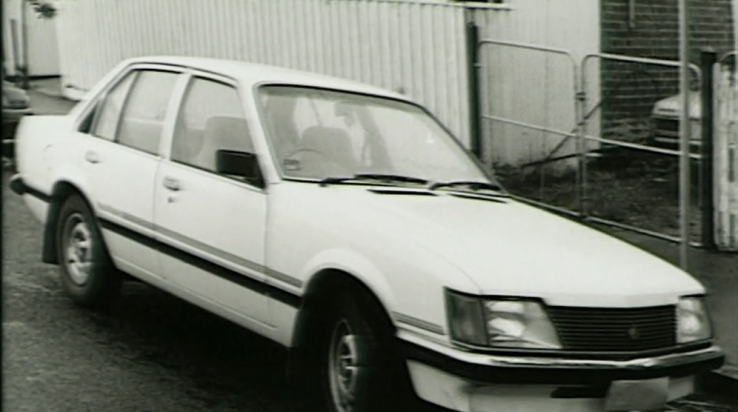

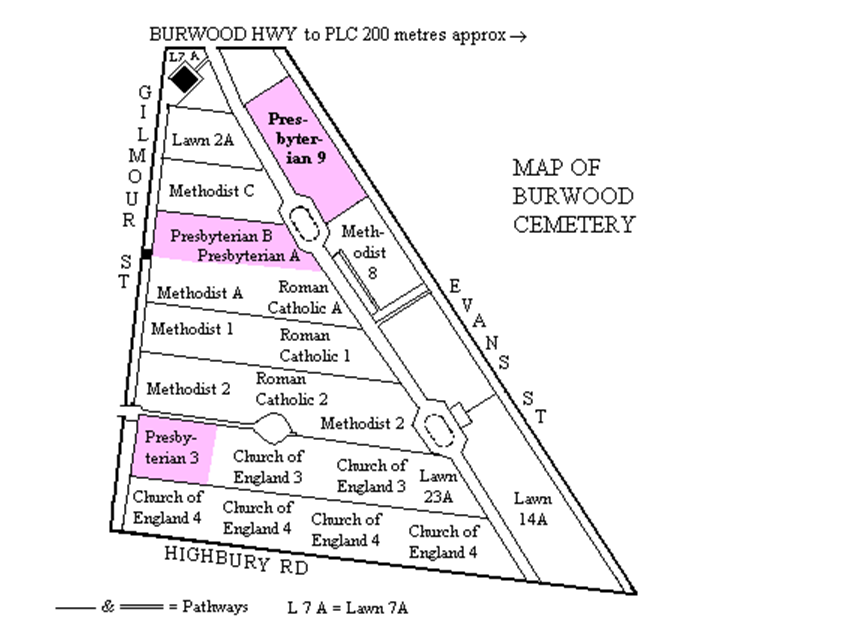

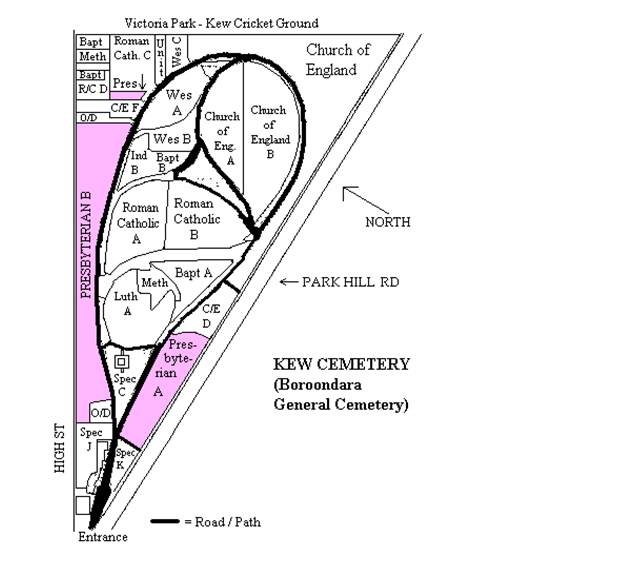
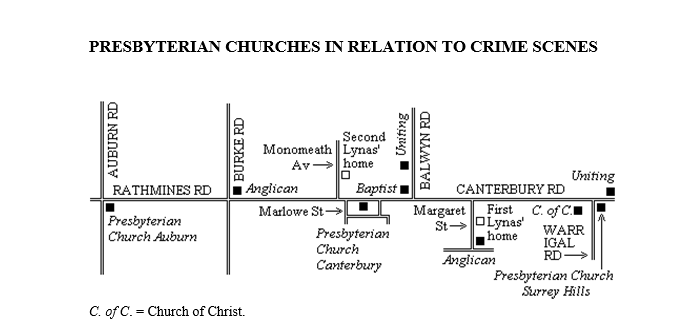


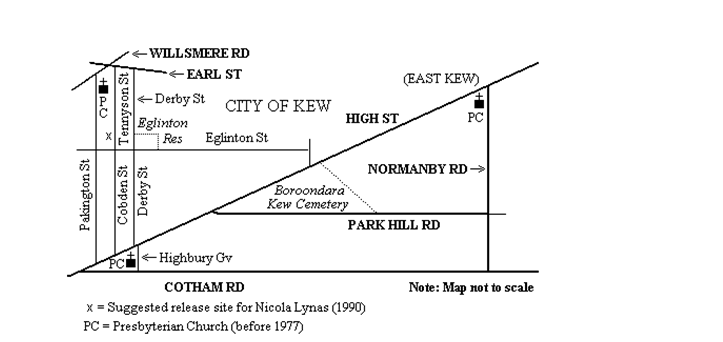
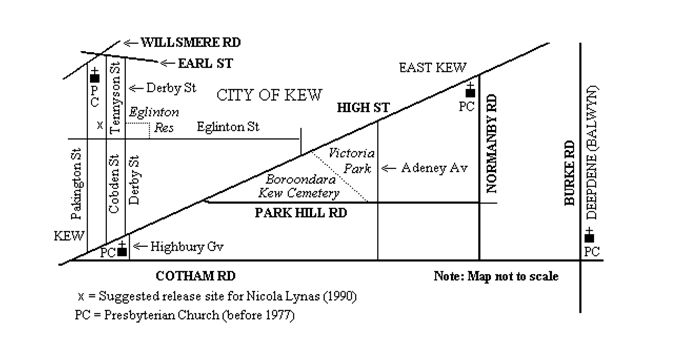


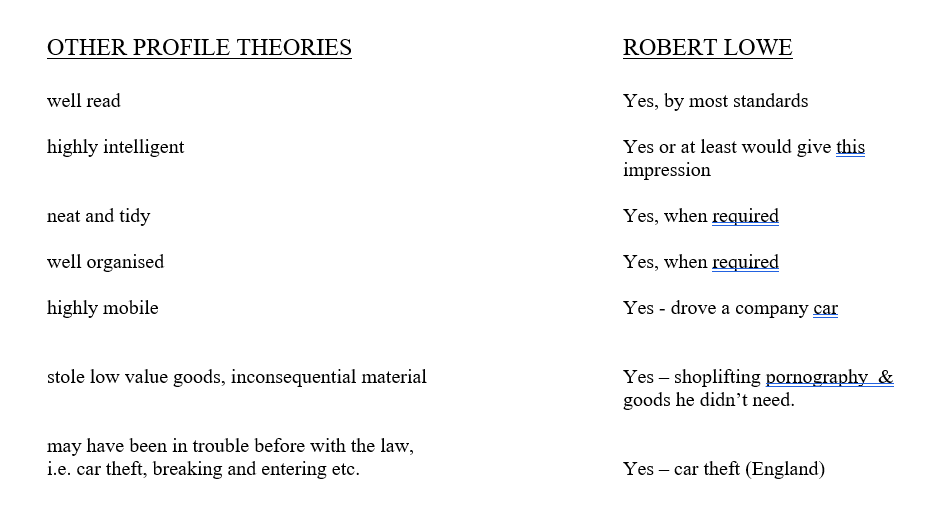


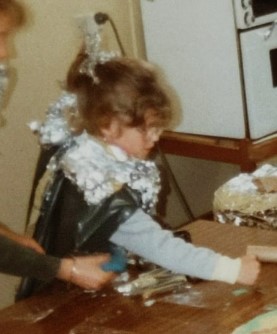
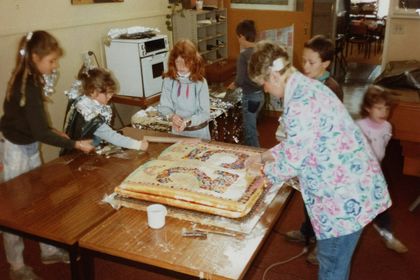


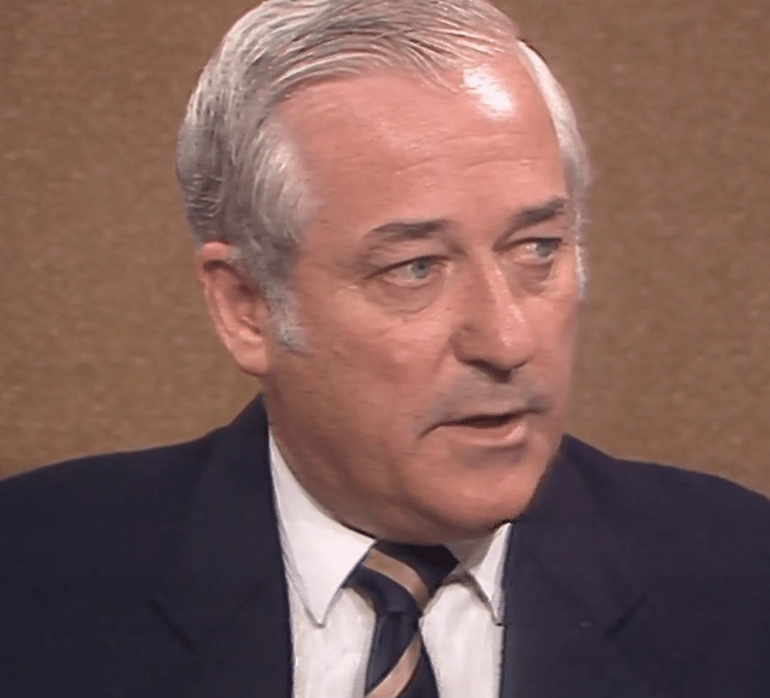


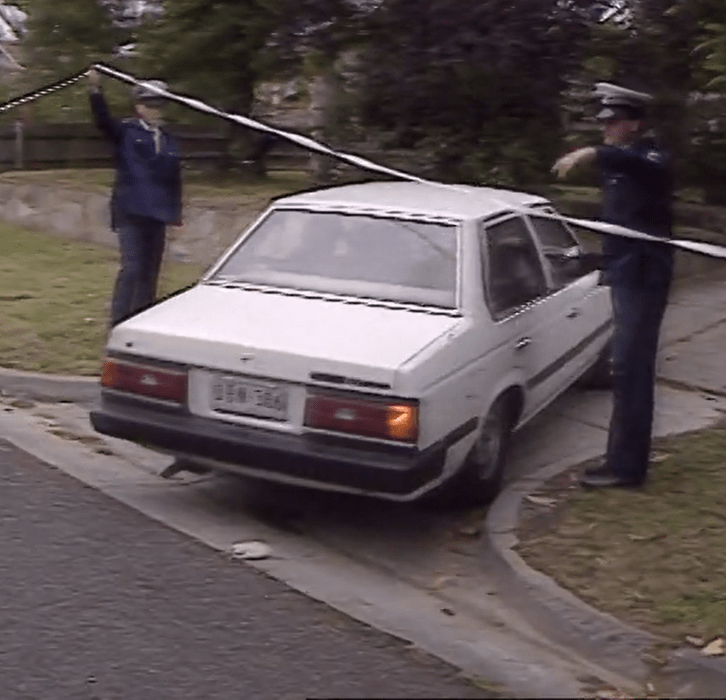


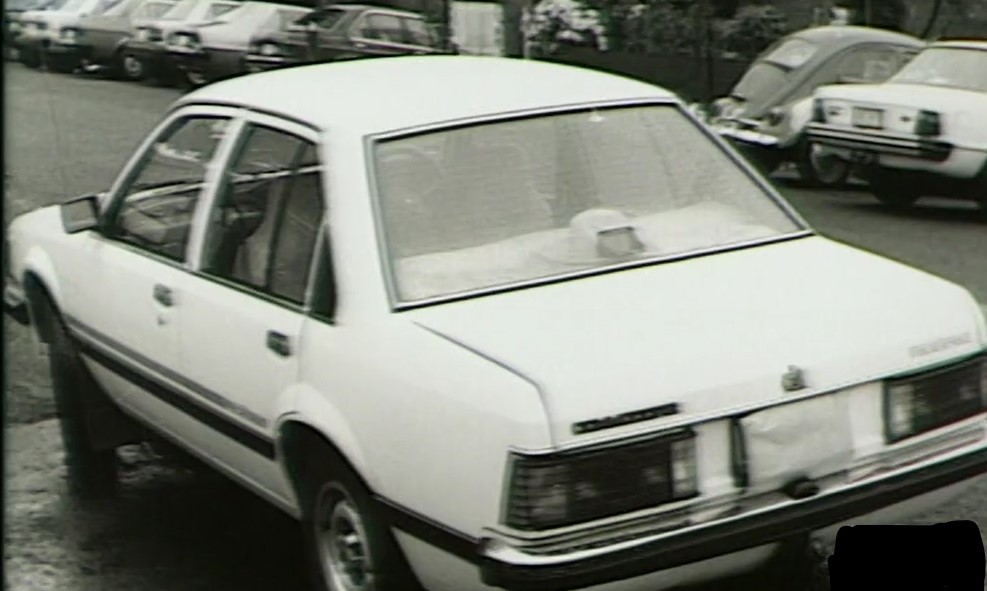

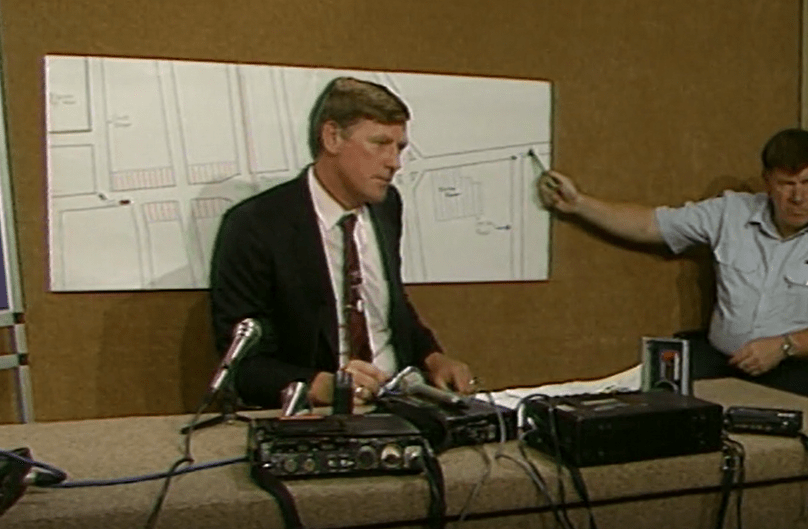

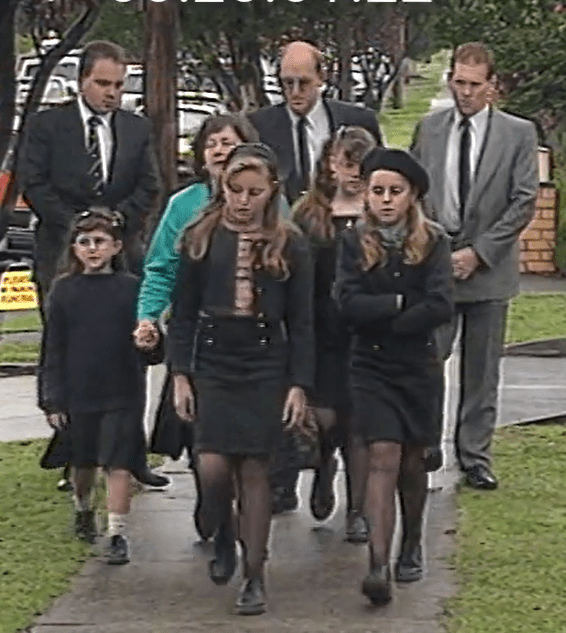
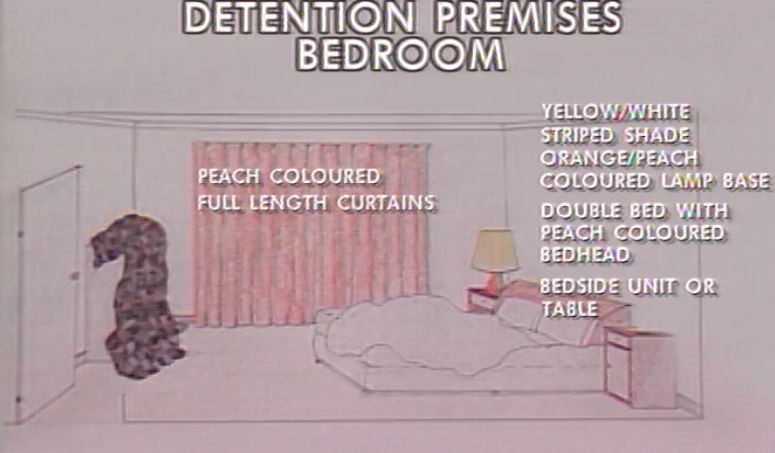
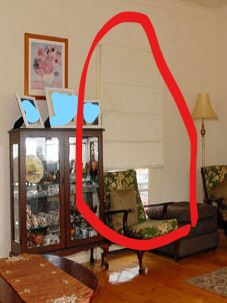
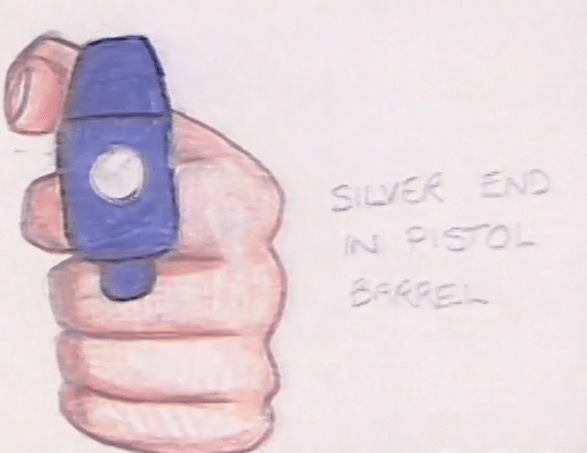


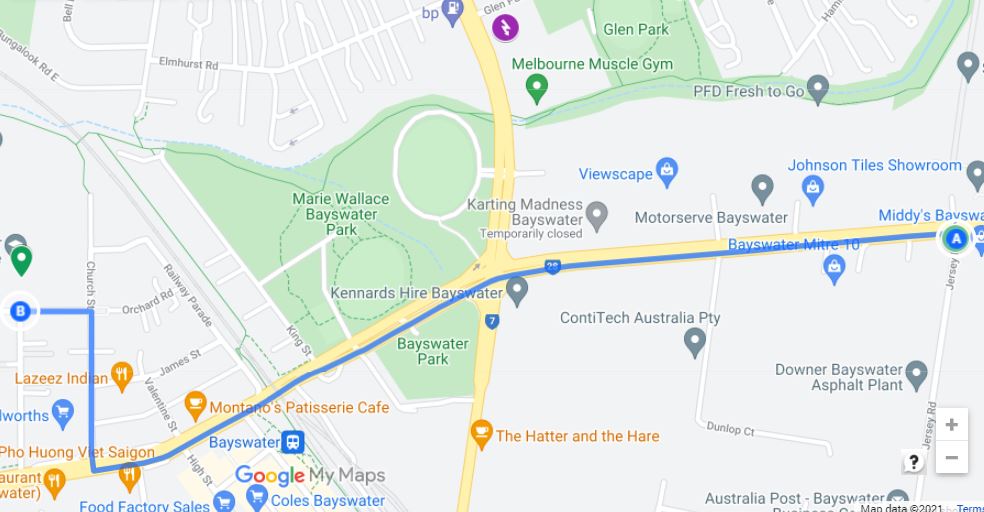


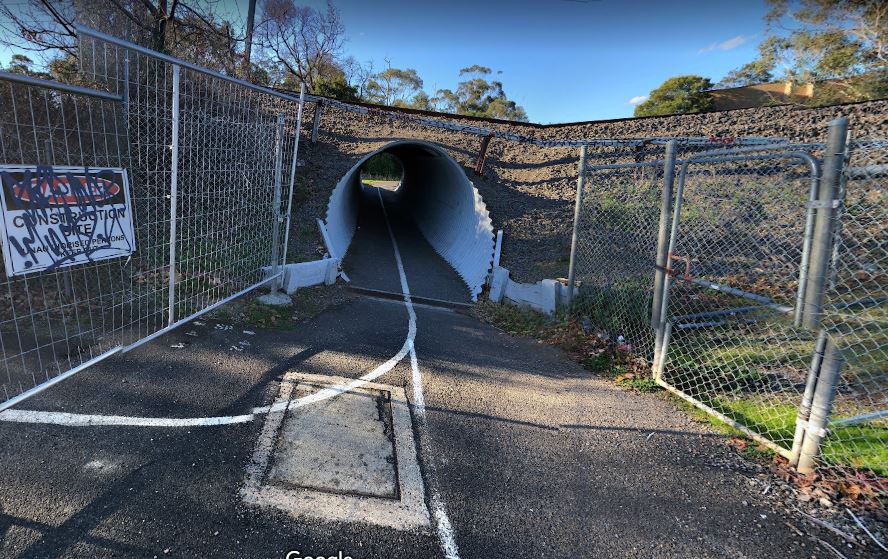


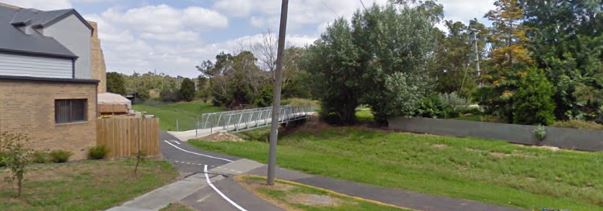
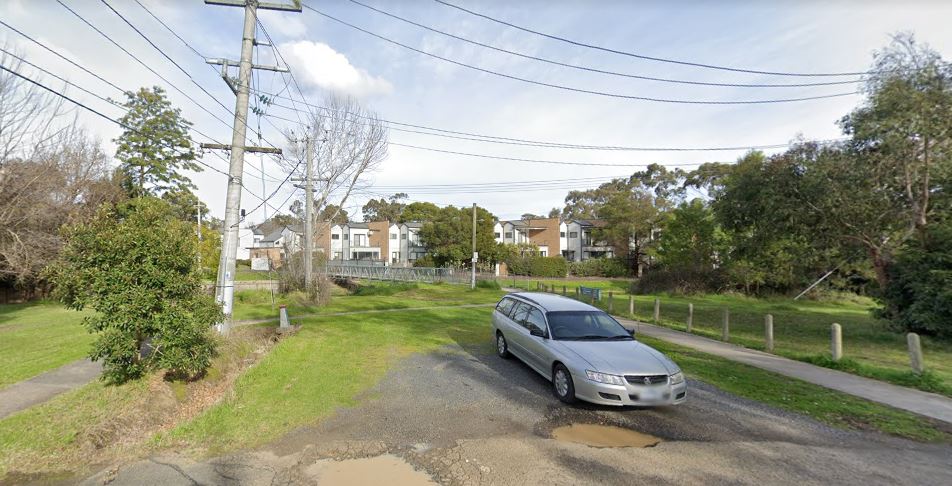

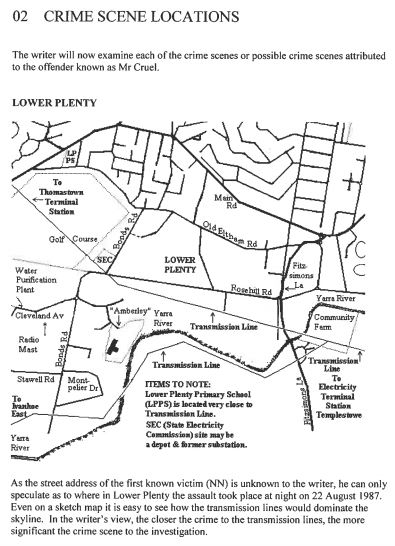

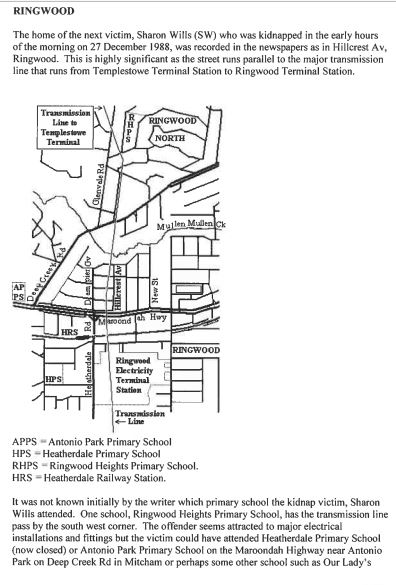



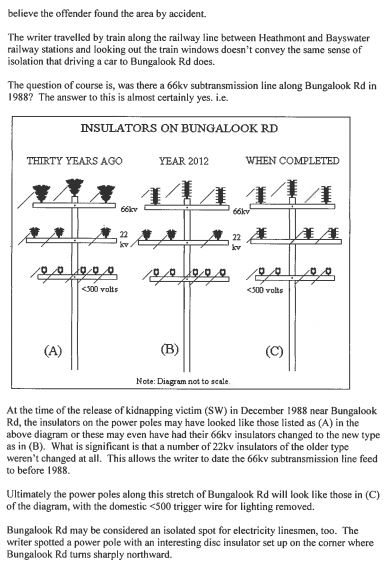




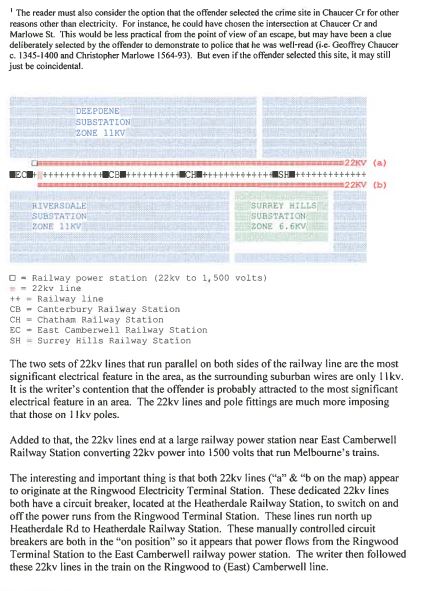

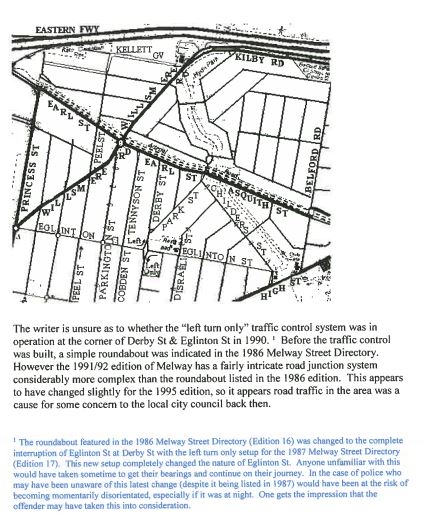


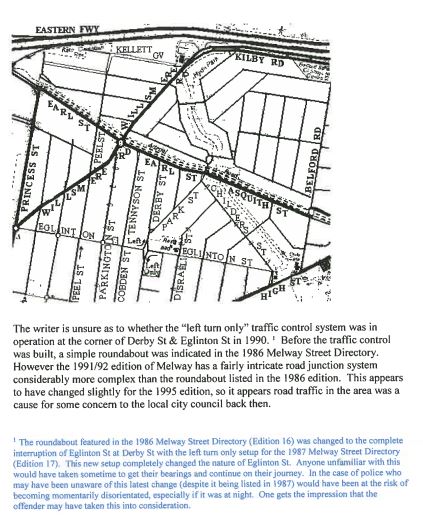


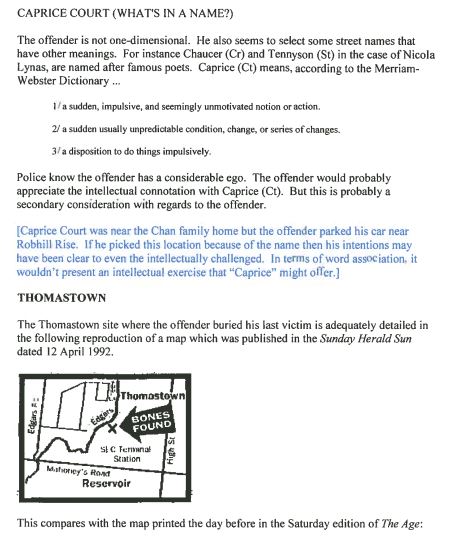









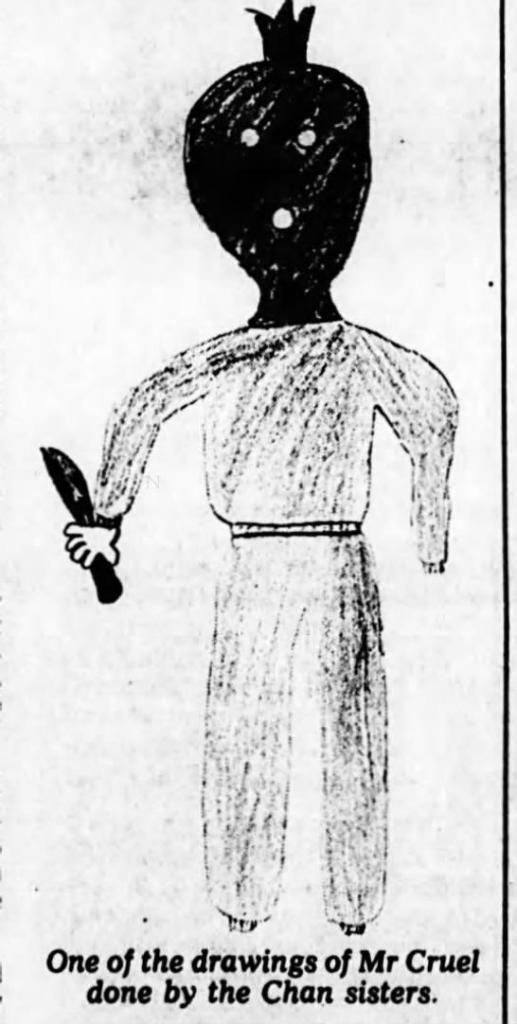
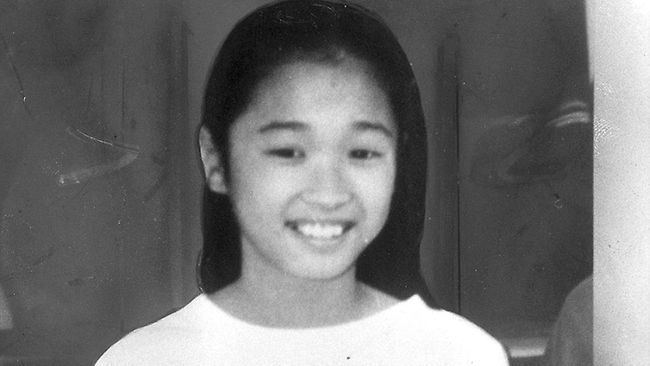

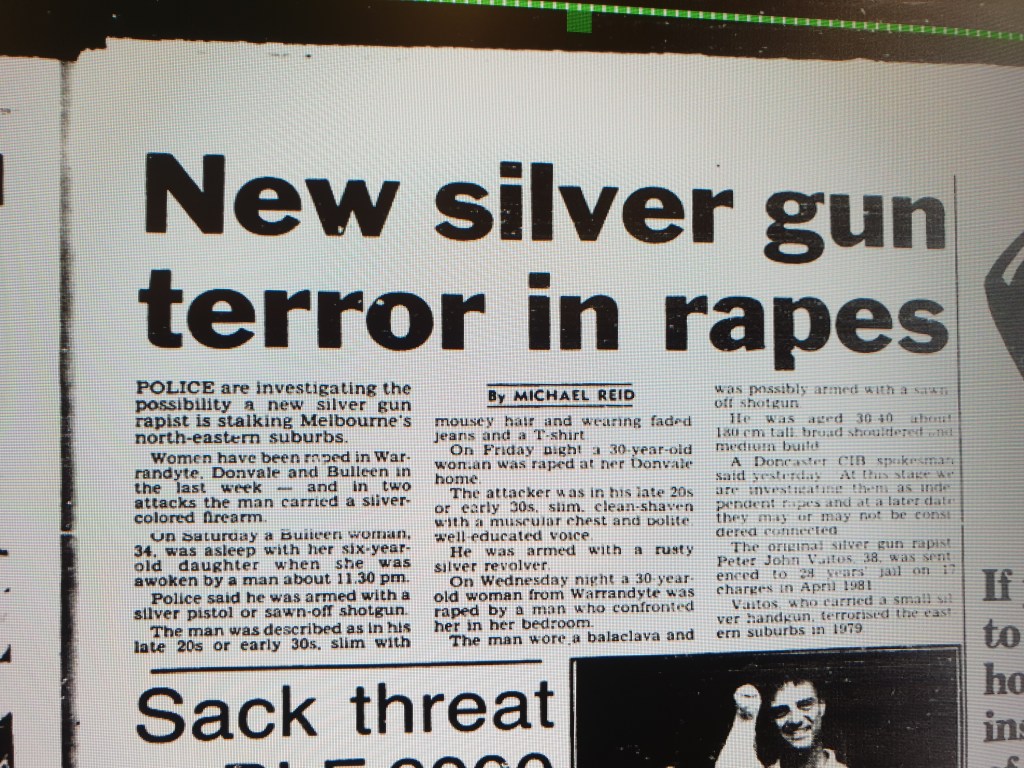


 Melbourne Marvels