In Karmein Chan 4, the fourth episode in the series on the story of the unsolved abduction and murder of Karmein Chan, Melbourne Marvels and Who is Mr Cruel? continue discussing the story of the Karmein Chan abduction.
In this episode we focus on the media telling of the story from the 17 and 18 April. Some of the main themes covered in this episode are:-.
– The expected offer of a reward to help capture the offender – A Sandringham woman fights off an intruder in a balaclava and carrying a knife who attempts to rape her in her home. – A media interview with Head of Forensic Medicine Dr David Wells (who treated previous abduction victims Sharon and Nicki) who appeals to the offender to release Karmein. – The reading of a blogpost telling the story of a source who claimed two men from a well-known criminal organisation had admitted killing Karmein Chan.
Please also read up on Jay’s website www.whoismrcruel.com for more information about this case.
NB: The use of copyright material in this podcast is for fair dealing for research purposes, for criticism and for reporting news. Melbourne Marvels is a non-profit blog/podcast that is researching the unsolved crimes of ‘Mr Cruel’.
Warning, this episode contains details about the sexual assault of children and the murder of a child. Please use discretion before listening.
If you like to leave a comment to Melbourne Marvels, please fill out the form below.
Production by Elocra
If you would like to make a contribution to help offsets the costs incurred as part of Melbourne Marvels’ research, please fill out the below form.
In Karmein Chan 3, the third episode in the series on the story of the unsolved abduction and murder of Karmein Chan, Melbourne Marvels and Who is Mr Cruel? continue discussing the ongoing fallout as hours tick by. It is now Tuesday 16 April, almost three days since Karmein was abducted, and the strain is starting to show as the number of hours she has been gone for surpasses that of how long previous Mr Cruel victim Nicola Lynas was taken for – 50 hours.
In this episode, Karmein Chan 3, we focus on the media telling of the story from the 16 and 17 April. Some of the main themes covered in this episode are:- – The relationship between the Chan family and high-ranking members of the Victoria Police Force. – The offer by the government of a reward, and swift rejection of it by the Commission of Victoria Police. – The heart-rending appeal by Phyllis Chan for the abductor to release her daughter.
For more information on Mr Cruel attacks please click on the following links.
Please also read up on Jay’s website www.whoismrcruel.com for more information about this case.
NB: The use of copyright material in this podcast is for fair dealing for research purposes, for criticism and for reporting news. Melbourne Marvels is a non-profit blog/podcast that is researching the unsolved crimes of ‘Mr Cruel’.
Warning, this episode contains details about the sexual assault of children and the murder of a child. Please use discretion before listening.
If you like to leave a comment to Melbourne Marvels, please fill out the form below.
Production by Elocra
If you would like to make a contribution to help offsets the costs incurred as part of Melbourne Marvels’ research, please fill out the below form.
Christian Bennett has written a manuscript analysing the Mr Cruel crimes. This manuscript was originally written in 2014 and has been updated several times. He has provided the manuscript to the Victoria Police. It has not been published previously on the internet. Clinton has given me permission to publish sections of it here. This chapter of the the manuscript deals with the connections between Presbyterians and the offender.
Melbourne Marvels would like to preface the inclusion of the below chapters from Bennett’s manuscript by stating our reasons for publishing these sections. Bennett proposes several theories as to the motive of the offender known as Mr Cruel. These are that perhaps he held a grudge against things Presbyterian, or against someone in this church or one of its offshoots. Melbourne Marvels finds these propositions to be highly unlikely, however, feels these sections are worthy of publication because of the excellent research carried out by Bennett. We also feel that, the associations between some of the Mr Cruel crimes and the Presbyterian Church could perhaps be better explained by a more simple proposition: perhaps the offender was in some way connected to one of the main branches of the Church. Furthermore, we feel that the information these sections provide on the convicted sexual offender and murderer Robert Arthur Selby Lowe are of great interest to the reader interested in the Mr Cruel case.
38 PRESBYTERIANS and THE OFFENDER
DID THE OFFENDER STAGE A VENDETTA AGAINST PRESBYTERIANS?
The concept that the offender, known as Mr Cruel, was staging some sort of vendetta against the Presbyterian Ladies College (PLC) in Burwood is hardly an original idea. After all, two of the College students were abducted from their homes, with one being assaulted and another murdered and possibly sexually assaulted as well.
The vendetta angle, possibly revenge for a perceived slight, would have been one of the first things detectives would investigate. PLC supplied a long list of people they had dealings with, and this would include those involved in the invariable dispute or complaint (legitimate or otherwise) that arise when running a school.
The idea that Mr Cruel had some sort of general loathing of things Presbyterian and was conducting some sort of campaign against them is harder to conceptualise. Anti-Semitism, as in hatred of Jewish people, is something most people are aware of, as in the Holocaust of the past, and present day attacks on synagogues and terrorist attacks on Jewish people.
A Google search will also produce a large quantity of hits for “anti-Catholic” and / or “anti-Protestant”.
By contrast, “anti-Presbyterianism” didn’t raise a hit. As a concept it would appear almost the stuff of macabre satire. Generally speaking, Presbyterians don’t excite much interest and until quite recently have been included in Australian census data under the cover-all title of “Other Protestant Denominations”. Catholics and Anglicans have always had their own sections.
However, given his behaviour towards two students from PLC, some sort of campaign against Presbyterians in general cannot be ruled out. Two is not a huge sequence, but the obvious planning that went into both kidnappings suggests something beyond a physical motive.
There is also an internet blog suggesting that Sharon Wills had a first cousin who attended PLC. At the moment the writer is unable to confirm the veracity of this piece of information but if true, this potentially increases the sequence to three.
So now we come to look at what circumstantial evidence there is that the offender may have had some connection with the Presbyterian Church – whether as a member, or as an embittered ex-member, or as someone who held a grudge against that particular Church and its members.
At first it would appear that there would be no physical circumstantial evidence of any sort of connection but there does seem to be some interesting coincidences.
PRESBYTERIAN GRAVEYARDS
The writer has already postulated that the offender may have used a number of cemeteries for his surveillance of crime scenes. However, when the writer looked at actual maps of these cemeteries, his attention was drawn to something that could be quite significant.
If the offender known as Mr Cruel was using Burwood Cemetery as a surveillance area for Presbyterian Ladies College students arriving and departing from the school, then he would most certainly have chosen the Burwood Hwy side. Of interest is that the Presbyterian graveyard section of Burwood Cemetery dominates the northern portion of this site.
This by itself would probably not be particularly significant. The cemetery is dominated by the four major denominations of pioneer settlement i.e. Church of England, Presbyterian, Methodist and Roman Catholic. The cemetery is now fully occupied with no new burial places. Not surprisingly it is a favourite among a small group of students of local history.
Templestowe Cemetery
Presbyterians occupy a small but significant corner of the Templestowe Cemetery. Roman Catholics and Church of England have their own significant areas, but in this case Methodists (and possibly it’s successor, the Uniting Church) are listed under Other Denominations (as well as “Other D” on the map). The Lutherans have a presence probably from the earliest days of settlement.
It has been suggested by the writer that the offender, Mr Cruel, possibly used the Templestowe Cemetery for surveillance of the Church Rd area south from the cemetery. This is the place where Karmein Chan had her home, on the corner of Church Rd and Serpells Rd. From the cemetery corner, near the intersection of Foote St and Church Rd he would have had an uninterrupted view south, straight up the hill to the place where she lived.
The Presbyterian graveyard or section borders the internal cemetery road called Hunter Av which runs parallel to Foote St, and at first, it would seem that this part of the cemetery would not be as significant as a place nearer Church Rd i.e. the Harle Lawn section.
However, from the point of view of monitoring traffic, at night, that turns in and out of Church Rd from the south of Foote St and the continuation in Reynolds Rd, the Presbyterian section offers the best concealment. Even at night the Harle Lawn area, would mean that potentially the offender may be spotted from four different angles. The Presbyterian Monumental area, not only provides grave stones and other hiding places, but the offender if he has his back to the cemetery side fence on the west side, can only been seen from one side. Given this, on a moonless or overcast night, the offender would have been virtually invisible.
From the Presbyterian graveyard section, the offender potentially could have monitored not only the traffic, but before the road works circa 1990, also the Chan family car if they used the Foote St – Church Rd intersection to turn south towards their home near the top of the hill.
By the time the writer came around to finding a map of the Kew cemetery – near where Nicola Lynas was released in 1990 – he had a “hinky” feeling that the nearest significant graveyard section that would be closest to the crime scene, would be the Presbyterian section.
The Presbyterian section of the Kew Cemetery – also known as the Boroondara General Cemetery – dominates the High St side, which is the street that’s closest to the Eglinton St and Tennyson St area where Nicola Lynas is reputed to have been released.
The Presbyterians occupy a greater area in the cemetery than their numbers in the past would suggest as a percentage of Australian Christians, but would reflect a very strong local presence. This will be discussed later, but it is no real surprise that on either side of the Kew Cemetery, along High St, within a kilometre, were once three Presbyterian churches.
Given the apparent planning that went into the offender’s crime with regard to Nicola Lynas, it is not totally unreasonable to suggest that he may have lived in the area at once stage, or at the very least had something to do with the suburb of Kew i.e. work, or even being involved socially.
The Kew Cemetery itself has the usual preponderance of Church of England (Anglican) sections but Wesleyan sections suggest a strong link with the Methodist church. Baptists and Lutherans are also represented.
Of interest is a large memorial to David Syme (1827-1908), the man who saved The Age newspaper from insolvency in the 1860s and made it into what was then a great liberal newspaper and institution. Syme was raised a Presbyterian but revolted against its Calvinistic teachings of the day. Syme and The Age championed manhood suffrage, land reform, free and secular education, and protectionism for industry.
Whether the man know as Mr Cruel supports these or similar views is an open question, but circumstantial evidence would suggest that the offender had an interest in newspapers that was greater than that of merely an average reader.
A cynic may suggest that it is merely coincidence where Presbyterians bury their dead when it comes to Mr Cruel but it is not totally unreasonable to suggest that there may be some connection, even if it is the offender laying another red-herring.
However, when it came to the selection of one of his victims – in the case of Nicola Lynas – and the siting of the crime, Presbyterian churches may have some connection. Committing a crime near a Presbyterian church is something that the offender has some control over in terms of topography.
The following example is given:
PRESBYTERIAN CHURCHES IN RELATION TO CRIME SCENES
The above map represents approximately the 4 kilometres covered by Rathmines Rd-Canterbury Rd between Auburn Rd in Hawthorn East to just past Warrigal Rd in Surrey Hills.
Not surprisingly all the major Protestant denominations are listed, including a Church of Christ (C. of C.). While all churches along Rathmines Rd-Canterbury Rd are listed, a few minor denominations close by have been omitted. These are the Armenian Apostolic, located in Norfolk Rd, between Margaret St and Warrigal Rd. and a Seventh Day Adventist Church, some distance from Rathmines Road in East Hawthorn.
A quick look at the map would suggest that if this pattern was replicated throughout Australia, then the Presbyterian Church would be the dominant Protestant denomination, if not the largest Christian community. But this is more than a mere statistical aberration, for it reflects the conservative nature of the area in that these individual churches didn’t join the Uniting Church in 1977 when two-thirds of the old Presbyterian Church of Australia did.
The map also shows the location of the first place of residence for the Lynas family (c. 1987-1990) and the second temporary location (1990) while they were planning their eventual return to England (in July 1990).
Just up from their first home in Margaret St is an Anglican church. Mr Brian Lynas was very much an establishment type person (MCC member who followed Melbourne Football Club). Whether they were actual church goers or not is unknown. He may have chosen PLC for his daughters’ education probably because it was moderately close by and for its good academic reputation.
The Lynas’ first home is just about halfway between the Presbyterian Church in Surrey Hills and the Presbyterian Church in Canterbury. The second Lynas home in Monomeath Av is quite close to the Presbyterian Church in Canterbury.
A point to note is that while all three Presbyterian churches are substantial buildings, the one in Canterbury is almost approaching cathedral size. The complex there almost speaks of a time when it was really important, possibly an administrative centre. There is even a tennis court.
It is this Presbyterian Church in Canterbury which may have found its way into the possible planning by the offender, known as Mr Cruel when he kidnapped Nicola Lynas near midnight on a Tuesday night on 3 July 1990.
It is on the public record that the offender known as Mr Cruel, kidnapped Nicola Lynas, stole the Lynas’ family car, drove it around for several minutes (possibly to disorientate his victim), dumped the car in Chaucer Cres, and then transferred his victim to another vehicle (possibly also stolen) and took her to a prepared hideout possibly in the northern suburbs.
That much is known. But it is also the contention of the writer that the offender may have been planning to walk his victim from her home in Monomeath Av to his getaway car in Chaucer Cres in the event that he couldn’t steal the Lynas’ family car.
As evidence of his mindset here, Mr Cruel allegedly ordered Nicola Lynas, while he was inside her home, to get her Presbyterian Ladies College blazer, tunic and runners. Note he didn’t appear to request that she get her leather school shoes.
It’s one thing to drive a kidnap victim around for several minutes, it’s quite another to walk some distance with them. A feature of Mr Cruel’s crimes is that he was prepared to walk 200-300 metres with his victims but it must be noted, in a direct route to where he most likely intended.
In Nicola Lynas’ case, this would have been south along Monomeath Av, then crossing Canterbury Rd, a short walk east to Marlowe St, then south (possibly on the east side which has no footpath) down Marlowe St, passing an unnamed alleyway, to Chaucer Cres to where his car was nearby. (Circumstantial evidence suggests that the offender included unnamed roads, paths and alleyways in his plans).
Not only is this plan the most logical way, it is by far the shortest route. And this is something the map doesn’t tell the reader. Most of the houses that he would have passed would have been on the sides of their property. Only some four or five would have directly faced his flight route. The houses across the road, even if an occupant could see him, could have looked for all the world at 11.30 pm on a cold winter’s night, like a nondescript couple making their way home from some function.
At first sight the map of the Presbyterian Church location in Canterbury doesn’t suggest anything much in the way of the planned crime.
One thing that police almost universally agree upon is that the crimes of Mr Cruel are extremely well-planned.
The writer would concur with this view. It is here that the possible planning of the offender may be deduced.
Had the offender felt the need to walk his victim, Nicola Lynas, from her home to his getaway car, what would he do if police sirens and lights suggested that the kidnapping had become possibly known to them?
One course of action that springs to mind is that if he was in Marlowe St, abandoning his victim, exiting down the unnamed alleyway, and heading for the grounds of the Presbyterian Church in Canterbury makes sense.
From recent aerial photographs it would appear that a number of properties may have annexed bits of the alleyway that runs off Marlowe St and between Canterbury Rd and Chaucer Cres. Trying to navigate these with the idea of eventually getting back to Chaucer Cres doesn’t seem practicable. However, climbing one or two fences to get to the grounds of the Presbyterian Church located nearby seems a much better option.
Back in 1990, in order to plan something like this, the offender would have to have known the area or at least visited here to grasp such things. It’s quite possible that he visited the Presbyterian Church and / or its grounds some time prior to this.
It’s interesting that a local council property map has the unnamed alleyway being officially a passable lane for some three properties distance, then it lists it as an easement for the rest of its journey. Some 50 to 100 years ago it was probably totally navigable due to such services as the toilet pan collection of the night cart, which would need to access the back of home properties. Changing technology would make such things obsolete.
Please note: The map of the Presbyterian Church Canterbury location area is based on today’s maps. While most of the homes in the area would be more or less as they were in 1990, the unit complex to the east of the Presbyterian Church is very modern looking and may not have been there in 1990.
The circumstantial evidence for Presbyterian graveyards and churches is starting to mount up. But there is one other thing to note.
Currently there is a Presbyterian church listed in Tennyson St, Burwood. It has previously been listed as some sort of local administrative centre and now is the official home of the Presbyterian Chinese Church of Burwood.
At a distance of some 2 km from PLC it doesn’t seem much of a clue, even though the church is located in the Burwood suburb.
However, the offender is known for laying false trails and red-herrings. This has been tantamount to taunting police investigators of his crimes.
The fact that this church is in Tennyson St, Burwood, is of some significance since the offender released Nicola Lynas in or near another Tennyson St (but this time in Kew).
Also of interest, but in a suburb much further away, there is another Presbyterian church located in Tennyson St, this time in Elwood. The arrangement of this Tennyson St, Byron St disrupts, closely matches the disruption to Chaucer Cres in Canterbury, where the offender had placed his getaway vehicle.
In 1990 there were some 25 Tennyson streets, avenues, courts etc in the Melbourne metro area. A hunt through the Melway Street Directory only produces two churches for all these locations, and both are Presbyterian. In Moonee Ponds there is a Presbyterian church in the street next to Tennyson St, located in McPherson St.
FORMER PRESBYTERIAN CHURCHES
As previously mentioned, two former Presbyterian churches, located a short distance either side of the Kew Cemetery, joined the Uniting Church in 1977.
In 1988, the offender released Sharon Wills near Church St, in Bayswater. Across the Mountain Hwy, in Bayswater, just down from Church St, is a Uniting Church located in Elm St.
This looked as if it just might fit the pattern, but a source within the Presbyterian Church of Australia has pointed out that this particular church had never been part of the previous Presbyterian Church prior to two-thirds of the membership voting to join the Uniting Church in 1977.
This does not rule out a connection but unless there is other evidence to support this, as a clue it would have limited value.
KEW PRESBYTERIAN CHURCHES JOIN THE UNITING CHURCH
While on the subject of Presbyterian churches joining the Uniting Church in 1977, it is worth noting what took place in the Kew area, near where the offender released kidnap victim, Nicola Lynas, in 1990.
According to past editions of the Melway Street Directory, before 1977, there were three Presbyterian churches in the City of Kew. All of these churches voted to join the Uniting Church in the 1977 merger of Methodists, Congregationalists and Presbyterians.
This left the City of Kew without a Presbyterian church and to this day this arrangement has been in place. Chances are that approximately a third of each Presbyterian congregation would have opposed their individual church moving to the Uniting Church, then over half a congregation worth of members would have been disenfranchised.
How these members would take it would range from great bitterness to resignation to the inevitable. Rusted on Presbyterians of Kew could, of course, travel to a suburb relatively nearby and continue to attend one of the churches that made up the PCA from 1977 onwards.
A person driven to seek revenge for this new arrangement would, on the surface, be more likely to take out their frustration on the Uniting Church, but this notion doesn’t discount the possibility of them being more angry with those Presbyterians who voted for the merger.
The map of Kew detailing the three previous Presbyterian churches is interesting in that the previous Presbyterian church at Highbury Grove (now a Uniting Church) is almost in a straight line with Derby St that leads to Eglinton Reserve in Eglinton Street, Kew. This is where some allege that Mr Cruel parked his vehicle and then walked Nicola Lynas round to Tennyson St, then released her there (“x” on the map).
NOT ONLY KEW PRESBYTERIANS BUT SUBURBS NEARBY
If Presbyterians in the City of Kew felt aggrieved that all three of their Presbyterian churches voted to join the Uniting Church in 1977, then their countenances would not have been improved by the next nearest Presbyterian church, located in Deepdene (Balwyn) also voted to join.
This church was formerly the Frank Paton Memorial Presbyterian Church on 958 Burke Rd, Deepdene (Balwyn). It was located next to the Deepdene Primary School.
Before 1977, a Presbyterian churchgoer living on the corner of Adeney Av and Cotham Rd, would have had, within a little over a kilometre, five Presbyterian churches to choose from. The four on the map and another to the south in Auburn.
In fact, from this location, one could walk in more or less a straight line, north or south, east or west, to a Presbyterian church without necessarily seeing another denomination’s church along the way. If one was to disingenuously use the area as a typical snapshot representing Australian Christianity in general, then Presbyterianism would be the dominant force.
Of course, this is not the case, but a case can be made for Kew and surrounding area being once a Presbyterian stronghold. The number of churches and graveyard sections might appear to be a rather crude indicator, but probably is a reasonable reflection on the hold the old Presbyterian church once had on the area.
After 1977, all four Presbyterian churches on the map became members of the Uniting Church.
A staunch Presbyterian who say lived near the corner of Adeney Av and Park Hill Rd, who once had four churches to choose from within walking distance, would suddenly find that at the stroke of a pen, find their worship options severely restricted.
CANTERBURY STAYED PRESBYTERIAN; KEW WENT UNITING CHURCH
By now the reader will have realised that both Canterbury and Kew were once significantly represented by the Presbyterian Church. Some might even say, over represented.
Here are two comparable established areas, in terms of wealth and desirability. These two areas are also moderately close to each other. Yet, one area’s Presbyterian churches voted to join the Uniting Church, while the other voted to stay Presbyterian.
Why this happened is hard to explain. In fact, it may get down to the personalities of the leading figures of each individual church at the time (1977). This would include Presbyterian ministers along with elders of the church etc. It’s quite possible that even the individual congregations or the State governing bodies of the present day Uniting Church or Presbyterian Church of Australia would not know the answer to this.
SIGNIFICANCE OF THE LOCATION OF CHURCHES IN TWO CRIMES
The location of a Uniting church, at Highbury Gv in Kew, near where the offender released Nicola Lynas (1990), in itself, would not be particularly significant if it wasn’t for the fact that there was a Uniting church, not far from Church St, Bayswater, where the offender released Sharon Wills (1988), just behind Bayswater High School.
Added to this, is that both Uniting churches are more or less the same distance from the release locations of two of the offender’s kidnap victims.
But that’s not the only similarities. Both Uniting churches are located due south of the crime scenes. And with both churches, any offender would have cross a mjaor road to get to the minor road that leads to the crime scene. Both these major roads travel in a North-East direction (although High St, Kew, is a truer example of this).
CONCLUSION – WHAT TO MAKE OF ALL THIS?
Despite all the above material, the writer still feels that the offender is more likely to have some sort of grudge – real or imaginary – against the Presbyterian Ladies College rather than Presbyterians in general.
He did after all kidnap two PLC students and there is no record of any other kidnapping of Presbyterians. Certainly no Presbyterian ministers or elders!
What cannot be ruled out is that this apparent grudge against PLC could manifest itself in other ways i.e. Presbyterian graveyards facing crime scenes; etc . The circumstantial evidence for the offender leaving false clues and crime scenes that may have hidden meanings is quite strong.
It would be up to the police to determine whether any of this matches existing evidence which is in their possession.
ADDITIONAL NOTE – THE PLC CHURCH AT PAKINGTON RD, KEW
When the writer was researching this section in 2015, he completely missed the former PLC Church at Pakington Rd, Kew, as it’s now listed as the North Kew Kindergarten (Inc.), and is located at 152 Pakington St, Kew.
Allowance has now been made for this correction both in maps and in the text of this section.
Obviously when the Uniting Church acquired the former PLC Church at Pakington Rd, Kew, it was realised that the area was well serviced by Uniting Churches, so turning it into a kindergarten made sense without unduly inconveniencing its members as there was another Uniting Church nearby in Highbury Gv.
Of real interest is that the former Pakington St Presbyterian Church was listed more or less correctly on the pre-1977 Melway maps but for a time incorrectly sited in the index (locality coordinates listed near the “P” in Pakington and not where the actual church was located.)
This sort of detail is almost typical of the offenders apparent type of planning. For instance, the Presbyterian Church listed in the Melway at the time of the Karmein Chan kidnapping, in 1991, which is the closest church to the main area of the kidnapping (in Serpells Rd and Church Rd), is not listed in its correct position on the Melway map.
The reason for this is that the congregation met inside the Templestowe Park Primary School and it would have been considered inappropriate to place the church symbol inside the school grounds.
That the offender chose an area where the closest Presbyterian / Former Presbyterian Church is not located exactly on a Melway map or in the index, could probably be put down to coincidence, were it not for the fact that numerous examples of the offender choosing crime sites / potential crime sites near where changes or even mistakes had been listed on Melbourne street directories.
A prime example was that the home number of kidnap victim, Karmein Chan, was incorrectly listed in several previous Melway Street Directory editions some years before 1991.
NOTE ON ACCURACY Every effort has been made to make this submission as accurate as possible. For the location of previous Presbyterian churches the writer has relied on the internet and historical copies of the Melway Street Directory and sources within the Presbyterian church and others for information. Any assistance with the correction of facts is always welcome and these will be incorporated into the document as they come to hand.
39 THE POLICE PROFILES AND THEPRESBYTERIAN CHURCH
The reader may feel that the writer has laboured long and hard over attempting to connect cemeteries and Presbyterian churches with the activities of the offender. Of course, the evidence is purely circumstantial.
One reason for investigating this angle is that the police profiles do mention religion.
The FBI profile of the offender, in point 6 and in part reads:
… He may show a short-term interest in religion.
Previously the writer felt this suggestion probably said more about the American profilers than the offender. By contrast Victorian police tended to downplay any such suggestions and the writer cannot find any reference to religion in their published profiles.
But given the number of times a Church road or Street appears near crimes scenes, and given the evidence of churches and cemeteries etc., the FBI may have scored a “hit” here.
If all this sounds somewhat fanciful, the reader should consider this proposition. Does there exist someone who is a renegade Presbyterian who fits much of the criteria of the police profiles?
The following might surprise the reader, but one such criminal comes to mind!
ROBERT LOWE’S CONNECTION WITH THE PRESBYTERIAN CHURCH
He is Robert Arthur Selby Lowe, a former elder in the Knox Presbyterian Church, located in Dandelion Drive, Rowville, and convicted murderer of 6 year old Sheree Beasley.
The list of profile matches is quite staggering:
[PLEASE NOTE: The above was written before the original FBI profile and letter dated 24 April 1991, accompanying it were released in April 2016, persumably by Victorian Police and then presented on the Fairfax website of The Age newspaper. The above FBI profile was generally listed as such in newspapers and was reproduced in books such as Rats – Crooks Who Got Away With It, by John Silvester and Andrew Rule, published in 2006.
The following profile points listed under Profile: Spectrum contain many points listed in the original FBI profile letter but were selectively published in newspapers presumably with the approval of Victoria Police.
The section containing “Other Profile Theories” is considered to be a mixture of police profiles and theories put forward by leading experts such as forensic psychologists, etc.
The key point here is not where all these profile points originate from but the fact that these were given “currency” in newspapers, books and other media.]
Incredibly, Robert Lowe, ticks almost all the boxes on the FBI profile and the Spectrum profile on Mr Cruel. He even had an obsession about the Karmein Chan kidnapping and collected newspaper clippings on her.
He also ticks the boxes for other information released on Mr Cruel i.e.
Notable differences with profiles and known behaviour include a certain lack of discipline by Lowe while under suspicion i.e. was reported to have masturbated in a café and also in an alleyway when under police surveillance. Lowe’s surveillance of victims allowed him to be seen and remembered by family members of potential victims and targeted victims. Also Lowe’s alibis were unconvincing and alerted police to his possible involvement in the Sheree Beasley abduction / murder. Lowe’s modus operandi was fairly unsophisticated when compared to that of Mr Cruel. As far as known, Lowe did not break into homes at night.
And there was a critical difference between Lowe and Mr Cruel as to how they acted towards their victims. Mr Cruel apparently sought some sort of personal relationship with those he abducted; the first two cases indicate attempting to engage his victims in conversation, and feeding and washing them. Lowe’s actions toward Sheree Beasley, suggest a much colder, baser relationship without any regard for anything much above power and lust.
The Knox Presbyterian Church was mortified when they discovered the extent of Robert Lowe’s past behaviour and his possible involvement in the Sheree Beasley abduction. With admirable speed, the Presbyterian Church excommunicated Lowe, some five days before he was sacked from his workplace as a sales representative.
Mr Cruel was some sort of hero to Robert Lowe, but it is highly unlikely that Lowe was Mr Cruel. The real question is, if Mr Cruel had some connection with the Presbyterian Church, would Robert Lowe have known him or had some idea as to the identity of Mr Cruel?
Robert Lowe was notable for a long, protracted legal battle in an unsuccessful attempt to prevent his DNA being taken for a match with a much earlier kidnap and rape and murder. This despite there being no connection, but it does suggest that in the future there may be other DNA matches especially as future scientific advances are made.
Robert Lowe’s crimes probably have little to do with his being a Presbyterian. Of course, being an elder in the Presbyterian Church would have given him a veneer of respectability and Lowe was almost certainly capable of using this to advantage. But he was a true Jekyll and Hyde character. His inability to control his more baser instincts led to his undoing on more than one occasion, with a long list of convictions in three countries (England, New Zealand & Australia). He also had an over inflated view of his own abilities and underestimated those in authority.
While the average law-abiding Presbyterian would see someone like Lowe as a modern day Judas Iscariot or worse, being a member of the Presbyterian Church may not have provided him with any motives for his crimes. He was also once a Baptist member.
Sadly, the individual church that Lowe belonged to, didn’t long survive his being a member. His association with the Knox Presbyterian Church at Rowville proved extremely traumatic. According to the Herald Sun of Saturday, 10 December 1994, the residing minister, Ross Brightwell, who once considered himself a friend of Lowe’s, for a time left the church and moved away to the country. His faith was severely shaken.
Membership of the Knox Presbyterian Church dwindled, and few were willing to replace those who left. It was as if the Devil itself had cursed the very ground on which the church at Rowville stood.
ADDITIONAL NOTE ON ROBERT LOWE
As stated, Robert Lowe was unlikely to be Mr. Cruel. He’s slightly taller than the height figures given for the offender. However, a small number of factors do give pause for thought.
Robert Lowe lived at Mannering Drive, Glen Waverley, of which the southern end enters Watsons Rd next to a high voltage transmission line. The writer has theorised that Mr Cruel has some intimate connection with electricity.
He was once an active member of the Baptist Church at High Street, Syndal. Of interest, is that there was Syndal Primary School (now closed) directly diagonally opposite the Baptist Church in High Street, Syndal. Being an active member of this church could mean making visits during school hours, something the average member wouldn’t have need or inclination to do.
The (former) Knox Presbyterian Church in Dandelion Drive, Rowville, doesn’t offer anything remotely like a clue where it’s situated. However, Dandelion Drive could be said to have continued on into Armstrong Drive for those not paying close attention to the road system. This sort of detail would be consistent with the offender, Mr Cruel, who seemed to prefer interrupted roads. Whether Armstrong Drive existed at the time Lowe was an elder with the Knox Presbyterian Church is not known at this point by the writer.
And in fairness to Presbyterians, while Lowe was born into the Presbyterian Church, after coming to Australia from New Zealand he became a member of the Baptist Church. He was a member of the Baptist Church at Brighton (in Melbourne), was married in the Camberwell Baptist Church (near the Camberwell Junction), taught Sunday School at a Baptist Church in Chelsea, before being an active member of a Baptist Church at Syndal. He was virtually expelled from this when his activities, such as placing a banana down his swimming togs, became publicly known when he was named in The Sun newspaper.
With regard to church membership, he was most likely devious and sly. When Lowe’s family joined the Knox Presbyterian Church, his wife was able to play the piano at services (always a welcome gift in a church). This was Robert Lowe’s entrée into the church social set there and churches love family involvement. Whereas a single man might attract more scrutiny, when Pastor Ross Brightwell asked whether the congregation had any objections to Robert Lowe becoming an elder in the church, if anyone did they kept it to themselves. It’s a lot harder to wound the feelings of an entire family, than one individual. Anyway, chances are that Robert Lowe, by charm and guile, was above suspicion.
Another thing to consider is that Lowe doesn’t seem to have chosen a church that was particularly close to where he lived. The Syndal Baptist Church was a few kilometres away from his home in Mannering Drive, Glen Waverley. As was his next church, the Knox Presbyterian Church in Rowville. It’s as if Lowe was in the habit of compartmentalising his activities in the event that he was unmasked.
Lowe was a pathological liar. His own psychotherapist, the late Margaret Hobbs, described Lowe as a habitual liar, a person who lied even when it wasn’t necessary or in his interests. One of the many disturbing elements connected to Robert Lowe, is his attitude to Christianity. He seemed to view the church like a bank. A churchgoer would build up a store of good-will, commit a crime, repent, be forgiven, ultimately accept Jesus as his saviour, and upon death enter the kingdom of Heaven … probably a long way in front of a heathen who led a good and law-abiding life. The writer has met many people who think like this including an overseas pastor that described in loving detail, their own sinful past (young women, alcohol, gambling, greed, more young women etc) but renounced all this to follow in the footsteps of Jesus. The writer is not sure whether a sceptical secular society would buy this; maybe from a pastor but certainly not from someone like Lowe.
NOTE ON THE NATURE OF INHERENT; ACQUIRED & AFFECTED PREJUDICE
In the event that Mr Cruel had some sort of animosity towards Presbyterians in general, it is most likely to be “acquired” as opposed to be “inherent” or “affected”.
It is probably safe to say that whatever prejudices Mr Cruel may of had with regard to Presbyterians, these are most likely to have been acquired.
40 OTHER CONTROVERSIES INVOLVING THEPRESBYTERIAN CHURCH
One of the endearing images of Lieutenant Columbo, is a scene in which the TV detective reads a history book on the military college where a murder has taken place. It was not enough to look for clues, Columbo wanted to know the history of the place, the values they attempt to inculcate to students, any past issues or controversies.
With regard to such matters as to a possible motive or event that motivated Mr Cruel regarding the Presbyterian Church would be in the realm of speculative theory but it is worth noting a few events that may or may not have had some bearing on his mindset.
First a little background history:
Before the 1960s, most Protestant churches were fairly conservative, and while the Church of England (Anglican) was the most “establishment” church, being a Methodists, Congregationalists or Presbyterians would not have been far behind.
Methodists tended to be the most conservative of this latter group of three, and there were still those among its membership who were opposed to dancing and playing any sort of card games (a joke at the time, occasionally repeated by broadcaster Phillip Adams, suggested Methodists were opposed to premarital sex because it led to dancing).
But society in the 1960s was rapidly changing, and the various churches adapted in varying degrees to this. Old fundamentalist views on a number of activities were quietly forgotten or had their bans lifted.
During the 1960s, the Presbyterian Church was the more progressive. It’s moderator from 1965-1966, the Rev. Alf Dickie, was a leading figure in the Peace Movement, thought of as a Communist front by right-wing organisations such as The League of Rights and influential commentator Mr Bob Santamaria (1915-1998).
All three churches had their radicals, for instance Rev. Dr Harold Wood, principal of the Methodist Ladies College (from 1939-1966), was publicly opposed to the White Australia Policy and the Vietnam War. He was under surveillance by ASIO for many years, as was the Rev. Alf Dickie of the Presbyterian Church.
In the early 1970s the Methodists, Presbyterians, and Congregationalists held discussion on an eventual merger of all three Church organisations.
In 1977 Methodists voted at synod level to join the new Uniting Church and almost all did. The much smaller organisation, the Congregationalists, didn’t quite have the same near unanimous result but some 220 of its churches voted to join, with 40 voting to establish the Congregational Union. But the Presbyterians voted on a local level with individual churches voting either for or against joining the Uniting Church. Some two-thirds voted for this merger with a third voting to stay “Continuing Presbyterians” as they were colloquially known.
Unfortunately there was a great deal of bitterness associated within the Uniting Church and without for the way the Presbyterians handled their part of the 1977 merger (or not as in the case of a third of its churches).
Even in the Uniting Church there was friction over seemingly trivial issues to the point where the Methodist way of conducting holy communion was alternated with the old Presbyterian way the next time holy communion was celebrated (with individual small glasses of grape juice being served as opposed to members taking a sip from the church chalice.). The writer can vouch for the fact one Minister taking a tape measure to his new church and complaining bitterly that the seating dimensions in relation to the alter and central nave were not in accordance with approved and correct apostolic architecture.
This may sound amusing but there were to be much more bitter disputes between the Uniting Church and the reconstituted Presbyterian Church (of the Continuing Presbyterians)
Never was this more so than with a property commission set up to deal with ownership of Scotch College and the Presbyterian Ladies College (PLC). The commission ruled that both schools were to be awarded to the (continuing) Presbyterian Church. This was challenged by Scotch and PLC, with strong backing from staff and old collegians associations. Supreme Court litigation followed, which in 1981 reaffirmed the original decision by the property commission.
The fallout for both schools was different. Scotch, which traditionally had been a conservative college, quickly made the transition under a new principal, Dr Gordon Donaldson, appointed in 1983, to reaffirm itself as one of Australia’s leading schools.
PLC’s future was to be more traumatic. With the college and its school council firmly under the control of the Presbyterian Church, popular principal Joan Montgomery was virtually sacked (a contract extension was not offered) in 1985. The college head had been a female since 1937 but the clock was turned back with the appointment of Rev William MacKay. Whereas Miss Montgomery could be described as a progressive liberal, the Rev MacKay was deeply conservative as evidenced by his occasional letters to The Age railing against the decline of standards in society etc.
The change at the top was to be reflected in the staff appointments as well. It was no place for radical feminists, as all ten department heads were eventually to be held by men. The head of the junior school, Mrs June Stratford was also replaced, but the new head was female. Even terms like “Ms” were replaced by “Miss” and “Mrs”.
Discontent bubbled over into the press with a very public spat between liberal and conservative groups battling for control of the college council. One council member was removed by the church commission and his position taken by the moderator of the Presbyterian Church in 1992.
Issues such as falling enrolement, perceived declining education standards, infrastructure needing replacement or improvement, and half the staff being replaced within the first five years of Rev Mackay’s tenure, etc were cited as issues of concern. As were parent concerns which included the following:
The parent said the school had adopted “a siege mentality” after the murder last year of one of its students, Karmein Chan. Another parent was concerned by the decline in enrolments and the growing proportion of girls from Asia who spoke poor English in the senior school. The Age – Friday, 31 July 1992, Church faces split in the tug-of-war over Presbyterian college, by Geoff Maslen.
There is no doubt that for a time the “college brand” suffered, but not all this can be sheeted home to Principal Rev William Mackay and the Presbyterian Church. The severe economic recession during this time and the unfortunate kidnapping of two students from their homes, who happened to attend the College, are events that the administration almost certainly had no control over.
Also Rev William Mackay, the Principal, was far more tolerant in matters of race than some of the parents were. It must be remembered that prior to joining the College, he had been a teacher at a boys’ school in Peru. Later after he retired he took to teaching English to foreigners, some of whom were Asian. The one thing he shared with former principal, Miss Joan Montgomery, was a belief in racial equality and an abhorrence of racism.
PLC eventually recovered; it simply had a history and tradition of academic success that would ensure adversity would be overcome. After 1997 when Rev William Mackay retired, a slightly more progressive female Principal was appointed, setting the future tone and mollifying the feminist element. PLC prospered under the leadership of Mrs Elizabeth Ward (1998-2006). It is still considered one of Australia’s top girls’ schools today.
The dispute between Presbyterians and the Uniting Church and between Presbyterians within the Presbyterian Ladies College is listed here as examples of bitterness that can linger for years.
Whether any of this provided Mr Cruel with some sort of perverse justification for his actions is unknown but cannot be ruled out.
THE MERGER BETWEEN THE METHODISTS & PRESBYTERIANS ETC
The merger between the Methodist Church, most of the Congregationalists and two-thirds of the Presbyterians, created a new organisation, the Uniting Church, that was roughly double the size of the old Methodist Church or Presbyterian Church.
The sheer size of the Uniting Church guaranteed its future. Over the last 20 years it has steadily drifted to the left on social issues i.e. climate change, refugees, euthanasia, etc. It has had its share of divisive issues at synod level centering around issues such as gay ordination and “marriage equality” for homosexuals.
The Congregational Union of Australia, split again into a smaller organisation of the same name and another called the Congregational Federation of Australia. Important unto themselves but quite insignificant in the ecumenical scheme of things.
The new reorganised Presbyterian Church was just large enough to be self-sustaining and could be said to have benefited from shedding its more liberal minded former members who joined the Uniting Church, in that some of the divisive issues affecting such a large organisation were not such a problem. Certainly, it became a more streamline organisation.
The current Presbyterians (PCA) are generally a more conservative group than those of the old 1960s Presbyterian Church. The PCA creed states among other things a belief in the literal truth of the Bible, as in the word of God. Members are generally like-minded or are what’s known as “cultural Presbyterians”; that is traditionally they or their parents were Presbyterians previously and they feel comfortable belonging to the successor organisation. Not surprisingly, a large number of people of Scottish descent are counted among the membership.
Presbyterians get good marks for being racially tolerant and it is not surprising that Melbourne has a Chinese Presbyterians Church (incidentally near PLC), and Presbyterian churches catering to Korean, Indonesian, Japanese, Samoan and Sudanese congregations etc.
While Presbyterians are unlikely to publicly suggest that homosexuals practicing sodomy be executed as in Leviticus 20:13, they tend to be law-abiding types who subscribe to the view to “render unto Caesar the things that are is Caesar’s”.
All of the above tends to make one think that someone such as Mr Cruel would probably not have much affinity with past or present Presbyterians.
A GRUDGE AGAINST THE PRINCIPAL OF PLC?
One of the first things police would have investigated were suspects with a perceived grudge against PLC in Burwood or against an individual from that College, i.e. the principal, who happened to be Rev William Mackay, at the time of the kidnappings of Nicola Lynas (1990) and Karmein Chan (1991).
What would make this more difficult to follow up is that Rev Mackay was not only the PLC principal (and the job of principal invariably makes some enemies regardless of how popular the incumbent is), but he was also active socially, being an elder in the Knox Presbyterian Church of Eastern Australia, located at 358 Mountain Hwy, Wantirna.
This community mindedness would increase a person’s social contacts quite considerably. And by extension further the possibility of meeting someone deranged enough who wished ill on him and / or the college he was principal of. Simply a drawback of being in public life, by anyone who is involved.
The trouble with posing a theory that the offender may have wished ill on Presbyterians due to some perceived slight on the part of Rev William Mackay, takes something of a hit when one considers that the principal of PLC was NOT a member of the Presbyterian Church of Australia (PCA).
He was a member of a much smaller church organisation, the Presbyterian Church of Eastern Australia (PCEA) – about one-fiftieth the size of the Presbyterian Church of Australia. And when he became moderator of the Presbyterian Church in 1993, it was not the PCA but the small PCEA.
And to demolish any suggestion that as an elder in the Knox Presbyterian Church, Wantirna, he may have had a hand in the excommunication of Robert Lowe from the Knox Presbyterian Church in Rowville in 1991; these were two different churches belonging to two different organisations.
Any relationship between Robert Lowe (and possibly a deranged associate) and Rev William Mackay would at first appear be unlikely or purely coincidental. Robert Lowe belonged to the PCA, whereas Rev William Mackay was PCEA.
A CONNECTION WITH MISSIONARY WORK & PLC?
But appearances may be deceptive. There is one area that the unlikely pair may have something in common. Lowe became a volunteer representative of HCJB (Heralding Christ Jesus Blessing), the international Christian short-wave radio station, “The Voice of the Andes”, which was dedicated to missionary work involving bringing the words of Christ to the world. At its height (both in elevation high in the Andes Mountains, and listener numbers) HCJB broadcast in Spanish, English, native languages and many main language groups. During the 60s and 70s, it was probably the easiest short-wave station to pick up. HCJB broadcast from Quito, capital of Ecuador, next to the country of Peru, where Rev. William Mackay was once a teacher, then later head of that boys’ school in Lima.
The Rev. William Mackay would almost certainly have known about HCJB and he was interested in Christian missionary work. Robert Lowe, whether sincere or not, was a most enthusiastic proponent of HCJB. He spoke in many churches and meetings about it, and hosted international representatives at his home.
Whether he even had an occasion to meet the Rev. Mackay is an open question but it can be safe to say that if he did, they would have had a topic both were interested in.
There is another quite bizarre connection involving Ecuador. It has been reported that the offender stole an dark blue parka from the Lower Plenty crime scene (22 August 1987) that was made by the Ecuadorean Shirt Company. An unusual item to say the least. This begs the question: Did the offender know about HCJB or meet Robert Lowe? Or did something made in Ecuador mean something to the offender? Or was it just one of those many purely circumstantial bits of evidence that possibly have no value but waste the time of investigators?
There is another circumstantial connection. It has been reported that Pastor Ross Brightwell, of the Knox Presbyterian Church at Rowville, sent his daughter to PLC and that she was in Karmein Chan’s year there. This further fact, allowed Robert Lowe to bring up the subject of her disappearance and offer prays for her safe return.
RELATIONS BETWEEN PCA & PCEA
The next question is was there any official relationship between the PCA and the PCEA? Are the organisations affiliated or have some formal agreement?
Despite each claiming to be Presbyterian, the answer to this is no.
That’s not to say that there haven’t been cultural exchanges, communication and the occasional transfer of ministers etc, but each organisation has its own headquarters and own synod etc.
PRESBYTERIAN BRAND DIFFERENTIATION
Any investigator of the crimes of Mr Cruel, who didn’t know that the Rev. William Mackay was a PCEA member and not a PCA member would not be doing their job.
But what is the difference between the two bodies, each claiming to be Presbyterian (i.e. the PCEA newsletter is called the “Presbyterian Banner”, note it is not called the “Presbyterian Church of Eastern Australia Banner” or the “PCEA Banner”)?
The PCEA would claim that between them and the PCA “… there remain significant points of difference between the two bodies which ought not to be minimised. We [PCEA] believe the distinctive and, as we would respectfully maintain, more Biblically consistent testimony of the PCEA continues to be needed today.” (M. G. Smith, article: “What is Our Heritage”, featured on the PCEA official website).
PCA members would dispute that they are less “Biblically consistent”. And it’s this sort of arcane claim and counter claim that is probably lost on most ordinary church-going members. The leadership of these churches are most likely the only ones who really get excited by this.
A more obvious distinction is in the type of church music permitted. PCEA members eschew hymn singing with musical accompaniment, preferring the chanting of psalms. PCA members have always been enthusiastic hymn singers, the wealthier Presbyterian churches having large pipe organs that add a powerful and stirring quality to the mix.
Ask any church minister, Presbyterian or otherwise, what is the subject that causes the most controversy and heated argument within their congregations, and they will probably simply say “music”. The older members generally prefer hymns, the younger generation consider these mournful and their preference is something more upbeat, bordering on pop music.
All this probably has little to do with Mr Cruel, but it should be noted that he was alleged to have stolen some classical music from the crime scene in Lower Plenty in 1987. If he is a church goer then a more traditional music preference could be postulated.
CONTROVERSIES CONCERNING PCA AND PCEA
With two organisations claiming to be Presbyterian, it is only natural that there would have been some cross-pollination between the two, as well as some controversies along with some co-operation as well.
A notable dispute within the PCEA which saw one of their ministers being removed in 1979 for making “exaggerated claims for the King James Version of the Bible”, proved a painful controversy which ultimately led to the defection of several ministers to the PCA.
This was a major blow to the PCEA as they are a relatively small organisation but they scored a small victory when the Rev David Kumnick, formerly of the Frankston Presbyterian Church (PCA) defected to them. He lost his status as a minister for rejecting the Declaratory Statement of the PCA in 2004 over a matter in which the Confession was to be read. His application to become a minister with the PCEA was approved by their Synod in 2012.
Such are the nature of bitter church disputes, but it’s hard to see that these and others could have any bearing on the actions of Mr Cruel, unless other information was available.
REV WILLIAM MACKAY, COLLEGE PRINCIPAL AND PCEA MEMBER
So how did Rev William Mackay, a PCEA member, become head of the Presbyterian Ladies College (PLC), which belongs to the PCA?
Firstly, it’s not set in stone that the principal of PLC must necessarily be a Presbyterian (although it would be an advantage). Rev. William Mackay was “Presbyterian enough” to satisfy the PCA and the college board dominated by the PCA. At the time they were looking for a particular type of kindred person to head PLC and he was considered the most appropriate.
History is probably going to be somewhat unkind to Rev William Mackay. A Google internet search produced very little about his past connection with PLC. It was almost as if he was considered something of a small embarrassment. Certainly, the writer when meeting parents and former parents of students of PLC couldn’t find anything much in the way of support for the principal. The kindest things said about him to the writer was that he was earnest and had appropriate gravitas but many sneered about his previous experience as a teacher and head of a boys’ school in Peru (Colegio San Andrés, Lima).
There is an element of snobbery in all this. Firstly, by any average standards, the Rev. William Mackay is a well educated, highly organised and intelligent man. After retiring from PLC and moving to Edinburgh, Scotland, he was appointed Moderator of the General Assembly of the Free Church of Scotland in 2001. He was also the Chairman of the International Missions Board of the Free Church of Scotland, and a lecturer in Church History at the Edinburgh Theological Seminary. He was ordained in 1961. And hardly surprising, given his travels, has a reported interest in geological matters and membership of organisations concerning this. He was also well regarded by the PCEA church at Wantirna, where he is a former elder.
So, is there anything in all this to suggest a grudge against the Principal of PLC at the time of the Mr Cruel crimes?
Unfortunately not a great deal. And it took the writer an inordinate amount of time to find out that the Rev William Mackay was a member of the PCEA and probably not the PCA. Would someone who loathed Presbyterians in general be even remotely concerned about the differentiation?
Also, someone with a maniacal grudge against Presbyterians, may not even be that interested to do any deep and insightful research.
THE IRRATIONAL NATURE OF SOME LONG STANDING GRUDGES
A valid criticism of the theory that Mr Cruel may have been a disaffected Presbyterian or some sort of “Presbyterianaphobe”, looks less likely when one considers that his crimes against PLC college students took place in 1990-91, compared with possible “trigger events” of the merger between two-thirds of the Presbyterian church with the Uniting Church in 1977, and the appointment of the Rev William Mackay to PLC in 1985.
This ignores the sometime simmering nature of a desire for revenge that occasionally gets worse in those with a criminal disposition as they age.
A couple of examples here may give pause for thought.
In 1985, David Lewis Rice, murdered Charles Goldmark and his wife and two sons, in Seattle, USA, for being communists. It was a case of mistaken identity, as Charles Goldmark was not only not a communist, but it was his late father who had once been a member for only a short time in the 1930s. Not only was Rice’s quarry long dead but couldn’t even be said to be an enthusiastic or long standing member of the Communist party. (Source: You belong to me, by Ann Rule, Crime Files: Vol 8).
In 2004 an elderly man fire-bombed a Brisbane house because he believed the owner cheated him out of a $2.5 million Lotto win 18 years before. Milan Laus, 77, was not only monumentally unsuccessful, but his intended victim had sold the house to a former policeman who promptly disarmed him. Laus received a 10-year jail term.
It is therefore not that hard to perceive of a simmering long-standing grudge that Mr Cruel may have against the Presbyterian Ladies College, Burwood and / or its principal at the time or Presbyterians in general. But unfortunately, only circumstantial evidence appears to support this possible view, and there appears to be somewhat meagre evidence at that.
Please also read up on Jay’s website www.whoismrcruel.com for more information about this case.
How the Mr Cruel moniker is actually a misnomer that was originally used to describe a different man, one Christopher Clarence Hall, – the curious mix-up of Mr Cruel and Mr Careful.
The following blogpost contains details about the sexual assault of women and girls. Please use discretion when reading.
In 2019 Criminologist Xanthe Mallett published the book Cold Case Investigations1 which featured a chapter on the “Mr Cruel” crimes. The work was the author’s professional evaluation of a variety of Australian cold case crimes where she analysed the behaviour of the offenders in question in an attempt to provide the reader with an insight into the type of person they might be. However, Mallett made a significant error in the chapter on “Mr Cruel” by asserting that the offender had also been responsible for the rape of “an elderly nun”.
In fact, serial rapist Christopher Clarence Hall – known by the media as the Ascot Vale Rapist until he was caught in June 1993 – was responsible for this rape and was convicted of it in April 1994. Not only this, but the victim in question was only 48 years old, not “elderly” and was in fact a former nun when she was raped by Hall on the night of 10-11 November 1987. Unfortunately, Mallett’s error has only resulted in misinformation about the crimes of the, yet to be identified, unknown offender (who Melbourne Marvels hopes will be one day be arrested for his crimes) who police believe raped an 11-year-old girl in Lower Plenty in 1987, abducted and assaulted 10-year-old Sharon Wills in 1988, abducted and assaulted 13-year-old Nicola Lynas in 1990 and abducted, and police believe most likely murdered, 13-year-old Karmein Chan in 1991.
At around the same time as Mallett’s mistake was published in her 2019 book, a concomitant Daily Mail article by Stephen Gibbs was also published making the same false statement under the title Masked child killer ‘Mr Cruel’ who terrified a city by abducting young girls from their homes three decades ago raped an elderly nun years earlier – and he could still be on the loose2. This article continues to provide people with false information about the case as it is one of the first articles that comes up when one searches for “Mr Cruel” in a Google search. Unfortunately, this is just one of many falsities that have been published about this unsolved case, all of which create a distorted picture of the truth of this offender’s actions and thus, serve to decrease the likelihood the case will ever be solved.
To be fair to Mallett, the majority of her chapter on our unknown offender is quite insightful as she draws on her expertise as a criminologist to analyse his behaviour, describing him as “the careful predator3“. She states that she was told the information that Mr Cruel had raped the “elderly nun”4 by psychologist Tim Watson-Munro who had worked on the case and provided a profile of the offender for police back when it was believed the same offender had been responsible for it. Mr Watson-Munro however, had clearly not learnt of Christopher Clarence Hall’s subsequent conviction for the attack in April 19945, 34.
Let us backtrack for a moment here though so we can understand the origin behind the term Mr Cruel. As reported in previous posts by Melbourne Marvels, the term Mr Cruel was first used in the headline of an article by Jim Tennison for the Sun News Pictorial on 19 November 1987 titled Police hunt for ‘Mr Cruel’6. This article was published after a police press conference to inform the public about a man police believed was a serial rapist operating in the suburbs of Melbourne. The police had held the press conference just one week after a rape of a 48-year-old woman that had occurred on the 11 November 1987 in Moonee Ponds.
The article detailed how a police taskforce had been set up to find the offender who had committed this rape and two others – that of an 11-year-old girl on 22 August 1987 in Lower Plenty, and that of a 30 year-old woman in Donvale in December 1985. During the press conference the police were quoted as describing the offender as “super cool, and super cruel”. It is therefore understandable why Tennison’s article includes the term “Mr Cruel”, especially considering it was common practice for the media in the 1980s to give unknown serial rapists “Mr” monikers, such as the infamous Mr Baldy and Mr Stinky. But, there was just one problem. The man who raped the 48 year-old former nun, would later be ruled out by police as being the man who had committed the two other rapes7.
As mentioned earlier, Christopher Clarence Hall was convicted of the rape of the Moonee Ponds woman, as well as the rapes of numerous other women aged 22 to 82, in April 1994. He was initially sentenced to 34 years in prison in May of that year, the longest ever sentence for rape in Victoria, but in October of that year had his sentence reduced to 27 years8 on appeal.
Hall was convicted based on his confession and DNA evidence9 as he had left semen at many of his rapes. You can read about the police operation to catch him in Liz Porter’s excellent book Written on the Skin: An Australian forensic casebook.The majority of his rapes had occurred between January and May 1993, but police were also able to link him to the 1987 Moonee Ponds rape. His rapes occurred in the suburbs of Essendon, Flemington, Airport West, Carlton North, Ascot Vale and Fitzroy North10.
During the first half of 1993 the northern and north-western suburbs of Melbourne were terrorised as this man repeated rape after rape without being caught, much like the East Area Rapist terrorised Sacramento in the mid 1970s. Just like in that case, the local news media in Melbourne were transfixed with the story of the Ascot Vale Rapist, and many women living in the area were living in fear that they would be his next victim as he continued to carry out his attacks with impunity11.
Another feature Hall had in common with Sacramento’s East Area Rapist was that he had previously been a prolific house burglar before graduating to rape. His first court appearance was as a 17-year-old all the way back in June 197012. He was sentenced to six years in prison in June 1979 for committing 31 burglaries and four car thefts between December 1977 and May 1978 that had occurred in the suburbs of Gisborne, Woodend, Airport West, Broadmeadows, Tullamarine, Preston, Sunbury and Bacchus Marsh. Hall was living in Arthur Street, Preston at this time13.
He escaped from custody in Wangaratta after a basketball game between Beechworth prisoners and a local team14 before being recaptured in May of that year in Penong, on the Nullabor Plain in South Australia15 (perhaps he was attempting to flee to Western Australia), and extradited to Victoria. I’m not sure when he was ultimately released from prison, but what is clear is that by 1987 he had become a rapist, and would eventually become a serial rapist.
If Hall was the offender in the Moonee Ponds rape, is it also not then possible he was the offender in the canonical Mr Cruel attacks such as the 1987 Lower Plenty rape, and the 1988, 1990 and 1991 abductions? Hall could not have been our unknown offender as he was in prison again, this time in South Australia, between mid October 1989 and 12 August 199216 (for what crime I do not know) so could not have abducted Nicola Lynas or Karmein Chan. There are however, a number of common features between the 1987 Lower Plenty rape and his modus operandi. For example, in both the Lower Plenty rape and the Moonee Ponds rape the offender wore something that covered his face and broke into the victim’s homes when it was dark.
Additionally, both offenders wore jeans, made their victims count to 100 when17 he left their homes, gagged and blindfolded their victims with elastoplast or surgical tape18, stole cash from their victims, wore athletic sneakers, and tied up their victims using a type of cord not sold in Australia19. In fact the police operation to capture the Ascot Vale Rapist, was named Operation Century after the offender’s penchant for telling his victims to count to 100 before seeking help. It is for these reasons that you can see why the 1987 police taskforce thought these attacks were linked.
However, for whatever reason, the police later decided the Lower Plenty attack was not Hall. Perhaps these are some of the reasons they concluded this: Hall’s 19 known victims were all adults, and were raped in their homes mostly in the north and north-western suburbs of Melbourne (in 1997 Hall was convicted of five more rapes of four more women in Thornbury, Glenroy and Glen Iris, the latter of which is in the eastern suburbs)20.
Unlike in the Lower Plenty attack, Hall never attacked his victims when men were present and his victims were often extremely vulnerable women as many were elderly and his victims included a blind woman, a woman with schizophrenia and a woman who was eight months pregnant, and he twice raped one victim who was intellectually disabled, with an interval of five years (meaning she was likely first raped as early as 1988). These women were also alone in every instance bar one, when one victim was at home only with her young child. In this case, Hall threatened the woman that he would harm the child if she did not accede to his requests21.
Hall also often left DNA evidence in the form of his semen whereas our unknown offender did not22. Lastly, Hall never used a gun in any of his attacks, but the offender in the Lower Plenty attack, and the abductions of Sharon Wills and Nicola Lynas had a gun.
Therefore, while I cannot conclusively say that Hall did not commit the 1987 Lower Plenty rape, there may be other reasons the police know that I don’t as to why they ultimately ruled it out as being him. What is clear is police certainly suspected him of committing more rapes and worked hard to link him to unsolved rapes. He was eventually convicted in 1997 for committing four more rapes, some of which occurred between 1988-1989.
An article in The Age from 1997 claimed this occurred after Hall contacted police from his prison cell and admitted raping four more women than he was originally sentenced for23, however, Liz Porter in her chapter on how police caught Hall from her book Written on the Skin: An Australian Forensic Casebook states this only occurred when Detective Jacqueline Curran pored through old files of unsolved rapes and managed to link his DNA to two of them24. Then, when confronted with this information, Hall inadvertently admitted to two more rapes when he became confused as to which crimes she and her fellow detective Steve Waddell were referring to.
As a result his sentence was increased to 32.5 years with a minimum of 27 years after it had been reduced to 29 with a minimum of 27 years on appeal in 1994. In 2006 Hall made a legal challenge in the Supreme Court for leave to appeal against his sentence. However, it is unclear if he took up the opportunity to appeal, nor whether, if he did (likely), he was successful. As a result of his legal challenge a new non-parole period of 24 years and 8 months was granted from April 1997, meaning he would not have been eligible for parole until 2021. If he hadn’t made his legal challenge he would have been eligible for parole in December 2011 and released by June 2015 (assuming that is, that he was still alive).
A high degree of violence, humiliation and cruelty on vulnerable women. When Hall was released on parole from his prison stint in South Australia on 12 August 1992, it took him little over a week before he raped his next victim and he would go on to be convicted of this rape and that of another 18 women in the nine months until he was caught in June 1993, with the majority occurring between January and May of 1993. Hall’s attacks always involved a high degree of violence, humiliation and cruelty. Cruelty being the operative word here. Reading The Queen V. Christopher Clarence Hall (1994) and understanding the degree of cruelty Hall displayed is an exercise of engaging with the darkest side of humanity, so I urge the reader to do so with caution25.
An analysis of the rape of the 48 year-old former nun makes it plain why police described the man they were looking for as “cruel”, even if they had mistakenly linked him with two crimes he probably hadn’t committed. The details of the Moonee Ponds rape, and those of Hall’s other rapes make for harrowing reading. Among the horribly cruel things Hall did to this victim were the following:
The victim told Hall she was a virgin as she was a former nun. Hall raped her anyway, causing her excruciating pain and ignored her screams that she was in pain.
Hall taunted the victim, by asking her why God had not prevented her from being raped.
After the first rape he hogtied the woman, leaving her prone on the bed.
He stole the victim’s ATM card, asked her for the PIN and threatened her with the words “If you give me the wrong one, I’ll come back and I’ll…”, not finishing the sentence to leave the woman to speculate as to what it might involve.
When he returned from withdrawing $300 from the ATM, he raped her several more times.
During the final rape of the woman, she lost control of her bowels and asked to go to the toilet. Hall subjected her to further indignity by insisting on watching her as she went. He watched her throughout this act, handing her toilet paper as she went.
After the rapes he asked the victim if she were still a nun.
He suggested the rapes were because God was punishing her for having resigned from being a nun26.
It is clear to see that Hall’s actions in this rape are the very definition of cruel. Of course, that is not to say that the offender who committed the unsolved crimes by our unknown offender wasn’t cruel himself. No doubt, he caused a great deal of suffering and trauma to his victims. However, in his own twisted mind he seemed to believe he was “nice” to his victims. Despite the horrible things he did, it was reported by the ABC television news on 6 July 1990 that he generally spoke softly to his victims. One victim described him as playing a kind of role where he was imagining being married to her27.
This offender released Nicola Lynas on the day of her 14th birthday, which police thought may have indicated a measure of compassion28. He brought his victims food and drink29. He also told Nicola Lynas that she was prettier than the photograph of her that had been circulated in the media30. Of course, none of these actions would have been in any way reassuring to the frightened and traumatised victims, but there is a clear contrast between this type of behaviour and the misogynistic humiliation that Hall displayed in the rapes of the 19 women for which he was convicted.
Indeed, Hall seemed to relish in the very act of humiliating his victims. Therefore, while cruelty was certainly involved in the Mr Cruel canonical crimes, it would be unlikely that those people who know him well would describe him in this way. Rather, as has been reported by this author and many others over the years, the defining trait that sums up our unknown offender, more than any other, is carefulness in avoiding being apprehended, despite the risky behaviour he was carrying out.
The real Mr Cruel was captured in May 1993. It seems then that police were almost certainly thinking of “cruel” when referring to Christopher Clarence Hall’s attack of the 48 year-old former nun in November 1987. As mentioned though, police later reassessed and decided Hall was not responsible for the August 1987 rape of an 11-year-old girl in Lower Plenty nor the 1985 rape of a 30 year-old woman in Donvale.
Eventually, the police would reassess again and decided the unknown offender who abducted Karmein Chan in April 1991, Nicola Lynas in July 1990 and Sharon Wills in December 1988 was the same offender who committed the rape of the 11-year-old girl in Lower Plenty in 1987. After the millions of dollars spent on the Spectrum Taskforce between 1991 and 1994, they were confident the unknown offender was responsible for these four attacks (and possibly a series of other rapes and abductions in the Bayside suburbs of Melbourne between 1985 and 1987). But, since the real Mr Cruel had been arrested in 1993 and sentenced in 1994 who is the unknown offender who has never been brought to justice for his crimes?
So, if the real Mr Cruel was captured in 1994, who is our unknown offender? As I mentioned above, the defining feature which characterised our unknown offender was “carefulness”. Xanthe Mallett referred to him as “the careful predator” in her 2019 book31. This was because of how meticulous he was in avoiding leaving any fingerprints or DNA evidence in any of the four canonical attacks. Val Simpson, the lead detective of the taskforce which investigated the Lower Plenty rape told me he had never seen a crime scene like it – in other words, one in which the offender was so good at cleaning up any evidence.
He had made his victim clean her teeth carefully and bathe after assaulting her to ensure he left no evidence of himself on her. He did the same with his 1988 and 1990 abduction victims32. This was at a time when DNA fingerprinting technology was in its infancy, but it was something he was clearly knowledgeable about. He also rigorously ensured his victims never saw his face. Clearly whoever this man was, he went to great pains to ensure he would not be identified, and he knew how to avoid leaving clues for police detectives to make their job that much harder.
In a word, he was careful. Mr Careful. The real Mr Cruel, Christopher Clarence Hall, was not as careful as Mr Careful and was caught by police in 1993 before spending decades in prison. Mr Careful on the other hand, has never been identified and is possibly still out there hiding amongst us.
In the past it has been reported by journalists Keith Moor and John Silvester that police were never happy with the moniker Mr Cruel for our unknown offender. This was because they felt it might have given the public a false image of who this man was. He was likely to have been a very ordinary man they said, and possibly, outwardly very neighbourly and community-minded33. Perhaps then it is time to shed this misnomer and refer to our unknown offender as Mr Careful.
Gibbs, S. (2019) “Masked child killer ‘Mr Cruel’ who terrified a city by abduction young girls from their homes three decades ago raped an elderly nun years earlier – and he could still be on the loose,” Daily Mail Australia, 2 September.
Tennison, J. (1987) “Police hunt for ‘Mr Cruel,’” The Sun News Pictorial, 18 November.
Catalano, A. (1991) “Brutal abductor breeds fear with cruelty,” The Age, 4 May.
The Queen V. Christopher Clarence Hall (1994).
Porter, L. (2007) “Reading the blood,” in Written on the skin: An Australian forensic casebook. Sydney, NSW: Pan Macmillan, pp. 34–35.
Tippett, G. (1993) “Crime fear stalks a generation,” The Age, 30 May.
Tippett, G. (1993) “Crime fear stalks a generation,” The Age, 30 May.
The Queen V. Christopher Clarence Hall (1994).
The Age (1979) “Jailed for burglary,” 22 June.
The Age (1980) “Prisoner missing after basketball,” 17 April.
The Age (1980) “Jail Escaper Recaptured”, 2 May.
The Queen V. Christopher Clarence Hall (1994).
Moor, K. (2016) “Victoria Police and FBI Dossier on shocking Mr Cruel child attacks,” The Herald Sun, 8 April.
The Queen V. Christopher Clarence Hall (1994).
Willox, I. (1988) “Police seek a new ‘Mr Stinky’ rapist,” The Age, 12 May.
The Queen V. Christopher Clarence Hall (1994).
The Queen V. Christopher Clarence Hall (1994).
Porter, L. (2007) “Reading the blood,” in Written on the skin: An australian forensic casebook. Sydney, NSW: Pan Macmillan, pp. 34–35.
Gurvich, V. (1997) “Convicted rapist gets another three years,” The Age, 3 April.
Porter, L. (2007) “Reading the blood,” in Written on the skin: An australian forensic casebook. Sydney, NSW: Pan Macmillan.
The Queen V. Christopher Clarence Hall (1994).
The Queen V. Christopher Clarence Hall (1994).
Silvester, J. and Rule, A. (2006) Rats: Crooks who got away with it: Tails of true crime and mystery from the underbelly archives. Camberwell, Vic.: Floradale/Sly Ink.
Edmonds, M., Armstrong, P. and Talbot, L. (1990) “Nikki’s safe,” The Herald, 6 July.
Silvester, J. and Rule, A. (2006) Rats: Crooks who got away with it: Tails of true crime and mystery from the underbelly archives. Camberwell, Vic.: Floradale/Sly Ink.
Moor, K. (8 April 2016) “Victoira Police and FBI Dossier on shocking Mr Cruel child attacks,” The Herald Sun.
Silvester, J. and Rule, A. (2006) Rats: Crooks who got away with it: Tails of true crime and mystery from the underbelly archives. Camberwell, Vic.: Floradale/Sly Ink.
Johnson, P. (1994) “Rapist gets 25 years for reign of terror”, The Age, 13 May 1994.
Kearns, L. (1993) “Man faces sex charges”, The Age, 12 Jun 1993.
Johnson, P. (1993) “Sentence cut for Ascot Vale Rapist”, The Age, 13 Dec 1994.
Trioli, V. (1993) “In Ascot Vale the mood is anger”, The Age, 25 May 1993.
Milburn, C. and Plunkett, R. (1993) “Rape fear mobilises neighbourhood”, The Age, 28 May 1993.
The following map displays the location of the main events that occurred throughout the Mr Cruel case. We recommend not using a smart phone when viewing it, in order to fully appreciate its scope.
Mr Cruel Map image
The map tags the locations (approximate or exact) of the 10 attacks that have been atrributed at one point or another to the amorphous character known as Mr Cruel. Also, tagged are other important events that are of interest to this case. For example, the approximate residential locations of the seven main suspects.
Other items of interest are the places where abduction victims were dumped, other locations somehow related to the attacks (eg., the location where Karmein Chan’s remains were found) are also included. Also contained within is the location of a number of electrical substations and their proximity to certain crime scenes as first mapped by Melbourne Marvels in 2019.
In March 2022, the Nine Network and their guest Mike King falsely claimed on their program Under Investigation Australia that the locations of these substations were determined using a fancy new technology called GIS. In fact, Melbourne Marvels was the first to map these locations by trawling through copies of old Melway street directories.
This task was achieved back in late 2020 a full year and a half before Mike King plagiarised it and claimed to be the first to map the locations of the substations to the crime scenes in question on the Under Investigation program in March 2022. This map and any theories contained within is the exlusive intellectual property of Melbourne Marvels. Anyone wishing to use knowledge contained therein must cite Melbourne Marvels as the creator of this map.
To use the map properly click on the ‘View in larger screen’ icon in the top right hand corner, and then zoom in on the map using your mouse wheel. You can do this to find your desired location. There is a menu of options on the left hand side which divides the key events by type. You can also click on any of the icons on the map to get more information about that particular event.
To learn more about the Mr Cruel case, look up some of Melbourne Marvels’ other blogposts and podcasts about this case. These blogposts contain more information about these cases than you will find anywhere else on the internet. They are your go to for learning about the case. Click the following links to learn about the other unsolved crimes in this case:
Mr Cruel is the moniker for a serial rapist, and most probably murderer, who terrorised Melbourne in the late 80s and early 90s. He was never caught and punished for his crimes. There continues to be some debate as to exactly which crimes were his, but it seems that most detectives who worked on the Mr Cruel case agree that he was responsible for at least four attacks in the eastern suburbs on girls aged between 10 and 13 between 1987 and 1991. The first attack involved a rape of an 11 or 12 year old girl, while the second and third attacks involved abductions and assaults. The last attack ended in the infamous murder of Karmein Chan.
However, more attacks have been attributed to him during investigations over the years, with a total of ten attacks having been attributed to him by journalists who have interviewed detectives about the case. These ten attacks stretch back to 1985 and involve home invasions and rapes of adults and children from the age of 14 and up.
This overview will first look at the 4 cases that are considered the canonical Mr Cruel attacks, which, it seems, most detectives agree were the work of Mr Cruel, before then looking at the lesser known attacks that have at some point been attributed to Mr Cruel in the media.
The Canonical Attacks
The first case of the canonical Mr Cruel attacks was that which occurred on 22 August 1987 in Lower Plenty. In this case the perpetrator wearing an open-faced balaclava and armed with a handgun, a knife and carrying a rape kit, broke into a house at an unknown address and tied up the parents in the household and their 6 or 7 year old son (sources differ on the ages here), before raping the 11 or 12 year old daughter over a period of 2 hours. The location of this house has never been revealed publicly, nor has the identity of the family in question. (1) (2)
A police sketch of Mr Cruel in the Lower Plenty Attack 22 August 1987‘Police warn that armed rapist might strike again’, Greg Burchall, The Age, 29 August 1987
The second canonical attack occurred in the early hours of 27 December 1988. This time the attack occurred in the home of the Wills family at 11 Hillcrest Avenue, Ringwood. The perpetrator broke into the house and tied up the parents before abducting a 10-year-old girl – Sharon Wills – from her bedroom and taking her to a waiting vehicle. He drove Sharon to his lair at an unidentified location where she was assaulted. He then dumped her 18 hours later at Bayswater High School, Bayswater.
Police Sketch of how Mr Cruel looked during the Sharon Wills attack 27 December 1988Sharon Wills before her abduction in 1988
The third of the canonical attacks occurred on 3 July 1990, when Mr Cruel broke into the expensive rented home of the Lynas family, at 10 Monomeath Avenue, Canterbury. This time the parents were not home, but Nicola Lynas (13) and her sister Fiona (15) were sleeping in their bedrooms. Mr Cruel woke them up before tying Fiona to her bed and abducting Nicola. He took the family’s rented car keys and stole their car before driving Nicola to Chaucer Avenue, just a few streets away. From here he bundled Nicola into his own car and drove her back to his lair. Here he assaulted her, and held her captive for a period of 50 hours, before dumping her in the early hours of her 14th birthday at an electricity substation in Kew.
Police sketch of how Mr Cruel looked in Nicola Lynas abduction 3 July 1990 Nicola Lynas before her abduction in 1990
Lastly, the fourth of the canonical attacks. This time the attack occurred on 13 April 1991 in the wealthy suburb of Templestowe at 111 Serpells Road where Karmein Chan (13) and her two sisters, Karly (9) and Karen (7) were at home alone watching television. A masked man broke into the house before bundling Karly and Karen into a wardrobe and pushing a bed up against it to block their exit. He then abducted Karmein and she was never seen alive again.
Karmein Chan before her abduction in 1991.
Almost one year to the day later, a man was walking his dogs along Edgars Creek in Thomastown when his dogs were attracted to something protruding from the earth in a landfill site at that location. It was a human skull, that of a young female. Police were confident it was Karmein’s and lab tests later confirmed that it was indeed hers.
Landfill site where Karmein Chan’s remains were found in Thomastown 9 April 1992
The Karmein Chan murder was the last crime that has been attributed to Mr Cruel. However, some people believe there is not enough evidence to link the Karmein Chan case to the first three canonical attacks because, unlike in the first three canonical attacks, police could not interview her about her attacker. Adding to this confusion, police maintain that Mr Cruel was almost certainly responsible for a number of other attacks besides the four canonical ones, but have kept their lips tight about these cases. Nevertheless, a scouring of the contemporary newspaper articles reveals a number of other attacks which were attributed to Mr Cruel in the late 1980s. On top of this, research by other journalists has revealed information about some of the other attacks some detectives believe to be the work of Mr Cruel.
Other attacks attributed to Mr Cruel
The first of these occurred on an unknown date in February 1985, when, at 9pm at night, a man abducted a 14 year old girl from her Hampton home at an unknown address. He then drove the girl to a vacant building site and sexually assaulted her, before dumping her at Moorabbin Bowl, a ten-pin bowling business on Nepean Highway.
Then, on an unknown date in July 1985, a 14 year old boy was abducted from his Hampton home at an unknown address at 8:25pm. He was taken to an unknown residence and imprisoned for just over 3 hours and was sexually assaulted. He was then released in Caulfield South at 11:45pm.
Both of these Hampton attacks were revealed by Keith Moor in an article (3)he wrote for the Herald Sun in 2016 to mark the 25th anniversary of the Karmein Chan abduction. It is not clear why detectives believe these attacks may be the work of Mr Cruel other than that they seem to have borne many of the same hallmarks that the canonical attacks featured.
Other attacks that have been attributed to Mr Cruel are three attacks that occurred in December of 1985. The first of these occurred on 4 December, when a 30 year old woman was raped in her home in Warrandyte at an unknown address by a man wearing a balaclava and armed with a sawn off shotgun. Then, on 6 December, a 30 or 35 year old woman (depending on source) was raped in her home in Donvale at an unknown address by a man armed with a rusty revolver or a long-barrelled handgun (depending on source).
Finally, on 7 December, a 34 year old woman was asleep in bed with her 6 year old daughter at her Bulleen home at an unknown address when she was awoken by a man at about 11:30pm and raped. (4) He was armed with a silver pistol or sawn off shotgun. In all three of these cases the attacker wore a balaclava or hood, and blindfolded, bound and gagged his victims, (2)which is a very similar modus operandi to the later attacks.
‘New silver gun terror in rapes’, Michael Reid, The Sun News Pictorial, 9 December 1985
The last attack that has been attributed to Mr Cruel in the media is the Moonee Ponds rape of a 48 year-old woman which occurred on 11 November 1988. The attacker entered the woman’s home before binding, gagging raping her. He then left her bound up, stole the woman’s ATM card and drove to a bank before stealing $300 from her bank account. He then returned to her house and raped her again. (2)(I discovered in June 2021 that the Ascot Vale Rapist Christopher Clarence Hall was found to have been responsible for the Moonee Ponds attack in 1994. That same year he was jailed for 29 years for this and other attacks).
‘Police hunt for Mr ‘Cruel”, Jim Tennison, The Sun News Pictorial, 19 November 1987
In November 1987, the Warrandyte-Donvale-Bulleen attacks of December 1985 were linked with the Lower Plenty attack and the Moonee Ponds attack. A taskforce was then set up to try to establish any connection between them. By May 1988 the taskforce were convinced the Donvale, Lower Plenty and Moonee Ponds attacks were linked whereas at least 17 other attacks were deemed to be possibly linked, but it is unknown which attacks were being referred to here. It is unknown if the Warrandyte, Donvale and Bulleen attacks were ever ruled out as being the work of Mr Cruel. (5)
‘Police ask for help in tracking rapist linked to 20 attacks’ Innes Willox, The Age, 10 May 1988
So, this has been an overview of the case. In the future I will be giving an in-depth analysis of each of the canonical cases and then I will write some posts about some possible theories I have in this case.
In the meantime here is a detailed map I made of the case which helps you navigate the important locations. Zoom in on the eastern suburbs of Melbourne to see the tagged areas where the important events in this case occurred. Each tag is clickable and contains more information on each event.
Here is a Youtube video that explains how to use the map.
Please also read up on Jay’s website www.whoismrcruel.com for more information about this case.
NB: The use of copyright material in this podcast is for fair dealing for research purposes, for criticism and for reporting news. Melbourne Marvels is a non-profit blog/podcast that is researching the unsolved crimes of ‘Mr Cruel’.
Warning, this episode contains details about the sexual assault of children and the murder of a child. Please use discretion before listening.
If you like to leave a comment to Melbourne Marvels, please fill out the form below.
If you would like to make a contribution to help offsets the costs incurred as part of Melbourne Marvels’ research, please fill out the below form.
The Unresolved Disappearance of Frederick Valentich
The Unresolved Disappearance of Frederick Valentich – On 21st of October, 1978, 20 year old Frederick Valentich is flying a Cessna 182 light aeroplane from Moorabbin Airport to King Island. Not long after commencing the over water section of the flight, between Cape Otway and King Island, at 7:06 in the evening, just before sunset, Valentich contacts Air Services at Tullamarine Airport with an unexpected request. “Melbourne, this is Delta Sierra Juliet, is there any known traffic below 5,000 feet?”
Working that evening for Air Services is Steve Robey, whose job it is to control air traffic outside of restricted airspace. Robey quickly confirms in the negative that there should be no traffic before Valentich continues: “There seems to be a large aircraft below 5,000.” Robey asks Valentich what type of aircraft it is before the young pilot replies: “I cannot affirm, it is 4 bright, it seems to me like landing lights”. Here he pauses for a few seconds before adding: “The aircraft has just passed over me at least a thousand feet above”.
Robey asks Valentich if it is a large aircraft and the young man replies: “er unknown due to the speed it’s travelling, is there any airforce aircraft in the vicinity?” Robey replies in the negative and a few seconds later Valentich says: “it’s approaching now from due east towards me”. About 30 seconds pass as Valentich observes the mysterious craft, before he adds: “It seems to me that he’s playing some sort of game, he’s flying over me, 2, 3 times at a time, at speeds I could not identify”.
Robey asks Valentich what his altitude is and the 20 year old replies that he is at four and a half thousand feet. The flight services officer then asks the young pilot to confirm that he cannot identify the aircraft. “Affirmative”, Valentich replies. Some seconds pass before Valentich says: “It’s not an aircraft, it’s (…2 seconds…). Robey then asks Valentich if he can describe the aircraft. Valentich answers with: “as it’s flying past, it’s a long shape(…3 seconds…) cannot identify more than that (that it has such speed) (…3 seconds…) before me right now Melbourne…”.
Robey interrupts the pilot here, as he says “roger, and how large would the er object be.” A few moments pass before Valentich gives his response: “it seems like it’s stationary. What I’m doing right now is orbiting and the thing is just orbiting on top of me. Also, it’s got a green light and sort of metallic like. It’s all shiny on the outside. Twenty seconds later Valentich holds down the microphone for 5 seconds before adding “it’s just vanished”. A few seconds later he asks Robey if he would know what type of aircraft he’s got, is it a military aircraft? Robey asks Valentich to confirm that the aircraft has just vanished, but Valentich doesn’t hear this message and asks Robey to repeat it which Robey does. Valentich must see the craft again at this point though as he says: “now approaching from the southwest”. Distressingly, about 30 seconds later Valentich reports “the engine is rough idling. I’ve got it set at 23, 24 and the thing is coughing”.
Robey responds “Roger, what are your intentions?“ The next reply Valentich speaks down the microphone is the last thing Valentich is known to have spoken to another human being: “my intentions are ah to go to King Island. Ah Melbourne, that strange aircraft is hovering on top of me again(…2 seconds…) it is hovering and it’s not an aircraft.” The audio tape of this conversation has never been released to the public, as it is classified by the Department of Defence. The Department of Transport did however release the final 17 seconds of Valentich’s call before he and his light aircraft disappeared and were never heard from again. The following is those final 17 seconds.
Audio of last 17 seconds of radio transmission that was released by the Department of Transport.1st page of transcript of radio transmission 2nd page of transcript3rd page of audio transcript
Frederick Valentich went missing that day and despite protracted air, land and sea search, neither he nor his cessna 182 L have ever been found.
Planned route of flight
Frederick Valentich was born in Melbourne on June 9th 1958 to Italian immigrant parents Guido and Alberta Valentich who hailed from the multicultural city of Trieste in the north east of the country. Fred was the eldest of four children, who included his younger brother Ricky and his younger twin sisters Olivia and Lara. The family lived in the Melbourne suburb of Avondale Heights, where they enjoyed a happy, suburban life like many other European immigrant families who lived in the same area.
In 1974, Fred left school after completing year 10 at Keilor Heights High school. While he was noted as being an excellent athlete by his P.E. teacher, his results in his other subjects were all average or below average, and he failed both of the maths subjects he took that year. However, he did not want to let this stop him from fulfilling his dream of joining the Royal Australian Airforce. Unfortunately for Fred, his poor academic results from school and his performance in the entrance examination he took for entry into the RAAF in 1976, meant that he failed in his application. An examiner noted about Fred’s test results: “very low scores, indicative low I.Q. fit for unskilled work only”.
Class photo of Fred from 1974 Keilor Heights High School
While disappointed with failing in his application to the RAAF, Fred was determined to prove that he could still become a civilian pilot, and so in February of 1977 he gained his student’s pilot licence, with a view to later gaining his commercial pilot’s licence. Throughout 1977, Fred took and failed many of the testing components that are prerequisites for gaining one’s commercial pilot’s licence. While he passed many of these components at subsequent attempts, he failed all 5 of his CPL theory exams, in both October 1977 and April 1978.
Despite failing in his attempts to become a commercial pilot, throughout 1978, Fred possessed the legal documentation required to pilot single-engine cessna aircraft by himself and carry passengers. While he continued to study for another attempt at the CPL examinations throughout 1978, Fred built up his flying hours by flying light aeroplanes out of Moorabbin Airport on weekends.
Meanwhile, after Fred had failed all his CPL examinations in April of ‘78 he requested assistance from one Edwin Robert Barnes, a Squadron Leader attached to the Air Training Corps that Fred was studying in. Fred had begun volunteering for no pay at the Air Training Corps in order to gain more experience. Barnes saw his enthusiasm for his work and after Fred requested the squadron leader become his private tutor, Barnes agreed to help him in navigation and aircraft performance. Thus Fred would regularly visit Barnes at his home on Sundays for his lessons, where Barnes was impressed with Fred’s enthusiasm and politeness.
Barnes noted that, while Fred was particularly bad at spelling, he felt that the young man had the capability and responsibility required to pass his next examinations in July of that year. Barnes further noted that Fred was “of sober habits” and never partook in the consumption of more than one alcoholic beverage on the evenings in question.
Fred in his Air Training Corps uniform
In July of 1978 Fred took 2 of his 5 CPL examinations for the 3rd time and the following Sunday, he turned up to Barnes’ home with his girlfriend Rhonda Rushton and two bottles of wine saying he wished to celebrate as he believed he had passed his two examinations. Barnes declined a drink because he was on “reserve”, and told Fred that they would drink them when he was told that he had passed all of his exams.
In September of ‘78, Barnes returned from a holiday and received a telephone call from Fred in which the trainee pilot informed him that he had passed all 5 of his CPL examinations. Fred had in fact failed 3 examinations for the third time and not taken the final 2, a fact Barnes only discovered after Fred’s disappearance when the Air Safety Investigation Branch of the Department of Transport wrote to him to request his assistance in providing a character reference for Fred. In his letter to the ASIB, Barnes expressed extreme disappointment at Fred’s dishonesty and wondered whether Fred’s failure had something to do with his disappearance.
Letter to ASIB from (Edwin) Robert Barnes 1to ASIB from (Edwin) Robert Barnes 2
Throughout 1978, Fred was dating the formerly mentioned 16 year old girl, Rhonda Rushton. On a number of occasions she had flown with Fred, and she considered her boyfriend to be a diligent and responsible pilot who understood the importance of being disciplined while flying. About two months before his disappearance they had flown together to Newcastle. On the return flight Fred had accidentally strayed into restricted airspace in the Sydney suburb of Bankstown. Rhonda later recalled that Fred had become extremely agitated during this incident and remembered using a handkerchief to dab the sweat off his forehead. Fred received a letter reprimanding him for this incident for his poor navigation skills.
When Rhonda was interviewed by the Department of Transport 3 days after Fred’s disappearance, investigators were keen to understand Fred’s mental state in the days leading up to the 21st. While Rhonda told the interviewers that Fred was a very sober young man, rarely drinking more than two beers on nights out, she also mentioned a couple of things which stood out to the investigators as unusual. Firstly, about one week before the incident, she and Fred had driven out to the Dandenong Ranges where they had discussed the topic of UFOs and Fred had said “If a UFO landed in front of me now, I would go in it, but never without you”.
When pressed as to whether UFOs were a topic he often discussed or was heavily interested in, she said that they had talked about them only occasionally, and never in any depth and denied that he was any more interested in them than the average person. The interviewer also claimed that Rhonda said she had seen newspaper clippings of UFOs that Fred kept as a hobby, something she denied 40 years later when questioned about this at an anniversary event held by the Victorian UFO Action group.
Furthermore, according to Rhonda, Fred had lied to her previously about passing his meteorology subject. According to her he had told her this false information when he first met her, but that 4 months later he had admitted to his lie. But, perhaps the most significant piece of information that Rhonda later revealed was that, the weekend prior to his disappearance, 2 days before the trip to the Dandenong Ranges mentioned previously, Fred had asked Rhonda to marry him.
According to Thonda he had proposed to her and given her ‘a friendship ring’, which was to be replaced at a later date by a more expensive ring which he had placed on layby. He told her she could keep the friendship ring until he had enough money to pay the amount owing on the more expensive ring on layby at a jewellers near where he worked in Moonee Ponds.
He also told Rhonda to keep the engagement secret because he didn’t want to announce it until he had enough money to pay out the remainder of the layby which he was planning to do that Christmas. Furthermore, he had planned to be engaged to her for 1 year because Rhonda was to turn 17 in the December and then after 1 year she would be 18 and she would have reached the legal age for marriage.
On the one hand, Fred’s plans to marry Rhonda may well be seen by some to be a sign of a young man who was looking forward to the future. On the other hand, his tutor Edwin Robert Barnes, in his letter to the Department of Transport, saw his actions in proposing to Rhonda and giving her a temporary friendship ring as the behaviour of someone who was acting very strangely indeed and wondered whether he did it because he had planned to commit suicide on the 21st October.
Rhonda Rushton and Fred Valentich 1978
Years later at the 40th anniversary event of the incident held by the Victorian UFO Action group at Moorabbin Airport in 2018, Rhonda told a live audience that the Department of Transport had asked her some extremely inappropriate personal questions, the nature of which she was not willing to disclose. Needless to say, this would be very unprofessional behaviour by a Government Department when questioning the grieving girlfriend of a missing man, especially since she was just 16 years old at the time and not accompanied by her parents. In addition,, while she was being interviewed she felt intimidated because a bright spotlight was shone in her face throughout so that she could not see who was interviewing her.
On the evening prior to Fred’s disappearance, Fred visited Rhonda at her home in Preston at about 9:15pm. Rhonda told the DoT in her interview that Fred wasn’t his usual-cheerful-self that evening and appeared as though something was bothering him. According to the DoT interview report of Rhonda’s interview he had agreed to take her out on the Saturday night after he returned from his flight.
“In their conversation it became evident to her that he had forgotten he had agreed to take her out on Saturday night. The forthcoming flight to King Island was discussed and together they evolved the schedule of departure: Moorabbin 4 o’clock; land King Island 5:30pm; pick up crayfish, leave 6 o’clock; land Moorabbin 7:30. As it was a 20 minute drive from the airport to Preston she suggested Valentich put his good clothes in which to take her out, in his car when he left home early on Saturday. Since the aircraft went missing, she had seen the car at Moorabbin, and was aware that no clothes were in it.”
There are a couple of strange things about this information. Firstly, it is at least a 40 minute drive from Moorabbin Airport in Cheltenham to Preston. But, more significantly, Rhonda now denies that she ever told the investigators that she told Fred to put his good clothes in his car. She denies that she ever told them that they had agreed for him to pick her up at her house in Preston to go out that night. In fact, at the 40 year anniversary event, Rhonda Rushton spoke publicly about how she and Fred had agreed to fly to King Island together. That later they were going to go out for dinner to celebrate their 6 months anniversary together.
Interview with Rhonda starts at 1:05:00ASIB interview report of meeting with Rhonda Rushton 24 October 1978 1ASIB interview report of meeting with Rhonda Rushton 24 October 1978 2
In fact, in its final report summary written on 24th of August 1981, almost two years after the incident, investigator Barry Mahony also made a slanderous accusation about Rhonda with the following comment: “Frederick’s girlfriend seemed to enjoy the publicity limelight surrounding the disappearance. She did not appear to be unduly concerned and gave the impression that she expected to see him again.”
Fred’s father, Guido Valentich, was interviewed by the Department of Transport on October 25th 1978, the day after Rhonda Rushton’s interview. Among other things he told them that Fred was a firm believer in UFOs and had read the book Chariots of the Gods? Unsolved Mysteries of the Past, by Swiss author Elrich Von Danniken. Published in 1968, the central tenet of the book was that many of the technological advances made by ancient civilisations were introduced to them by extraterrestrial beings.
Furthermore, Guido told the investigators that Fred’s beliefs in UFOs had not long ago been strengthened during a recent camping trip he had made to Gippsland with the Air Training Corps, when he had been allowed to view the RAAF’s secret files on UFOs. However, Fred had refused to reveal the contents of those files to his family as they were classified and he took his duty not to reveal its contents very seriously.
Guido also told the investigators that Fred’s mother Alberta had recently seen a UFO and had called Fred and he had seen it too. They described it as a large light, its size about ten times that of the largest star. The object had remained stationary for some time before shooting off at a high speed. While Guido had not been present during this incident himself, his wife and son’s explanation of it convinced him that UFOs were real, and that the planet was regularly being visited by some sort of extraterrestrial intelligence.
Lastly, Guido revealed that Fred had worried about attack by UFOs, so his father had attempted to assuage his fears by telling him that if aliens did attack there was nothing they could do, so there would be no point in worrying about it.
Guido ValentichGuido interview with ASIB DOT 25 October 1978 1Guido interview with ASIB DOT 25 October 1978 2
According to Guido, Fred had gone to bed at about 10:30 on the night of the 20th of October 1978. In the morning he had a light breakfast of coffee, orange juice and cereal with his family. He then drove to Puckle Street in Moonee Ponds where he worked as the Assistant Manager of an Army Disposals shop, a store which specialises in camping and outdoor equipment. He started his shift here at 9am before finishing at noon, when he immediately drove from Moonee Ponds to Moorabbin Airport, where he had his first lecture at 1pm. This meant that he would not have had time to get lunch before the start of his classes.
Meanwhile, at Moorabbin Airport that morning, Vince Alfonso carried out the daily inspection of the Cessna 182, DH-VSJ, Fred would later that day fly to King Island. The inspection was begun before 6am when Alfonso flew the aircraft to French Island as part of the routine examination that was to check the performance of the aeroplane. Alfonso noted the plane performed “ok”. There was a smell emanating from the heater, which soon dissipated, but this was not considered unusual.
More alarmingly, on the return flight to Moorabbin Airport a passenger noticed fuel emanating from the fuel tank on the right hand side of the aircraft. After landing it was discovered that the cap was out of the tank and hanging from the chain, so Alfonso reported this anomaly to Southern Air Services. The next morning when discussing the disappearance of Fred at S.A.S. he discovered that the cap had been repaired before Fred’s flight.
Interview with Vince Alfonso
Fred’s classes finished at 5pm, after which he headed to the briefing office to submit his flight plan. Fred lodged the flight plan at 5:23pm, and it stated a take off time of 5:45pm. However, he did not actually take off until later as he was so hungry, having not eaten anything since morning. Later, both Rhonda and Guido told investigators as it was his normal practice to do so, he would have driven to the local McDonalds restaurant on the Nepean Highway near the Southland Shopping Centre and eaten a large meal that usually consisted of “2 Big Macs, 2 Cheeseburgers, a fillet-o-fish and some chips and most likely would have drunk a carton of coca-cola”. Rhonda later said she believed Fred would have gotten take away and would have driven his car to the beach where he would have eaten his large meal while looking out to sea.
It is believed Fred took the Cessna for refuelling at 6:10pm and waited in the cessna as it was being refuelled by mechanic Ronald Tyson. Once done he was given the ok for take off. Crucially, Fred did not actually take off from Moorabbin Airport until 6:19pm, a full 34 minutes after he had indicated he would in the flight plan. This meant that by the time his cessna was to arrive at King Island the sun would have set and it would be almost completely dark. Despite this, Fred made no phone call to the airport on the island requesting them to turn on the runway landing lights, as was standard procedure at the time.
In fact, there were a number of contradictions in what Fred told to different people in regards to his intentions for this flight. In the days after the incident the Department of Transport was told by Bob Hope, an instructor with Southern Air Services, that Fred had told him on the day that he had planned to pick people up on King Island. He also told Darcy Hogan his briefing officer that he was going to pick up passengers on the Island, but no such passengers existed.
Yet, according to the Department of Transport he had told Guido and his friend Greg Reaburn that he was picking up crayfish on the island. This was also strange, as the crayfisherman on the island, Cliff Day, said he had no contact with Fred regarding procuring any crayfish, and that they had sold out of cray fish early in the afternoon anyway.
It is not clear why he told different people different things about the purpose of his flight. His girlfriend Rhonda Rushton, now believes he had no intention of landing at all and was just building up flight hours.
It is believed Fred flew towards Frankston before heading out over Port Phillip Bay towards Point Lonsdale. From here Fred flew along the coastline towards Cape Otway which he reached at 7pm. Here he contacted Steve Robey at Air Services in Tullamarine Airport by radio to inform him he was commencing the over water section of his flight.
Fred had been flying for 6 minutes over the open water before his first contact with Steve Robey, in which he enquired about whether there was “any known traffic below 5,000 feet”. The 17 seconds of indecipherable static that is heard at the end of the tape occurred at 7:12pm. It is not known what happened to Fred’s plane, but if he did crash into the ocean at this point, and assuming he was flying in largely a straight line from Cape Otway, the crash site would have been located about 40 km south south east of Cape Otway, not quite halfway to King Island. This however, is disputed as we shall see later.
After the transmission of the 17 seconds at the end of the call from Fred’s plane, Steve Robey made numerous attempts to communicate with Fred, but received no reply. He therefore initiated a safety measure known as an Alert Phase that would require a King Island Flight Service officer to duty, as the last employee had gone home for the day at 5 o’clock. This alert phase also involved the activation of the island’s emergency procedures, one of which included turning on the landing lights at the runway. When Fred’s cessna failed to arrive at King Island at 7:33pm, the Distress Phase was declared, and an immediate ground, sea and air search was commenced.
Brian Jones, the officer in charge at King Island Airport was called back to duty at 7:15pm after the Alert Phase was initiated. He arrived at the airport, and put the landing lights on at 7:35pm. At the same time that he arrived, his assistant Graeme Smyth also arrived to put the landing lights on for a cessna that was flying out of the airport, but had been delayed while waiting for passengers. This other cessna was then used to fly around the island to search for Fred’s plane.
Despite the fact that there was excellent visibility, and they could see all the way to the Cape Otway lighthouse, they did not sight Fred’s plane. That night a ship in the area was notified of the missing aircraft and conducted a search for Fred’s plane, but did not see anything. Planes were also sent along the route Fred’s aircraft took, but as it was night it was difficult to spot anything in the darkness.
With daylight, the search was given renewed impetus. One aircraft conducted a land search of the island and another a coastal search, but found nothing. 3 vessels searched off the west coast and islands off King Island and the RAAF Orion searched off the north coast. An oil slick was found here, but no wreckage could be located. The next day the vessel ‘Nomad’ was sent to the area and a sample of the oil slick was taken for testing, to determine whether it could be from Fred’s cessna. However, later it was determined that the oil was not of the type that would come from an aircraft. Debris consisting of fruit and vegetable boxes was also located near this site, but this was determined not to be from Fred’s Cessna 182.
A light aircraft also located some more debris to the north west of King Island, but as this plane was not fixed with integral navigation systems it needed to rise in altitude in order to sight land before fixing its position, and in doing so it lost sight of the debris and could not locate it again.
After 3 full days of searching, the search and rescue operation by sea vessels was called off on the 25th of October. Nevertheless, volunteers and friends of Fred’s continued to search by air and land. Many of Fred’s friends felt that since no wreckage had been found in the ocean search, he must have turned the aeroplane around and crash landed somewhere on the heavily forested Cape Otway Peninsula. Therefore, on the 26th a group of his flying buddies travelled down to the region and spent a number of days performing flyovers and searching the area by foot, which was also to prove fruitless.
The media became aware of the unusual nature of Fred’s disappearance as soon as the search and rescue operation was put in place on the night of the 21st, and the general public was able to eavesdrop on the radio transmissions. This prompted the DoT to publicly release the transcript of the radio conversation between Fred and Air Services controller Steve Robey on the 22nd. The fact that Fred had witnessed an unidentified aerial phenomenon right before he and his plane went missing became a huge story, and newspaper and radio journalists scrambled to interview all those who were close to Fred.
On the 23rd of October, an article appeared in the Bendigo Advertiser titled ‘UFO Took Our Boy – Pilot’s Parents’ detailing Guido and Alberta Valentich’s belief that Fred may have been abducted by the UFO. The interview, which had been conducted on the evening of the 22nd, after the first full day’s search had ended in failure, also explained that Guido and Alberta did not believe a proposed explanation that Fred may have turned the plane upside down or entered into an uncontrolled spiral after becoming disoriented. Fred’s parents also expressed the view that the Department of Transport was attempting to cover up what really happened to their son.
Bendigo Advertiser 23 Oct 1978 “UFO Took our boy – Pilot’s parents”
In the days after Fred’s disappearance, it became evident that one month earlier, a woman had written a letter to the editor, published in the King Island News on September 20 concerning recent accounts of Unidentified Aerial Phenomena. It stated: “We saw our first sighting two months ago. We were driving into Currie and a slow moving light followed us down the North Road, and finally disappeared toward the lighthouse.
There were other sightings in Currie on the same night. Some people further up north also saw a strange light passing over their house. Then another (told) of seeing beautiful strange lights outside. On going out to investigate the lights suddenly disappeared. Then last night…the strange light appeared again just up from Camp Creek. On each of these occasions, the light has been very large and bright, and seems to light up the area as if it were daylight.”
The Courier 24 Oct 1978 “Hopes Fade for Pilot”
Soon other stories of sightings of unexplained aerial phenomena emerged. A man by the name of John Snow contacted the Department of Transport investigators on the 23rd of October to inform them that, at about 11:45pm on the night of Fred’s disappearance, his 11 year old son had witnessed a long streak of greenish white light flash across the sky to the south of the Barwon Heads area, about 120km from Cape Otway. A Mr P. Farr of Burwood, an officer in the RAAF reserve, contacted investigators to inform them that on the night in question he had witnessed what he described as “a shower of very bright metallic scintillations, to the south, high in the sky..about 30 bright centres.”
The Australian published an article describing a sighting by a technician who worked with the CSIRO named Wayne Bellew who witnessed a UAP whilst camping with his wife at Bateman’s Bay NSW on the night in question. He described seeing a “bright white object performing wild stunts over the ocean…the thing was performing such incredible manoeuvers that any conventional pilot who tried it would have been guts over kneecaps”.
Perhaps the most startling UAP sighting made on the night of Fred’s disappearance came from a man named Don Cox and his wife from Valley View, South Australia, in a detailed letter to the RAAF. Describing a bright shining object he and his wife witnessed from the garden of their home he wrote in his letter: “Having got my binoculars from within the house I focussed (on) this object…What I saw was a large triangular, yellow white light, laying on it’s (sic) side, with one side of the triangle in a vertical position. Within this triangle were iridescent lights. I can only positively remember three of the colours, which were blue, blue green and orange, but feel sure there were also others. My wife watched it for near enough ten minutes, and myself for a total of roughly forty-five minutes before losing sight of it behind a large gum tree two gardens away.
During the last stage of viewing this assortment of colours it transformed into a V shape, still on it’s (sic) side with the top half appearing to be the reflection of the lower portion, as one might view a boat sitting on the surface of the water. I reported this matter to Edinburgh Airport at 5:45pm Monday the 23rd of October, and was told by a girl that this information would be passed onto the UFO investigations officer in the morning.
By now I was aware I had seen word for word exactly as the missing Melbourne pilot (meaning Fred) had described. I rang again Edinburgh Airport the following day October 24th and spoke to an officer who told me he would try either to see me at my place of work or at my home in the evening. As by the following day, the 25th, he had not made the effort to interview me, I again phoned and told him of my concern, pleading with him to heed this information which I felt so vital in the case of the missing pilot.
After confirming my statement with my wife over the phone, this officer subsequently visited my home and took a signed statement from me along with a diagram of the three stages that this moving light had taken. I have no doubt in my mind that whatsoever I witnessed was exactly as the young pilot described who has gone missing…I am prepared to swear an oath or submit myself to any lie detector test to substantiate this my statement.”
One week after Fred’s disappearance, Air Services controller Steve Robey was involved in another UAP sighting incident. In the vicinity of Sale, Gippsland a pilot reported seeing an extremely bright light heading from west to east. A few minutes later the same pilot reported the same phenomenon and told Robey that if it happened again he would land the aircraft. It happened again, an extremely bright light, travelling quickly from west to east, this time it was travelling below him. As a result, the pilot landed the aircraft out of fear of being impacted by any similar objects. At the time there was a military phone number that was provided to all Air Services personnel to report such incidents. Robey contacted the number and soon afterwards he was interviewed by a man from the military about the incident.
Meanwhile, the Department of Transport set about investigating the cause of Fred’s disappearance, an investigation that would not be completed for 2 and a half years. It was this process that led to the interviewing of Fred’s girlfriend Rhonda Rushtion on the 24th of October, Fred’s father Guido on the 25th of October and many of Fred’s friends and peers. As time went on and Fred and his plane were nowhere to be found, speculation mounted in the media as to whether the six minute transcript of the radio contact between Fred and Steve Robey was a full account of the conversation that transpired between the pair. Despite the fact a number of UAP research organisations based in both Australia and the United States wrote to the Department of Transport urging them to release the full audio tape recording of the conversation. The DoT responded by declaring it had never been its policy to release audio tapes related to accident investigations.
In January 1979, Fred’s father, Guido Valentich, wrote a letter to the Director of the Department of Transport for the Victoria and Tasmania region, G.Hughes, requesting a copy of the audio tape of Fred’s radio transmission with Steve Robey. The department privately expressed reluctance to release the tape, expressing the view that it went against their normal procedures to release audio tapes from accident investigations, particularly ongoing investigations which had not yet concluded.
Guido was suspicious that the Department was trying to hide something, and believing that Fred had been abducted by alien spacecraft, he requested the help of veteran American UFO researcher Paul Norman. Norman and Australian UFO researcher John Auchettl established a dialogue with the Department on Guido’s behalf and arranged a meeting with the DoT in which they requested a full, unedited copy of the tape. The Department however, agreed only to supply an edited version which only included only the parts of the tape between 7:06 and 7:12pm – from when Fred had first reported the unusual aerial sighting until the final indiscernible 17 seconds.
Furthermore, the edited tape would not include any of the parts of the tape in which Steve Robey was speaking, nor the part of the tape that was recorded prior to 7:06pm. While, Guido and UFO researchers Auchettl and Norman tried to insist on the full tape the DoT insisted that this would not be possible as those other parts of the tape were deemed confidential and it was only releasing the 6 minutes of Fred’s voice out of sympathy to Guido and his family. Furthermore, they asked Guido to sign a document stating that he would not release the audio tape to the media and that he was to play it for family members only. After much back and forth, in March 1979 the DoT finally released this edited version of the tape to Guido and the Valentich family.
Paul Norman and John Auchettl were both members of VUFORS or Victorian Unidentified Flying Object Research Society, a research group which professed an agnostic stance towards UFOs, but considered the phenomenon deserved closer scientific scrutiny than was offered by mainstream science or sceptical explanations for UFOs. While VUFORS was simply seeking all available evidence in order to find out the truth of what had happened to Fred, the story was also ripe for charlatans and shysters to make a quick buck with pseudo-scientific explanations and false narratives of what had become of the 20 year old.
On 23rd April 1979 an article by reporter David Elias appeared in the Australian which detailed the claims of a New Zealand confidence trickster by the name of Colin Amery who falsely claimed to be a clairvoyant. According to the article, Amery claimed that he had conducted a seance the previous Saturday in which he had communed with Fred. Amery further claimed that Fred had told him during this seance that he had been “taken by a community in space and that the reason his aircraft had not been found is that it disappeared from any physical existence”. Amery also reported that Fred had told him that sixty seconds of the radio transcript of his conversation with Steve Robey had been “edited out and suppressed” and that Fred was “safe, but no longer (has) a physical body, I am in light, but can move to wherever I want to be”.
The Australia 23 Apr 1979 “Seance ‘reaches’ UFO kidnap pilot”
Despite Amery’s claims, others suggested that he was simply trying to publicise his book New Atlantis: The Secret of the Sphinx a book that “looks forward to a new and golden age of Aquarius that will succeed the present cycle of chaos and destruction”.
“New Atlantis the Secret of the Sphinx” by Colin Amery
In October 1979 Michael Fields, writing for the American magazine “Ideal UFO Quarterly” made the false claim that the Department of Transport had released only an edited version of the true transcript and published a story that they claimed was the true version of Fred’s radio conversation with Steve Robey. Strangely the narrative of this article was written like a long comic book story, but interspersed with some of the real dialogue from the transcript the Department of Transport had released one year previously.
Furthermore, there were extra details included that were not in the original transcript, most notably the parts in which Fred describes the unidentified aerial phenomenon as being a 100 feet long tube, with green gas emanating from it, windows showing lights on in the interior and that just before the call ends in indecipherable noise, Fred reports suffering from a scorching pain.
Idea UFO Quarterly “UFO Collides with Plane in Australia” by Michael Fields 1979
Local Melbourne based charlatans also attempted to profit from Fred’s story by giving credence to Ideal UFO Quarterly’s bogus story. That same month, author John Pinkney, who has made a career out of writing books about ghosts, the supernatural and conspiracy theories, wrote an article published in Rupert Murdoch owned Melbourne Tabloid, Truth. Now disbanded, Truth was a British style weekly tabloid newspaper that contained photos of bare-breasted page 3 models and usually published sensational scoops on personal scandals.
Pinkney’s article was included in a section of the newspaper titled “The Outer Limits” next to a photograph of him which was captioned “John Pinkney: Australia’s Leading UFO and Supernatural Investigator”. The article reported on the publication of the story in Ideal UFO Quarterly, and Pinkney mysteriously concludes his article with the line “Some of the pilot’s comments in the American magazine tally with notes I was given last October”.
Truth Weekend Magazine 24 Oct 1979, “Pilot ‘censored'”, John Pinkney
Despite the publication of these two articles, Ideal UFO Quarterly’s completely fictitious account was quickly dismissed by the one person who had first-hand knowledge of the nature of the conversation with Fred. Steve Robey himself has always maintained that the transcript released by the Department of Transport is exactly how the call played out.
In 1980, a book named the The Devil’s Meridian, which included a section on the Valentich disappearance, was written by authors Kevin Killey and Gary Lester. The central thesis of the book was the idea that there was an area of the Bass Strait, the so-called Bass Strait Triangle, in which a number of unexplained disappearances of both ships and aircraft had occurred. It provided a historical analysis of other ships and aircraft that had gone missing without a trace in the previous 150 years.
On the 28th February 1981 Melbourne tabloid newspaper, Truth, published an article in which they claimed that a filmmaker by the name of Brian Morris intended to make an expensive documentary about Fred’s disappearance. The article, by Brian Blackwell stated that Morris intended to import the same type of cessna 182 L aircraft from the United States before hiring a helicopter to tow the plane over the Bass Strait and ditch it into the sea. This would be done to see what happened to the wreckage of the plane.
The film was to be largely based on the previously mentioned book by Kevin Killey and Gary Lester, The Devil’s Meridian. Morris stated that it was his intention to include an interview with former President of the United States, Jimmy Carter, who claimed to have seen a UFO. He also expressed his belief that the documentary would cost in the region of $600,000 to produce. It is not known what happened to Morris’ film project, but it was never made.
Melbourne Truth 28 Feb 1981, “New Bid to Solve UFO Riddle”, Brian Blackwell
The Department of Transport finally released their accident investigation report summary of the Valentich Disappearance in August 1981. It stated that it could not be determined what happened to Frederick Valentich and his aircraft, but it did offer 5 possible hypotheses.
1. That Fred experienced disorientation which caused him to crash the plane into the sea. However, it noted that if this had been the case that it was unusual that there had been no wreckage discovered.
2. That Fred intentionally landed the cessna on the sea, before attempting to escape, either successfully or unsuccessfully. It implied that if this had been the case the aircraft may have sunk to the bottom of the sea completely intact, either with or without Fred’s body inside.
3. A controlled landing elsewhere. It suggested the possibility that Fred was not where he said he was and that he may have intentionally deceived the public by intentionally landing elsewhere.
4. Crashing on land while attempting a controlled landing. It suggested this as a possibility, and that if this was the case, the wreckage simply had not been found yet.
5. UFO intervention. The DoT then falsely added to this item, in a comment that is uncharacteristically speculative of a goverment department, that there were: “no sighting observations of a brightly illuminated craft large enough to take on board a cessna 182”. In fact there were at least 15 sightings of unidentified aerial phenomena reported to either the Department of Transport investigators, news media or to the RAAF, on the night in question.
Summary of accident investigation in to Valentich disappearance by the Air Safety Investigation Bureau of the Department of Transport
The summary report was delivered by hand to the Valentich family on 12th May 1982. A copy was also sent to the owner of the aircraft Dr. C.Day, Southern Air Service, and the Victorian Coroner that month.
In 1982 the Air Safety Investigation Bureau (ASIB), which had been a branch of the Department of Transport, had its name changed to the Bureau of Air Safety Investigation (BASI), an operationally independent unit, no longer of the Department of Transport (DoT), but now a branch of the Department of Aviation (DoA).
In December 1982, Fred’s father Guido Valentich received a telephone call from a filmmaker by the name of Ron Cameron. In the phone call, Cameron claimed that two divers contacted him to inform him that they had located 3 or 4 aircraft wrecks off Cape Otway, and that they had identified one as Fred’s Cessna 182 L, DSJ. Cameron claimed that the divers had requested $10,000 in return for revealing the location of Fred’s plane. A story in the ‘Herald’ evening newspaper on the 15th of December then elaborated on this story. Cameron claimed to have seen photographs taken of the underwater aircraft and believed one of them bore the same markings as Fred’s plane. He further claimed that the photograph revealed the cockpit of the cessna, but that Fred was not inside. Cameron told the newspaper that he intended to make a documentary film about the disappearance, and conduct a salvage operation in recovering the aircraft.
The Herald, 15 Dec 1982 “Film Man: I’ll Find Riddle Plane, Bill Hitchings
After this article was published the Coroner’s Court of Victoria contacted BASI expressing concern that these private individuals were publicly declaring a desire to interfere with possible evidence in determining the cause of a deceased person. Therefore, in January 1983, the J.Sandercock, the director of BASI, contacted Ron Cameron to explain to him the sensitivity of the issue at hand and to arrange a meeting where he hoped to explain to him that any salvage operation could only be carried out in the presence of both someone from the Coroner’s Court and a member of BASI.
Then, on 11th January 1983, on the day Sandercock was to meet Ron Cameron to discuss the salvage operation, another article appeared in the press, this time in the Sun titled: ‘UFO Plane Photos Upset Father’. In the article written by John Beveridge, Guido expressed his dismay that the divers were attempting to profit from the salvage operation of Fred’s plane. Filmmaker Ron Cameron was also interviewed again where he stated: “The plane was a little bit twisted, but in one piece. Once we get a line down to it we will be able to bring it to the surface in half a day.”
BASI director J.Sandercock immediately cancelled his meeting with Ron Cameron on seeing the article, expressing dismay that there had been so much media attention around the planned salvage operation. Then, according to Ron Cameron, the two divers in question pulled out of the deal to show him the location of the wreck, as they were unhappy that he seemed to suggest that he did not fully trust them in a radio interview on the topic.
BASI memos imply scepticism about Ron Cameron’s claims, and they expressed the opinion that he was simply trying to drum up publicity about the affair in order to attract funding for his film. Regardless, like Brian Morris’, the film was never produced and there were to be no more newspaper articles about the supposed wrecks.
The Valentich disappearance was back in the news for different reasons however, in May of 1983, when BASI received a package from Arthur Withers the Airport Manager of Flinders Island, a similarly sized island to King Island, but lying 350km to its east. The package contained some debris, an engine cowl flap from a Cessna aircraft that had washed up on the beach on Flinders Island, very close to that island’s airport runway. The debris had been found by Withers’ son Robert, and it was accompanied by a letter that stated that they believed it to be from Fred’s cessna 182 L – DSJ. The debris was in 3 pieces and heavily eroded, but BASI immediately set about attempting to determine whether it was in fact from Fred’s plane.
Engine cowl flap debris found off Flinders Island in May 1983, was it from Frederick Valentich’s plane?
The partial serial number visible on the debris, indicated that it came from a range within which DSJ’s serial number fell, meaning it was definitely possible that it was DSJ, but not certain. The debris however, was not buoyant and so Sandercock wrote to the Royal Australian Navy Research Laboratory to try to understand if it was possible for a piece of debris which could not float to be transported over such a long distance and end up at Flinders Island.
In October of 1983, Ian Jones of the Ocean Sciences Division of the RAN Research Laboratory replied that indeed it would be possible for the debris in question to have travelled across the bottom of the sea particularly during days when the ocean currents were strong. Since almost 5 years had passed since Fred went missing it would have been entirely possible that this debris could have been carried to Flinders Island in that time.
While some are convinced that this cowl flap is almost certainly from Fred’s plane, others are not. There had been two other known events when cessna aircraft taking off from Flinders Island airport had lost the same piece of engine cowl flap. Given that this piece was found so close to the runway, it is believed to be more likely to have come from one of these planes. Modern scientific analysis would be capable of determining whether the piece had been in salt water for 5 years, but unfortunately the debris in question has been lost by the Department of Aviation and so unavailable for testing.
In October 1988 Guido received a telephone call from celebrated Australian journalist and television personality, Ray Martin. On the phone call, Martin urged Guido to release his copy of the audio tape of Fred’s last radio transmission. Guido, unsure as to the legality of such an action contacted BASI to enquire as to whether he was still bound by having signed the agreement six years previously not to release the audio tape beyond his own immediate family. Sandercock told Guido that the agreement still stood, and as result the latter had to disappoint Ray Martin.
In 1998, VUFORS researcher Paul Norman interviewed an anonymous man who claimed to be witness to a startling sighting on the night of Fred’s disappearance 20 years previously, which he had. The sighting, which the man had not reported at the time, took place on the Great Ocean Road, at Barham River, about a kilometre south of Apollo Bay. The anonymous man stated that just beyond the bridge here, he pulled over his car where he and his two nieces, looking in an easterly direction towards the sea, observed a cessna aeroplane slowly descending in a diagonal direction.
While light was fading, as it was dusk, he could clearly make out the cessna and its distinctive white navigation light and red wingtip light. But, more astonishingly, the cessna was being pursued by a much larger craft, illuminated by a green, circular light travelling on top of and slightly to the rear of the cessna. He and his nieces stood watching this event for half a minute until both aircraft disappeared from view to the northeast It was clear that if the cessna had continued on its diagonally downward trajectory it would have splashed down in the sea just off the coast near Apollo Bay.
Researchers Paul Norman and Richard Haines then wrote a paper about this sighting in which they suggested that, based on this witness description, it was highly probable that Fred had changed course when he encountered the UAP. They hypothesised that Fred become somewhat disoriented when he first saw it, and turned away from King Island and back towards the coast of Victoria. Then, at 7:10pm on the transcript Fred states: “what I’m doing right now is orbiting and thing is just orbiting on top of me”. Normans and Haines suggested at this point Fred was facing towards the Victorian coast before doing a complete 360 degree orbit and continuing towards the coast.
It was soon after this that Fred reported his engine coughing, at which time Norman and Haines suggested, Fred began to lose altitude. The 17 seconds of indecipherable sounds, they suggested, was possibly caused by Fred’s plane dropping to an altitude when ground to air radio transmission was made impossible due to the curvature of the earth preventing a direct line of sight between the radio tower and the aircraft.
It is believed Fred continued towards the Victorian coast for several more minutes, all the time losing altitude and then turned to the right at 7:16pm heading towards the northeast about 1 to 2 kilometres from the Victorian coast. It was soon after this, they believe, Fred and the UAP were brseen by the anonymous man and his nieces while continuing a gradual diagonal descent, before disappearing beyond their line of sight and splashing down about 6km out from Apollo Bay at roughly 7:21pm.
The Norman and Haines paper concluded by recommending an underwater search be conducted at this location, but as of July 2020, this has not occurred.
Sadly, in the year 2000, Fred’s father Guido passed away, without ever having found an answer as to what happened to his son on that day in 1978. His mother Alberta and his brother Ricky and sisters Lara and Olivia, still travel to Cape Otway each year to remember Fred and are still looking for answers as to what happened to him.
In researching this episode I was contacted by a source who informed me that, while it has never been released publicly by what is now called the Air Safety Transport Bureau (formely BASI), there are in fact multiple copies of the original 13 minutes Valentich/Robey audio tape. This source made the claim that an anonymous person who had previously worked for the Department of Transport at Tullamarine Airport had taken recording equipment into their place of work and made a recording of the original, non-edited tape. This tape has since fallen into the hands of certain anonymous private UAP researchers. Despite this, these individuals have never released the tape publicly, as technically, the tape is the property of the Department of Transport.
As of July 2020, Frederick Valentich is still officially listed as a missing person, and as far as we know, nobody knows what happened to him. His family members still hold out hope that one day some evidence will come to light revealing what his fate was.
My name is Eamonn and you’re listening to Melbourne Marvels, a podcast about interesting events that have happened in the Melbourne area throughout history. I am releasing this podcast in recognition of national missing person’s week in order to highlight the plight of families who suffer from not knowing what happened to their missing loved one, as is very much the case with Frederick Valentich. I hope you’ve enjoyed listening to the podcast.
If you would like to reach out to me to ask me about anything in the podcast, please feel free to do so. You can contact me by email on melbinmarvels@gmail.com or you can follow me, on Facebook at Melbourne Marvels, on Instagram at melbinmarvels, or on Twitter on @melbinmarvels. If you would like to support this show, please do so by either leaving a 5 star review for the podcast on itunes, or writing a positive review on the Facebook Page. Leaving these positive reviews will mean that the show is exposed to more people online.
You can also support the show financially by seeking out the podcast on Patreon and donating as little as $1 per episode. This really helps with the expenses of the upkeep of the show. For example, I must pay an annual fee for the webpage, I have also paid for equipment I’m using to record the show and I also pay for monthly subscriptions to newspapers.com. I really appreciate any support you can manage, but don’t feel like you have to donate, especially in these difficult financial times, as I wouldn’t want anybody to pay who is not able to afford it.
I would also like to thank independent researcher Paul Dean for being a valuable source of information on this incident. Thank you also to George Simpson of VUFOA for giving his time to discuss this case. I would also like to thank Rhonda Rushton for answering the questions I put to her about Fred. I would like to thank the following musicians from freesound.org for allowing their productions to be used as part of the soundtrack to the podcast: Erokia; Ispeakwaves; samplingsamthemarylandman; josefpres; erh.
Eamonn Gunning 4/8/2020
Update: In December 2021 I was contacted by researcher Jack Frost who had recently managed to source a copy of a recording by legendary UFO researcher Richard Haines. The recording is of a presentation Haines did in which he plays the recording to an audience. The recording of the presentation can be found here.
Sources
Valentich 40, a video record of an event marking the 40th anniversary of the Valentich disappearance
NB: After completing this podcast and blogpost I learnt that researcher Keith Basterfield was largely responsible for the digitisation of the above files. While I didn’t rely on his blog in my research for this work, he is probably the most important researcher on this topic and you can view what he has to say on it by visiting his blog here.
Newspapers: The Australian; Melbourne Truth; The Herald; The Sun; Bendigo Advertiser; Courier (Ballarat)
The Bunurong aboriginal people, a tribe of the Kulin nation, have for thousands of years inhabited the land south-east of the modern city of Melbourne. Their country, covering about 8000 square kilometres, stretches from Werribee at its westernmost point, to Wilson’s Promontory in the south east and all the land in between including the Mornington Peninsula and the land south of the Yarra River, including the Dandenong Ranges. Although this land was only sparsely populated with between 300 and 500 Bunurong by the time of British settlement in the 1830s, they had a rich culture with an oral tradition that had managed to pass down stories of significant environmental events that had occurred in the region. The Bunurong had been in the area so long they had witnessed the formation of Port Phillip Bay 8000 years previously caused by rising sea levels which were occurring globally due to the demise of the last glacial period. The Bunurong oral traditions tell stories of their ancestors hunting kangaroo and emu in the valley where this body of water now lies.
One wonders therefore what significance the Bunurong gave to an incredible event that occurred in their country sometime in the late 1700s some 50 years before the devastation of their culture that British settlement was to bring. Roughly around the same time that Captain James Cook was sailing the Endeavour up the east coast of Australia an iron bolide from space, about the size of a truck, pierced the earth’s atmosphere in Bunurong country, coming from the North East and breaking up over a wide area between modern day Pakenham and Pearcedale. The event would have been spectacular visually, even if it had occurred in daytime the larger pieces of the breakup would have appeared brighter than the sun. Had it occurred during the night, the event would have turned night into day creating a magnificent spectacle for Bunurong witnesses. This would have been followed by incredible sonic booms and shock waves that could have knocked people to the ground for kilometres around. Indeed, there is no doubt the local Bunurong people would have attached a large amount of significance to the event.
From what is known about other cases of impact events being witnessed by Australian aboriginal groups, they tend to be accompanied by myths which portent catastrophe. Indeed, the aboriginal tribe who border the Bunurong to the north, the Wurundjeri have a myth about a separate impact site at Lilydale, known in the Wurundjeri language as Bukkertillibe. The story goes that Bunjil, the creator deity was displeased by the people’s behaviour and so became angry and punished them by causing a star to fall from the sky and strike the earth resulting in an explosion that killed many people. What is more, across Australia there are many other such accounts of impact events being explained by stories of deities punishing humans by flinging fiery rocks at them in what were no doubt meteor impact events.
Unfortunately, it seems that any myth surrounding the later impact event to occur in Bunurong land was lost by the almost complete devastation of Bunurong culture that was to occur upon British settlement in their lands. Bunurong alive today descend from a handful of aboriginal women who were abducted as sex slaves by Westernport Bay sealers who invaded the area in the early 1800s and any oral tradition about the event has been lost. So, one can only wonder how this incredible incident was viewed by the Bunurong in the late 1700s.
What is clear is that it was to prove to be an extremely inauspicious occurrence, as Bunurong culture, which had continued in a consistent manner for thousands of years, was to be laid waste in the form of British vices, murder and diseases within 100 years.
One surviving account of what the Bunurong thought of the large iron meteorites in their country seems to suggest a more positive perspective of the incident. The area of the strewnfield where the meteorites fell, between Pakenham and Pearcedale, while today a mixture of farmland and residential land, at the time of the impact in the late 1700s was largely swamp. Once Melbourne was settled by entrepreneurs from Launceston in 1835 squatters immediately set about transforming the surrounding swamplands into pasture land for cattle grazing, including at what was later to be known as Cranbourne about 40km to the south east of Melbourne. Here, protruding from some land owned by a Mr McKay there was a large body of iron and, years before it was identified as a meteorite, contemporary colonial reports state the local Bunurong people would:
“dance around it, beating their serpentine tomahawks against it, and apparently much pleased with the metallic sound thus produced”.
Other unsubstantiated reports suggest the iron meteorite was revered as a symbol of fertility, and that the Bunurong performed fertility rituals around it. This was apparently because, though the main mass was mostly buried, at the top of it there was a large protruding spur of nickel iron that, it is claimed, was in the shape of a phallus. This, the largest of more than a dozen meteorites that would eventually be discovered, would later be referred to as the Bruce meteorite or Cranbourne no.1.
When the impact event occurred the main mass, due to the extremely high temperatures generated and the extreme air pressure it was subjected to on entering the earth’s atmosphere at such a high speed, broke up into a number of smaller pieces which were strewn in more or less a straight line stretching about 25km from modern day Pakenham to Pearcedale.
In 1853 a settler who was travelling by horseback through McKay’s land attempted to tether his horse to what he thought was a tree stump sticking out of the ground. It was then that he realised that it was a mass of iron. Later that year a second iron mass about half the size of the first was also discovered about 6km to the north east on the land of James Lineham in what is today the suburb of Clyde. This mass would later be referred to as the Abel Meteorite or Cranbourne no. 2.
In 1854, the phallus-shaped spur on Cranbourne number 1 was cut off and 2 horseshoes were forged out of it. These were then exhibited at the Melbourne Exhibition by a farrier named James Scott. It is not known what the Bunurong thought of this emasculating action, but the deed would certainly be viewed unfavourably by everybody concerned when it was established later that a priceless meteorite had in fact been defaced to make some horseshoes.
In about 1857, a farmhand discovered a much smaller iron near the location of Cranbourne number 1. Even though the iron could fit in the palm of his hand it weighed 7kg because of its extremely dense composition of iron and nickel and was later to be known as Cranbourne no. 3. Not realising its significance, it was used as andiron on a fire where it was exposed to extreme temperatures that caused it to split in two. The owner at this point threw away one half of the meteorite.
It wasn’t until 1860 that the iron masses were, finally, correctly identified as meteorites. This occurred when a Cranbourne councillor by the name of Alex Cameron visited Melbourne in order to petition the government to build a railway line through the Cranbourne area. In order to entice interest in his idea he suggested that it would benefit the colony to build the railway through the Cranbourne area because of what he claimed was the huge seem of iron that existed just beneath the surface of the land there. The Melbourne town clerk at the time, Irishman Edmund Fitzgibbon, was an amateur geologist, and on hearing this bit of trivia knew that the councillor must have been mistaken, as there was no way such a huge seem of iron could have existed on what had been swampy territory. He decided to inspect the iron for himself. He was shown both Cranbourne numbers 1 and 2 where he made trenches in order to determine their size. Both McKay and Lineham, the owners of the land on which the meteorites rested, offered Fitzgibbon the meteorites for free if he agreed to pay for the cost to deliver them to Melbourne. He declined both offers, saying he simply wanted to generate interest in them as scientific curiosities and said it was now the government’s responsibility to arrange for their relocation.
Edmund Gerald Fitzgibbon
In February 1861 the famous German meteorologist Georg von Neumayer, who had, a handful of years earlier, established the first weather observatory in Melbourne at Flagstaff Gardens read a paper about the meteorites by the town clerk Fitzgibbon. Both he and a German mineralogist named August Theodore Abel, who was based in Ballarat, and some other scientists were fascinated with the account and decided to set out to Cranbourne to visit the meteorites. The men camped the night at the sight of Cranbourne no. 1 on McKay’s farm, performing some magnetic experiments and taking some samples before McKay informed them that he had already sold it to a neighbour of his named James Bruce. For the next fifty years this meteorite, known now as Cranbourne no. 1, would be known as the Bruce meteorite.
Von Neumayer and his party continued on the next day and eventually located Cranbourne no.2 on James Lineham’s farm. Lineham viewed the meteorite as a nuisance and was happy to sell it on, so it was purchased by Abel who made arrangements to have it delivered to Melbourne. For the next fifty years this mass would be known as the Abel Meteorite.
Georg Balthasar von Neumayer
Abel had it excavated and it weighed in at over 1 and a half metric tonnes, which in 1860 was the second largest meteorite in the world, only after Cranbourne no.1, which was to weigh in at 3 and half metric tonnes. Cranbourne no.2 generated great excitement on delivery to Melbourne where it was exhibited before being quickly shipped to London for the International Exhibition. Before having it shipped to London, Abel had offered the National Museum, in Melbourne a chance to purchase it from him for 300 pounds, but they declined the offer saying it was too expensive. Instead he agreed to sell it to the British Museum for 300 pounds, which meant he made a profit of 250 pounds having purchased it from Lineham and transported it to Melbourne for fifty pounds.
Meanwhile Fitzgibbon had obtained the remaining 3.5 kg of Cranbourne no.3 from McKay, exhibited it to the Royal Society, a Melbourne community of scientists and wrote a paper on it. The publication of this paper gave rise to great interest in the meteorites in Europe. Even the Emperor of Austria at the time, Franz Joseph the first, wrote a letter to Henry Barkly, the Governor of Victoria at the time, asking for more information. Barkly had a sample of no.1 sent to the Emperor through the German-Austrian botanist Ferdinand Von Mueller, who was the director of the Royal Botanic Gardens, and he also sent a larger fist sized piece of no.1 to the K.K. Hofmuseums in Vienna.
When it became clear just how important the meteorites were, many in the Royal Society decided it was of utmost importance that the main masses should be kept in the colony. One member was Irishman Frederick McCoy who was also Director of the the National Museum in Melbourne. Knowing that Abel had already sent his mass to London, McCoy wrote to Mr Bruce as to whether he would be interested in donating Cranbourne no. 1 to his museum. Bruce, being a proud citizen of the British Empire first and an Antipodean second informed McCoy that his request would be impossible, as he was determined to donate it to the British Museum. However, he told McCoy that he would be willing to have the meteorite cut in two, giving one half to the museum in Melbourne and one to the museum in London.
He wrote his letter to McCoy in early January 1862, but it seems that McCoy did not reply immediately to this letter, and Bruce, taking this to mean a rejection of his proposal, on January 31st, gave Cranbourne no.1 to Von Mueller in order for him to present it to the British Museum. Cranbourne no.1 was then moved to the University of Melbourne quadrangel, where it waited to be transported to London. When the Royal Society discovered that Bruce had arranged to send it to the British Museum, debate ensued in public throughout 1862 and many petitioned to have Cranbourne no.1 retained in Melbourne. Many members became outraged and publicly criticised Bruce’s actions in letters that were published in The Argus newspaper. One in particular, a Dr. MacAdam, criticised Bruce for his lack of “scientific attainments”. Bruce however, wrote his own letter in December of 1862, in which he bitterly defended himself. In it he explained how he informed McCoy that time was of the utmost importance in replying to Bruce’s agreement to split the meteorite in two, but as McCoy hadn’t replied in almost a month, he was well within his right to send the meteorite abroad. He also included a stinging rebuke of MacAdam with the following words:
“As for Dr. MacAdam’s insidious sneer with respect to my scientific attainments, they may or may not be empirical; at all events, I have not thrust myself before the public. If the great doctor’s last lecture is a fair specimen of his scientific attainments, I scarcely think he is free from the taint. But, this is beside the question, I have yet to learn that, unless I am possessed of great scientific attainments, I cannot deal with any property I may have possessing a scientific interest, as I see fit, without consulting even the Royal Society. Let the doctor commence to weed nearer home; there is plenty of room for the knife. I have lived long enough to know that they are not the men of greatest scientific attainments who are continually thrusting themselves before the public. I have spent many a pleasant day in the British Museum, and gained some information, why should I be prevented from making some return? By what right do the Royal Society attempt to deal with my property against my wish? Would it not be more creditable to them to throw all selfishness aside, take a more cosmopolitan view of the the matter, and lend their aid, instead of throwing obstacles in the way.”
Just when it seemed as if the impasse could not be overcome, Henry Barkly came to the rescue by writing to the British Museum and arranging for them to return Cranbourne no.2 in exchange for Cranbourne no.1. This agreement seemed to appease all parties involved and also saved the larger meteorite from being desecrated by being split into two.
Cranbourne no.1 was sent to London in 1865, where it is still on display in the Natural History Museum. Cranbourne no.2 was returned to Melbourne and put on display in the National Museum. It can still be seen in the Melbourne Museum in Carlton to this day.
Cranbourne #1, the Bruce Meteorite being excavated before delivery to Melbourne, February 1862.
In 1876 what came to be known as Cranbourne no.9 was found in a railway cutting, roughly 3km east of Beaconsfield Railway Station, when they were building the train line to Gippsland. It weighed 75 kg and had apparently been exposed above the ground for many years, unburied, unlike the two main masses. It apparently fell into the possession of a German mineral dealer who destroyed it by greedily cutting it up into many pieces and selling each piece for a profit.
In 1886 Cranbourne no.10 was discovered on the property of a Mr Padley, about 7km south east of the old Langwarrin Railway Station, by an employee who was ploughing an orchard. Padley saw the rock as a nuisance and simply moved it out of his way, not realising its significance. It was only when a Government geologist by the name of Murray visited the locality that it was Identified as a meteorite. It was quite a large fragment, weighing in at 914kg. Murray encouraged Padley to donate it to the Melbourne Technological Museum and today it is located at the Melbourne Museum, Carlton.
In 1903 the Pearcedale iron, or what became known as Cranbourne no.11 was found. It was quite large, weighing in at 760kg. This piece was to prove to be the most westerly fragment discovered as of February 2020.
1923 was a busy year for Cranbourne meteorites as another four were found this year all, nearby the largest fragment Cranbourne no.1. Cranbourne no. 4 weighed in at almost 1300kg, no.5 356kg, no.7 153kg, and no.8 24kg. All 4 fragments were found in the same paddock, by farmers ploughing the land.
5 years later in 1928, Cranbourne no.6 was discovered, further to the north east, at Pakenham and was a smaller rock at just 40kg. It was discovered during construction work involved in the widening of the Princes Highway, and like many of the others was buried at a shallow depth. This piece is the most easterly of the the 13 pieces discovered as of February 2020.
Cranbournes # 4, 5 & 7, The Argus, 24 January 1924
Cranbourne no. 12, a small fragment of some 23 kg was only identified in 1982. It had actually been found in 1927, but was not identified scientifically until the later date.
The last piece to be found, Cranbourne no.13, was identified as recently as 2008. A market gardener in Clyde, not far from the location of the Abel fragment, Cranbourne no.2, dug up a rock that had been annoying him for years. He had intended to dispose of the 85kg piece at the local tip until a friend suspected there was something special about it and urged him to keep it. Coincidentally, the man’s son was studying about the Cranbourne Meteorites at Clyde Primary School, and informed his teacher that his father was in possession of an unusual, heavy rock. When the assistant principal of the school, Maruie Richardson, made enquiries with the parent, the latter agreed to take it to the school, so that the children could study it. The school arranged for a sample to be taken and sent to the Melbourne Museum, and it was confirmed then that the fragment was indeed of meteoric origin.
It should be noted that, while 13 fragments of this meteorite have been discovered there are more out there awaiting discovery. As mentioned previously all of the pieces of the Cranbourne Meteorite were discovered in locations more or less in a straight line stretching 25km from Pakenham to Pearcedale. In total, the mass discovered thus far comes to 8,500kg. If one looks at the map of the strewnfield inlcuded in the melbinmarvels.com blogpost about this event, it can clearly be seen that the fragments are clustered together at four different main areas along the 25km flight path. These areas are at Pakenham, Clyde, Devon Meadows and Pearcedale.
Within these clusters larger bodies, because of their greater mass, travel further along the flight path. This can clearly be seen from the cluster at Devon Meadows, where Cranbourne no.1, the heaviest object, was further along the flight path to the south west than were the smaller bodies of Cranbourne numbers 4,5,7 and 8. The only exception to this theory in this location was Cranbourne no.3 which was located further to the south west than the others, but at just 7.5kg it is possible that this iron was picked up by a human and carried to the area it was found in in the late 1850s.
At both Pakenham, and Pearcedale the theory plays out as well, but with only 2 and 3 irons found thus far at these locations respectively, it is possible that searching in these locations for further irons may prove fruitful.
But, perhaps the best chances of success in attempting to find more of the fragments of the Cranbourne Meteorite would be at Clyde, where, until 2008 the only fragment to have been discovered was the massive 1.5 tonne Abel Meteorite, Cranbourne no.2. The theory predicts that upon separating from the main body, Cranbourne no.2 would have had smaller fragments detach from it, before it finally came to rest. And this theory was proven correct, when Cranbourne no.13 was found in 2008, close by, just to the north east. However, there are almost certainly more of these smaller fragments out there in the Clyde area.
Unfortunately, since 2008, much of this area has been rezoned as a residential area and a housing estate has been built on what was until about 3 years ago farmland. Therefore, an extensive search using metal detectors would be much harder to carry out today.
In 2001 the Pakenham Gazette interviewed Glenda Tait and Jean Hermon, who were granddaughters of Suzanne Lineham, who was a 9 year old child of James Lineham, on whose property Cranbourne no.2 had been taken from in 1860. Jean Hermon told the newspaper that her grandmother remembered as a child the impact the transportation of the meteorite had on local members of the Bunurong aboriginal tribe. “Grandma said the meteor was worshipped by the aborigines who came to the property. She said it was so special to them that they cried when they saw it being taken away.”
Jean Hermon & Glenda Tait, 2001
This account of the importance attached to Cranbourne no.2 by the Bunurong people, as well as the earlier one related by Mr McKay in regards to Cranbourne no.1, leads one to suspect that the impact event was the source of some profundity for the tribe. It is a terrible shame that, what that significance entailed, was lost. Indeed the Cranbourne Meteorite was to prove to be a particularly inauspicious occurrence for the Bunurong people. That this prized possession of the Bunurong was transported out of their lands to the capital city of the Empire that had so decimated their culture is perhaps symbolic of the British invasion of Bunurong land. One could view the Cranbourne Meteorite lying in the Natural History Museum in London as the Bunurong’s Elgin Marbles. Perhaps one day, the British government will return this culturally significant artefact to the Bunurong people as a gesture of goodwill.
Thank you for listening to this episode of Melbourne Marvels on the Cranbourne Meteorite. You can help me out by subscribing to the podcast on itunes, spotify or your Android podcasting app. You can also help support me on Patreon from as little as $1 US an episode. If you can’t afford that you can support me by giving me a 5 star rating on Itunes, this helps the discoverability of the show.
Credits:
I would like to personally thank Peter Skilton of the Mornington Peninsula Astronomical Society for answering enquiries I had about this topic.
Also, the Transactions of the Royal Society by Royal Society of Victoria, published in 1860, contained the information regarding the display of the horseshoes at the Melbourne Exhibition of 1854, the information regarding the Cranbourne councillor Alex Cameron petitioning the construction of the railway in 1860 and also the information regarding Fitzgibbon’s own visit to sites of the two main masses near Cranbourne.
Other helpful documents were primary sources by the individuals involved in the first assessments of Cranbournes 1 and 2. Notably Results of the Magnetic Survey of the Colony of Victoria Executed During the Years 1858-1864by Georg Balthasar von Neumayer, and published in 1869. This is the document which records the information regarding colonists’ observations of the Bunurong’s relationship with Cranbourne #1.
The other main source I used was Australian Gem and Treasure Hunter, Year Book, 1982, by William Cappadonna. This contains much of the information regarding the predictions for where future finds of meteorites in the Cranbourne area are likely to be.
Credits: Narration and research by Melbourne Marvels
Music By: James Longley; Klankbeeld; Frankum; Andrewkn
The Incredible Story of William Buckley Part 1 – The tale of an escaped convict who lived in the bush for 32 years with the Wathuroung aboriginal people before the settlement of Melbourne.
In 1803, when the transportation of British convicts to Australia is at its height. An attempt is made to start a settlement in Port Phillip Bay at modern day Sorrento. The mission is doomed to failure because of a lack of an adequate water supply, but before it relocates to Van Diemen’s Land and starts the settlement of Hobart Town, a handful of convicts escape their captivity by fleeing into the bush. Among them is a 6ft 5, 23 year old, former soldier named William Buckley. With the nearest sign of civilization at the time being the convict colony at Sydney, more than 850 kilometres away and with no maps or supplies the men are given up for dead.
Later, when the settlement of Melbourne has just begun, and a basecamp for the settlement has been set up at Indented Head on the Bellarine Peninsula to await the return of supplies from Van Diemen’s Land, a stranger walks into the campsite. Whoever it is is a giant of a man. He has long white hair and a long white beard. He’s dressed in possum furs and carries two spears. It is William Buckley. He’s been away from civilization for so long he’s forgotten how to speak English.
This is 1835, he’s been living in the wild with the Wathaurong aboriginal people for 32 years
In researching this story I’m relying largely on the 1852 biography ghost written by John Morgan called The life and adventures of William Buckley : thirty-two years a wanderer amongst the aborigines of the then unexplored country round Port Phillip, now the province of Victoria. It is the longest and considered the most authoritative source of Buckley’s life. However, it differs in some key respects to some other much shorter, contemporary accounts of the time which I we will discuss at the appropriate time.. Others criticise Morgan’s account for over embellishing certain aspects of Buckley’s story, however, historians tend to agree that Morgan’s account, as it is written in Buckley’s own voice, is the most accurate account we have.
However, I will say it is impossible to know for sure the truth of all the events that occurred as we are reliant on the veracity of Buckley’s story and the integrity of Morgan to avoid using creative licence. Ultimately, I think it is up to the reader as to how much of the story they should take for fact. The account would certainly reads as controversial to modern eyes in some respects. Particularly in its representation of the constant warfare and violence between the aboriginal ‘tribes’. There are also a number of accounts of cannibalism detailed amongst them and certainly the way this is represented by Morgan is in a extremely patronising way as he clearly looks down on what he regards as the uncivilised nature of the aboriginal savages and comes across as racist to a modern reader.
William Buckley was born in 1780 in Macclesfield, Cheshire, England. He had two sisters and a brother and his parents were farmers. He was adopted by his mother’s father and at the age of 15 was apprenticed as a bricklayer to a Mr Robert Wyatt. Buckley clearly didn’t enjoy this lifestyle because at the age of 19 he ran away and joined the Cheshire Militia. He describes receiving a bounty of ten guineas for this and remembers thinking this amount of money would last him forever.
After a year, his money had exhausted and he volunteered in the King’s Own Regiment of Foot at Horsham in the south of England a long way from his native Cheshire. After only 6 weeks here his unit was ordered to to embark for war in Holland where the Duke of York was in battle against the French Republic. Buckley’s regiment under the command of the Earl of Chatham suffered heavy losses in this battle and Buckley’s hand was severely injured although he doesn’t detail how this injury occurred.
On returning to England Buckley received another bounty for extended service. His officers had a good opinion of him because of his height, he was six foot five, and his good conduct. But, soon afterwards he fell in with a bad crowd he had met in the regiment and was arrested for receiving false goods.
Buckley always maintained his innocence in this affair saying that a woman asked him to collect some items for her and then he was arrested by authorities for receiving stolen goods. He was found guilty in court and after this sentence he never heard from his family again.
As a prisoner he initially worked on fortifications being built at Woolwich, but as a mechanic he was identified as possibly being useful to a new penal colony that was to be set up at Port Phillip in what was then New South Wales.
Buckley saw this as an excellent opportunity to redeem his sullied name and so he embraced being sent for transportation to the other side of the world. This is noteworthy when you consider the hardships that often went hand in hand with a marine trek to the Antipodes.
A journey from England to what was called New Holland at the time took the best part of a year to complete and trips were arduous affairs that often involved the deaths of upwards of 10% of those who embarked.
This is not to mention the exceptional remoteness of the colony. The convicts were expected to build infrastructure when they arrived in a complete wilderness. This says a lot about Buckley’s character that he was willing to embrace his transportation in order to redeem himself.
On top of this, prisoners were often treated cruelly in a time when severe punishments were the rule. Lieutenant Colonel David Collins was chosen to lead the expedition and to be the governor of what was to be the first settlement in modern day Victoria. They set sail in two ships, the Calcutta and the Ocean.Buckley was treated well on the journey and spent most of the time helping out the crew.
When they arrived the ships anchored 2 miles within the heads at a place Collins named Sullivan Bay. This site was chosen as a penal settlement because it was over 600 miles from Sydney which meant escape would have been practically futile.
The marines and convicts landed and encamped and Buckley mentions how, while most of the convicts had to camp inside a line of sentinels, he and the other mechanics were permitted to camp outside it and were set to work on the first buildings of the settlement.
Life, though, was tough at the new settlement. There was no access to a reliable fresh water supply and the soil proved poor for growing crops. So, after 3 months of roughing it Buckley and 3 others decided to make an escape from their bondage. Buckley in 1852 freely admitted to the madness of this plan, as it involved walking to Sydney 600 miles to the north.
With no maps though and no idea which direction Sydney lay in, the attempt was utterly pointless and perhaps speaks of the desperation he felt at the time, especially considering the settlement was attempting to survive on brackish seawater. Buckley and his 3 companions had been entrusted with a gun to shoot kangaroo in the area they were working in.
One dark night they absconded with the gun, an iron kettle and as many supplies as they could take. They were spotted however, by a sentinel who shot at them, taking down one of Buckley’s companions. He never found out if this man survived as he never heard from him again.
In fear for their lives the 3 remaining men ran for 3 or 4 hours before stopping for a break. Not long after renewing their march they came to a river now known as Balcombe Creek in Mouth Martha.
At daylight they began to renew their trek when they encountered a party of natives. This was the first encounter Buckley had with any of the natives that we know about. He says he fired the gun in order to scare them off and they ran into the bush.
Buckley crossed first to test the depth and then helped the others across and went back for their clothes.
That night they reached to about 20 miles from the modern city of Melbourne and rested there until the morning when moved on again until they crossed the Yarra River a few hours later.
They crossed the river and continued their way up the Mornington Peninsula crossing the Yarra River the next day. After this, they headed away from the coast and travelled through vast plains until they reached the Yawang Hills (today knows as the You Yangs). Here they finished the last bit of bread and meat they had taken with them.
As they were incapable of finding any food Buckley told his friends they must return to the bay to find shellfish or they would die of starvation and they agreed so they returned to the coast after what Buckley called “a long and weary march.”
They were able to subsist off shellfish, travelling down the west coast of Port Phillip Bay through the areas of modern day Corio and Port Arlington. But, life was becoming a serious struggle. Water was hard to come by and the only thing they had to eat was shellfish and which caused the men to suffer from diarrhea.
By this stage the men had been gone for a few days. There were thirsty, tired, suffering from diarrhea and they had started seeing native huts dotted about the place.
The indigenous people who lived in the area at the time, known as the Wathaurong people, were a nomadic hunter-gatherer people much like the other Australian indigenous peoples. They would often build these temporary huts made from bark and tree branches and then they would abandon them or perhaps come back to them at a later date. So, these 3 European men were seeing these types of huts around the place, but they were not occupied.
Buckley and his companions must have felt great fear at the prospect of bumping into these tribes as they referred to them. The common early 19th century trope that was in the backs of their minds was that these were untamed savages who would eat them as soon as greet them, so it can be imagined that they were somewhat concerned about this inevitable meeting. But, apart from the meeting they had had on their second day from the settlement on the other side of the bay, in this area they were only encountering vacant huts.
The next day they reached an island the Wathaurong called Barwal, which is called Swan Island in modern parlance. Buckley mentions how they could reach the island during low tide. Even today if you look at Swan Island on Google Maps you’ll see that the island is separated from the mainland by a very narrow strait of water.
Melbourne sits on the Northern tip of a large bay, but the point of entry to the bay is a very narrow strait at the Southern end. The Calcutta had anchored just inside the Eastern head of the bay and so the 3 escapees had walked around the entire length of the bay from the eastern head to the western head a journey of well over a hundred and close to two hundred kilometres. From Swan Island which lies just inside the Western head of the bay they could actually see the Calcutta at anchor on the other side as the bay considerably narrows the closer to the Heads you get. So, these men were exhausted, dehydrated and hungry, and in their minds they were in danger of being captured and potentially eaten by roaming packs of savages.
Suddenly the prospect of returning to the settlement started to look appealing. Sure they might be punished, they might have their sentences lengthened, but at least they would have a roof over their heads and something to eat and drink, and didn’t have the threat of being cannibalised at any moment hanging over their heads.
Buckley relates what happened next:
“The perils we had already encountered damped the ardour of my companions, and it was anxiously wished by them that they could rejoin her (meaning the Calcutta), so we set about making signals, by lighting fires at night, and hoisting our shirts on trees and poles by day. At length a boat was seen to leave the ship and come in our direction, and although the dread of punishment was naturally great, yet the fear of starvation exceeded it, and they anxiously waited her arrival to deliver themselves up, indulging anticipations of being, after all the sufferings they had undergone, forgiven by the Governor. These expectations of relief were however delusive; when about half way across the bay, the boat returned, and all hope vanished. We remained in the same place, and living in the same way, six more days, signalizing all the time, but without success, so that my companions seeing no probable reply, gave themselves up to despair, and lamented bitterly their helpless situation.”
Buckley goes on to relate how at the end of the next day, his companions decided to retrace their steps round the bay and return to the settlement. He spells it out thus:
“To all their advice, and entreaties to accompany them, I turned a deaf ear, being determined to endure every kind of suffering rather than again surrender my liberty. After some time we separated, going in different directions. When I had parted from my companions, although I had preferred doing so, I was overwhelmed with the various feelings which oppressed me: it would be vain to attempt describing my sensations. I thought of the friends of my youth, the scenes of my boyhood, and early manhood, of the slavery of my punishment, of the liberty I had panted for, and which although now realized, after a fashion, made the heart sick, even at its enjoyment. I remember, I was here subjected to the most severe mental sufferings for several hours, and then pursued my solitary journey.”
Now you may be wondering at this point what Buckley was doing on the Western side of Port Phillip Bay considering he was trying to reach Sydney. The elder Buckley wonders this himself in 1853 and reflects at how futile the quest of his younger self was.
On the first day of his solitary wanderings one of Buckley’s greatest fears was realised in that he encountered a group of about 100 aborigines in and near some huts made of bark and branches and some of them made towards him. Fearing for his life, Buckley jumped into a river with his clothes on whilst carrying his firestick. Luckily the natives didn’t follow him into the river, but in quickly jumping into it all his clothes were drenched and he had no longer any means by which to start a fire to keep warm. He had to sleep on the bank of the river that night in wet clothes in early Spring, which must have been close to unbearable.
The next day he returned to the beach making sure he wasn’t seen by the natives. As it was low tide, he found lots of abalone which the natives called Kooderoo. He continued on up the coast, subsisting on what the Watharoung called Kooderoo, which we know as abalone, which was abundant in the area. He passed through the Karaaf River and the River that pass through modern day Torquay at the beginning of what is today the Great Ocean Road. Buckley was just travelling further into the wilderness.
Adding to Buckley’s suffering throughout this time was the fact that water was hard to come by. On top of this, when he ate the abalone it made him thirstier. He would have to rely on the dew that collected on the branches in order to survive. If we look at the direction Buckley was travelling in at this point we will see that he was actually going in the opposite direction of Sydney, his supposed destination. Sometimes he would spot the abandoned huts of the natives. At others he would see wild dingoes and their howlings haunted him at night.
He continued travelling along the coastline in a South-Westerly direction passing through the areas of modern day Angelsea and Airey’s Inlet. Luckily he found the natives had been burning the bush here and managed to procure a firestick for himself. At this location he also found a native well, some berries in bushes and a great supply of shellfish which he was able to cook on his new fire. Buckley talks of giving up great thanks to God for this because he had been growing weak all the time due to the conditions he had been living under.
He continued on down the coast and two days later came to Mt. Defiance which the natives called Nooraki. Here he decided to settle down for a while as his body had begun to break out in strange sores, probably as a result from suffering from scurvy from malnutrition. He created a more permanent shelter and found some edible plants nearby that could sustain him and stayed in the area for a few months.





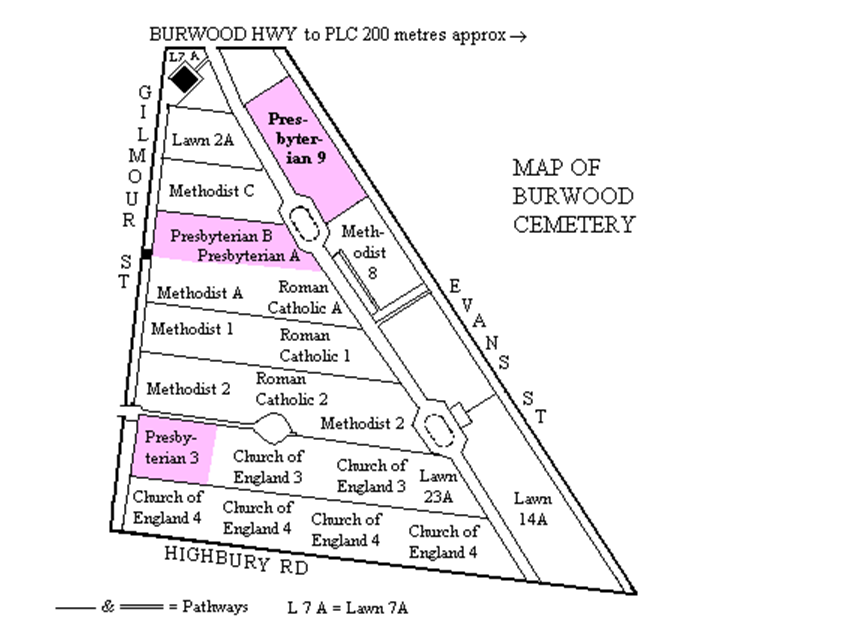

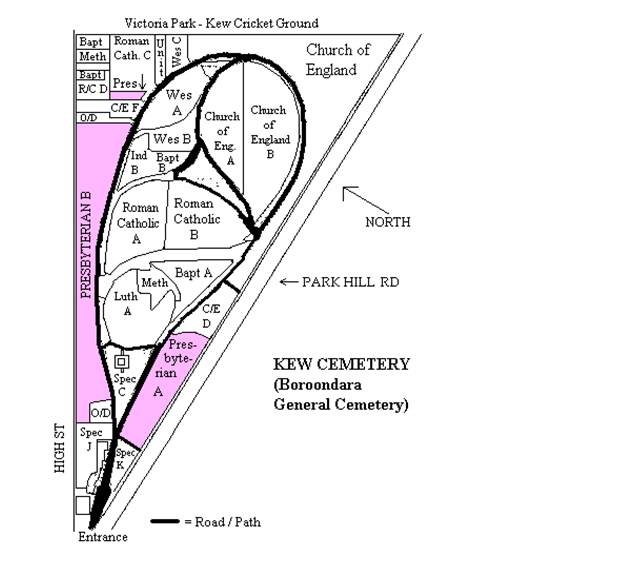
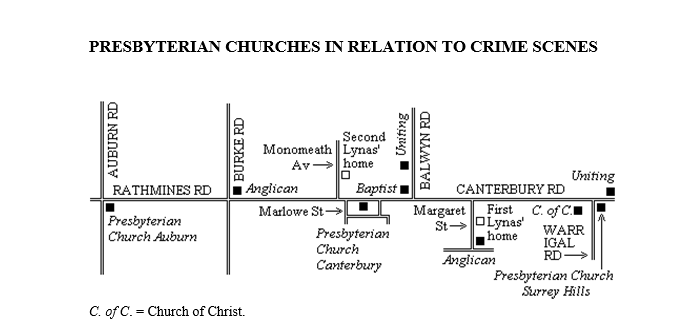


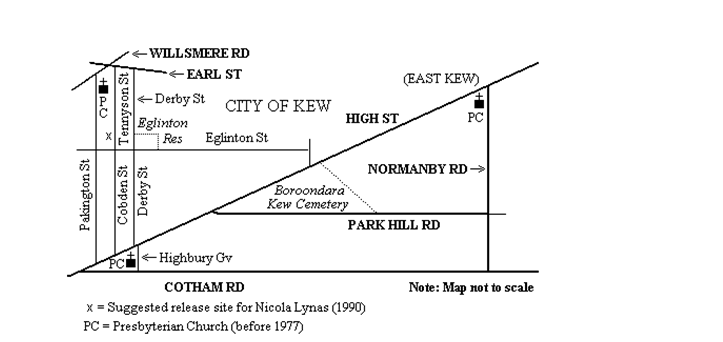
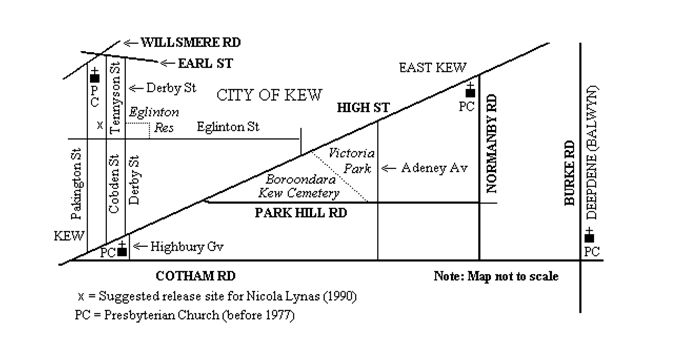


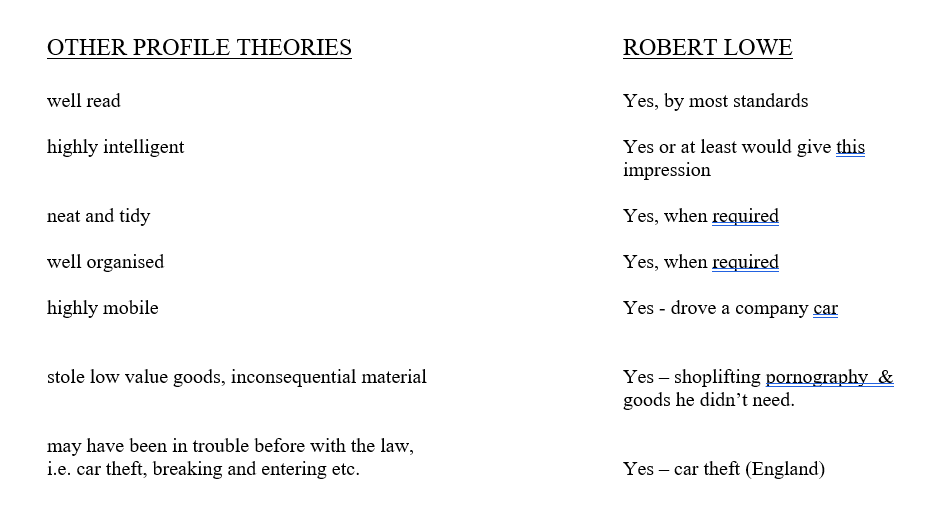





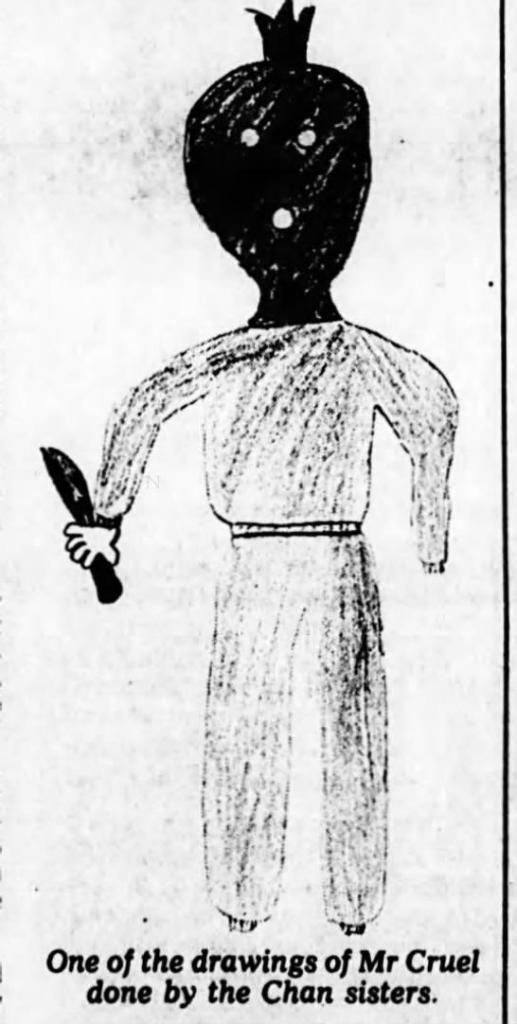
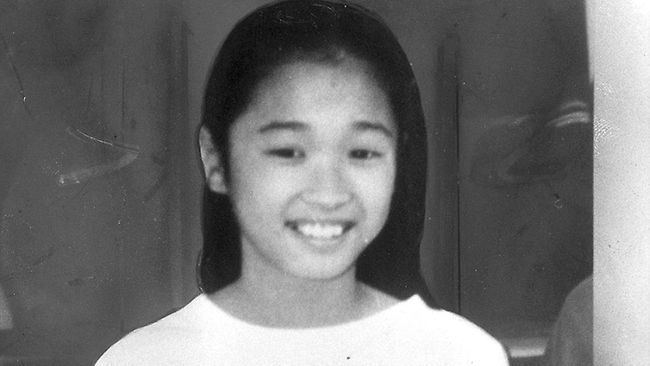

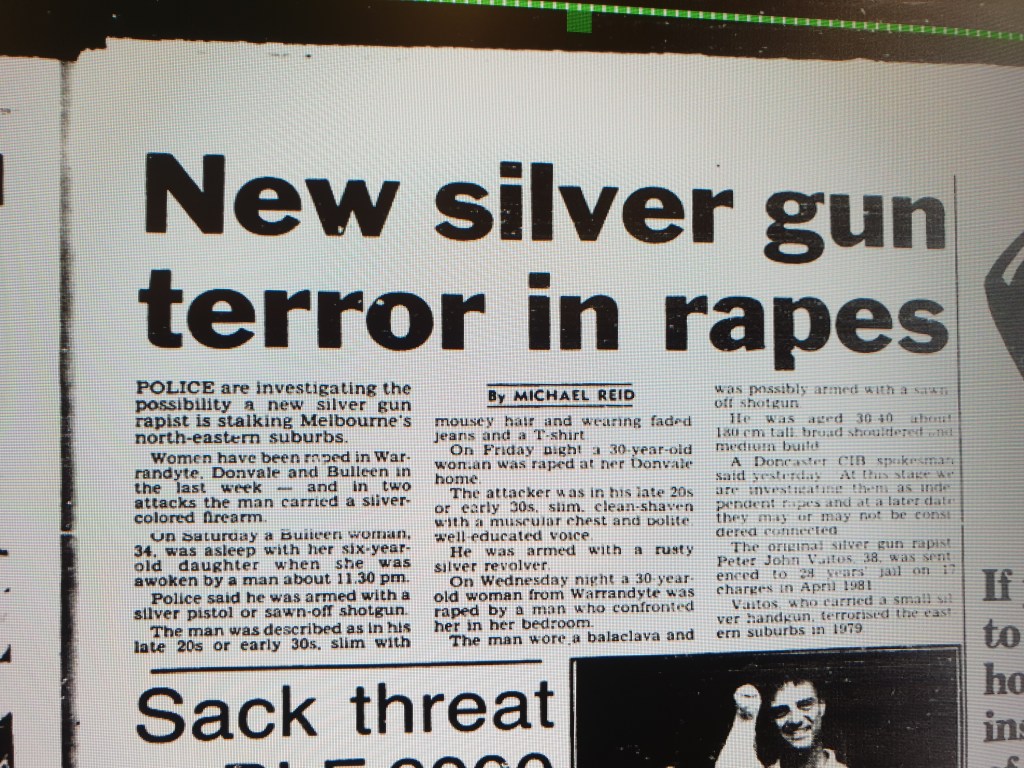















 Melbourne Marvels