How the Mr Cruel moniker is actually a misnomer that was originally used to describe a different man, one Christopher Clarence Hall, – the curious mix-up of Mr Cruel and Mr Careful.
The following blogpost contains details about the sexual assault of women and girls. Please use discretion when reading.
In 2019 Criminologist Xanthe Mallett published the book Cold Case Investigations1 which featured a chapter on the “Mr Cruel” crimes. The work was the author’s professional evaluation of a variety of Australian cold case crimes where she analysed the behaviour of the offenders in question in an attempt to provide the reader with an insight into the type of person they might be. However, Mallett made a significant error in the chapter on “Mr Cruel” by asserting that the offender had also been responsible for the rape of “an elderly nun”.
In fact, serial rapist Christopher Clarence Hall – known by the media as the Ascot Vale Rapist until he was caught in June 1993 – was responsible for this rape and was convicted of it in April 1994. Not only this, but the victim in question was only 48 years old, not “elderly” and was in fact a former nun when she was raped by Hall on the night of 10-11 November 1987. Unfortunately, Mallett’s error has only resulted in misinformation about the crimes of the, yet to be identified, unknown offender (who Melbourne Marvels hopes will be one day be arrested for his crimes) who police believe raped an 11-year-old girl in Lower Plenty in 1987, abducted and assaulted 10-year-old Sharon Wills in 1988, abducted and assaulted 13-year-old Nicola Lynas in 1990 and abducted, and police believe most likely murdered, 13-year-old Karmein Chan in 1991.
At around the same time as Mallett’s mistake was published in her 2019 book, a concomitant Daily Mail article by Stephen Gibbs was also published making the same false statement under the title Masked child killer ‘Mr Cruel’ who terrified a city by abducting young girls from their homes three decades ago raped an elderly nun years earlier – and he could still be on the loose2. This article continues to provide people with false information about the case as it is one of the first articles that comes up when one searches for “Mr Cruel” in a Google search. Unfortunately, this is just one of many falsities that have been published about this unsolved case, all of which create a distorted picture of the truth of this offender’s actions and thus, serve to decrease the likelihood the case will ever be solved.
To be fair to Mallett, the majority of her chapter on our unknown offender is quite insightful as she draws on her expertise as a criminologist to analyse his behaviour, describing him as “the careful predator3“. She states that she was told the information that Mr Cruel had raped the “elderly nun”4 by psychologist Tim Watson-Munro who had worked on the case and provided a profile of the offender for police back when it was believed the same offender had been responsible for it. Mr Watson-Munro however, had clearly not learnt of Christopher Clarence Hall’s subsequent conviction for the attack in April 19945, 34.
Let us backtrack for a moment here though so we can understand the origin behind the term Mr Cruel. As reported in previous posts by Melbourne Marvels, the term Mr Cruel was first used in the headline of an article by Jim Tennison for the Sun News Pictorial on 19 November 1987 titled Police hunt for ‘Mr Cruel’6. This article was published after a police press conference to inform the public about a man police believed was a serial rapist operating in the suburbs of Melbourne. The police had held the press conference just one week after a rape of a 48-year-old woman that had occurred on the 11 November 1987 in Moonee Ponds.
The article detailed how a police taskforce had been set up to find the offender who had committed this rape and two others – that of an 11-year-old girl on 22 August 1987 in Lower Plenty, and that of a 30 year-old woman in Donvale in December 1985. During the press conference the police were quoted as describing the offender as “super cool, and super cruel”. It is therefore understandable why Tennison’s article includes the term “Mr Cruel”, especially considering it was common practice for the media in the 1980s to give unknown serial rapists “Mr” monikers, such as the infamous Mr Baldy and Mr Stinky. But, there was just one problem. The man who raped the 48 year-old former nun, would later be ruled out by police as being the man who had committed the two other rapes7.
As mentioned earlier, Christopher Clarence Hall was convicted of the rape of the Moonee Ponds woman, as well as the rapes of numerous other women aged 22 to 82, in April 1994. He was initially sentenced to 34 years in prison in May of that year, the longest ever sentence for rape in Victoria, but in October of that year had his sentence reduced to 27 years8 on appeal.
Hall was convicted based on his confession and DNA evidence9 as he had left semen at many of his rapes. You can read about the police operation to catch him in Liz Porter’s excellent book Written on the Skin: An Australian forensic casebook.The majority of his rapes had occurred between January and May 1993, but police were also able to link him to the 1987 Moonee Ponds rape. His rapes occurred in the suburbs of Essendon, Flemington, Airport West, Carlton North, Ascot Vale and Fitzroy North10.
During the first half of 1993 the northern and north-western suburbs of Melbourne were terrorised as this man repeated rape after rape without being caught, much like the East Area Rapist terrorised Sacramento in the mid 1970s. Just like in that case, the local news media in Melbourne were transfixed with the story of the Ascot Vale Rapist, and many women living in the area were living in fear that they would be his next victim as he continued to carry out his attacks with impunity11.
Another feature Hall had in common with Sacramento’s East Area Rapist was that he had previously been a prolific house burglar before graduating to rape. His first court appearance was as a 17-year-old all the way back in June 197012. He was sentenced to six years in prison in June 1979 for committing 31 burglaries and four car thefts between December 1977 and May 1978 that had occurred in the suburbs of Gisborne, Woodend, Airport West, Broadmeadows, Tullamarine, Preston, Sunbury and Bacchus Marsh. Hall was living in Arthur Street, Preston at this time13.
He escaped from custody in Wangaratta after a basketball game between Beechworth prisoners and a local team14 before being recaptured in May of that year in Penong, on the Nullabor Plain in South Australia15 (perhaps he was attempting to flee to Western Australia), and extradited to Victoria. I’m not sure when he was ultimately released from prison, but what is clear is that by 1987 he had become a rapist, and would eventually become a serial rapist.
If Hall was the offender in the Moonee Ponds rape, is it also not then possible he was the offender in the canonical Mr Cruel attacks such as the 1987 Lower Plenty rape, and the 1988, 1990 and 1991 abductions? Hall could not have been our unknown offender as he was in prison again, this time in South Australia, between mid October 1989 and 12 August 199216 (for what crime I do not know) so could not have abducted Nicola Lynas or Karmein Chan. There are however, a number of common features between the 1987 Lower Plenty rape and his modus operandi. For example, in both the Lower Plenty rape and the Moonee Ponds rape the offender wore something that covered his face and broke into the victim’s homes when it was dark.
Additionally, both offenders wore jeans, made their victims count to 100 when17 he left their homes, gagged and blindfolded their victims with elastoplast or surgical tape18, stole cash from their victims, wore athletic sneakers, and tied up their victims using a type of cord not sold in Australia19. In fact the police operation to capture the Ascot Vale Rapist, was named Operation Century after the offender’s penchant for telling his victims to count to 100 before seeking help. It is for these reasons that you can see why the 1987 police taskforce thought these attacks were linked.
However, for whatever reason, the police later decided the Lower Plenty attack was not Hall. Perhaps these are some of the reasons they concluded this: Hall’s 19 known victims were all adults, and were raped in their homes mostly in the north and north-western suburbs of Melbourne (in 1997 Hall was convicted of five more rapes of four more women in Thornbury, Glenroy and Glen Iris, the latter of which is in the eastern suburbs)20.
Unlike in the Lower Plenty attack, Hall never attacked his victims when men were present and his victims were often extremely vulnerable women as many were elderly and his victims included a blind woman, a woman with schizophrenia and a woman who was eight months pregnant, and he twice raped one victim who was intellectually disabled, with an interval of five years (meaning she was likely first raped as early as 1988). These women were also alone in every instance bar one, when one victim was at home only with her young child. In this case, Hall threatened the woman that he would harm the child if she did not accede to his requests21.
Hall also often left DNA evidence in the form of his semen whereas our unknown offender did not22. Lastly, Hall never used a gun in any of his attacks, but the offender in the Lower Plenty attack, and the abductions of Sharon Wills and Nicola Lynas had a gun.
Therefore, while I cannot conclusively say that Hall did not commit the 1987 Lower Plenty rape, there may be other reasons the police know that I don’t as to why they ultimately ruled it out as being him. What is clear is police certainly suspected him of committing more rapes and worked hard to link him to unsolved rapes. He was eventually convicted in 1997 for committing four more rapes, some of which occurred between 1988-1989.
An article in The Age from 1997 claimed this occurred after Hall contacted police from his prison cell and admitted raping four more women than he was originally sentenced for23, however, Liz Porter in her chapter on how police caught Hall from her book Written on the Skin: An Australian Forensic Casebook states this only occurred when Detective Jacqueline Curran pored through old files of unsolved rapes and managed to link his DNA to two of them24. Then, when confronted with this information, Hall inadvertently admitted to two more rapes when he became confused as to which crimes she and her fellow detective Steve Waddell were referring to.
As a result his sentence was increased to 32.5 years with a minimum of 27 years after it had been reduced to 29 with a minimum of 27 years on appeal in 1994. In 2006 Hall made a legal challenge in the Supreme Court for leave to appeal against his sentence. However, it is unclear if he took up the opportunity to appeal, nor whether, if he did (likely), he was successful. As a result of his legal challenge a new non-parole period of 24 years and 8 months was granted from April 1997, meaning he would not have been eligible for parole until 2021. If he hadn’t made his legal challenge he would have been eligible for parole in December 2011 and released by June 2015 (assuming that is, that he was still alive).
A high degree of violence, humiliation and cruelty on vulnerable women. When Hall was released on parole from his prison stint in South Australia on 12 August 1992, it took him little over a week before he raped his next victim and he would go on to be convicted of this rape and that of another 18 women in the nine months until he was caught in June 1993, with the majority occurring between January and May of 1993. Hall’s attacks always involved a high degree of violence, humiliation and cruelty. Cruelty being the operative word here. Reading The Queen V. Christopher Clarence Hall (1994) and understanding the degree of cruelty Hall displayed is an exercise of engaging with the darkest side of humanity, so I urge the reader to do so with caution25.
An analysis of the rape of the 48 year-old former nun makes it plain why police described the man they were looking for as “cruel”, even if they had mistakenly linked him with two crimes he probably hadn’t committed. The details of the Moonee Ponds rape, and those of Hall’s other rapes make for harrowing reading. Among the horribly cruel things Hall did to this victim were the following:
The victim told Hall she was a virgin as she was a former nun. Hall raped her anyway, causing her excruciating pain and ignored her screams that she was in pain.
Hall taunted the victim, by asking her why God had not prevented her from being raped.
After the first rape he hogtied the woman, leaving her prone on the bed.
He stole the victim’s ATM card, asked her for the PIN and threatened her with the words “If you give me the wrong one, I’ll come back and I’ll…”, not finishing the sentence to leave the woman to speculate as to what it might involve.
When he returned from withdrawing $300 from the ATM, he raped her several more times.
During the final rape of the woman, she lost control of her bowels and asked to go to the toilet. Hall subjected her to further indignity by insisting on watching her as she went. He watched her throughout this act, handing her toilet paper as she went.
After the rapes he asked the victim if she were still a nun.
He suggested the rapes were because God was punishing her for having resigned from being a nun26.
It is clear to see that Hall’s actions in this rape are the very definition of cruel. Of course, that is not to say that the offender who committed the unsolved crimes by our unknown offender wasn’t cruel himself. No doubt, he caused a great deal of suffering and trauma to his victims. However, in his own twisted mind he seemed to believe he was “nice” to his victims. Despite the horrible things he did, it was reported by the ABC television news on 6 July 1990 that he generally spoke softly to his victims. One victim described him as playing a kind of role where he was imagining being married to her27.
This offender released Nicola Lynas on the day of her 14th birthday, which police thought may have indicated a measure of compassion28. He brought his victims food and drink29. He also told Nicola Lynas that she was prettier than the photograph of her that had been circulated in the media30. Of course, none of these actions would have been in any way reassuring to the frightened and traumatised victims, but there is a clear contrast between this type of behaviour and the misogynistic humiliation that Hall displayed in the rapes of the 19 women for which he was convicted.
Indeed, Hall seemed to relish in the very act of humiliating his victims. Therefore, while cruelty was certainly involved in the Mr Cruel canonical crimes, it would be unlikely that those people who know him well would describe him in this way. Rather, as has been reported by this author and many others over the years, the defining trait that sums up our unknown offender, more than any other, is carefulness in avoiding being apprehended, despite the risky behaviour he was carrying out.
The real Mr Cruel was captured in May 1993. It seems then that police were almost certainly thinking of “cruel” when referring to Christopher Clarence Hall’s attack of the 48 year-old former nun in November 1987. As mentioned though, police later reassessed and decided Hall was not responsible for the August 1987 rape of an 11-year-old girl in Lower Plenty nor the 1985 rape of a 30 year-old woman in Donvale.
Eventually, the police would reassess again and decided the unknown offender who abducted Karmein Chan in April 1991, Nicola Lynas in July 1990 and Sharon Wills in December 1988 was the same offender who committed the rape of the 11-year-old girl in Lower Plenty in 1987. After the millions of dollars spent on the Spectrum Taskforce between 1991 and 1994, they were confident the unknown offender was responsible for these four attacks (and possibly a series of other rapes and abductions in the Bayside suburbs of Melbourne between 1985 and 1987). But, since the real Mr Cruel had been arrested in 1993 and sentenced in 1994 who is the unknown offender who has never been brought to justice for his crimes?
So, if the real Mr Cruel was captured in 1994, who is our unknown offender? As I mentioned above, the defining feature which characterised our unknown offender was “carefulness”. Xanthe Mallett referred to him as “the careful predator” in her 2019 book31. This was because of how meticulous he was in avoiding leaving any fingerprints or DNA evidence in any of the four canonical attacks. Val Simpson, the lead detective of the taskforce which investigated the Lower Plenty rape told me he had never seen a crime scene like it – in other words, one in which the offender was so good at cleaning up any evidence.
He had made his victim clean her teeth carefully and bathe after assaulting her to ensure he left no evidence of himself on her. He did the same with his 1988 and 1990 abduction victims32. This was at a time when DNA fingerprinting technology was in its infancy, but it was something he was clearly knowledgeable about. He also rigorously ensured his victims never saw his face. Clearly whoever this man was, he went to great pains to ensure he would not be identified, and he knew how to avoid leaving clues for police detectives to make their job that much harder.
In a word, he was careful. Mr Careful. The real Mr Cruel, Christopher Clarence Hall, was not as careful as Mr Careful and was caught by police in 1993 before spending decades in prison. Mr Careful on the other hand, has never been identified and is possibly still out there hiding amongst us.
In the past it has been reported by journalists Keith Moor and John Silvester that police were never happy with the moniker Mr Cruel for our unknown offender. This was because they felt it might have given the public a false image of who this man was. He was likely to have been a very ordinary man they said, and possibly, outwardly very neighbourly and community-minded33. Perhaps then it is time to shed this misnomer and refer to our unknown offender as Mr Careful.
Gibbs, S. (2019) “Masked child killer ‘Mr Cruel’ who terrified a city by abduction young girls from their homes three decades ago raped an elderly nun years earlier – and he could still be on the loose,” Daily Mail Australia, 2 September.
Tennison, J. (1987) “Police hunt for ‘Mr Cruel,’” The Sun News Pictorial, 18 November.
Catalano, A. (1991) “Brutal abductor breeds fear with cruelty,” The Age, 4 May.
The Queen V. Christopher Clarence Hall (1994).
Porter, L. (2007) “Reading the blood,” in Written on the skin: An Australian forensic casebook. Sydney, NSW: Pan Macmillan, pp. 34–35.
Tippett, G. (1993) “Crime fear stalks a generation,” The Age, 30 May.
Tippett, G. (1993) “Crime fear stalks a generation,” The Age, 30 May.
The Queen V. Christopher Clarence Hall (1994).
The Age (1979) “Jailed for burglary,” 22 June.
The Age (1980) “Prisoner missing after basketball,” 17 April.
The Age (1980) “Jail Escaper Recaptured”, 2 May.
The Queen V. Christopher Clarence Hall (1994).
Moor, K. (2016) “Victoria Police and FBI Dossier on shocking Mr Cruel child attacks,” The Herald Sun, 8 April.
The Queen V. Christopher Clarence Hall (1994).
Willox, I. (1988) “Police seek a new ‘Mr Stinky’ rapist,” The Age, 12 May.
The Queen V. Christopher Clarence Hall (1994).
The Queen V. Christopher Clarence Hall (1994).
Porter, L. (2007) “Reading the blood,” in Written on the skin: An australian forensic casebook. Sydney, NSW: Pan Macmillan, pp. 34–35.
Gurvich, V. (1997) “Convicted rapist gets another three years,” The Age, 3 April.
Porter, L. (2007) “Reading the blood,” in Written on the skin: An australian forensic casebook. Sydney, NSW: Pan Macmillan.
The Queen V. Christopher Clarence Hall (1994).
The Queen V. Christopher Clarence Hall (1994).
Silvester, J. and Rule, A. (2006) Rats: Crooks who got away with it: Tails of true crime and mystery from the underbelly archives. Camberwell, Vic.: Floradale/Sly Ink.
Edmonds, M., Armstrong, P. and Talbot, L. (1990) “Nikki’s safe,” The Herald, 6 July.
Silvester, J. and Rule, A. (2006) Rats: Crooks who got away with it: Tails of true crime and mystery from the underbelly archives. Camberwell, Vic.: Floradale/Sly Ink.
Moor, K. (8 April 2016) “Victoira Police and FBI Dossier on shocking Mr Cruel child attacks,” The Herald Sun.
Silvester, J. and Rule, A. (2006) Rats: Crooks who got away with it: Tails of true crime and mystery from the underbelly archives. Camberwell, Vic.: Floradale/Sly Ink.
Johnson, P. (1994) “Rapist gets 25 years for reign of terror”, The Age, 13 May 1994.
Kearns, L. (1993) “Man faces sex charges”, The Age, 12 Jun 1993.
Johnson, P. (1993) “Sentence cut for Ascot Vale Rapist”, The Age, 13 Dec 1994.
Trioli, V. (1993) “In Ascot Vale the mood is anger”, The Age, 25 May 1993.
Milburn, C. and Plunkett, R. (1993) “Rape fear mobilises neighbourhood”, The Age, 28 May 1993.
In the early hours of 27 December 1988 an intruder broke into the home of the Wills family in Ringwood. 10 year old Sharon Wills was abducted by the offender known as mr Cruel. This is that story.
Podcast
Why I’ve written this blog.
The Mr Cruel crimes remain unsolved, and my hope is that by keeping the spotlight on this series of crimes that it may contribute in some way to answers for the victims of the offender. The vast majority of the information about this case in the public forum comes from a series of newspaper articles written by the award-winning journalist Keith Moor for the Herald-Sun in 2016 to mark the 25 year anniversary of the abduction of Karmein Chan. Moor’s articles were based on files he had received, not through official channels, but from an unnamed source.
However, in researching the case, by reading all of the contemporary newspaper articles and watching archival footage on it, I couldn’t help but notice a number of contradictions between the information that was presented to the public at the time of the crimes and the information about the case that Moor presented in his 2016 Herald Sun article. Therefore, this blog post is to be an analysis of the original reports and then a comparison of them with Moor’s 2016 information.
Lastly, I conduct an analysis of all we know about Sharon’s abduction in an attempt to offer some insights about the profile of the offender. Hopefully, having presented all of the information that is on the public record in this case I will be able to offer something constructive about the type of offender we are looking for.
An analysis of the contemporary newspaper articles and archival footageof the Sharon Wills abduction
On 7 July 1988 an article appeared in the Melbourne tabloid the Sun News Pictorial which detailed the story of a house fire which occurred at the home of the Wills family on 5 July in the outer eastern Melbourne suburb of Ringwood. The article, titled Mother battles blanket blaze, by Paul Cunningham described how 36-year-old mother Julie Wills had responded to cries from her four daughters while in the middle of a phone call. When she arrived in her daughters’ bedroom she was greeted by the frightening sight of one of the top bunks of the bunk-beds completely on fire. Mrs Wills had ordered her daughters, Sharon 10, Linda and Robyn 8 and Annette 5 outside as she unsuccessfully attempted to put the fire out. The fire brigade were called but the fire still caused quite a lot of damage to the house.
Accompanying the article was a photograph by Karl Jahn of the 4 girls and Mrs Wills holding up the cause of the blaze, a faulty electric blanket. Sharon Wills is pictured on the far left of the photograph standing on a bottom bunk bed. She is wearing glasses, a skivvy, a jumper, a polka-dot skirt, and white socks. Just over 5 months later, this innocent little girl was to be abducted from her home by an armed intruder, held captive at a residence of some sort, where she was assaulted, before being released 18 hours after her abduction. Later, investigators were to state that it was possible the abductor saw this 7 July 1988 newspaper article, and that it may have been what prompted him to take her.
Sharon Wills appeared on the Channel 10 children’s television program The Early BirdShow as a member of the Victorian Children’s Choir in early December 1988. On the program the children sang the Christmas song Happy Xmas (War is Over) by John Lennon. Sharon appears only fleetingly for no more than one second, hardly enough time for anyone to notice her.
The Early Bird Show (full video) Darryl Cotton and The Victorian Children’s Choir. Happy Christmas (War Is Over). (Thanks to Reddit user int3rest3d for finding this footage.)A screenshot of Sharon’s one second appearance as a member of the Victorian Children’s Choir on the Channel 10 children’s television program The Early Bird Show in Dec 1988.
The first newspaper article to break the news about Sharon Wills’ abduction, written by David Towler for The Herald, was titled Armed bandit flees with girl, 10. The bandit had taken the girl from her bed, it explained, at about 6am. The man had entered the house armed with a pistol before going straight to the bedroom of a man and woman before tying them up and declaring: “all I want is money”. The man had left soon afterwards and when the man and woman had untied themselves they realised their 10-year-old daughter was missing. The father of the girl had told police he had had trouble sleeping and so had only been in bed for half an hour when the intruder entered his room.
The girl who had been abducted was the eldest of 4 daughters who had all been asleep in the same room. Her 3 sisters had apparently not woken up when the man took Sharon. To the perspective of the man and woman, the gunman had left the room briefly before returning and asking about the telephone. About 15 minutes after the gunman left, the man managed to free his wife, but when they checked on their children who all slept in one bedroom, they noticed their eldest daughter was missing.
The abducted girl had been wearing a “short, white nightie, with blue and mauve flowers and lace around the neck”. She was extremely short for her age at 112cm tall with “a round face, freckles, and long wavy brown hair”. Note, 112cm would have been the average height of a 6-year-old for the time. Her sisters, who were aged between 5 and 8 had slept through the abduction and so could not help detectives. Sniffer dogs were being used in the surrounding area. This first ever newspaper article about the abduction did not mention the name of the family or the abducted girl, nor did it publish a photograph of her.
Melbourne’s evening news channels also reported on Sharon’s abduction. The ABC reported that a search was underway in Kellett’s Road, Rowville after reports that a woman had spotted a girl matching Sharon’s description in the area. They also stated that some items of clothing were missing from Sharon’s bedroom “including a tartan skirt, a white skirt, white pants with a ballerina imprint and a two-tone checked blouse”. A female neighbour of the Willses stated: “You think well, if they picked that house, who’s next?”
This school photo of Sharon Wills was provided to the police and the media on 27 Dec 1988.A “two-toned checked blouse” like the one that was reported missing from Sharon Wills’ bedroom. Later newspaper reports stated that, unlike this one, the missing item was blue.Police search a new housing estate in Rowville after reports a woman had seen Sharon Wills in the area.Chief Inspector Des Johnson addresses the media outside the Wills residence, 27 Dec 1988.A police information caravan is set up around the corner from the Wills residence on 27 Dec 1988.Unidentified neighbours of the Wills family are questioned by the media near the Wills residence, 27 Dec 1988. This woman stated: “You think well, if they picked that house, who’s next?”
By the morning of 28 December the other Melbourne dailies were reporting on the abduction, with The Sun News Pictorial publishing a story by Bruce Tobin and Christine McTighe on their front page titled Kidnap agony. This story went to press before it was realised that Sharon had been released around midnight that morning. This time the article detailed the name of Sharon Wills and her family and published a school photograph of Sharon Wills as well as a photograph of what it described as “one of Sharon’s sisters and a friend” through a window at the front of their house in 11 Hillcrest Avenue Ringwood. The article was largely about information gleaned from a police spokesperson who spoke to the media in the afternoon of the 27th.
The article detailed a plea by Sharon’s parents for the return of their daughter Sharon before stating that police were worried that she might have seen the gunman’s face after he had left her parents’ bedroom. Chief Inspector Des Johnson expressed his fears that Sharon may have come out of her bedroom after her mother had screamed saying: “He may have taken off his ski mask and she may have seen him. We are very concerned for her safety”. The article went on to state that the intruder may have taken Sharon because he was worried she could have identified him.
Other details included in the article were the facts that 2 skirts and a blouse were missing from her bedroom, and police had speculated this may have been so that the abductor could change Sharon into different clothes to make her “less conspicuous”. Chief Inspector Johnson had speculated that Sharon may have wandered out of her bedroom and seen the intruder after he had tied up her parents and robbed them of $35. The man had only been in the house 7 or 8 minutes.
Sharon’s parents were interviewed by detectives, but had no idea who the intruder may have been. It named Sharon’s sisters as 8-year-old twins Robyn and Linda and 5-year-old Annette. The intruder was wearing a ski mask and armed with a handgun had entered the premises through a backdoor about 5:45am. He then “bailed up” Sharon’s parents, named as John and Julie Wills, before demanding cash. They were forced face down on their bed and tied up with wire. It then took John Wills about 15 minutes to free his wife using a pair of pliers. They then went into their daughters’ bedroom to discover that Sharon was missing.
The article went on to describe Sharon as a pupil of Antonio Park Primary School and “a member of the Victorian Children’s Choir and a keen musician”.
A large police search was being undertaken with search and rescue squad members diving in Mullum Creek. Moreover, a police helicopter was scanning the surrounding area, but there was no sign of Sharon. Acting Detective John Telford described the clothes taken from Sharon’s room as “a white skirt and a tartan skirt and a blue check blouse”. Telford also announced that Sharon had poor vision and had left her spectacles at the house.
The article went on to state how police had searched parts of Rowville the previous day after a woman had sighted a girl in a nightie. “The woman…spotted a young girl hiding behind a fence near Blaxland Drive and Kelletts Rd”. A police caravan had been set up a few metres from the Wills residence in Ringwood “to coordinate the search”.
The police also gave a description of the abductor as “about 180cm tall, thin build and wearing a ski mask, dark blue overalls and armed with a handgun”.
On page 4 of the The Sun, published on the same day, 28 December 1988, another article was published titled A street of fear after abduction with no author listed. It was about interviews conducted with neighbours of the Wills family and their reactions to the abduction. A woman named Paula Corcoran was interviewed and told of her shock and worry that the same thing could happen to anyone. She also described Sharon as a girl who liked her singing and that “her mother is always taking her off to choir practice”.
A teenager who was interviewed spoke of his concern about the recent increase in crime in the area. “A boy got stabbed at Ringwood Station – and now this”. Paula Corcoran said that Sharon and her sisters usually played in their own front yard. Sharon was “lovely” and “quite shy with a gentle nature”.
Also on page 4 of that day’s The Sun was an article about an interview with Patsy Worledge, the mother of 8-year-old schoolgirl Eloise Worledge who had been abducted from her Beaumaris home in similar circumstances to Sharon Wills in January 1976 and had never been found. On hearing about Sharon Wills’ abduction Patsy Worledge said it “goes without saying” that they should not lose hope. She went on: “When I heard, it was a bit of a shock. I just hope that they find her quickly. It’s 13 years on. You’ve got to get on with your life. We’ve had a lot of time to come to terms with it.”
Also, on page 4 of the Sun that day was an articletitled Family in narrow escape from blaze, that detailed the fact that the Wills girls and their mother had the article published about them the previous July which described their narrow escape from the house fire mentioned earlier.
Lastly, also on page 4 of The Sun that day was an article titled Report sparks bush search. The article detailed how a search had been carried out in Rowville the previous day after a woman had reported seeing a girl in bushland in the area. The woman had seen the girl about 11:30am on the 27th from her car as she drove past. When shown a photograph of Sharon Wills, she had confirmed that the girl she had sighted looked the same. The search was only scaled back when it was reported that a girl from the area about the same age as Sharon had been playing in the same locality.
However, then the woman who had made the original sighting told police that she was sure the girl she had seen was Sharon and so the search was stepped up again, with police using trail bikes, motorbikes and a four-wheel drive. Then a car was reported in bushland in Ferntree Gully and the search moved to that area. But, this proved to be a false alarm as the occupants of that vehicle were apparently just leaving feed out for cattle. After five hours of searching there was still no sign of Sharon, but police were still open to the possibility the girl the woman had seen was her.
The Sydney Morning Herald chose to contrast the abduction of Sharon Wills with the abduction of another 10-year-old girl in Sydney, Helen Karipidis, on 22 December 1988. Helen was abducted from the suburb of Marrickville and was last seen playing in a sandpit. Her father was quoted as saying: “I’m scared as the days go by. I’m beginning to think someone may have kidnapped her”. The article also went on to say that Sharon Wills had been abducted from her bedroom by an armed robber.
On page 2 of The Sydney Morning Herald more details were given about the abduction of Sharon. While most details given in these articles were the same as that given in The Sun, there were some points of difference. The first was that this article stated that the intruder bound Sharon’s parents “with strands of copper wire”. Secondly, it stated that the intruder gained entry to the home at 5:30am, slightly different to The Sun’s 5:45am and The Herald’s 6:00am.
The clothes of Sharon’s that were taken were also described slightly differently, with this article using the personal pronoun ‘she’ as if it was Sharon’s decision to take the clothes. This description was given thus: “She may have taken a red and green tartan skirt, a white skirt, a pair of underpants, and a two-tone blue checked blouse”. This is interesting as The Sun did not mention the colour of the tartan skirt nor that underpants had been taken.
The article also described neighbours saying that Sharon was a member of a choir, but also that she “played several musical instruments”. It then went on to paraphrase Chief Inspector Johnson as saying that Sharon had been awoken by her mother’s screams and had then got out of bed and “been confronted by the gunman near the lounge room”. The article seemed to present this claim more as if it was fact than speculation as The Sun had presented it.
The Age benefitted from what can only have been a later publication time than The Sun so that it was able to carry the scoop that Sharon had in fact been found in the early hours of the 28th. It ran it’s cover page with the title Ringwood schoolgirl found. Police still hunting for abduction suspect, by Paul Conroy and Gerard Ryle.
It detailed the fact that Sharon had been found alive in Bayswater early that morning. Naming her as Sharon Louise Wills, it stated that the girl would have a medical examination at the Austin Hospital that morning. Sharon had been found by an unnamed female driver who had found Sharon “walking along Orchard Road, Bayswater” according to a police spokesperson. She had apparently been dumped in the location by a man driving a car.
According to the female driver’s husband, his wife had found Sharon “running around in the street” at the corner of Orchard Road and Armstrong Road, when she was returning from work just after midnight. The man said that it had been raining and the woman stopped to check if the girl was alright. When Sharon told the woman she had been abducted, the woman took Sharon back to her house and called the police.
Most of the rest of the article is information that has already been mentioned in earlier articles. However, there were some other additional details. Firstly, that “the intruder was believed to have escaped on foot with Sharon, but might have had a vehicle parked nearby”. The article also mentioned that “detectives have not ruled out the possibility that the abduction was prompted by a newspaper report about the family in June”. This is a reference to The Sun article the previous July about the house fire at the Wills residence, but the writers here have made a minor error with the month this occurred. Lastly, the article described the gunman as “in his late teens to early 20s” which is the first description we have seen of the offender’s age in regards to this crime.
By the time the afternoon edition of The Sun was published on 28 December, news had obviously filtered through that Sharon had in fact been found early that morning. In an article titled Sharon Found by Bruce Tobin and Christine McTighe, news of Sharon’s recovery updated the story of her abduction that had run in the morning paper.
The front page of the newspaper included an updated section of text just above a photograph of one of Sharon’s sisters from the previous day. It stated that Sharon had been found “by a resident” in Orchard Road, Bayswater 18 hours after she had been abducted. The article reported that the police had said Sharon had not been seriously injured. She was in discussions with police in order to “unravel the mystery” of what had happened to her.
On page 2 of the same newspaper the story continued under the title Mystery as kidnap girl found. However, no new information was given by police about the nature of the abduction. The only other additional information given was that it stated that the Wills family had lived in their weatherboard house for 4 years. Otherwise the article was just a rehash of what was included in their morning edition.
The Herald once again benefitted from its evening publication in that they were able to include in their story information gleaned from a police press conference that evening in an article by David Towler titled Sharon taken by a ‘monster’ – police. It stated that police were worried Sharon’s attacker could strike again after she was found 18 hours after being abducted from her Hillcrest Avenue, Ringwood home. After being treated at the Austin Hospital she had been allowed to go home with her parents to get some sleep. She arrived home holding a teddy bear and waved and smiled at her sisters.
Sharon’s father, John Wills, was emotional when he spoke to the media outside his home saying: “I would like to thank the lovely lady who found her. I would just like to thank all our friends, relatives and media for all the coverage that was given. I would like to thank the police. Without the police I don’t know what would have happened.”
Police had said Sharon was spoken to by a social worker before she and her father were taken back to the Bayswater area (where she had been dumped). Chief Superintendent Kevin Holliday said “the crime had been very well planned and the man involved had gone to extraordinary lengths to conceal his identity”. After tying up Sharon’s parents “he had blindfolded Sharon and placed an object in her mouth – possibly a ball – to prevent her screaming as he took her away from the house and drove her away in a small car”. Chief Superintendent Kevin Holliday was quoted as saying: “She’s given us some information, but as you can appreciate the child has had little or no sleep. She’s 10 years old and we don’t want to inflict any more interrogation on her so she’ll have a rest and detectives will interview her later”.
Mr Holliday was paraphrased as stating that Sharon had been dumped in the street at about midnight (a slight difference to other information that she was in fact dumped on the grounds of Bayswater High School). He was quoted as saying:
“The intruder came into the room and asked her name and simply took her with him…I would say that we are dealing with a dangerous, cunning person who has set to capture this girl right from the very beginning and probably put a lot of planning into the commission of this crime…I think to get hold of this girl was his primary target and the fact that an armed robbery was committed at the time was just by the way.” The article also stated that the perpetrator had “gone to great lengths to keep his identity a secret and is not believed to be known to the girl or the family”.
However, Holliday stated that police would not reveal the extent of information they knew about the man. This is interesting because, as we saw earlier, The Age had paraphrased police as saying that the man was “in his late teens or early 20s” and The Sun had paraphrased the police as saying that he was “about 180cm” tall. One wonders what the relevance of this sudden shutting up shop may suggest about police motives in this regard.
Mr Holliday was also paraphrased as stating that the man had “probably staked out the location for some time” and “was very determined and had gone to a lot of trouble”. The article also stated that “there was real concern that he might strike again”. Holliday was also quoted as stating: “We believe that the person probably looked at the scene well before the crime was committed and may have loitered around there on occasions prior to 5:30am yesterday morning”.
Television news channels also reported on Sharon’s return during the evening news of 28 December 1988. An artist’s rendition of the dark blue balaclava the abductor wore was displayed on the ABC news, as was an image of the handgun he used in the attack. Notably, the man was portrayed as wearing no gloves and the handgun was in his left hand. On giving details about Sharon’s abduction the ABC evening news reported “police say she’d been sexually assaulted, but was otherwise uninjured.” The ABC news coverage also reported: “Police say Sharon had been lying on a bed somewhere for most of her ordeal. The man had offered her vegemite sandwiches, milk and lemonade.”
Chief Superintendent Kevin Holliday speaking to the media about Sharon’s return 28 Dec 1988.Artist’s rendition of the balaclava the offender wore in the abduction of Sharon Wills.Artist’s rendition of the offender’s ungloved left hand holding a pistol.Full body image of the offender as shown on Channel 9 newsSharon Wills arrives home from the Austin Hospital with her parents 9 hours after being dumped in Bayswater.John Wills carries his daughter inside their home as she clutches a teddy bear.An emotional John Wills speaks to the media outside his home in Ringwood.
The story took out the front page of The Sun’s morning edition on 29 December 1988 with an article headlined Brave Sharon by Bruce Tobin and Christine McTighe. Contrary to the previous day’s The Herald article it stated Sharon had been dumped in the Bayswater High School schoolyard. It named the woman who had found Sharon as “Paula”. It quoted her as telling Channel 10 “She just said ‘my name’s Sharon Wills and I was taken from home early this morning. A man left me here and told me to go and ring home'”.
The article quoted Detective-Chief Superintendent Kevin Holliday as referring to the attacker as “a dangerous and cunning monster”. It repeated the notion that the offender had put a lot of effort into planning the crime whilst also stating that Sharon had said she was held throughout her ordeal in a house or flat.
The article also included a photograph of the woman who had found Sharon in the street, “Paula”. Page 2 of the same article was headlined Sharon’s ordeal and included a map of where Sharon was abducted from and dumped. It went on to quote Chief Inspector Des Johnson as saying “we have to get this one” and paraphrased him as saying that the man had the potential to kill.
He also said that Sharon had been found on the corner of Orchard and Armstrong Roads, Bayswater “wearing only a man’s short-sleeved shirt” and that “she was in quite good spirits”, however, “the clothes she was wearing when kidnapped are still missing”. The man had entered the room of Sharon and her sisters after tying up her parents, “walked up to her bunk and asked for her by name”. This is interesting as it is different to the previous day’s The Herald report which had stated that he had “asked her name”. It is quite a significant difference in reporting because The Herald report indicates the offender did not know her name, whereas, The Sun report indicates he knew her name beforehand.
After abducting her, the man had driven Sharon around for a while before taking her to a flat “and assaulting her”. Apparently, the man was “gruff to her first off, but was quietly spoken afterwards”. He had given Sharon a glass of milk and later a vegemite sandwich. After the ordeal, the man had wrapped Sharon in garbage bags and dumped her at Bayswater High School according to Chief Inspector Johnson. He was quoted as stating: “She was trussed up. She was placed in one and it was taped up to her shoulders. Another was put over her head and taped around her body and the face…was cut out of it”.
The article also paraphrased Chief Inspector Johnson as stating: “as the man carried her over a fence to dump her in the schoolyard, a car drove along Orchard Rd and the kidnapper had to duck for cover to avoid being spotted. He was quoted as saying: “If someone saw anyone who they thought was putting out the garbage, he wasn’t”. The offender had told Sharon the direction of where she could get help and warned her not to look at him as he left. He then drove off and Sharon walked towards a house in the direction of where the man had pointed, but she hurt her feet on the ground, so she then went in the opposite direction and was found by Paula on Orchard Road.
The article also stated how surprised Sharon’s rescuer, Paula, had been and how courageous and bright Sharon was. When Paula had encountered Sharon she had asked the girl if she would like to get in and she would take her home and call the police. Sharon had agreed to and seemed pleased that the woman had offered to help.
Also on the 29th December The Sydney Morning Herald published a small article with an artist’s impression of the offender’s head in black and white. It was the same portrait that appears on video footage from news reports of the police press conferences, but which no other newspapers had published till this point.
The Canberra Times also published an article on 29 December. Most of the details were the same as had been published in other newspapers beforehand. One unique detail was that it stated that the attacker had only removed the tape with which she had been blindfolded for the entire 18 hour ordeal when he dumped her at Bayswater High. Also, that “she must not look at his face or he would recapture her”. It quoted Chief Inspector Des Johnson as stating “we can only guess what would have happened if she had taken the blindfold off”. It paraphrased Johnson as saying that “she had little idea of the distances” (from her house to the flat he took her to), “but, felt he might have driven in circles at some stages”. Like The Sun, it stated Sharon was given a glass of milk first, and later a vegemite sandwich, but added that she was also given a glass of lemonade with the vegemite sandwich.
The article added a detail that I have not seen reported elsewhere when it stated “another possible lead for police was that garbage men were in the area of the girl’s Hillcrest Avenue home in Ringwood at the time she was taken”.
That evening’s The Herald contained an article titled A father happy to cry for joy by Mark Harding. It repeated how John Wills had been emotional when he spoke to the media after Sharon’s return to their house. It stated how Sharon’s sisters had been waiting in the house next door, and that when Sharon’s auntie arrived she was taken next door to see them as the Wills residence was still cordoned off by white crime scene tape. The article also expressed surprise that the attacker had chosen to abduct a girl from this area stating: “although the kidnapper took $35 and a handbag after tying up the parents, a bandit would not expect to find great wealth in such an area”.
The same paper included an article titled Tears as Sharon returns home, by David Towler. The article included 2 photos of Sharon, one by herself, holding a teddy bear, and one as she is being carried inside by her father John Wills. All of the details included in this article were identical to information that had already been featured in other newspapers earlier in the day apart from some points including: “police hope they will be able to identify the suburb (of the flat or house Sharon was held in) and gain an important breakthrough in the investigation.
The article also stated that after she had a rest, Sharon would be interviewed again by police, and that “that interview was also expected to include a reconstruction of the trip she was taken on yesterday”. It also stated that “today, Sharon went with police as they searched the area near Bayswater High School, sifting through rubbish, and lifting drain covers”.
This edition of The Herald also included an article titled The Attacker with information about him and a photograph of an actor posing in a balaclava. It stated that the perpetrator was “wearing an anonymous blue boilersuit and a dark blue ski mask with holes for the eyes and mouth…the holes were trimmed in white with a red line running through it…a police artist’s impression gave no indication as to his type of footwear”. Interestingly, it also stated: “police said that they had no idea as to his age although initial reports indicated he may have been in his late teens or early 20s…he was of thin build and about 180cm tall”. This comment seems to acknowledge the fact that there were earlier reports giving these details, before police refused to give information about the attacker’s age at the police press conference on the 28th.
The television continued to report on the case on 29 December. The ABC evening news reported on a police press conference given that afternoon in which John Wills spoke to the media. The father of 4 girls spoke of the importance of home security after his ordeal. On reporting on the abduction the ABC noted that: “The man sexually abused the 10-year-old, and then dumped her at Bayswater High School.” On reporting on the description of the offender the ABC reported: “Police believe he’s a loner in his late teens or early twenties.” John Wills was also shown saying: “I could never forgive him for what he’s perpetrated against my daughter. I guess if ever I got the opportunity I would certainly convey those thoughts into an action.” It then reported that “police have set up stations at Eastland and Bayswater shopping centres”.
John Wills speaks to the media at a police press conference on 29 Dec 1988.A police information caravan set up at Eastland shopping centre.
30 December 1988 started off with The Sun’s Trauma lingers for kidnap family, by Bruce Tobin. It included information from John Wills from the previous day that had not been included in the articles from the 29th. Mr Wills spoke of how he and his family had been sleeping in the lounge room since they had returned to their house as they were too afraid to sleep in their own bedrooms, and that they expected to be doing this for some time.
Mr Wills added: “We are all naturally very concerned that he is going to return. If he ever came back I would be prepared next time”. He also mentioned how he thought the attacker was “sick” and needed help, but that he himself would never forgive him, and that he believed the man would continue to commit these sorts of crimes adding: “I feel very aggressive towards him, but I do understand that he needs help”.
Detective Inspector Des Johnson said that detectives were investigating whether the man had been responsible for other attacks in the Melbourne area. John Wills described Sharon Wills as a “brave little trooper” who was coping well despite her ordeal. He also said he would not want the same sort of thing to happen to another little girl. Mr Wills said that he was considering moving his family to a different house because of the attack. He described the trauma he had suffered saying: “To have your daughter taken and not know where she is is indescribable.”
The article went on to describe how the intruder had entered through the back door “at around 5:45am”. Next the intruder had entered the parents’ bedroom, put a gun to John Wills’ temple and told him “not to be a hero”, before ordering him and his wife to lie face down on their bed and tying them up with copper wire. After he had robbed them of $35 he had cut the telephone line. He then blindfolded and gagged Sharon, with “a ball and tape”. Mr Wills then described how he reacted on finding Sharon Wills missing from her bed: “I immediately ran next door because he had cut my telephone, banged on the door and woke up my neighbour. I asked him to ring the police and then I started running around the block looking for her”.
Mr Wills then urged others to put more effort into securing their homes because “they would hate to have happen what has happened to us”. He also called on anybody who might know the perpetrator to come forward to police. The article then gave the same description as had been described previously, saying he was “1.8 metres tall”, but not mentioning his age.
The Age’s article for 30 December 1988 by Paul Conroy was titled We fear intruder will return, says abducted girl’s father. It repeated how the family were sleeping in the lounge room, but added they had been “for the past two nights”, and the family were “too frightened to go to their bedrooms in case the man…returns”. Mr Wills also described how he had installed security doors and an alarm system since the attack. The article added that police said that Sharon and her 8 year-old twin sisters were receiving counselling since the attack. Mr Wills was also quoted as saying: “He put the gun to my head and asked whether I was going to be a hero. I said I wasn’t”. The father also said: “I got the impression he was looking for a little girl. I had four to choose from”.
John Wills was also quoted in The Age article as stating: “I honestly believe this man has done this before. He came well prepared and covered his tracks. I have run his voice over and over in my mind to try to remember whether I might know him but I don’t”. The article added that John Wills became emotional by the end of the press conference and had to be helped away by detectives. It was also stated that similar offences were being checked to see if there were any connections with this crime.
Sharon a brave trouper, says father was published by The Canberra Times on the same day. It included most of the same details from the previous day’s press conference as The Sun and The Age articles did earlier. However, it described John Wills as remaining calm throughout before, at the end of the press conference, putting his head in his hands and being led away by police. The article also stated that both the “major crime squad and the rape task force were involved in the hunt for her attacker”.
The Herald article that day, by David Towler, titled Police check links in Sharon abduction, stressed the importance of how police were “sifting through files of similar offences in a bid to establish a link”. It also stated that the “public response to information caravans set up near the family’s Hillcrest Av. home and at Bayswater, where Sharon was left, has been slow.” It may be that this article was published after that day’s police press conference as there were additional details not included in The Sun and The Age articles. Detective Inspector Kevin Holliday was paraphrased as stating that “the methodical nature of the crime has left investigators with little evidence to follow up and they are desperate for any information”.
Holliday was also paraphrased as stating that he thought the gunman had operated by himself and “apparently had access to accommodation where he could be alone”. Interestingly, the article also stated: “the only evidence to establish an identity so far was the man’s voice which suggested he was young, perhaps in his late teens or early 20s”. The article also stated that neither John or Julie Wills knew the perpetrator, but that the fact that he had addressed Sharon by name may have been evidence that he may have learnt about the family from the newspaper article that had been published about the house fire at their home earlier that year. Mr Holliday was also paraphrased as stating that the attacker may have spent months planning the crime, but may not necessarily have known about the house.
There was another article in The Herald, published on 30 December, by Carolyn Ford, titled Police wait for clues in hunt for kidnapper. This article was more of an exploratory piece, highlighting the irony of a road sign outside Bayswater declaring the suburb “Australia’s most liveable suburb”. The article pointed out that there was an information unit set up just 150 metres from this sign, established to hunt for Sharon’s attacker. The article quoted Senior Detective Ralph Carnell as stating that “this is the worst part of police work, sitting and waiting”. The detective had been working at a similar information unit near Sharon’s home in Ringwood.
Apparently, 5 people had approached the Ringwood unit after the 6pm evening news the previous day, while there had been 13 callers on the 30th. At Bayswater, 6 people had phoned, 2 after the evening news. There, Senior Detective Mick Wheeldon was quoted as stating: “it is frustrating work because you want to go out and apprehend the offender”, but that “valuable information could come in at any time”. Wheeldon had only had 4 hours of sleep since 6am on the 27th. The article said that the information gleaned from these people was largely based on car descriptions and suspicions who the attacker may have been based on his description of being 180cm tall and thin. Detective Senior Constable Andrew Humberstone and Constable Andrew Wyatt were to man the information unit at Mountain Highway during that night’s graveyard shift.
On 31 December 1988 The Age published an article about the abduction by Paul Conroy titled The crime that stirs passions and is solved by cool logic. It was an article about the man in charge of the investigation into the abduction, Detective Chief Inspector Des Johnson. Johnson is quoted as describing the perpetrator as “a monster and a mongrel”, and as having four children of his own, before denying that this emotion would reduce his capacity to do his job professionally. Johnson had been told of the abduction when he received a telephone call at 6:55am on Tuesday morning. The article described how Johnson had told Sharon Wills’ distraught mother Julie, when he arrived at their home, that police “had to assume the worst”. He was also quoted as stating: “I told her (Julie Wills) and her husband to keep their spirits up, and that we were doing everything.” The investigation was to include “two teams of detectives who will be assisted by two CIB detectives from Ringwood and Nunawading”.
Detective Chief Inspector Des Johnson was also quoted as stating: “The unfortunate fact is that there are so many of this type of offender who are out there in the community. There are so many people with the propensity to do this”. We also have to consider the fact that he could have committed this for the first time.” The article then described how the offender had probably been watching the house for some time and had decided to strike after watching John Wills go to bed at about 5am after having had difficulty sleeping and doing a jigsaw puzzle to relax. The offender had entered the premises via the back door and after tying Sharon’s parents up with copper wire, had gagged Sharon with masking tape.
Des Johnson is then quoted as stating: “We can only dread what the man would have done if the girl had pulled off the blindfold and seen his face. It is that close to being a homicide. It is only an extra step.” The article then states how police had drawn up a list of similar offenders and “have focused their attention on a particular man who is known to have committed similar crimes”. They also paraphrased police as stating that it was also possible that the offender had previously committed milder offences before escalating to the level of this abduction over the course of several years. Lastly, Johnson is paraphrased as stating that the police had “no firm leads” as yet, but was then quoted as expressing his confidence that they would catch him.
A very brief article appeared that evening in The Herald titled Police step up kidnap hunt. It simply paraphrased Des Johnson as stating that the information caravans would be discontinued that evening and quoted him as stating: “There are quite a number of suspects to be checked out and the information that has been received has to be gone through.”
Also on 31 December 1988, evening television news programs reported on a police press conference that was held that day in which a $100,000 reward was announced to help catch the offender. The ABC evening news showed Chief Superintendent Kevin Holliday stating: “We suspect that he probably has committed offences in the past…we do suspect that this is not the first offence that he’s committed.” Chillingly, the ABC also paraphrased Holliday as saying that the offender could be capable of murder if he was ever seen by one of his victims and that the police were very concerned that that could happen in the future.
Chief Superintendent Kevin Holliday announces a $100,000 reward to help catch the offender on 31 Dec 1988.
On 2 January 1989 an article by Neil McMahon and Alexandra Cutherson appeared in The Sun titled Family backs reward – $100,000 bid to catch Sharon’s kidnapper. The article made the claim that John Wills had welcomed the reward when speaking to the media on 31 December 1988. Treasurer and acting Police Minister Rob Jolly was paraphrased as stating that the government shared the police view that everything needed to be done to catch the offender. Kevin Holliday was quoted as stating: “We are concerned at the likelihood this offender will offend again and perhaps commit an offence worse than he has. We suspect this is not the first offence he has committed”. The article paraphrased Mr Holliday as saying he feared the offender could eventually kill someone.
Kevin Holliday was also paraphrased stating he believed that someone may have known the identity of the offender, but was covering for him, before calling on any such people to come forward to police. He also stated he believed only one man was involved in the abduction, but would not rule out others being involved. On how Sharon was coping with her ordeal, Mr Holliday was quoted as stating: “So far, for a girl of her age, and the horror she has been through, she has been excellent. She is coping with it extremely well and only time will tell.”
The Age also published an article that day titled $100,000 for information on Ringwood abduction by Paul Conroy. It was also about the police press conference from the previous day.
The Canberra Times also published an article about the previous day’s police press conference titled $100,000 reward to find abductor.
On 4 January 1989, television news stations ran a story about a lead in the abduction case. The ABC News reported that a suspicious white Holden Commodore Vacationer, which was seen behaving strangely in Bayswater around the same time Sharon Wills was dumped at Bayswater High School, was a new lead in the case. Police held a press conference to discuss the potential lead in which they explained that the suspect vehicle, with its headlights turned off, almost collided with another car when turning left from Jersey Road onto Mountain Highway at about 11:15pm on 27 December 1988. Inspector Dannye Moloney said that the driver of the second car told police that the suspect was doing his best to avoid being seen, and that he “pulled the car forward trying to avoid showing his face to the other witnesses.” The Commodore had continued down Mountain Highway before turning right at Church Street heading towards Bayswater High School. The suspect vehicle was described as “an early 1980s Vacationer sedan with three blue stripes down the side.”
Back view of an early 1980s Holden Commodore Vacationer sedan like that one sighted by a witness as behaving suspiciously on the evening of 27 December 1988. Front view of an early 1980s Holden Commodore Vacationer sedan like that one sighted by a witness as behaving suspiciously on the evening of 27 December 1988. Inspector Dannye Moloney informs the media about a suspect Holden Commodore Vacationer sedan seen behaving suspiciously in Bayswater soon before Sharon Wills was dumped at Bayswater High School. An unknown police officer points out the location of the near collision on a map.The suspect vehicle almost collided with the witness’s vehicle whilst turning left from Jersey Road onto Mountain Highway at 11:15pm 27 December 1988.
On 5 January 1989 an article by Brian Walsh titled Car lead in kidnap case appeared in The Sun regarding information about a lead in the case that had been divulged the previous day at a police press conference. The information had been provided to police by a motorist who had seen “a driver acting suspiciously in the area Sharon was dumped”. Inspector Dannye Moloney said “the witness was driving along Mountain Highway, Bayswater about 11.15pm on the night Sharon was found when a white Holden Commodore Vacationer sedan turned out of Jersey Rd in front of him. The witness was forced to swerve violently to miss the Commodore which had its lights switched off. Insp Moloney said the Commodore’s driver appeared anxious not to be identified. He said when the witness pulled up at traffic lights next to the Commodore the man turned to avoid being seen. The witness’s description matched that given to police by Sharon and detectives were treating the information as a definite breakthrough.” The article also stated that police believed Sharon’s abduction could be connected to 8 similar attacks throughout the previous 10 years.
The Age also published an article by Innes Willox about the car lead that had been revealed in the previous day’s police press conference. In reference to the 8 attacks that had been linked to Sharon Wills’ abduction, this article added that they were all still “unsolved”. Police would be pamphletting the local area around the Wills family home and near where Sharon Wills was dumped in Bayswater.
Also, police hoped to display a car similar to the Holden Commodore Vacationer that was sighted by the witness in both areas. The Age article also added that the vehicle had “three blue stripes along its side” and that the witness had to “brake and swerve to avoid a collision”. Inspector Moloney was paraphrased as stating that the suspect in the Holden Commodore Vacationer “turned his head away and edged forward, as the irate witness, upset at the near collision, looked into his car.”
The article also paraphrased Inspector Moloney saying that “Sharon’s description of the car had been considered before the information was released”. The article continued: “The suspect’s car then went ahead and turned right about 1.5 kilometres along the road into Church Street, towards Bayswater High School, where Sharon was left less than 45 minutes later. The witness…did not see anybody else in the car.”
The Canberra Times also covered the story of the car lead on the same day, but there was no extra information included in the article.
The newspaper articles on 5 January 1989 were the last ones to cover the story of Sharon Wills’ abduction until the abduction of Nicki Lynas in July 1990. There has been no more mention about the car lead in any subsequent newspaper publications until the present day.
On 24 January 1989 an article by David Thomson was published in The Age titled Man accused of nine rapes held in custody. The article detailed the fact that one Mark Anthony Jewell had “made about 40 telephone calls to the family of Sharon Wills.” The information was gleaned from a session at the Melbourne Magistrate’s Court where Detective Sergeant Ian Tanner had told the court that when Jewell was arrested “he was in the process of making telephone calls to the Wills family.” Jewell was remanded to face a host of sex crime charges including 7 rapes which had occurred over 5 years “but mainly in the past 10 months”.
On 6 February 1990 an article by Peter Gregory titled Phone calls led to rape arrest for The Age was published. The article stated that Mark Anthony Jewell had pleaded guilty to raping and indecently assaulting numerous women in Armadale and Ringwood. He had been arrested after making phone calls to Sharon Wills’ parents in December 1988. The phone calls had been traced to a phone booth in the Alfred Hospital. The Crown Prosecutor Mr Damien Maguire said that Jewell was not involved in the abduction of Sharon. Maguire also accused Jewell of raping a 41-year-old woman in Prahran and raping 2 schoolgirls aged 14 and 15. Jewell had apparently also indecently assaulted girls aged 10 and 12, and women in theirs 20s.
When Nicki Lynas was abducted on 3 July 1990, Sharon Wills’ parents John and Julie were in the news again expressing their sympathy with Nicki’s parents and hoping for her quick return. Then When Karmein Chan’s body was discovered in April 1992 the Wills family attended her funeral.
The Wills family are escorted to Karmein Chan’s funeral service at Bulleen Baptist Church by 2 unnamed police detectives.
Drawings of the inside of the offender’s lair.
On 27 January 1993, the Spectrum Taskforce investigating the Mr Cruel series of child abductions decided to release previously secret information about the lair where both Sharon Wills and Nicki Lynas were held. Head of the Spectrum Taskforce David Sprague spoke at a press conference about his frustration of not having come up with a result until that point in the investigation and expressed hope that they still might be successful. The police released drawings of the bedroom and bathroom of the building the two girls were held in. The illustration of the bedroom was based on the recollection of Sharon Wills, who had lifted up her blindfold to take a peek at the bedroom she was being held in whilst leashed to a bed. She had taken the opportunity to spy the room after the offender had appeared to leave the building temporarily. This story ran on the ABC news on 30 January 1993.
The ‘detention premises bedroom’ at the building where both Sharon Wills and Nicki Lynas were taken.
An analysis of Keith Moor’s description of the Sharon Wills abduction from his 2016 Herald Sun article titled Victoria Police and FBI Dossier on shocking Mr Cruel child attacks.
In 2016, award-winning journalist Keith Moor wrote a series of articles for the Herald-Sun in which he described previously unknown information about the four canonical Mr Cruel crimes, including the Sharon Wills abduction. According to Moor, he was handed the information from an anonymous source, but not through official police channels. Moor claimed the files included previously unpublished information taken from witness statements and the police files about the Mr Cruel case.
While much of it was original, some of it directly contradicted information that had been released by police at the time of the abduction as described above. In fact, some of it even contradicted information contained in Moor’s own chapter about the case from his book Mugshots 1 which he co-wrote with Geoff Wilkinson. Despite this, Mugshots 1 was updated in 2019 and it still contained some of the old information from when it had been published previously, and was not updated with much of the new information from the police files that Moor had published in the 2016 Herald-Sun articles. So, now I will analyse some of the original information Moor presented in the 2016 Herald-Sun article and compare it to the historical information about the Sharon Wills case.
In his description of the abduction of Sharon Wills, Moor mentions that the offender may have seen her photograph in the newspaper article she had appeared in with her family a few months before the attack, as I covered earlier in this blog post. He describes how the victim in the Lower Plenty attack had also appeared in a newspaper article before she was attacked. While Moor suggests that the offender may have chosen Sharon “after seeing her photograph published in a local newspaper”, Sharon’s photograph was published in The Sun News Pictorial (he even says this himself in Mugshots 1). This newspaper was not a local newspaper, but a Melbourne wide morning tabloid.
Moor states that the Wills family were away from their home between the hours of 6pm and 10pm on Boxing Day, 26 December 1988. This is new information that hadn’t been included in the contemporary newspaper articles about the abduction. He doesn’t state where the family were during these hours, just that they arrived home at 10pm and the children were fed and in bed by 10:45pm. Moor also states that both John and Julie Wills went to bed at 1am on the morning of the 27th.
As was stated by the newspapers from 1988, Moor says that John Wills had trouble sleeping and so, got up and did a jigsaw puzzle. The father of four then went back to bed at 4:50am after turning out the lights in the house. Moor then states that the offender gained entry to the house around 30 minutes after John turned out all the lights – about 5:20am. The contemporary newspaper reports gave different times for this event, ranging from 5:30am to 5:45am to 6:00am, all slightly different to Moor’s 2016 information. Even Mugshots 1, puts the time of entry at 5:45am.
However, perhaps far more interesting was the way in which the offender gained entry to the residence, something that had not been reported anywhere else previously. Moor claimed the man had gotten into the house by sliding a newspaper under the back door and pushing out a key that was placed in the keyhole on the inside of the door. The perpetrator had then apparently pulled the newspaper back under the door.
One of two back doors to the Wills residence had glass panels, which may have allowed the offender to see a key in the door on the inside of the house.The back door of the Wills residence led directly to the lounge room as can be seen in this real estate photograph from 2009.
According to Moor, the offender then burst into John and Julie’s room and turned the light on whilst wearing a balaclava and carrying a handgun, but Moor doesn’t mention what hand he held the gun in. The newspapers of the day specifically mentioned he was carrying it in his left hand, but we will return to this detail later. As was described in the newspapers, Julie began to scream. In his 2016 Herald-Sun article, Moor says that Julie began to scream first, and then the offender put his gun to John’s head and told her to stop. However, in Mugshots 1, Moor and Wilkinson state that the perp put the gun to John’s temple first and then he told Julie to stop screaming. While holding the gun to John’s head the offender said to him: “You’re not going to be a hero are you”?
According to Moor’s 2016 Herald-Sun article and Mugshots 1, the offender then forced both John and Julie to lie face down on their beds and tied up their hands and feet. With “copper electrical wire” according to the Herald Sun article, which is slightly different to the “copper wire” as reported historically and in Mugshots 1. He then robbed them of $35 as was mentioned in the newspapers of the time.
Like the contemporary newspaper reports Moor reports that Mr Cruel then cut the phone line at this point, before entering the children’s bedroom where the four daughters occupied four bunk beds with Sharon on one of the top bunks. Again, this is verified by newspapers of the day. However, Moor’s 2016 description is unique in describing the subsequent events as told from the perspective of Sharon. Presumably it was taken from her witness statement to police.
It describes how Sharon had woken up when her mother had screamed and she had heard a man’s voice. The man then entered her bedroom and she pretended to be asleep as she was afraid. The offender had then “rolled Sharon over and shone the torch in her face and asked if she was awake”, but Sharon pretended to be asleep (none of the contemporary news reports made any mention of a torch). The offender then left the bedroom, closing the door, only to return a short time later and attempted to wake her up, when “she decided she could no longer pretend to be asleep”.
According to Moor’s anonymous source, the perpetrator then helped Sharon get down from the bunk bed and then started rummaging through her wardrobe for clothes (the items of clothing he is supposed to have taken differ somewhat to what was said to have been taken in the initial newspaper reports, but we will get to this later). Having taken some of Sharon’s clothes from the wardrobe Mr Cruel took Sharon Wills into the lounge room of the house and stole a coat belonging to John Wills off the hat stand in the hallway and put it on Sharon over her nightie.
In the lounge room Moor states that the offender went through a basket of clothes and took a shirt from it which he used to wrap the clothes he had taken from Sharon’s wardrobe. The offender then carried Sharon onto the back porch and put her down, but the girl began to scream so he placed a red rubber ball in her mouth to gag her. He then removed the ball when Sharon agreed not to scream anymore.
Mr Cruel then blindfolded Sharon “by placing material over her head that was either tied or stuck together”. This is an interesting detail as the historical news reports didn’t say exactly when Sharon was first blindfolded, while Mugshots 1 suggested it occurred while she was still in her bedroom. Next, Moor said that the offender carried Sharon out of the driveway and, after walking a short distance, put her down before changing direction and taking her to a car. He told Sharon during this walk to the car that he wasn’t going to hurt her and that he was going to give her parents a ransom note and “would return her in the morning when the banks opened and he got his ransom money”.
In the car the offender put her on the front passenger seat and told her to get on the floor, but after he began to drive, the man asked her if she could see, and she admitted she could. The man then used “adhesive tape” to stick the blindfold to her head and put a blanket over her head. He then drove the car “for some time” before stopping in a driveway where he carried Sharon into a house and put her on a bed.
Here he changed the blindfold he had on Sharon’s head, taping some type of eye pads to her head. While Sharon was on the bed blindfolded, she could hear a radio going and the sound of a running bath. The man then carried her to the bathroom and made her brush her teeth and bathe. He then took her back to the bedroom where she recognised the radio station as 3TT and heard the 7am news playing. Moor states at this point that Sharon “later told police she heard two planes flying over the premises”.
Moor states that Sharon was then “assaulted” before the man gave her a glass of milk and a stale vegemite sandwich. The offender then said that he was going out before he “leashed Sharon to the bed with some type of harness around her neck”. He did not turn off the radio before he left. While the offender was gone Sharon worked up the courage to lift up her blindfold and sneak a peek at the room she was in. This is when she was able to see “a wooden tripod set up for filming near the end of the double bed she was in”.
When the offender returned he took the leash, which was attached to Sharon’s neck, off and carried her back to the bathroom where he once again made her bathe. He then took her to “another room” to “assault” her again before once again taking her to the bathroom where she was made to bathe yet again. Next, she was again carried to the bedroom where he reattached the leash to her neck.
According to the 2016 Herald Sun article, the offender left Sharon leashed to the double bed for quite some time at this point, often returning to the room to check on her and ask “how she was”. The offender finally told Sharon that she was to have a shower rather than a bath where he “made her wash her hair and body really well”.
When she was dry the offender dressed Sharon Wills in the shirt he had taken from the basket in the Wills family lounge room and put her inside two garbage bags. He pulled the bottom garbage bag up to her neck and taped it to her shoulders, while he put the other one over her head and taped it to her waist. Then he made a hole so that she could breathe before carrying her to a car and placing her on the floor in front of the front passenger seat.
The car would not start at first, and as the offender struggled to start it he told Sharon that “stolen vehicles do not always start properly”. Once he had the car started he reversed it out of the driveway and “drove for what she described as a long time, sometimes fast, sometimes slow”. After some time he stopped the vehicle, got out and lifted Sharon out of the car with the garbage bags still on her. He began jogging while carrying Sharon “stopping now and then to put her down while he rested”.
After an unstated period of time the man put Sharon down and “told her how to get to a nearby Food Plus store”. Moor states that the offender then removed the garbage bags and blindfold and told Sharon not to look at him as he left. The information about the Food Plus store directly contradicts the information Moor himself gives here in his book Musgshots 1 which stated that the offender told Sharon to walk across the oval to the north of Bayswater High School and “towards a house with lights on” as did the historical newspaper reports. The only Food Plus store which was operating in the area at the time was located to the south of the school at 684 Mountain Highway, Bayswater, in the opposite direction of the houses on the other side of the oval, so it is unclear why this contradiction occurred.
However, it is the description of the offender himself from Moor’s 2016 Herald Sun article which contradicts the historical reports more than any other area, and I am at a loss to explain why they differ so dramatically. The first discrepancy is that it describes the offender as between 173cm and 180cm tall “and of thin to medium build”. This contradicts all the original reports in various newspapers and the ABC television news which described the offender as 180cm tall and of thin build.
Secondly, Moor’s files described the offender as “aged mid 20s to 30s”. Again this contradicts the historical account in various newspapers and the ABC television news which put his age between “late teens and early 20s”. However, other information from Moor’s files was original with the article stating that the offender “had either a moustache or whiskers, possibly an early beard growth”. It also said he was right-handed.
While the historical articles didn’t mention whether the offender was right or left-handed, the artist’s depiction of the offender showed him holding the handgun in his left hand. Furthermore, it depicted the offender as ungloved, but Moor’s file states that he was wearing gloves, directly contradicting both the police artist’s depiction of the offender and a Herald article from 29 December 1988 which specifically mentioned that the offender’s hands were “bare”. Moor also said that the offender was carrying a bag and a torch.
This police artist’s depiction of the offender showed an ungloved left hand holding a handgun.
There were also discrepancies between the information provided in Moor’s 2016 article about the items the offender stole from Sharon Wills’ house as compared with the historical record. The 2016 article provided new information about the offender stealing a men’s “brown and black checked waist length lumber jacket with lamb lining” belonging to John Wills. It also stated that “a pair of girl’s cream coloured panties with an amber motif on the left side…of either an apple or an umbrella”, were stolen. Historically, one newspaper reported that “a pair of white pants with a ballerina imprint” had been stolen, while another stated simply that “a pair of underpants” had been. Perhaps they are referring to the same item of underwear?
Moor’s 2016 article also referred to “a girl’s cotton knee length nightie with a mauve and blue pattern, cap sleeves and a ribbon to tie the neckline” had been stolen. This was the nightwear Sharon was wearing when she was abducted that numerous newspapers referred to. What was not mentioned in the newspapers was the “pair of children’s blue thongs with plastic straps and white beading” that Moor’s 2016 article refers to, presumably the footwear Sharon was wearing when she was abducted. Also, not mentioned in the newspapers was a “Bonds white singlet, size 8”. However, other items of clothing that were reported in the historical newspapers as having been stolen, but not mentioned by Moor’s 2016 article, included a “white skirt” and “a blue checked blouse”.
Keith Moor also gave a description of the vehicle the offender drove based on the testimony of Sharon Wills. However, he makes no mention of the witness description of the Holden Commodore Vacationer which had been seen to have been behaving strangely in the Bayswater area not long before Sharon was dumped. In fact, Keith Moor makes no mention of this vehicle in any of his writing, and I have not been able to determine whether anything more ever came of this lead. While that description was only of the exterior of a vehicle, Moor’s 2016 description of the vehicle used in the attack only provided information about its interior.
Sharon described the vehicle as having bucket seats, and that it sounded like an old vehicle. There was a hump in the middle of the floor, and the glove box was located down low. In the middle of the hump was a gear lever. The arm rest, inner front door and the carpet were all coloured cream. The lock on the door was also cream and had a circle on top. The car also smelt clean.
Analysis of the Sharon Wills abduction
In researching the abduction of Sharon Wills I did come across a couple of interesting pieces of information that had not been published anywhere in written accounts of the crime. Firstly, the day before Sharon was taken from her house in Ringwood the area received a whopping 54.2mm of rainfall in 24 hours. This was the highest amount of rainfall received in Ringwood in the entire year of 1988. None of the newspapers covering the crime mentioned this weather anomaly in their coverage of the case.
One wonders whether there was any relationship between this event and the committal of the crime. For example, no doubt there would have been a degree of flooding in the low-lying areas of Ringwood that day or around creeks. The Victorian SES (State Emergency Services) may well have been active in the area for this reason due to flooding or rain damage. There may well have been electricity outages in the area requiring SECV linesmen to work on the nearby transmission lines.
Secondly, one element of this crime which has not been reported on at all in the published media is the fact that the Wills residence was and is located barely 30 metres from a 50 metre tall, high-voltage electricity pylon and 750 metres from the Ringwood Terminal Station. As I have written about previously, and as has been pointed out by researcher and writer Clinton Bailey, electricity pylons, sub-stations and terminal stations seem to feature unusually prominently in all the canonical cases of the Mr Cruel series. Perhaps most famously, Karmein Chan’s body was discovered buried at the Thomastown Terminal Station in 1992.
Less well-known is the fact that her home was located only 800 metres from overhead transmission lines running along tall pylons from the Templestowe Terminal Station located four kilometres from the Chan family home. Furthermore, Nicki Lynas was dumped at an electricity substation in Kew after she had been held by the perpetrator for 50 hours, and her home at 10 Monomeath Avenue was an 850 metre walk to East Camberwell Substation. The latter was even closer to where the perpetrator parked his getaway vehicle in Chaucer Crescent.
Furthermore, just across the road from Nicki and Karmein’s school, Presbyterian Ladies College, was the site of Burwood Electricity Substation and Box Hill Electricity Service Centre. Lastly, the house in which the Lower Plenty sexual assault occurred in was located approximately 800 metres from overhead transmission wires which ran to an old State Electricity Commission of Victoria substation in Lower Plenty also within a 1km radius of the home.
A 1988 Melway map of the Ringwood area. Circled in red are Hillcrest Avenue where the Wills family home was, the transmission line which ran behind their home, Antonio Park Primary School where Sharon went to school, the SEC Ringwood Terminal Station, and Eastland Shopping Centre.
It should also be noted that Eastlink (a tolled section of freeway) now runs just to the east of Hillcrest Avenue. It had not yet been constructed when the crime was committed in 1988 (despite a well-known American blogger claiming the offender could have used it as a fast getaway). Its construction involved the destruction of the street immediately to the east of Hillcrest Avenue, Bonview Avenue. The 1988 map clearly shows the future path the highway would take in light green.
Regarding the electricity pylon located directly behind the Wills residence, I was startled to discover on visiting it that a linesman working on the tower would have had a direct line of sight into the windows at the back of the Wills residence. What was the Wills residence on Hillcrest Avenue now has a granny flat that would block a view from the tower, but in 1988 this building was not there. Given all of the other links to electricity infrastructure in the Mr Cruel series I wondered whether the police had investigated this angle.
An electricity pylon located directly behind what was the Wills residence in 1988. A linesman or repairman working on this tower would have had a direct line of sight into the rooms at the back of the Wills residence.
I managed to get in touch with a community of linesmen who had worked at various terminal stations and electricity substations throughout the Melbourne area. When I enquired as to whether any of them knew of any police enquiries at their places of work during the Mr Cruel investigation I was pleasantly surprised to hear that indeed the police had entered their work premises and interviewed many of the workers.
I’ve been informed that the police interviewed workers at Watsonia Electrical Substation. Another worker who said that he worked for the SEC at Broadmeadows Depot told me he was visited at home by the police and questioned there, and he informed me that some of his colleagues had the same experience. Yet another linesman told me the police visited his depot at Sunbury and questioned numerous linesmen there as well. If nothing else, all this shows the police did consider the electricity infrastructure angle worthy of investigation. However, that is as far as I have been with this lead, and I know of no excellent suspects who were SECV linesmen.
Another feature of the Sharon Wills abduction that merits discussion is the fact that, according to Keith Moor, the Wills family spent the hours of between 6 and 10pm away from the house on 26 December 1988. Of course this begs the question as to whether the offender saw the family out somewhere and decided to follow them home. If the family were shopping during the Boxing Day sales, he may have seen them in a crowded public case and taken notice of Sharon. If this was the case he may have heard Sharon’s name being used and this could have been how he knew her name later.
What other features of the Sharon Wills abduction are worthy of discussion? The method of entry, as described in Keith Moor’s 2016 Herald Sun article surely meets this criteria. Moor claimed the man had gotten into the house by sliding a newspaper under the back door and pushing out a key that was placed in the keyhole on the inside of the door. The perpetrator had then apparently pulled the newspaper back under the door.
I consulted a locksmith about the feasibility of such a method of gaining entry to a house. He assured me that it would be impossible with modern locks, but that it was a technique that was employed by house burglars decades in the past. The method of entry certainly seems to point to a perpetrator who was somewhat skilled in the arts of burglary, and it begs the question: did he know the key would be on the inside of the lock, or did he just notice this in the early hours of the morning of 27 December 1988?
This raises another question. Could the offender see that there was a key on the inside of the lock from some vantage point in the back garden of the Wills residence? Or, had the perpetrator been on the inside of the residence in some other capacity and seen the key on the inside of the lock? We know firemen, journalists and a photographer were inside the residence in July of 1988, what about others?
No doubt tradesmen had been on the inside of the household in the weeks after the 5 July fire to repair fire damage. We also know that in all three of the other canonical crimes attributed to Mr Cruel, he gained entry to the residence through a window, so this method is certainly unique in its MO. And Did the offender bring the newspaper he used with him, or whatever device he used to poke the key out of the door? Perhaps these items were inside the bag Moor said he brought with him.
The next detail of the attack on the Wills family to analyse is the way in which he dealt with the two adults in the house. The offender confidently managed to subdue two adults including the man of the household. Unlike the three other canonical attacks, the offender in the Sharon Wills abduction was not carrying a knife. He was carrying a handgun in his left hand and, according to Moor’s 2016 Herald Sun article, a torch. Pointing the gun at John Wills’ head asking him if he was going to be a hero suggests a brazen individual who perhaps had executed this type of crime previously.
Perhaps the modus operandi on display here points to an individual who was experienced at armed robbery, an alpha-male type character who was confident enough to control two adults because he had committed crimes in the past that similarly involved threatening adults with a gun, such as bank robbery. This fact might be one reason why any future investigation should concentrate on individuals who had a history of armed robbery prior to 1987. Perhaps the offender had experience as an armed robber and later decided to employ these skills to satisfy some latent sexual fantasies he had about prepubescent/early pubescent girls.
This last point also raises an interesting detail about the offender’s victim selection. If we are to accept that the same offender was responsible for all four canonical crimes (something for which there is not a consensus on among the police) we can analyse his victim choice. Nicki Lynas was the oldest of the victims at the time of her attack as she was almost 14-years old. Likewise, Karmein Chan would also have already reached puberty, being 13-years old when she was abducted.
The Lower Plenty victim however, was only 11-years old, and Sharon Wills was a 10-year old who was the height of a 6-year old. Perhaps Sharon was the anomaly amongst all these girls in that she certainly wouldn’t have appeared to have been pubescent at the time she was abducted. Was Sharon abducted because of her unusually small size? The offender was able to carry Sharon around various crime scenes because she was so small, something he could not do with Nicki Lynas. Perhaps he had decided carrying his victim was not so important by the time of Nicki’s abduction in 1990.
This also raises the discussion of the motive of the offender. While Keith Moor never states in his writing that either Sharon Wills or Nicki Lynas were sexually assaulted, historical news reports did say they were. The ABC television news reported that both Sharon Wills and Nicki Lynas were sexually assaulted saying that the police said this was the case. In fact, celebrity policeman Ron Iddles also stated this in an interview with Matt Dunlop Media in November 2020.
Looking at the clothes the offender selected from Sharon’s wardrobe also points to the sexual motive of the offender. He stole two of her skirts and a pair of her underwear. Moreover, after she was assaulted by the offender, and he had apparently left the building temporarily, Sharon reported seeing a wooden tripod set up for filming. It is therefore likely he recorded the assault on the child to satisfy a sexual motive. Sharon’s statement to police also included information about her being “leashed” to the bed. Does this indicate that the offender had some kind of sexual fetish or an interest in sado-masochism? Or was the leash simply a tool of convenience to prevent the child’s escape?
Another major feature of the offender’s modus operandi in the abduction was the fact that he was so careful not to leave behind any forensic evidence. Both times Sharon was assaulted he forced her to bathe to remove any trace of evidence. He even forced her to shower before he dumped her, and she was instructed to “wash her hair and body really well”. She was then dumped wearing only a shirt taken from her home. Since it is unclear whether he was wearing gloves as, as mentioned previously we have contradictory reports about this, it is unknown whether he would have left any fingerprints, either at the Wills residence or on Sharon (although Keith Moor claimed that police had no DNA or fingerprint evidence in an interview with Ethan Cardinal in November 2020).
It may be that, as the police artist’s depiction portrays him, he was not wearing gloves, but that any fingerprints left at the crime scenes did not match any in the police database. One does have to wonder about the only item of evidence left on Sharon, the men’s short-sleeved shirt that the offender took from a laundry basket in the Wills lounge room. Has this item of evidence been retained? Could it be checked in the future for DNA evidence?
Another interesting aspect of the offender’s personality was his use of trickery to get what he wanted. He told John and Julie Wills when he first burst into their bedroom that he only wanted money. He told Sharon while transporting her to his vehicle that he was going to give her parents a ransom note and that he would return her in the morning once he got his money. He told Sharon on the return journey that “stolen cars do not always start properly” when he struggled to start the engine. Of course, we have no way of knowing whether the vehicle was stolen or not, but I’d suggest there is a good chance it wasn’t since he seemed to want Sharon to believe it was.
1988 Melway map of the Bayswater area where Sharon Wills was dumped at about midnight 28 December 1988. Circled in red are Bayswater High School, a tennis court near where Sharon was dumped, the corner of Orchard and Armstrong Roads were Sharon was found by ‘Paula’, the location of the Food Plus store at 684 Mountain Highway, the corner of Jersey Road and Mountain Highway were a witness driving a car almost had a collision with a Holden Commodore Vacationer which may have been the offender when he was driving to Bayswater High.
While he did finally dump Sharon at Bayswater High School, no source, whether historical or later sources, state where the offender parked his car. All we know from Sharon’s statements is that he carried her while jogging and would stop to rest every now and again. This suggests that he must have parked his car a reasonable distance from the school, perhaps because he was worried about it being seen in the area.
We will see in a future blog post that the offender displayed the same wariness about his car being identified in the abduction of Nicki Lynas in 1990. If the perpetrator was the same person as the man seen driving the Holden Commodore Vacationer, we know that he did turn right from Mountain Highway onto Church Street not long after 11:15pm. Unfortunately, that is still currently a big ‘if’. I did contact former detective Dannye Moloney regarding this lead as he was the officer who gave the press conference about it, but he had no memory of the incident. All he said was that, any enquiries about the vehicle mustn’t have led anywhere if there was no more information about it.
Possible route Holden Commodore Vacationer seen by a witness may have taken from the corner of Jersey Road and Mountain Highway to Bayswater High School.
So, where did the offender leave his vehicle? As I said, it must have been some distance from Bayswater High. We have conflicting accounts of the offender ordering Sharon to flee to houses to the north of the oval (itself to the north of Bayswater High), and to the south towards the Food Plus. An analysis of the crime scene however, suggests that the latter account is more likely to be true. Why? Because this part of Bayswater is completely cut off to traffic to the north, east and west because of Dandenong Creek to the north, the railway line to the east, and no main connecting roads to the west respectively.
It is for this very reason that Bayswater High School made such an excellent dumping site and would have made for an easy getaway. The offender would have been anxious about police arriving on the scene in the minutes after Sharon was dumped and closing off exit points from this part of the suburb at the only location that could be closed off – to the south. However, I have found a relatively simple walking route he could have taken to enter a completely different suburb on the other side of both the railway track and Dandenong Creek.
In fact, the offender could well have parked his vehicle north of Dandenong Creek at the southern tip of Bungalook Road East in Bayswater North, very near Dandenong Creek. From here he could easily have carried Sharon over the footbridge over Dandenong Creek and then west towards the railway line. From there he would have used the tunnel at this location under the railway line which would have brought him out to the north eastern end of Bayswater High School. Rather than entering the school through the football oval here, he may have tried to confuse the girl by carrying her south down Church Street before turning right at Orchard Road. Here (according to The Sun on 29 December 1988) he lifted Sharon over the small fence and had to duck for cover as a car drove down Orchard Road.
Of course, Sharon was still blindfolded at this point so there is every chance she was confused and he lifted her over the fence at Church Street, and this is where he ducked for cover to avoid being seen. Either way, by telling Sharon she could reach a Food Plus store, which was located to the south on Mountain Highway, this would have given him enough time to flee to the north east and head back through the tunnel and over the footbridge over Dandenong Creek to where his vehicle would have been waiting in Bayswater North. This way, he would not be caught by any roadblocks set up along Mountain Highway to block vehicle exit points from this part of Bayswater.
1988 Melway map of Bayswater area. Areas circled in red are the tunnel access under the railway; the footbridge over Dandenong Creek, the Food Plus store on Mountain Highway, and an SEC substation a short walk from Bungalook Road.
We don’t know for sure that this is what the offender did, but it would go a long way to explain why he chose this particular area as a dumping ground, and hence, escape site. However, while the area by the creek would undoubtedly have been deserted at that time of the night, as mentioned earlier, it had been raining heavily on Boxing Day. Would Sharon not have heard the sound of running water as he carried her over the footbridge? Google Streetview images of Dandenong Creek show it as little more than a trickle today, but it surely would have been raging after the area received 55mm in a day only 24 hours previously.
I’ve spoken to a person who grew up in this area and he has no memory of this creek being anything more than a trickle even after heavy rainfall. Furthermore, if we are to accept that the Holden Commodore Vacationer really was the perp’s car then wouldn’t this theory be ruled out as the vehicle was seen turning right onto Church Street (a dead end road that cannot reach Bayswater North) just before 11:20pm. It was cryptically suggested in some newspapers that the information was checked with Sharon before it was released. Does that mean that Sharon corroborated the fact that the two cars almost collided?
Even if we are to accept that Sharon was in the Vacationer though, there was still 40 minutes to kill before she was dumped, and it is therefore possible the offender turned his vehicle around, turned back onto Mountain Highway, before turning left at Bayswater Road and driving to the Bungalook Road area of Bayswater North. Indeed, Moor’s 2016 article stated Sharon had felt the offender may have been driving around in circles at times.
Possible walking route the offender took in order to bypass railway line and Dandenong Creek
If the offender really did escape under the tunnel and over the footbridge over Dandenong Creek to Bayswater North he would have had ample time to flee as we know Sharon was not picked up by Paula at the corner of Orchard and Armstrong roads until 12:15am. By then, he surely would have been in his vehicle.
Tunnel under railway track just to the northeast of Bayswater High School which also existed in 1988.Dandenong Creek looking north from the walking track between the railway tunnel and the footbridge over Dandenong Creek.Walking track facing east heading from the railway tunnel towards the footbridge.Footbridge over Dandenong Creek, view from the south east, facing north west.View of footbridge facing south west from the southern tip of Bungalook Road East (simply called Bungalook Road, in 1988).
Summary– Questions about the case that need to be clarified
Having researched everything I can find that has been written by original sources about the Sharon Wills abduction case, I must conclude by requesting that the following items are clarified.
Was the offender wearing gloves during the commission of the crime? If he was, then why did the police artist’s rendition of him picture him as wearing none? If he wasn’t then why did Keith Moor’s 2016 article on this case state that he was? Was it that he wasn’t at some point, but was at other points in the commission of the crime? If so, how did he manage to leave no forensic evidence behind?
Did the offender tell Sharon when he dumped her at Bayswater High School to head north towards the lights of houses on the other side of the footie oval as stated in the historical account, or did he tell her to head south towards the Food Plus on Mountain Highway as stated in Keith Moor’s 2016 article?
Was the lead of the witness seeing the Holden Commodore Vacationer on the night of 27 December 1988 the offender or not? Was this lead ruled out, or do investigators still consider it important?
What was the actual description of the offender? Late teens to early 20s and 180cm tall as reported in the historical record, or late 20s to early 30s and 173cm to 180cm tall as reported in Moor’s files.
If detectives cleared up these items, it would go some way to creating a clearer picture about the crimes.
Melbourne Marvels 4 September 2021
Acknowledgments.
Thank you to Reddit users Elocra, mjr_sherlock_holmes, pwurg and HollywoodAnonymous for lots of help and feedback which helped a lot in the creation of this blogpost. Thank you also to researcher Clinton Bailey.
Clinton Bailey (pseudonym) has written a manuscript analysing the Mr Cruel crimes. This manuscript was originally written in 2014 and has been updated several times. He has provided the manuscript to the Victoria Police. It has not been published previously on the internet. Clinton has given me permission to publish sections of it here.
Clinton Bailey (pseudonym) has written a manuscript analysing the Mr Cruel crimes. This manuscript was originally written in 2014 and has been updated several times. He has provided the manuscript to the Victoria Police. It has not been published previously on the internet. Clinton has given me permission to publish sections of it here.
For the best part of 30 years the majority of media reports have linked the perpetrator known as Mr Cruel with 4 attacks on children aged between 10 and 13. As mentioned in previous posts, these attacks, known as the ‘canonical’ Mr Cruel attacks, were the sexual assault of an 11 or 12 year old girl in Lower Plenty on 22 August 1987; the abduction of Sharon Wills on 27 December 1988; the abduction of Nicola Lynas on 3 July 1990; and the abduction of Karmein Chan on 13 April 1991 (and her subsequent murder).
However, at different times since 1985, the police or the media have also linked this same perpetrator to another 12 sexual assaults at least. At present, it is unknown if any of these attacks have been definitively ruled out by investigators as being the work of Mr Cruel.
Some of these attacks are as follows:
The abduction and sexual assault of a 14 year old girl in Hampton in February 1985.
The abduction and sexual assault of a 14 year old boy in Hampton in July 1985.
The sexual assault of a 30 year old woman in her Warrandyte home on 4 December 1985.
The sexaul assault of a 30 or 35 year old woman in her Donvale home on 6 December 1985.
The sexual assault of a 34 year old woman in her Bulleen home on 7 December 1985.
The sexual assault of a woman in Greensborough in March 1987.
The sexual assault of woman in Greensborough in August 1987.
The sexual assault of a 48 year old woman in Moonee Ponds on 10-11 November 1987. NB: This attack has been verified as being perpetrated by the Ascot Vale Rapist Christopher Clarence Hall, who was convicted of this rape, and that of many other women, in 1994.
The sexual assault of an unknown victim in Hawthorn between 1985-1987.
The sexual assault of an unknown victim in Brighton between 1985-1987.
The sexual assault of an unknown victim in Caulfield between 1985-1987 (unknown if this is the crime referenced in this newspaper article in which a woman was abducted from her Caulfield home on 16 February 1986 and driven to Chelsea Heights).
The sexual assault of an unknown victim in Dingley between 1985-1987.
Watch Youtube video of episode here.
“The Hampton rapist”
Let us analyse what has been said about these attacks in the media and who has linked them to Mr Cruel over the years. The sexual assault of a 14 year old girl in Hampton, in February 1985, was first linked to the perpetrator known as Mr Cruel by writers John Silvester and Andrew Rule in their 2008 book Rats, Crooks who Got Away with it : Tales of True Crime and Mystery from the Underbelly Archive. The co-writers wrote only briefly about this attack stating: “Police had been looking for a man they called the ‘Hampton rapist’ who, they suspected, abducted a fourteen-year-old from her home in February 1985. They believe the same man was responsible for attacks in Caulfield, Hawthorn, Brighton, Dingley and Donvale. He was an opportunist who would break into houses looking for money, but who would sexually assault victims if he had the chance. The ‘Hampton Rapist’ was believed to be the same man responsible for later attacks, including Karmein Chan’s. Much later, after thousands of hours of fruitless investigations, police were to conclude there were probably two offenders – possibly one a copycat. While some of the Hampton assaults had striking similarities to the later one, police finally established that the first-known attack by Mr Cruel was in Lower Plenty, in August 1987.”
One confusing point about this information is that Silvester and Rule’s book suggests that police later ruled out the earlier attacks “after thousands of hours of fruitless investigations”. Yet, this contradicts Keith Moor’s later information that some detectives did indeed consider at least two of the 1985 attacks in Hampton as being the work of Mr Cruel. Furthermore, this is the only source on the public record that has ever attributed attacks in Hawthorn, Caulfield, Brighton and Dingley as being possibly the work of Mr Cruel, and nothing more is known about any of them. The Donvale attack referred to must be the same one mentioned in the contemporary newspaper articles as that of the rape of the 30 or 35 year old woman in December of 1985.
The sexual assault of a 14 year old girl in Hampton in February 1985 was also linked to the perpetrator known as Mr Cruel by journalist Keith Moor in his article for The Herald Sun Mr Cruel suspected of at least a dozen attacks on children, dated 12 April 2012. In the article Moor stated: “One of the incidents police believe may have been one of the first Mr Cruel attacks involved a 14-year-old girl who was abducted from her Hampton home in 1985. She was tied, gagged and blindfolded before being driven to a vacant building site and assaulted. The scared and scarred schoolgirl was dumped at the nearby Moorabbin Bowl on Nepean Highway at 2.10am, nearly five hours after being kidnapped”
“The 1985 survivor, in her statement…believes the assailant ejaculated in her and swabs were taken.”
I cannot find any reference to this crime in any major Melbourne newspaper, nor any local newspaper from the time period. Another reference I have found to this crime was in Adam Shand’s documentary Australian True Crime Stories, season 3 episode 7, which appeared on the Nine Network in 2019.
“As I mentioned earlier Mr Cruel could be connected to up to 12 assaults. I’ve spoken at length to Mr Cruel’s first documented victim from 1985. Understandably she doesn’t want to talk on camera. But, she did relay what he said to her during the assault. “My liberty, my freedom is more important than your life. This is very telling when viewed through the lens of the Karmein Chan murder. In the mid 1980s, DNA testing was in its infancy and poor forensic work in the early cases, dramatically impacted later investigations.”.
The scene then cuts to an interview with Keith Moor, who states: “Quite a lot of the original witness statements from 1985, ‘86, ‘87, that David Sprague desperately wanted were never able to be found. In one case, I think it was his first victim, had been tied up. The rope was retrieved, but the rope had been put into a plastic bag. Whilst he got very good at covering his tracks, common sense suggests, you don’t start off that good. If he was ever going to make mistakes, it would have been in those early days. That rope could have had his DNA on it. And the Spectrum Taskforce were mortified when they couldn’t find the rope.” The documentary then cuts to a visual of a plastic bag marked with the title “police evidence” and a hand belonging to an unknown person picking it up and taking it out of the scene. It is not clear what the producers of this film were implying by showing this visualisation, but it certainly seems to hint at some sort of conspiracy.
The scene then cuts back to Adam Shand interviewing former detective Chris O’Connor and Shand states: “The 1985 survivor, in her statement…believes the assailant ejaculated in her and swabs were taken. Do you think, if they are around, they could still be tested?” Chris O’Connor replies: “they could certainly be matched, if they’re still in existence”. What is unclear about this exchange is whether the swabs taken from the 1985 Hampton victim are still in existence or not. The placing of this scene in which the question is put to O’Connor by Shand just after the scene in which Keith Moor has described the police losing evidence is odd indeed, but it is not clear what the intention was here since it is never verified that the semen swabs taken from the 1985 Hampton victim were also lost. The viewer then, is left to decide for themselves as to whether a) the semen swabs are still in existence; and b) there was some sort of conspiracy that led to police evidence being lost in this case. Furthermore, what that conspiracy might be in the latter case is never dealt with.
Neither Keith Moor’s article, nor Shand’s documentary state what month in 1985 the attack on the 14 year old girl occurred, but we can deduce that it occurred in February 1985 because Moor’s article states that the next attack attributed to Mr Cruel, that of a 14 year old boy, occurred “on July (sic) 1985, five months after the attack on the 14 year old Hampton schoolgirl” and this matches up with the date given by Silvester and Rule in their own discussion of the same attack.
“He was held captive and assaulted in unknown premises for just over three hours”.
Keith Moor in his article for the Herald Sun titled Victoria Police and FBI dossier on shocking child abductions, dated 8 April 2012, goes into detail about an attack on a 14 year old boy that also allegedly occurred in Hampton in 1985.
“Another unsolved attack in Hampton, Bill’s stamping ground at the time, bore many of the hallmarks of a Mr Cruel attack — except it was on a 14-year-old boy. Experts say with such offenders it is often more about control and power over victims, rather than the sex of the victim. The schoolboy was abducted from his Hampton home about 8.25pm on July 1985, five months after the abduction of the 14-year-old Hampton schoolgirl. He was held captive and assaulted in unknown premises for just over three hours before being released in Caulfield South about 11.45pm.” The person named Bill here, is the pseudonym Keith Moor gave to one of the main suspects in the case, who was later named by Channel 9 as one “Brian Alan Enkler”. This however, was a mistake, as his actual surname is Elkner.
Again, I could find no reference to this attack in the newspaper articles of the day, either in local newspapers or the The Age, The Sun News Pictorial, or The Herald.
“A 30 year old woman from Warrandyte was raped by a man who confronted her in her bedroom”
The next non-canonical attack which has been attributed to Mr Cruel and for which we have a date was the 4 December 1985 rape of a 30 year old woman in Warrandyte. The first article to appear in the press about this attack was a 9 December 1985 article in the Sun titled New silver gun terror in rapes by Michael Reid. The article reported about a group of 3 rapes that had all occurred within the space of 4 days in the Eastern suburbs of Warrandyte, Donvale and Bulleen. The comment about the “new silver gun rapist” was a reference to a previous rapist, Peter Vaitos, a man who had terrorised the eastern suburbs in the late 1970s and had been sentenced to a long prison term in 1981. He had used a silver handgun in his attacks on women, and it appeared that this new attacker was doing the same thing. On the Warrandyte attack, the article stated “On Wednesday night a 30 year old woman from Warrandyte was raped by a man who confronted her in her bedroom. The man wore a balaclava and was possibly armed with a sawn off shotgun. He was aged 30-40, about 180cm tall, broad-shouldered and medium build.
Addendum: In a November 2020 interview with Matt Dunlop Media, retired detective Ron Iddles talked briefly about some of these earlier attacks. When questioned about the earlier attacks he stated: “On one of the occasions…it’s a vacant house which is up for sale. Now, there was no forced entry so how did he get access? And then there were questions about, well, could he be a real estate agent? But, the way in which he cleaned up, the MO is nearly identical, so that’s why they were put in I guess a basket, to say well, he might have started back in ‘85 and you’re looking about every six eight months for an attack. So, they were very, very similar.” It is not clear which of these earlier attacks Iddles is referring to here. However, the fact that he states that there was no forced entry seems to rule out the attack on the 14 year old boy, as Moor stated that attack occurred at “unknown premises”. Rather, Iddles’ description seems to match up with that of the attack on the 14 year old girl which was the attack that Moor described as occurring at “a vacant building site”, but this cannot be 100% confirmed.
‘New silver gun terror in rapes’, Michael Reid, The Sun News Pictorial, 9 December 1985
“The man, armed with a gun, appeared from a walk-in wardrobe while the woman was getting ready for bed“
The next day on 10 December 1985, the Doncaster and Templestowe News published an article with no author listed titled Police seek man after rape. The article was only about the Warrandyte rape and did not mention the other two that occurred the same week. It included extra details about this attack stating: “A spokesman for Doncaster CIB, said the man, armed with a gun, appeared from a walk-in wardrobe while the woman was getting ready for bed about 11:10pm on Wednesday. Detectives are searching for a man 30-40 years old and about 177.5 to 180cm tall in connection with the incident. He is believed to be of medium build with broad shoulders and a pale complexion. Police said he was wearing fawn overalls, a dark balaclava and gloves. A car, which police said was used as a getaway vehicle, was sighted in the area. Police are carrying out a doorknock to try to find more clues.”
‘Police seek man after rape’, The Doncaster and Templestowe News, 10 December 1985
“Police said he is well-spoken and might drive a white car, possibly a Mercedes-Benz.”
One week later on the 17 December 1985, also in the Doncaster and Templestowe News, another article was published giving more information about the rapist. The article told of a Neighbourhood Watch meeting which had taken place in Templestowe Heights. At the meeting Sergeant David Trueman had told the group that “women who came home to an empty house should be especially careful”. He went on to say “he appears to have observed his victims’ movements, as in each attack he has known there will not be a man in the house”. The description of the offender stated: “The man is believed to be in his late 20s to early 30s, with a muscular chest and clean-shaven”. A description of his getaway vehicle was also given: “Police said he is well-spoken and might drive a white car, possibly a Mercedes-Benz.”
‘Police warn about rapist’, The Doncaster and Templestowe News, 17 December 1985
As mentioned in the Melbourne Marvels blog post about the Lower Plenty attack, the Warrandyte attack was still being linked to the Lower Plenty attack in newspaper articles that appeared in 1987 and 1988. After this though, it is not mentioned again in the press. Clearly however, the MO is extremely similar. It is unknown whether the Warrandyte rape was ever completely ruled out as being the work of Mr Cruel, or whether any arrest was ever made.
“A 30 year old woman was raped at her Donvale home”
The second of the attacks that occurred in December of 1985 was the 6 December rape of a 30 or 35 year old woman in Donvale. This attack was still being linked to Mr Cruel by Keith Moor and Geoff Wilkinson as late as 2019, so it is an attack that police who studied it felt had many of the hallmarks of a Mr Cruel attack. It is first mentioned in the aforementioned The Sun article by Michael Reid on 9 December 1985. On the Donvale attack, Reid wrote: “On Friday night a 30 year old woman was raped at her Donvale home. The attacker was in his late 20s or early 30s, slim, clean-shaven with a muscular chest and polite, well-educated voice. He was armed with a rusty silver revolver.”
As mentioned in the previous blog post about the Lower Plenty attack, the Donvale rape was strongly linked with the Lower Plenty attack. In that blog post, I detailed how Detective Sergeant Val Simpson had told me when I interviewed him, that he believed it was the same perpetrator in both attacks. He had said how the rope used in both attacks was identical, and was not made in Australia. He had conducted a fruitless search by visiting rope factories in an attempt to identify the source of the rope.
“He waited in a house for a 30 year old woman and her 17 year old sister”
The victim in the Donvale rape was described as 35 years old in the 19 November 1987 Jim Tennison article for The Sun titled Police hunt for ‘Mr Cruel’, but this was possibly a mistake as, as mentioned in the Lower Plenty blog post, a more detailed description of the Donvale rape appeared in the 12 May 1988 Innes Willox article for The Age titled, Police seek a new ‘Mr Stinky’ rapist. Willox described the attack as thus: “Police are certain the first rape was in Donvale on 6 December 1985, when he waited in a house for a 30 year old woman and her 17 year old sister. When the women arrived home at 10:30pm, the older woman was confronted by a man in the lounge at the back of the house. He had broken in through the back door. Armed with a long-barrelled pistol, the man took the woman to a bedroom where he had heard the younger woman talking. Using pantyhose he tied the girl up and locked her in a bedroom wardrobe, securing the door handles. The man then took the older woman to another bedroom, tied her up and raped her. Police said that during the attack, he called to her sister in the wardrobe to check on her. The rapist spent about 90 minutes in the house after the attack. He stole a small amount of money and ripped the telephone from the wall.”
Police hunt for ‘Mr Cruel”, Jim Tennison, The Sun News Pictorial, 19 November 1987
The Donvale attack was being written about as possibly linked to the other Mr Cruel attacks as recently as 2019 when Keith Moor and Geoff Wilkinson republished Mugshots 1. Moor and Wilkinson mention an attack on a 30 year old woman in 1985 in this book (although no suburb is mentioned, this is probably a reference to the Donvale attack). As mentioned previously, I believe the same attack was that that was referred to in John Silvester and Andrew Rule’s book Rats, Crooks who Got Away with it : Tales of True Crime Mystery from the Underbelly Archive. Therefore, we know it is still considered to be likely the work of Mr Cruel.
“A Bulleen woman, 34, was asleep with her six year old daughter when she was awoken by a man about 11:30pm”
The last attack that occurred in the spate of rapes in December 1985 was the one on a 34 year old woman in Bulleen on 7 December 1985. In his article, Michael Reid described it thus: “On Saturday a Bulleen woman, 34, was asleep with her six year old daughter when she was awoken by a man about 11:30pm. Police said he was armed with a silver pistol or sawn-off shotgun. The man was described as in his late 20s or early 30s, slim with mousey hair and wearing faded jeans and a t-shirt.”
I have not found any other sources that describe this attack. It was still being considered as possibly linked to the Lower Plenty attack when the latter occurred in August 1987, meaning it went unsolved until at least this date. Like the Warrandyte attack it disappears from being mentioned in the same breath as other Mr Cruel attacks after 1987, but I do not know if it was ever solved.
“The woman told them she fought with the man as he tried to pull off both his and her clothes”
Next we come to the Greensborough attacks that occurred in March and 8 August 1987. These offences were first written about by Sally McDonnell for the Diamond Valley News on 25 August 1987 in an article titled Would-be rapist may strike again: police. The 8 August attack was described thus: “Police said the masked man forced his way into the Joyce Av. home at 5am on Saturday August 8. The woman was asleep alone in the house. Police said the woman told them she fought with the man as he tried to pull off both his and her clothes. She told police the man repeatedly assaulted her during the 15 minute ordeal. The woman said the man forced her to commit an indecent act on him.”
‘Would-be rapist may strike again: police’, Sally McDonnell, The Diamond Valley News, 25 August 1987
“Wore a stocking mask and was of muscular build”
The same article described the first Greensborough attack in March thus: “Det Sen Constable Wayne Amor, of Greensborough CIB, said a similar incident occurred at Poulter Av. also in Greensborough last March at 1am, when a man forced his way into the house occupied by a woman and two young children.” Amor was then quoted as stating: “There are certain factors which are similar and certain factors which aren’t so. Whether it’s the same person at this stage we don’t know”. The article went on to state: “Det Sen Const Amor said the two houses were one street away from each other. He said on both occasions the man who forced his way into the house, wore a stocking mask and was of muscular build.” Amor was quoted as saying: “What disturbs us is that it appears that in both instances the offender had prior knowledge of the house and its occupants and may well have been watching the house prior to the offence…The offender is described as being 175cm-177cm (5’9”-5’10”) and of muscular build.”
As mentioned in an earlier blog post, the Greensborough attacks were mentioned as being possibly linked to the Lower Plenty attack in the Sally McDonnell article about the latter crime when it was reported on in the Diamond Valley News on 1 September 1987, describing those attacks thus: “Det Sgt Simpson said police were keeping an open mind as to whether he was the same person responsible for two recent attempted rapes in the Joyce Av, Greensborough, area. On both of those occasions a man forced entry into houses at about 4am early on Saturday mornings and attempted to rape the female occupant of each house.” However, afterwards, the Greensborough attacks are not mentioned again in the press in the same breath as the other Mr Cruel attacks. What cannot be denied however, is the striking similarity of the description of this offender and the man who committed the December 1985 attacks. It is unknown if the Greensborough attacks were ever completely ruled out of the Mr Cruel case, or whether any arrests were ever made.
‘Task force to hunt rapist’, Sally McDonnell, The Diamond Valley News, 1 September 1987
“Threatened her with a knife, bound and gagged her, and then raped her”
I covered the Moonee Ponds attack quite extensively in the blog post about the Lower Plenty attack because they were strongly linked at the time and occurred within 3 months of one another.
It was first reported about under the title ‘Police hunt for Mr ‘Cruel”, by Jim Tennison,in The Sun on 19 November 1987.
Tennison said that the offender in this attack broke into the home of a 48 year old woman and “threatened her with a knife, bound and gagged her, and then raped her”. The man then stole her bank card and went to a bank in Moonee Ponds, where he withdrew $300 from her bank account. He had then returned to the woman’s house and “sexually assaulted her again, before leaving in the early hours of last Wednesday morning”.
“Park St or Clarinda Rd”
On 25 November 1987 an article by Nadine Hartnett said that the attack occurred at “10pm” before describing the attack in the same way as was in Jim Tennison’s article. However, more information was given on the location and the description of the attacker. He was described as “a slim man wearing pale blue jeans” and “could have been seen near Park St or Clarinda Rd between 9:30 and 10 pm on November 10, or at the Commonwealth Bank in Puckle St, near Pratt St, between 1 and 1:30am the next morning”.
‘Task force to hunt rapist’, Nadine Hartnett, The Essendon Gazette, 25 November 1987
“He admonished the woman and raped her again”
The next article to cover the Moonee Ponds attack in detail was by Innes Willox for The Age in an article titled Police seek a new ‘Mr Stinky’ rapist on 12 May 1988. He stated that the attack occurred on “10 November 1987. The man broke into the house at 9:20 pm (notice this is different from the time of 10 pm given in Nadine Hartnett’s article in the Essendon Gazette) and used a knife to threaten the 48 year old woman who lived alone. She was sleeping when she was attacked. The rapist did not turn on the lights. He tied her up with a nylon cord which is not available in Australia, and then raped her. He emptied her handbag and took her automatic teller machine card. Police are certain he planned the attack because he walked almost a kilometre to a bank with an automatic withdrawal machine. He withdrew $300 from the woman’s account and walked back to the house. He was away about 45 minutes. During that time the woman freed herself of her gag and called for help. When the man returned, he admonished the woman and raped her again, before ripping out the telephone and leaving. The woman’s ordeal lasted more than four hours”.
‘Police seek a new ‘Mr Stinky’ rapist’, Innes Willox, The Age, 12 May 1988
Mr Cool?
In a long article for The Age titled Brutal abductor breeds fear with cruelty, published 3 weeks after Karmein Chan’s abduction, Antony Catalano claimed that a police taskforce, set up after the Moonee Ponds attack, dismissed it as not the work of Mr Cruel. This is strange indeed as, as recently as 2019, Xanthe Mallett in the chapter of her book Cold Case Investigations that dealt with Mr Cruel, was asserting that the Moonee Ponds attack was the work of Mr Cruel.
Catalano also offered a speculative origin story for the term “Mr Cruel”, claiming that it was coined when police initially thought the identity of the attacker of the 48 year old former nun and the Lower Plenty victim were one and the same. They had, he claimed, called the perpetrator in the Lower Plenty case “Mr Cool”, so when Chief Police Commsioner for Crime, Mr Vaughan Werner, described that perpetrator in the Moonee Ponds case as “cruel” the name “Mr Cruel” appeared as the headline the next day in the Sun article by Jim Tennision about the rape. However, I can find no source that backs up this story as being fact. While the perpetrator in the Lower Plenty attack case had been described as “cool and calculating”, nowhere have I found evidence that he was referred to as “Mr Cool”. Furthermore, the fact that Catalano refers to the linking of the Moonee Ponds rape with the Lower Plenty rape as a “mix-up”, when some experts have more recently asserted that the two crimes were linked, makes this information even more confusing. As mentioned previously John Silvester and Andrew Rule also argued this origin story for the name ‘Mr Cruel’ in their 2008 book. However, I suspect they have simply repeated Catalano’s speculation, as I have not found one source which backs the claim that he was originally referred to as “Mr Cool” in the published record.
‘Brutal abductor breeds fear with cruelty’, Antony Catalano, The Age, 4 May 1991
“No, Mr Cruel wasn’t an exclusive paedophile”
The most recent publication to link the Moonee Ponds attack with Mr Cruel was Xanthe Mallett in her 2019 book Cold Case Investigations.
Mallett then went on to describe her belief that the offender “specifically targeted children in their pre-pubescent stage before they go through puberty and develop secondary sexual characteristics. I was interested to know whether Mr Cruel was a paedophile in the true sense of the word.” She then goes on to state that she knew criminal psychologist Tim Watson-Munro had worked on the Mr Cruel case and so she asked him his opinion on whether Mr Cruel was a paedophile. “No, Mr Cruel wasn’t an exclusive paedophile”, he replied. Mallett then goes on to explain in Watson-Munro’s words how he had been retained by Victoria Police to profile Mr Cruel’s offending which exposed him to the “full range of his actions. These included the rape and confinement of an elderly nun in a Melbourne northern suburb, with him brazenly taking her car and her ATM card in order to drive to a local bank and steal her savings.” This is clearly referring to the Moonee Ponds attack on the night of 10-11 November 1987. Except, Tim Watson-Munro has referred to the woman as “elderly” when the woman in question was reported at the time as being only 48 years old. And there is another inconsistency. According to Mallett, Watson-Munro told her that the offender stole the woman’s car and drove it to the bank. However, Innes Willox’s article from 12 May 1988 clearly stated that the offender walked to the bank before stealing the woman’s savings. Mallett also said that Watson-Munro told her the woman was a nun. Antony Catalano’s 4 May 1991 article which mentioned the Moonee Ponds attack stated that the woman in question was a “former nun”. Catalano also claimed that police had ruled out the attack as being the work of Mr Cruel.
One can only speculate that Mr Watson-Munro may have remembered this case incorrectly. It is possible of course that the police publicly stated that the woman was only 48 years old, so as to protect her true identity from being revealed publicly, as the police were known to do this in the 1980s. Whether the woman was a nun or a former nun however, I do not feel like I can speculate on.
Update 7 June 2021
On 5 June 2021, I discovered an Age newspaper article by Philip Johnson from 13 May 1994, that confirmed for me that the Moonee Ponds rape was committed by a serial rapist by the name of Christopher Clarence Hall. The article stated “Hall bound and gagged a 48-year-old victim after raping her, and took her credit card, withdrawing $300, and then returned and raped her again”. This description is clearly referring to the Moonee Ponds victim that Melbourne Marvels has repeatedly written about as possibly being one of Mr Cruel’s victims. This is astonishing because it means criminologist Xanthe Mallett was unaware that the rape of this woman in Moonee Ponds had actually been solved, when she referred to it as being one of Mr Cruel’s unsolved crimes. The fact that we now know the crime was solved all but ensures we can now rule it out as being the work of Mr Cruel. Of course, there is still the lingering possibility that it was Mr Cruel, in that it is possible that Christpher Clarence Hall was Mr Cruel. However, this seems unlikely, since police have access to Hall’s DNA profile, and it seems not to be a match for the profile the Channel 9 documentary suggested police had for Mr Cruel from the 1985 Hampton attack. Furthermore, it seems the vast majority of Hall’s victims were adult women, which would suggest that it is unlikely he is responisble for the abductions and sexual assault of the child victims of Mr Cruel. Hall was free until 1993, so, some may argue he would still make a good suspect for the Mr Cruel series. All his crimes being committed in the north western suburbs of Melbourne, however, also suggests that it may be unlikely.
Update: March 2022. Christopher Clarence Hall can now be categorically ruled out as being Mr Cruel – well at least he can be ruled out as being the same perpetrator who abducted both Sharon Wills and Nicola Lynas. This is because we know he was in prison in South Australia during the commission of these crimes. Furthermore, we know more about the nature of his attack on the 48 year old former nun who he raped on 11 November 1987. This is from what was published during an appeal he filed to his conviction in 1994. You can access this file here. It should be noted here that the attack on the 48 year old former nun was particularly vicious and cruel which is likely what prompted the police to refer to the attacker as “cruel” in the first place. Thus, in a way, you could say the moniker Mr Cruel should be changed, perhaps to Mr Careful, as this moniker suits our man better.
‘Rapist gets 34 years for reign of terror’ Philip Johnson, The Age, 13 May 1994.
Four mysterious attacks
Lastly, we come to the four mysterious attacks on girls and women that, according to John Silvester and Andrew Rule’s 2008 book Rats, occurred between 1985 and 1987 in the suburbs of Hawthorn, Caulfield, Brighton and Dingley. Unfortunately, I can find absolutely no reports of these attacks in any of the contemporary newspaper sources. All we know is that some police believed that they were possibly the work of Mr Cruel. Perhaps more will be revealed about these attacks at some point in the future.
It may be that the Caulfield attack referenced here is that of the abduction of a woman from her Caulfield home at 12:40am on 16 February 1986. The woman was blindfolded and forced to lie on the floor of a red Toyota sedan by a bearded man in his late 20s who wore jeans and silver-rimmed glasses. The woman was driven to Chelsea Heights where she managed to esacape at 3:15pm.
Melbourne Marvels
April 2021
Please leave a comment below if you would like to contribute to the discussion. Alternatively you contact me on melbinmarvels@gmail.com if you have any information about the case.
Note. If you have gained something from this post please consider donating to my Patreon to cover the costs I have incurred in researching it.
Clinton Bailey (pseudonym) has written a manuscript analysing the Mr Cruel crimes. This manuscript was originally written in 2014 and has been updated several times. He has provided the manuscript to the Victoria Police. It has not been published previously on the internet. Clinton has given me permission to publish sections of it here.
Many people who have studied the Mr Cruel case cannot help but notice the seeming correlation between significant events and electricity transmission lines, electricity substations or electricity terminal stations. I first came across this theory on the Mr Cruel subreddit on Reddit in 2019. I then researched it a bit more and strongly felt that it was a lead worth investigating. In Ferbruary of 2021 I was contacted by a researcher who had independently investigated the same theory in 2014. This person wishes to remain anonymous, but I will refer to him in this post as Clinton Bailey. Bailey has written a manuscript about Mr Cruel and has passed on a copy to me. Over the coming weeks I intend to publish certain chapters from this manscript, the first of which I am publishing today.
It should be pointed out that Bailey is not an electrician and is by no means an expert in this field. However, he did research the topic extensively over the course of a year for his manscript.
NB: I have had to scan the document and upload as image files because the original formatting of the diagrams contained on the file is not compatiable with this blog.
I recently started to research fatal shark attacks that had occurred in Port Phillip Bay. What I found surprised me. There have been 7 since 1835. The contemporary newspaper reports of some of these accounts are quite incredible.
In the 185 years since Melbourne’s settlement there have been 7 fatal shark attacks in Port Phillip Bay, in 1855 off Port Melbourne, 1858 off Williamstown, 1876 off South Melbourne, 1877 off South Melbourne, 1914 off Sandringham, 1930 off Brighton, and 1936 at Mordialloc. This means there have been 7 verifiable shark fatalities in Port Phillip Bay, since 1835, but none for 84 years. I suspect this may have something to do with the large number of large sharks that were purposely baited and killed right throughout the 20th century, particularly in the wake of these attacks. There simply may be fewer large sharks in the bay now than there were in the early days of the settlement. Large sharks are rarely sighted in the bay, but they still are occasionally. In 2009, a huge 5 metre Great White Shark was photographed by two fisherman 7km off the coast of Altona. So, while rare, it is clear they do still occasionally frequent the waters of the bay.
In 1876 the city of Melbourne was a vibrant place with a population of about 250,000 people, making it one of the largest cities in the British Empire. What’s more it was a popular destination for Europeans, Americans and Chinese who were seeking to strike it rich since gold had been discovered in Central Victoria in the 1850s.
Peter Rooney was born in Melbourne in 1857 to Patrick Rooney an Irish labourer and Rose Rooney who was originally from Berkshire in England. The Rooneys had married in 1847 at St. Francis’ Roman Catholic Church. By 1876, Peter was 18, and was one of 5 children to Patrick and Rose, he being the only surviving boy. As was common for the time, 3 of Peter’s siblings, died in infancy, while he had 4 remaining sisters. As the only male heir remaining, he was his parents’ pride and joy, and it was expected he would carry on the Rooney family name.
Peter lived with his parents and sisters in Leichardt Street, a lane off Lonsdale Street. The area was a slum called “Little Lon” and was a notorious red light district replete with poverty. Despite this, he worked as an apprentice stonemason in Emerald Hill, what we today refer to as South Melbourne. Peter was a strong swimmer, and would sometimes swim at the beach after a hard day’s work. The 6th of February 1876 was a Sunday, so while Peter didn’t have work on this day, he was still keen to go for a swim at Emerald Hill with his friend Robert Johnson, and some other young men. The boys got up very early, and arrived at the beach as early as 6am. Peter and Robert set out to swim straight away, and were seen to be swimming from the Emerald Hill jetty to the Emerald Hill Company’s baths. They took rest here before Peter jumped off the piles and swam out into deeper waters, while Robert swam in the shallow waters back towards the jetty.
What happened next would haunt Robert for the rest of his life. Swimming in the shallows he managed to reach the jetty before Peter, and just as he climbed up onto the platform he heard a desperate scream from his mate: “For God’s sake, save me”. Looking around Robert was horrified to see a monster of a shark, 5 metres in length, its enormous jaws clenched on to his friend’s left leg. Before Robert had a chance to react, the shark appeared to be dragging Peter further out to sea, whilst he struggled against it. Watching these events unfold was a man by the name of James Pritchard who was riding his horse on the beach. Without thinking Pritichard rode his horse into the sea in an attempt to rescue Peter from the clutches of the shark. Peter was in about 5 feet of water and was just about to sink beneath the bloody waves when Pritchard, on horseback, grabbed his hand. Pritichard was able to to lift Peter out of the water, but not quite onto the horse, and the shark seemed to hesitate for a second due to the presence of the horse. But, as Pritchard retreated, Peter dangling awkwardly from the horse with blood pumping from the wound to his left thigh, the shark seemed to get its bearings and swam aggressively towards them. This time it bit at Peter’s left calf to the horror of his friends. The scene was nightmarish with the colour of the water all around turning red due to being diluted with blood.
Pritchard struggled on though, still managing to pull Peter towards the shore. At one point the shark swam in between their position and the shore as if to cut them off. By this stage a small crowd had gathered on the beach and the combination of their clamoring and the horse’s frantic neighing seemed to spook the shark, and it swam out to sea.
Peter seemed to be barely conscious, perhaps from shock and blood loss, since he had first yelled out for help. When Pritchard’s horse arrived back on the beach Peter was completely unconscious. They lay him on the sand and rested his head on Robert’s knee. The majority of the flesh of his left thigh and calf dangled from the bone, and blood pumped onto the sand. There was nothing the young men could do and within a few minutes Peter stopped breathing and died.
The next day an inquest was held at the Black Eagle Hotel on Lonsdale Street. Peter’s body had been taken to his mother’s house nearby where the jury could view the body. It was clear from the bite marks that the shark had not taken any of the flesh with it, nevertheless the bones of both the thigh and calf were visible. Patrick, Peter’s father, spoke first at the inquest, followed by Robert Johnson and finally James Pritchard. The jury was then satisfied that Peter had died from blood loss having been bitten by a shark.
It seems that Peter’s mother Rose took Peter’s death particularly badly. She slumped into a deep depression after the loss of her only son and died, herself, within two months of his death. The inscription on her gravestone at Melbourne General Cemetery in Carlton North reads:
Quote ”Erected by Patrick ROONEY in memory of his beloved wife Rose age 51 years who died of excessive grief, 4 Apr 1876 through the loss of their son Peter who was killed by a shark whilst bathing on 6 Feb 1876, age 18 years” end quote.
Peter’s father, Patrick Rooney, would go on to live a very tragic life. Of his 4 remaining children, 2 of them would be dead within 4 years, 1 would die 12 years later at the age of 35 and the last would die in 1898 at the age of 33. He would outlive them all and die a lonely death at the age of 77 in 1899.
As if that wasn’t enough, barely one year later there was another fatal shark attack at a Melbourne beach. William Marks an American from Chicago had recently arrived in Melbourne. He was working as a ferryman on the Yarra River. According to a fellow worker, he was 39 years old, a keen violinist and a very strong swimmer. No doubt he was unaware of the attack that had occurred the year before less than 200 yards from where he decided to go swimming at 7am on Sunday the 4th of February 1877.
On that day, a man by the name of Dorsay Dossor was bathing in the shallows at Emerald Hill. On walking back to the shore, he observed a man, later to be established as William Marks, taking off his clothes before going for a swim himself. Dossor noted that Marks swam out quite a distance, about 300 yards, before swimming parallel with the beach. Dossor observed the unfamiliar man swam confidently before he suddenly seemed to jump or was thrown out of the water. He then seemed to swim a few more yards before he suddenly disappeared beneath the waves. Dossor did not notice any shark, but thought it strange that the man never resurfaced. After waiting some time, he and another man on the beach noticed the swimmer had left some clothes on the beach. Amongst his possessions were a tuning fork, and a letter with American postage marks, addressed to a, William Marks, care of his employer, the ferry operator, on the Yarra River. The men took the possessions to the St. Kilda police station and the police conducted a search of the water using the quote “local Chinamen’s fishing nets”, to trawl the water, but no body was found.
Two days later a man by the name of Thomas Coppin, a saddler who lived on Brunswick Street, was bathing in the local Emerald Hill baths. He noticed a dark object floating in the waves about 300 yards away. Copping reported his discovery to Captain Levens, the owner of the baths. With the help of a telescope Levens was able to tell that the object was that of a dead body and surmised that it must have been that of the American man who had gone missing two days previously. The two men took a boat out to retrieve the body, and when they did, it was obvious that the man had been killed by a shark. The flesh on each leg, from the knee up had been eaten away and there was a large bite mark stretching 14 inches on both his chest and back.
At the inquest into the man’s death, a co-worker from the ferry company he worked at on the Yarra River, identified him as William Marks, a 39 year old American from Chicago, who had been, until his recent arrival in Melbourne, working as a farmer in California.
This attack coming so soon after the one on Peter Rooney the year before, and at virtually the same location, leads one to assume that it may well have been the same shark that killed both men, perhaps a Great White that lurked in that part of the bay in the late 1870s.
But, these were not the first shark-caused fatalities in the Bay. Indeed two had occurred in the bay 20 years earlier in the 1850s. Adolphe Bollander was a 21 year old sailor with the Swedish ship Constance which arrived in Melbourne on March 10th 1858 having left Leith in Scotland on November 25th the previous year. On Sunday the 14th of March, Bollander and some of his fellow crew, were enjoying a swim under the bow of their 785 ton vessel, where it was anchored 1km off the shore, in Hobson’s Bay, at the Northern tip of Port Phillip Bay, near Williamstown. One by one the men had enough of their swim and returned to the ship until Bollander was the only man left in the water. Suddenly, a horrific shriek was heard from his direction. The other sailors who were on the deck looked towards him, and saw that he had been seized on the thigh by a large shark that was dragging him under the water. Bollander was a fit strong man, 6 feet in height, and somehow he managed to escape from the shark’s clutches and reach the ship. The shark though seemed to reenergise and took another chunk out of Bollander’s leg as he was being helped onto the ship, to which he screamed out in agony, and blood pumped out all over the side. It was a horrific scene. The other men used long poles with hooks on the ends and paddles to beat the shark, until it finally relented and they managed to drag him onto the deck. The men immediately took him to the shore in order to seek medical attention, but Bollander died of blood loss before they reached it.
An inquest was held the next day at Williamstown at Rees’s Steam Packet Hotel, where Bollander’s body lay. The coroner remarked that Bollander was an extremely handsome man, but was horrified to observe that the flesh had been completely torn from his thigh. The jury found that he had died from the effects of being bitten in the thigh by a shark, and cautioned against bathing in Hobson’s Bay.
3 years earlier than this incident, in 1855, the earliest recorded confirmed fatal shark attack occurred in Port Phillip Bay. Not much information has been recorded about this incident, including the name of the victim. However, there were enough contemporary media reports about it to confirm that it was a verifiable shark attack. It was reported in Sydney’s Empire Newspaper as follows, quote: “Fatal Occurrence – Reported Destruction of a Bather By a Shark. Yesterday afternoon, two seaman belonging to the whaling brig Curlew, lying off Towns’s Wharf, jumped overboard for the purpose of bathing, and having a swim. They had not been many minutes in the water when one of them suddenly disappeared,and the other rapidly returned to the vessel, and reported that his companion had been seized by a shark.” End Quote
Thus far, we have only reported on fatal shark attacks in Port Phillip Bay that occurred in the 19th century, however, there were a handful that also occurred in the 20th century. 27 years after William Marks was killed at South Melbourne, on the 12th of June 1914, Adriah Croxford, had an encounter at Sandringham Beach that would change her life forever. She went to the beach that day with her husband John Croxford. Mr and Mrs Croxford had eleven children from their marriage, but it is not clear from press reports whether any of the children were with them that day. John Croxford, who was 43 years old, and reportedly an excellent swimmer, was, no doubt, also fairly resistant to cold, considering he chose to swim in the Bay on this day in the middle of winter. At around 3pm he told his wife he was going to swim in the water. He went into the Ti Tree scrub for privacy, and changed into his bathing suit before swimming out quite a distance. Soon afterwards, John returned, no doubt invigorated by the icy water, as he remarked to Adriah how beautiful it was. He told her he was going in again, and this time swam out about 100 yards. Little did Adriah know that she would never speak to the father of her 11 children again.
Mrs Croxford watched her husband enjoy himself for a few moments before seeing a dark object appear in the water behind him. She recognised it as a shark and called out to her husband, but he did not seem to hear her. Abruptly, the shark disappeared beneath the water, and in the next moment John Croxford completely disappeared from view. Adriah Croxford was convinced her husband had been taken below the waves by a shark, so immediately rushed to Sandringham Police Station where, in an extremely agitated state, she informed Constables Lane and Raven about what she had witnessed. The officers arranged for a motor boat to scour the area for Mr Croxford, but they found no sign of him, in fact, despite an extensive search, his body was never found.
But, perhaps the most notable, and eventful fatal shark attack to occur in Port Phillip Bay, occurred on the 15th of February 1930. Norman Clark was born in 1910 in Brighton, a Bayside suburb of Melbourne. He was one of 12 children to James Clark a mechanic, who worked for Brighton Council, and Priscilla Clark. But, James had died in 1924 leaving Priscilla and her 12 children to survive as best they could. By 1930, at just 19, Norman was a winchman at the Melbourne Wharves, where he worked hard to help support his brothers and sisters.
This day, however, was a Saturday, and Norman intended to enjoy it at the beach with his fiance and his 14 year old younger brother, Russell. The day was the occasion of the Interstate dinghy race being held by the Brighton Yacht Club and, as a result, there were about 200 people on Middle Brighton pier watching proceedings. Norman, his girlfriend, and Russell walked down to the end of the pier, and sat on the lower-level platform which is almost at the level of the sea. This point of the pier is about 400m from the shoreline, and as such the water level is quite deep. While the three were dressed in bathing suits, witnesses described Norman’s girlfriend and brother Russell as reluctant to enter the water, as Norman seemed to spend a few minutes trying to goad his two companions to enter with him.
Unable to convince them, Norman dived in alone and swam out about 7 or 8 metres, before returning to the landing. At this point he began splashing his girlfriend in order to encourage her to jump in with him, but if anything it had the opposite effect to what he intended, as she recoiled away from him because of the cold.
Norman decided this was not going to ruin his fun though, and dived in again, swimming out some distance. He returned to his companions and treaded water about 3 metres from the platform. He once again asked them to join him, and this time it seemed like his girlfriend had acquiesced to his insistence as she approached the edge where he was. Just before she was about to enter though, Norman seemed to raise one hand into the air while shrieking, “Oh!”, before disappearing under the water.
Norman Clark.
The girlfriend at first thought he was playing games, but a few seconds later, this was proven wrong when Norman reappeared as he was straddling the nose of a huge Great White Shark. The shark clearly had a hold of one of Norman’s legs, and he was desperately struggling with it, throwing punches in a vain attempt to get the beast to let go. At the same time there was a huge commotion on the pier, as onlookers became aware of the terror unfolding in front of their eyes. Norman’s girlfriend fainted almost immediately at the shock of what she was witnessing and was carried away, whilst Russell called pitifully to his brother. But, the shark and Norman, disappeared under the water again, and were carried to a spot about 4 metres from the end of the pier, where they could be faintly made out struggling under the water.
Then, Norman resurfaced again, this time blood diluted the water all around, and he seemed to have been weakened by the shark, as he was not throwing as many punches as he had previously. Again, he was dragged under and resurfaced in a spot about ten metres to the south west side corner of the end of the pier. Here he resurfaced a few times, all the time struggling more and more feebly. This went on for about five minutes before he was dragged under and wasn’t seen again.
Throughout this horrifying experience, about 100 hundred people stood transfixed on the pier, watching the horrifying events unfold. News spread down the pier as to what was happening and swimmers on Brighton Beach soon exited the water, but nobody on the pier attempted to help Norman throughout his ordeal.
A few minutes after he last disappeared, news of the incident had finally motivated someone to put 4 motorised boats into the area to search for any sign of his body. But, they failed to locate neither Norman nor the shark.
Witnesses, described the shark as a monster, 4 to 5 metres long. In the weeks following the tragedy, fishermen throughout Port Phillip Bay made extra effort to catch the shark responsible for Norman’s death. Dozens of sharks were caught and killed, but none of them were the same monster Great White.
For decades afterwards, tales of Norman’s demise took on an almost mythical quality in Melbourne’s pubs and school playgrounds. One apocryphal version of the story which seems to have gotten quite widespread traction was the tale of Norman Clark, the kid who jumped off Brighton pier straight into the jaws of a shark. Of all the incidents detailed in this podcast, it was definitely the one that captured the imagination of Melburnites more than any other. For some reason, his death lived on in memories far longer than any other shark attack. This is despite, the fact that just 6 years later there was another fatality in Melbourne’s bay.
Early in the morning, on the 30th of November 1936, Charles Frederick Swann, a crippled 46 year old World War I veteran who had taken a bullet to the knee in battle, decided to go fishing for snapper in a small dinghy about 6km off the coast of Mordialloc. Concerns were raised when he failed to return and one of the oars, and the backseat to his dinghy washed up on the beach at 3pm. The oars were recognised by a friend of his named George Anstey who had lent them to Swan two weeks previously. That night Anstey and some of Swann’s other friends from Parkdale began to search for him on the Bay in a large motor launch, but did not find him. The next day an R.A.A.F seaplane was sent out to try to find him, and at 11 am it spotted his waterlogged dinghy. A motor boat was sent out to tow the dinghy to shore, and when they arrived they spotted a huge 4 metre Grey Nurse Shark circling the boat. There was a significant 2 by 3 feet hole in the dinghy and a shark’s teeth from the upper and lower jaws were embedded in it. Fisherman believed that the shark had followed a snapper that Swann had hooked, and attacked the boat throwing, him into the water where he was easy pickings for the shark. Numerous sharks were caught in the following weeks in an attempt to find his body, but neither he nor the shark were ever seen again.
1936 is the last time someone was verifiably killed by a shark inside Port Phillip Bay. There have been other incidents just outside the bay, such as the 1956 case in which John Wishart was killed by a 12 foot shark whilst surfing at Portsea backbeach. This is not to mention the infamous case of the disappearance of the Prime Minister of Australia Harold Holt whilst swimming at Portsea backbeach in 1967, there is no evidence he was taken by a shark though. In an extraordinary coincidence another man by the name of Wishart was killed by a shark off Wilson’s Promontory early in Vicotria’s history in 1839. There have been other claimed shark fatalities in Port Phillip Bay such as that of two teenage boys who disappeared whilst fishing from a boat in Carrum in 1916, but despite the coroner finding they were taken by sharks, there was no physical evidence suggesting this was the case and so I don’t consider it a verifiable shark attack. So, in the 185 years since Melbourne’s settlement there have been 7 fatal shark attacks in Port Phillip Bay, in 1855 off Port Melbourne, 1858 off Williamstown, 1876 off South Melbourne, 1877 off South Melbourne, 1914 off Sandringham, 1930 off Brighton, and 1936 at Mordialloc. This means there have been 7 verifiable shark fatalities in Port Phillip Bay, since 1835, but none for 84 years. I suspect this may have something to do with the large number of large sharks that were purposely baited and killed right throughout the 20th century, particularly in the wake of these attacks. There simply may be fewer large sharks in the bay now than there were in the early days of the settlement. Large sharks are rarely sighted in the bay, but they still are occasionally. In 2009, a huge 5 metre Great White Shark was photographed by two fisherman 7km off the coast of Altona. So, while rare, it is clear they do still occasionally frequent the waters of the bay.
In researching the podcast I used Trove and Newspapers.com to scour old newspaper reports of shark attacks. I made a list of the newspaper articles I used. You can find them here.
Credits: Narration and research by Eamonn Gunning
Music Track 1: elementary-wave-11 by ‘Erokia’ on Freesound.org
Music Track 2: ambient-level-location-sound by ‘Kickhat’ on Freesound.org
Music Track 3: sci-fisurvival-dreamscape by ‘Onderwish’ on Freesound.org
Music Track 4: creepy-background-noice-1-loopable by ‘Osiruswaltz’ on Freesound.org
Music Track 5: intro-electronic-loop by ‘Frankum” on Freesound.org






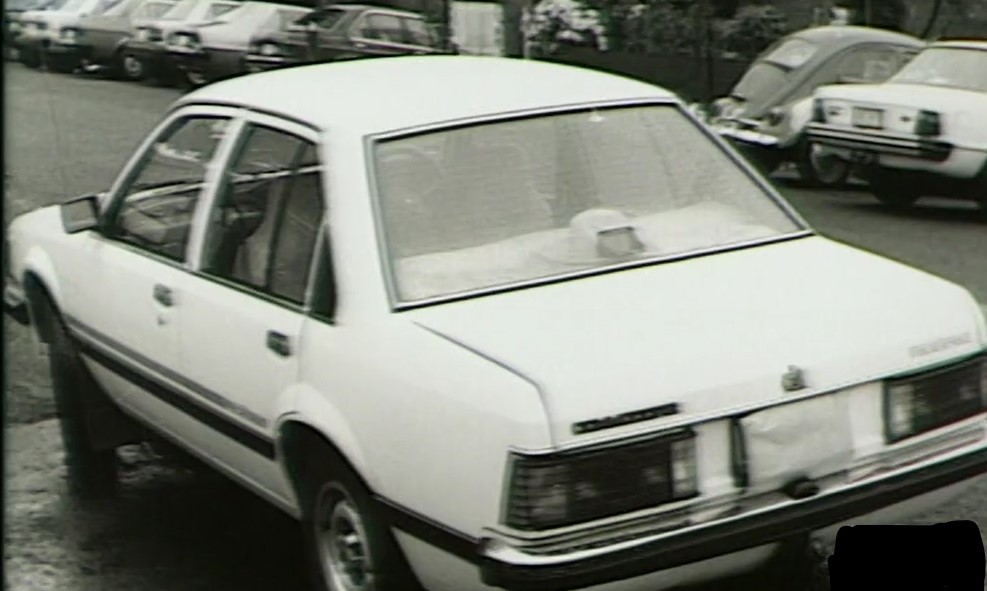

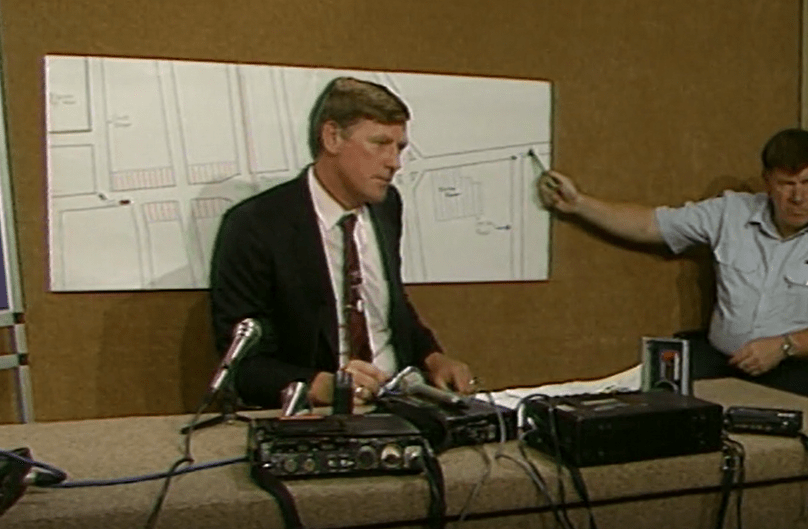

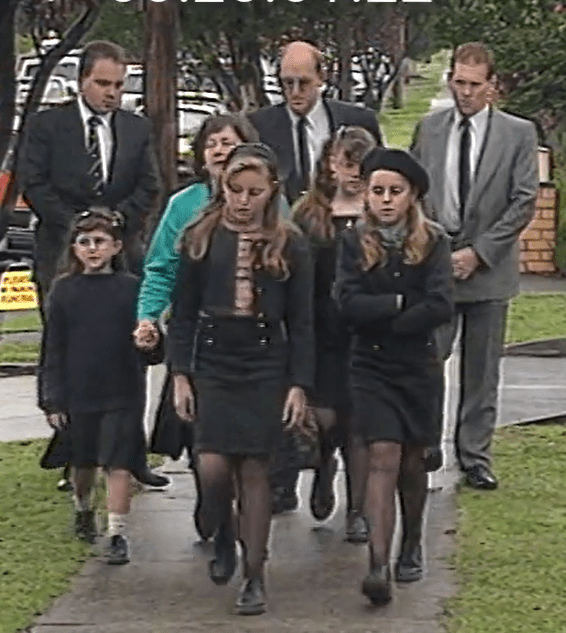
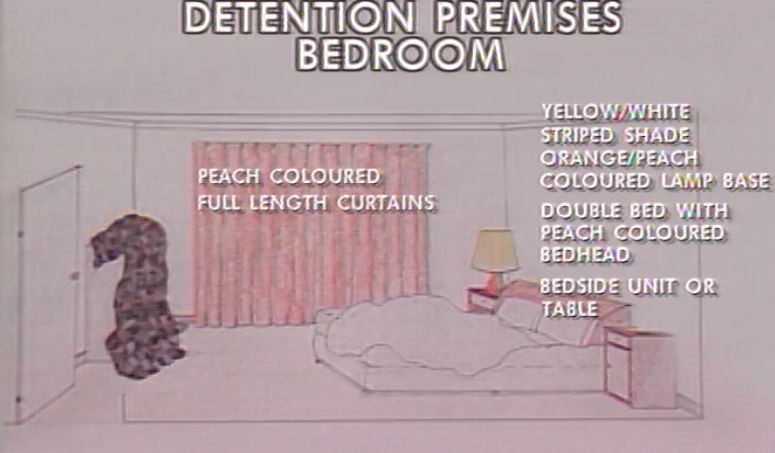
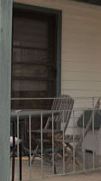
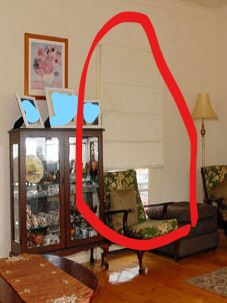
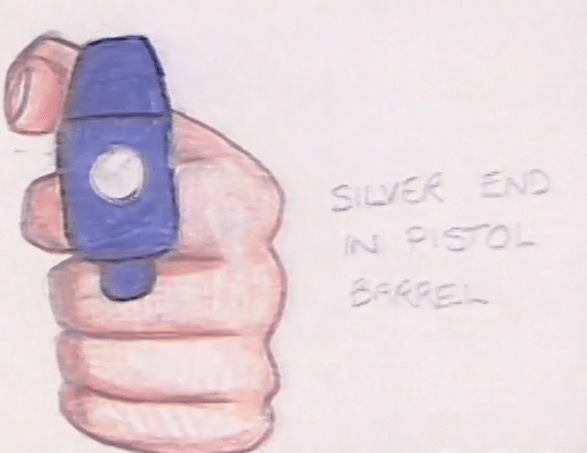


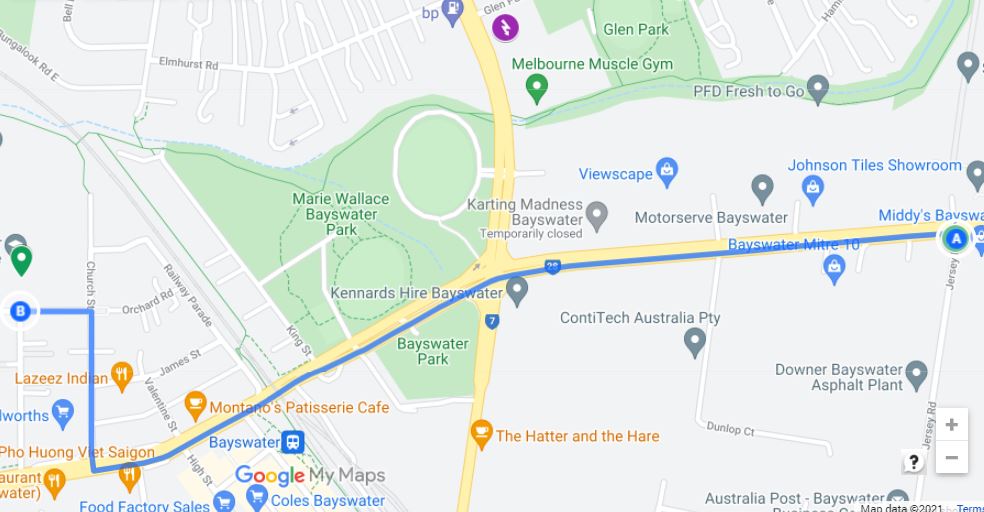


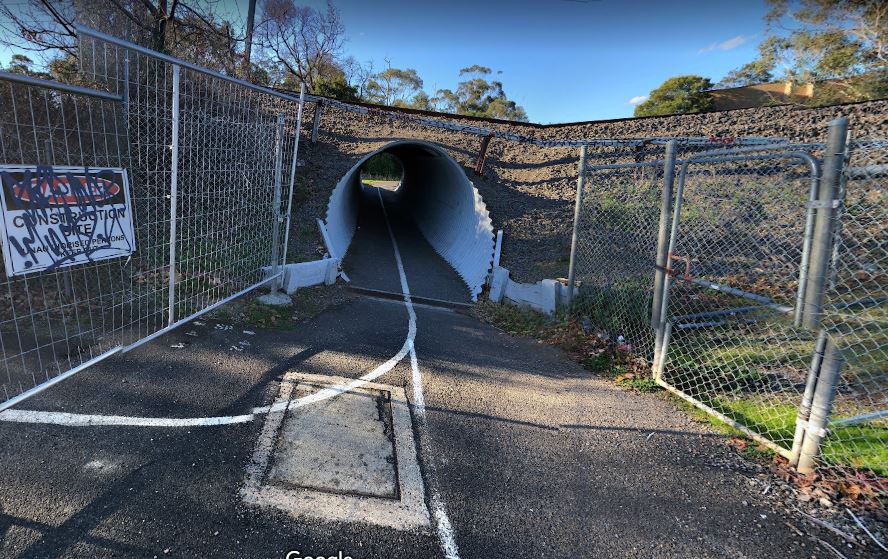


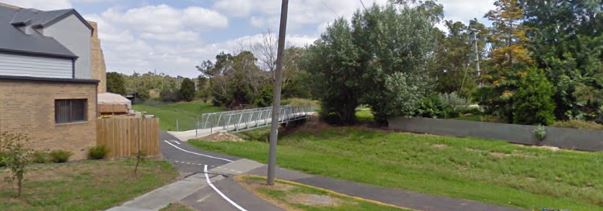
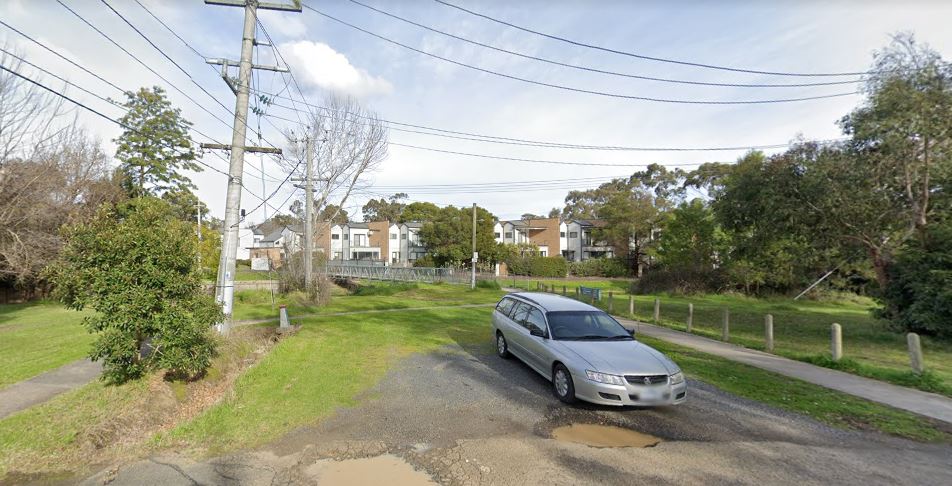












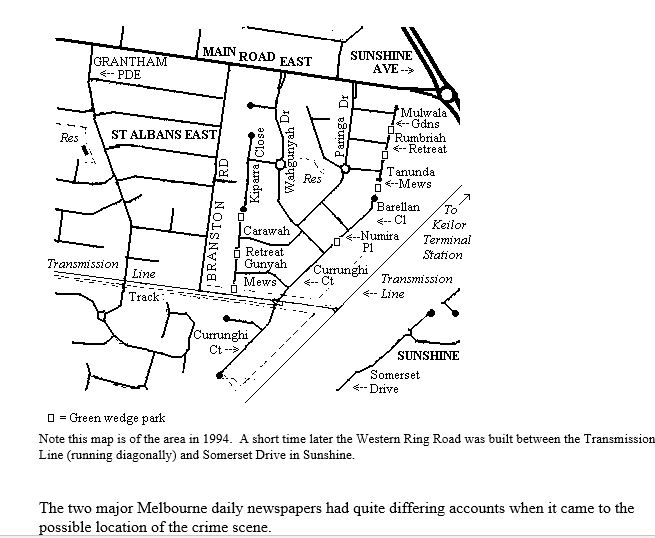

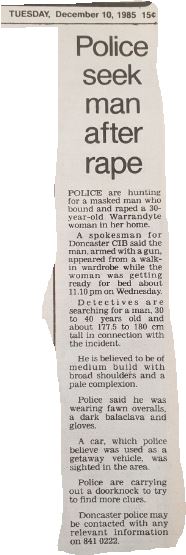
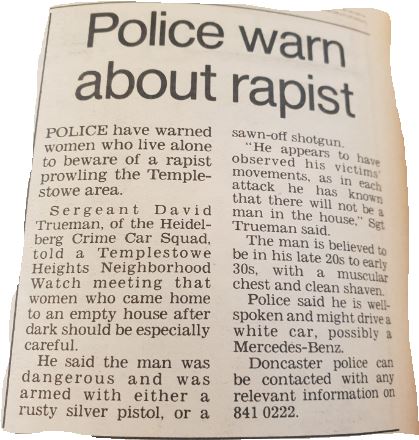
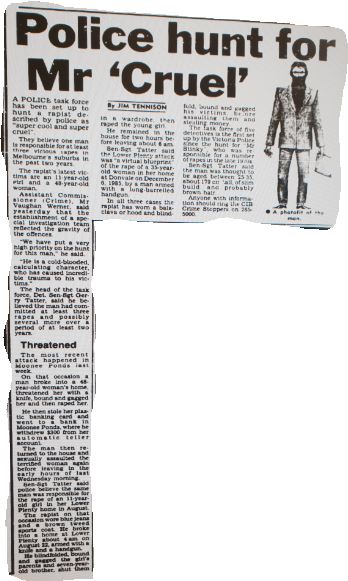


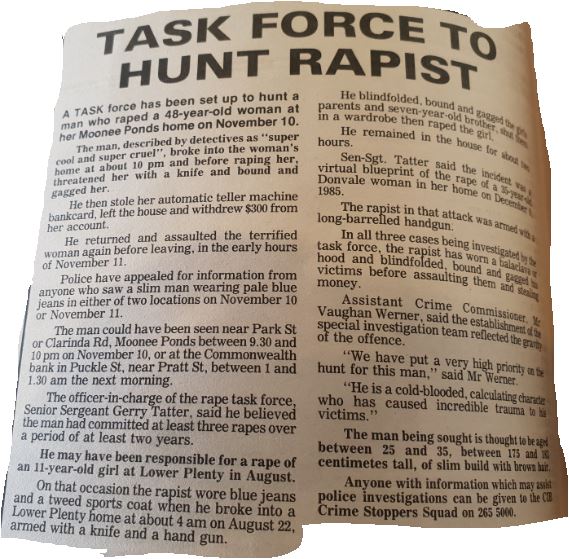
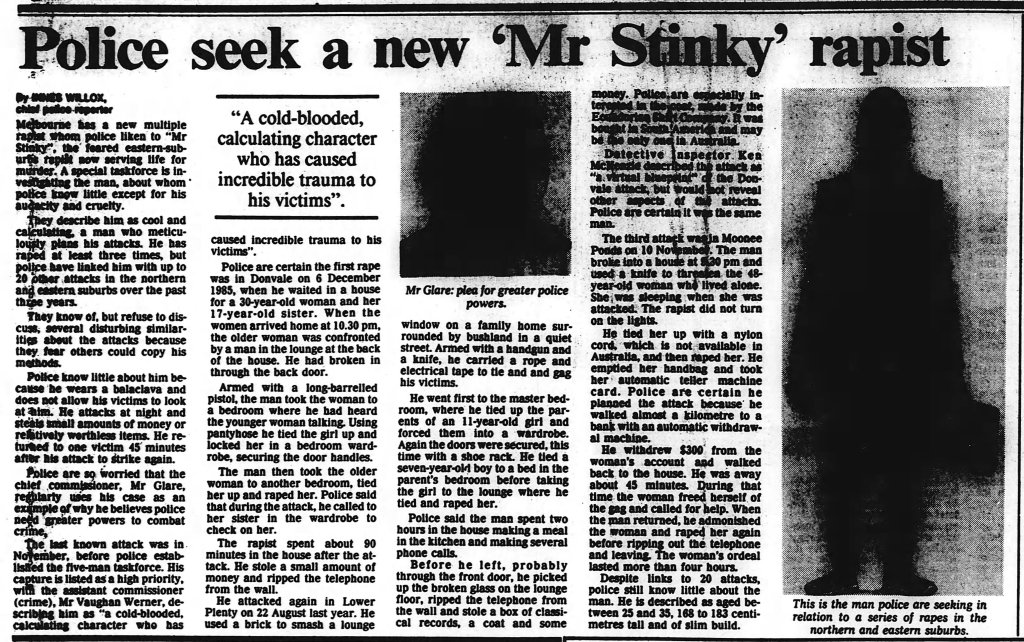
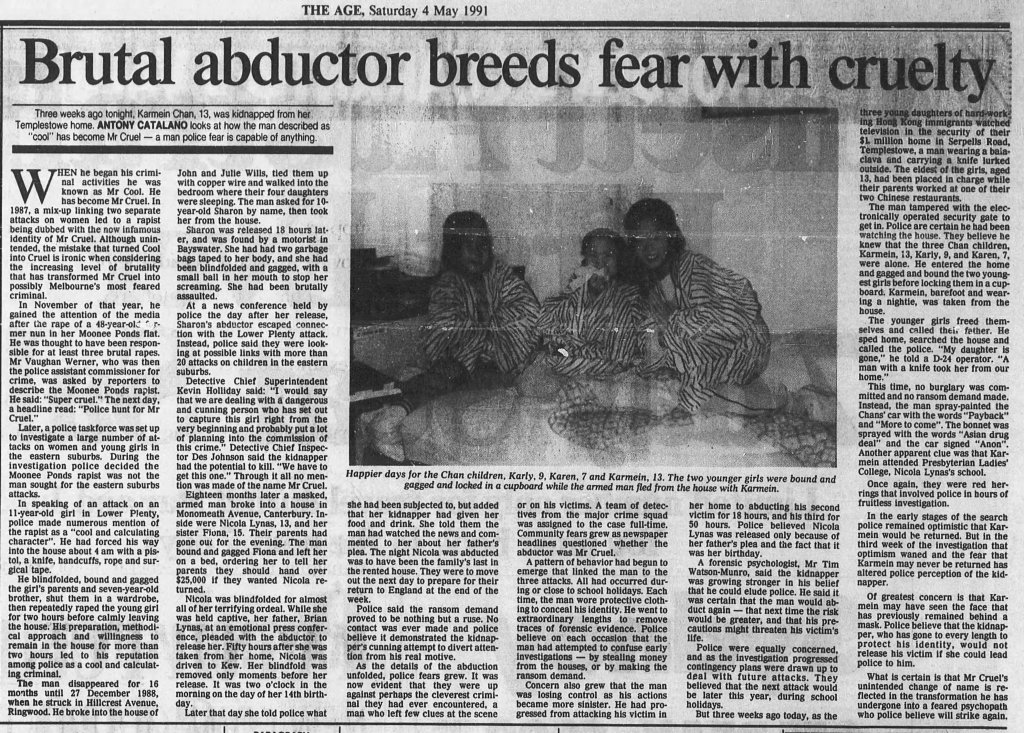

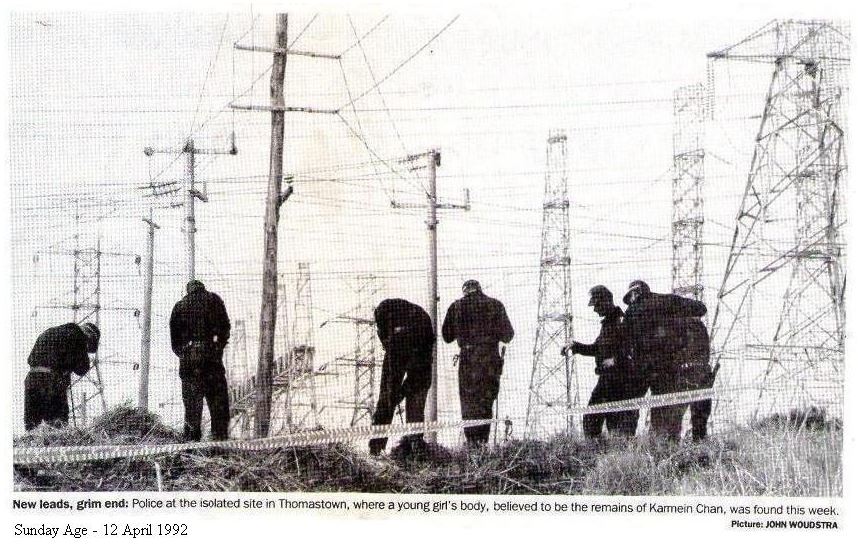


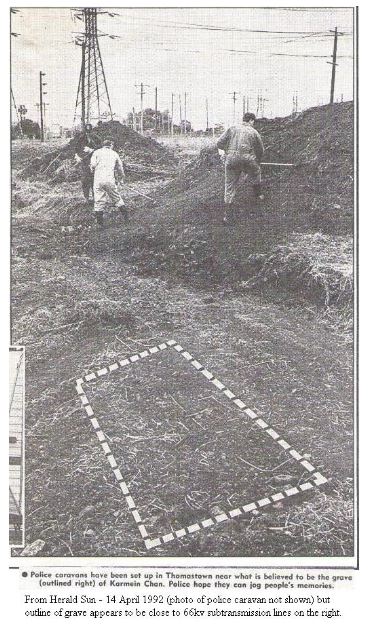


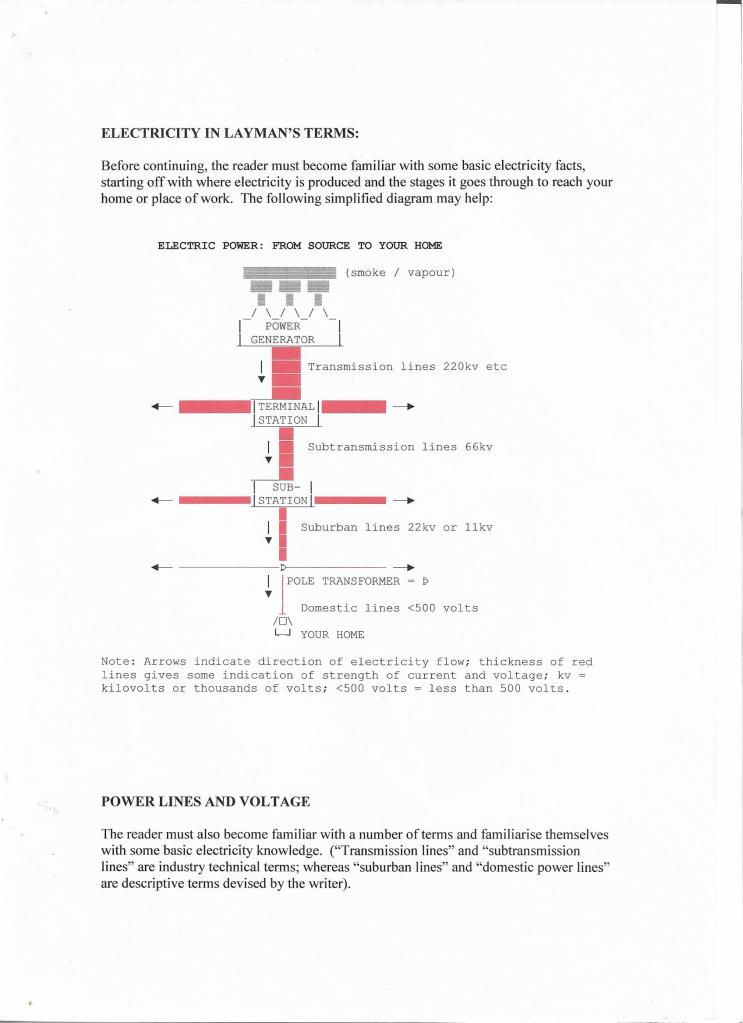

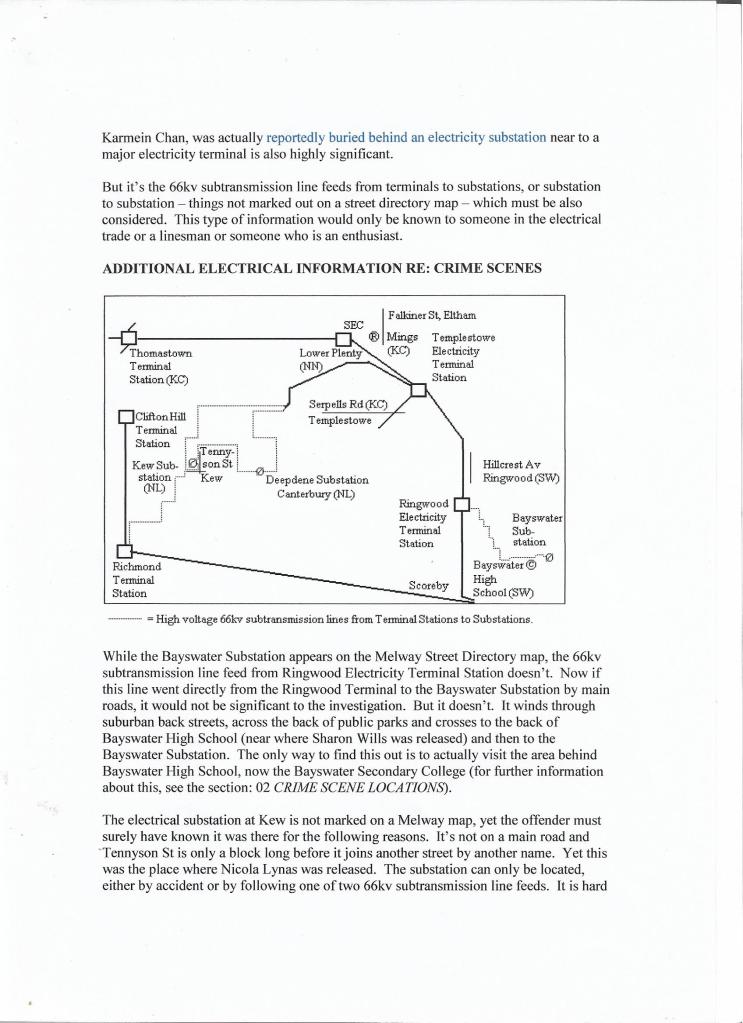




 Melbourne Marvels